PARAGUAY
(2002)
A ROAD TRIP FULL OF CONTRASTS
Our adventure began with a flight from Rio de Janeiro straight to Foz do Iguaçu. We were eager to marvel at the world-famous waterfalls—and on the first day, everything pointed to a dream vacation. The weather was simply fantastic, the sun was shining, and we took advantage of the perfect conditions to enjoy an extensive excursion to the Argentine side of the falls. But things turned out differently. From the brilliant sunshine at the gigantic waterfalls to a hasty escape in a taxi, our trip to Foz do Iguaçu unfolded far more rapidly than we ever would have imagined. But let's start over from the beginning.
Escaping the Rain: Our Spontaneous Detour to Paraguay
To visit the world-famous Iguazu Falls on the border between Argentina and Brazil, you need one thing above all else: a huge stroke of luck with the weather. Unfortunately, Mo and I had absolutely none of that.
And yet, it had all started so perfectly. We had arrived in the Brazilian city of Foz do Iguaçu the day before and were delighted by the brilliant sunshine. By chance, we managed to snag a room at a truly high-end hotel for a bargain price and happily settled in. But the next morning brought a rude awakening: thick, heavy rain clouds hung in a pitch-black sky. We realized immediately that our planned trip to the waterfalls over the coming days would literally be a washout.
Bruises, tension in the air, and a taxi to Paraguay
The mood instantly plummeted to rock bottom, and a string of mishaps ensued. Mo slipped on the slick, rain-soaked steps and slammed hard onto the unforgiving asphalt. We were badly shaken and in low spirits, and it didn't take long before we were having a heated argument. At that moment, we both realized one thing: we had to get out of there—fast! Acting on impulse, we grabbed the nearest taxi, headed for the border, and embarked on a completely spontaneous side trip to Paraguay.
To visit the world-famous Iguazu Falls on the border between Argentina and Brazil, you need one thing above all else: a huge stroke of luck with the weather. Unfortunately, Mo and I had absolutely none of that.
And yet, it had all started so perfectly. We had arrived in the Brazilian city of Foz do Iguaçu the day before and were delighted by the brilliant sunshine. By chance, we managed to snag a room at a truly high-end hotel for a bargain price and happily settled in. But the next morning brought a rude awakening: thick, heavy rain clouds hung in a pitch-black sky. We realized immediately that our planned trip to the waterfalls over the coming days would literally be a washout.
Bruises, tension in the air, and a taxi to Paraguay
The mood instantly plummeted to rock bottom, and a string of mishaps ensued. Mo slipped on the slick, rain-soaked steps and slammed hard onto the unforgiving asphalt. We were badly shaken and in low spirits, and it didn't take long before we were having a heated argument. At that moment, we both realized one thing: we had to get out of there—fast! Acting on impulse, we grabbed the nearest taxi, headed for the border, and embarked on a completely spontaneous side trip to Paraguay.
The Stamp Dilemma at the Bridge of Friendship
No sooner said than done. Less than ten minutes later, we were sitting in a taxi with our small daypacks, speeding toward the border as if possessed. Mo and I were still far too shaken by the earlier fall and the argument to even realize that we were already caught up in the chaotic border traffic of Ciudad del Este.
It wasn’t until we were standing in the middle of the Puente de la Amistad—the Bridge of Friendship separating the two countries—and the driver was heading toward the Paraguayan city center that a queasy feeling came over me. Feeling a bit unsure, I asked, “Don’t we have to go through any border formalities at all?”
The driver turned around to face us, completely surprised, and casually waved off our concern: he said no stamp was needed for a brief visit to the border town—we could move around freely there. The problem was that our actual destination was Asunción, the distant capital of Paraguay! Understandably, I was determined to get an official entry stamp in my passport—before the authorities in the interior picked us up and potentially mistook us for illegal immigrants.
No sooner said than done. Less than ten minutes later, we were sitting in a taxi with our small daypacks, speeding toward the border as if possessed. Mo and I were still far too shaken by the earlier fall and the argument to even realize that we were already caught up in the chaotic border traffic of Ciudad del Este.
It wasn’t until we were standing in the middle of the Puente de la Amistad—the Bridge of Friendship separating the two countries—and the driver was heading toward the Paraguayan city center that a queasy feeling came over me. Feeling a bit unsure, I asked, “Don’t we have to go through any border formalities at all?”
The driver turned around to face us, completely surprised, and casually waved off our concern: he said no stamp was needed for a brief visit to the border town—we could move around freely there. The problem was that our actual destination was Asunción, the distant capital of Paraguay! Understandably, I was determined to get an official entry stamp in my passport—before the authorities in the interior picked us up and potentially mistook us for illegal immigrants.
Half measures at the border: Entry stamp without an exit stamp
The taxi driver was not at all pleased with my demand. Furious, he yanked the steering wheel around and whipped the car back toward the border post, weaving through oncoming traffic at what felt like 180 km/h. However, he wasn't willing to go too far: he simply dropped us off on the Paraguayan side—the trip back to the Brazilian border was simply too far for him.
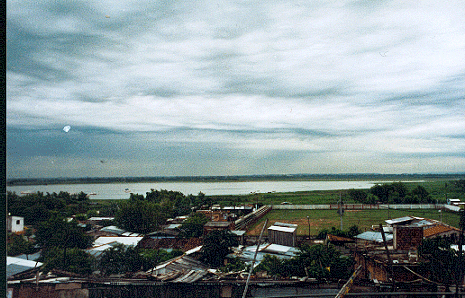
It is worth noting that Ciudad del Este is one vast, gigantic duty-free market. Thousands of Brazilians stream across the bridge every day to shop at rock-bottom prices. On this particular day, a perfect storm of factors converged: it was pouring with rain, it was the weekend, and the Friendship Bridge was completely gridlocked.
Amidst this absolute hive of activity—a chaotic mix of people and cars—we finally managed to secure our Paraguayan entry stamp. However, we didn't have a Brazilian exit stamp in our passports, as the taxi driver had run out of patience. We were left hoping that this missing stamp wouldn't come back to haunt us when we eventually returned to Brazil...
The taxi driver was not at all pleased with my demand. Furious, he yanked the steering wheel around and whipped the car back toward the border post, weaving through oncoming traffic at what felt like 180 km/h. However, he wasn't willing to go too far: he simply dropped us off on the Paraguayan side—the trip back to the Brazilian border was simply too far for him.
It is worth noting that Ciudad del Este is one vast, gigantic duty-free market. Thousands of Brazilians stream across the bridge every day to shop at rock-bottom prices. On this particular day, a perfect storm of factors converged: it was pouring with rain, it was the weekend, and the Friendship Bridge was completely gridlocked.
Amidst this absolute hive of activity—a chaotic mix of people and cars—we finally managed to secure our Paraguayan entry stamp. However, we didn't have a Brazilian exit stamp in our passports, as the taxi driver had run out of patience. We were left hoping that this missing stamp wouldn't come back to haunt us when we eventually returned to Brazil...
Chickens, children, spitting men: Six hours on a rattling bus to Asunción
The taxi driver dropped us off at the Ciudad del Este bus terminal. In the ticket hall, we quickly bought two tickets to Asunción—and promptly ended up on an absolutely overcrowded, dilapidated, and long-since-retired clunker of a bus.
We spent the next six hours wedged in and packed like sardines among cackling chickens, screaming children, smacking mothers, and spitting men. At some point, my legs went completely numb from the lack of movement. However, I was so incredibly tired that I didn't even care; I simply dozed off, numb to it all.
Looking back, however, that was merely a gentle warm-up. Had I known at the time that just two days later I would be spending the next three consecutive nights on a bus, I would have turned right around—or rented a luxury private bus with a personal chauffeur!
The taxi driver dropped us off at the Ciudad del Este bus terminal. In the ticket hall, we quickly bought two tickets to Asunción—and promptly ended up on an absolutely overcrowded, dilapidated, and long-since-retired clunker of a bus.
We spent the next six hours wedged in and packed like sardines among cackling chickens, screaming children, smacking mothers, and spitting men. At some point, my legs went completely numb from the lack of movement. However, I was so incredibly tired that I didn't even care; I simply dozed off, numb to it all.
Looking back, however, that was merely a gentle warm-up. Had I known at the time that just two days later I would be spending the next three consecutive nights on a bus, I would have turned right around—or rented a luxury private bus with a personal chauffeur!
Unvarnished misery: Our bitter welcome in Paraguay's capital
The air inside the bus was hot, stifling, and damp from the rain. When we finally rolled into the capital, Asunción, after several hours, we felt like we’d been put through a meat grinder.
The squalor and visible poverty in Paraguay caught us completely off guard. We found a reasonably decent hotel on a side street and ducked into the nearest restaurant to treat ourselves to chicken and fries. However, we instantly lost our appetite when we saw hungry street children begging outside the window. We couldn't bring ourselves to keep eating; instead, we had the chicken packed up and handed it to the little ones on the next street corner.
Between Sheet Metal and Wood: A Harrowing Visit to the Guaraní Reserve
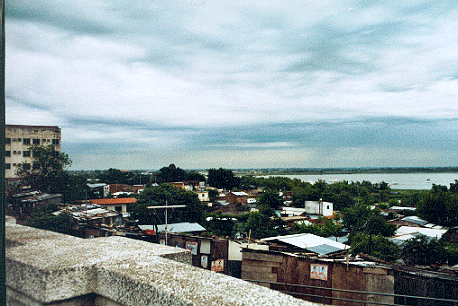
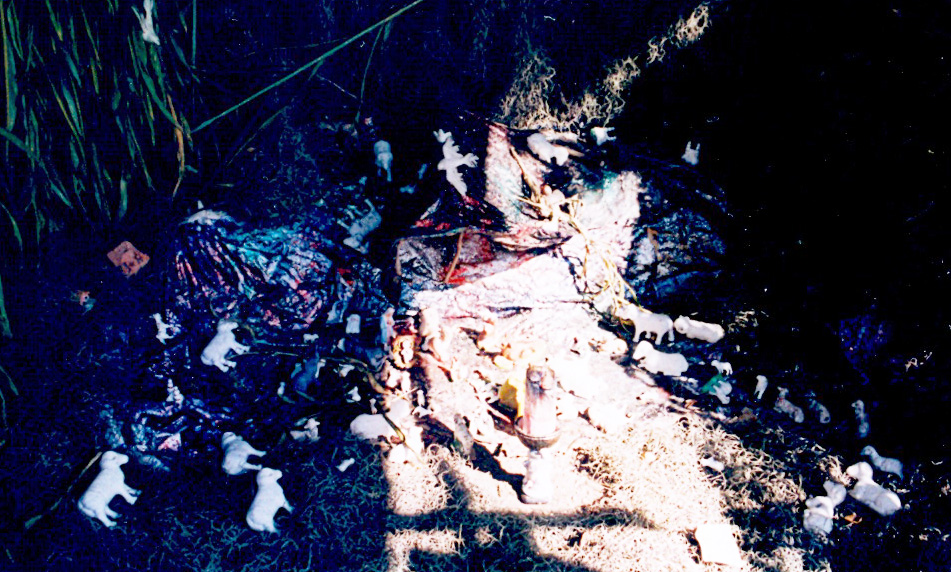
The next day, we hired a taxi to explore the city and visit a Guaraní indigenous reserve. What we saw there came as a shock: heaps of filth and trash piled up between squalid shacks made of sheet metal and wood. Deeply shaken by this bleak existence devoid of prospects and the indigenous people's harsh struggle for survival, we soon left the area.
The air inside the bus was hot, stifling, and damp from the rain. When we finally rolled into the capital, Asunción, after several hours, we felt like we’d been put through a meat grinder.
The squalor and visible poverty in Paraguay caught us completely off guard. We found a reasonably decent hotel on a side street and ducked into the nearest restaurant to treat ourselves to chicken and fries. However, we instantly lost our appetite when we saw hungry street children begging outside the window. We couldn't bring ourselves to keep eating; instead, we had the chicken packed up and handed it to the little ones on the next street corner.
Between Sheet Metal and Wood: A Harrowing Visit to the Guaraní Reserve
The next day, we hired a taxi to explore the city and visit a Guaraní indigenous reserve. What we saw there came as a shock: heaps of filth and trash piled up between squalid shacks made of sheet metal and wood. Deeply shaken by this bleak existence devoid of prospects and the indigenous people's harsh struggle for survival, we soon left the area.
|
°*°
Background: Who are the Guaraní? The Guaraní are an indigenous ethnic group that settled in the heart of South America long before the arrival of Christopher Columbus. Their territory extended across present-day Paraguay, Bolivia, Argentina, Brazil, and Uruguay. When the first European conquistadors set foot on the continent, the Guaraní were among the first peoples they encountered. A very early and intense mixing of cultures ensued. The fascinating legacy of this history shapes Paraguay to this day: although only around one percent of the population are purely indigenous Guaraní, an astonishing 80 percent of Paraguayans speak the language fluently. Guaraní is firmly enshrined in the constitution and stands as a proud, equal official language alongside Spanish. °*° |
Freedom on the streets? A bold theory about Paraguay's children
However, before we left, we also gained a completely different, unexpected perspective on the situation. On the day of our departure, we met a European man who was deeply committed to helping local street children. He put forward the bold argument that these kids were, in some ways, happier than children in our perfectly polished Western world. He believed that the harsh struggle for survival on the streets taught them an extraordinary level of initiative and personal responsibility—qualities completely lacking in many sheltered children in the West. Well... anyone who wants to believe that is certainly free to do so. Ultimately, everything in life likely has its pros and cons.
With charm and a wink: Our illicit border thriller on the way back
The night bus we took from Asunción back to Foz do Iguaçu came as a real surprise. Of all places, impoverished Paraguay fielded a bus that was far more spacious and comfortable than anything we had experienced in Brazil so far—even though vast Brazil, with its endless distances, would have had a much greater need for such luxury!
And what happened at the border regarding our missing stamps? Let’s just say: with a good dose of persuasion, a charming story, and a warm wink, the border guards turned a blind eye and simply let us slip through. ;-) Well, nobody’s perfect!
However, before we left, we also gained a completely different, unexpected perspective on the situation. On the day of our departure, we met a European man who was deeply committed to helping local street children. He put forward the bold argument that these kids were, in some ways, happier than children in our perfectly polished Western world. He believed that the harsh struggle for survival on the streets taught them an extraordinary level of initiative and personal responsibility—qualities completely lacking in many sheltered children in the West. Well... anyone who wants to believe that is certainly free to do so. Ultimately, everything in life likely has its pros and cons.
With charm and a wink: Our illicit border thriller on the way back
The night bus we took from Asunción back to Foz do Iguaçu came as a real surprise. Of all places, impoverished Paraguay fielded a bus that was far more spacious and comfortable than anything we had experienced in Brazil so far—even though vast Brazil, with its endless distances, would have had a much greater need for such luxury!
And what happened at the border regarding our missing stamps? Let’s just say: with a good dose of persuasion, a charming story, and a warm wink, the border guards turned a blind eye and simply let us slip through. ;-) Well, nobody’s perfect!
Three nights, two countries, one train: The great Brazil marathon journey
Anyone who thinks six hours on a dilapidated Paraguayan rattletrap of a bus is exhausting hasn't experienced the travel marathon that followed. After our spur-of-the-moment border hop, we didn't take a break in Foz do Iguaçu; instead, we relentlessly powered through the journey in one continuous stretch.
Our destination was Rio de Janeiro—with a very special stopover in Curitiba. We wanted to arrive there on time to take the world-famous, spectacular train ride through the jungle-clad mountains down to Paranaguá and back. It was a breathtaking setting, though one that exacted a brutal price in terms of sheer physical endurance.
We spent three consecutive nights on the hot asphalt of South America as follows:
Leg 1 (The warm-up lap): Asunción/Paraguay to Foz do Iguaçu/Brazil – 6 hours on the bus.
Leg 2 (The endurance test): Foz do Iguaçu to Curitiba – 14 hours on the bus. The breather: Off the bus, onto the historic train to Paranaguá, enjoying the fantastic views, the return trip, and...
Leg 3 (The grueling finale): Straight on from Curitiba to Rio de Janeiro – an unbelievable 20 hours on the bus!
When we finally rolled into Rio, we had a staggering 40 hours of pure bus travel in our bones. It was a totally crazy undertaking, but it’s precisely these kinds of mammoth trips that create memories you’ll never forget for the rest of your life!
Anyone who thinks six hours on a dilapidated Paraguayan rattletrap of a bus is exhausting hasn't experienced the travel marathon that followed. After our spur-of-the-moment border hop, we didn't take a break in Foz do Iguaçu; instead, we relentlessly powered through the journey in one continuous stretch.
Our destination was Rio de Janeiro—with a very special stopover in Curitiba. We wanted to arrive there on time to take the world-famous, spectacular train ride through the jungle-clad mountains down to Paranaguá and back. It was a breathtaking setting, though one that exacted a brutal price in terms of sheer physical endurance.
We spent three consecutive nights on the hot asphalt of South America as follows:
Leg 1 (The warm-up lap): Asunción/Paraguay to Foz do Iguaçu/Brazil – 6 hours on the bus.
Leg 2 (The endurance test): Foz do Iguaçu to Curitiba – 14 hours on the bus. The breather: Off the bus, onto the historic train to Paranaguá, enjoying the fantastic views, the return trip, and...
Leg 3 (The grueling finale): Straight on from Curitiba to Rio de Janeiro – an unbelievable 20 hours on the bus!
When we finally rolled into Rio, we had a staggering 40 hours of pure bus travel in our bones. It was a totally crazy undertaking, but it’s precisely these kinds of mammoth trips that create memories you’ll never forget for the rest of your life!
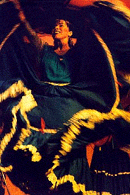
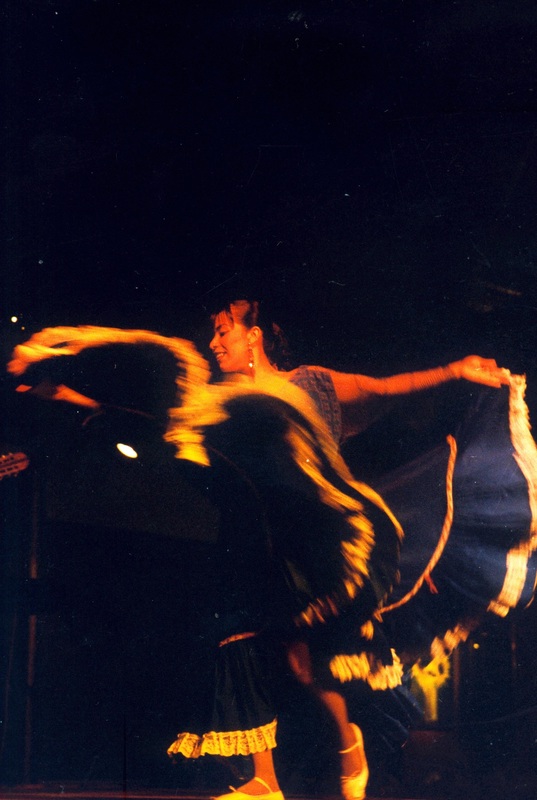
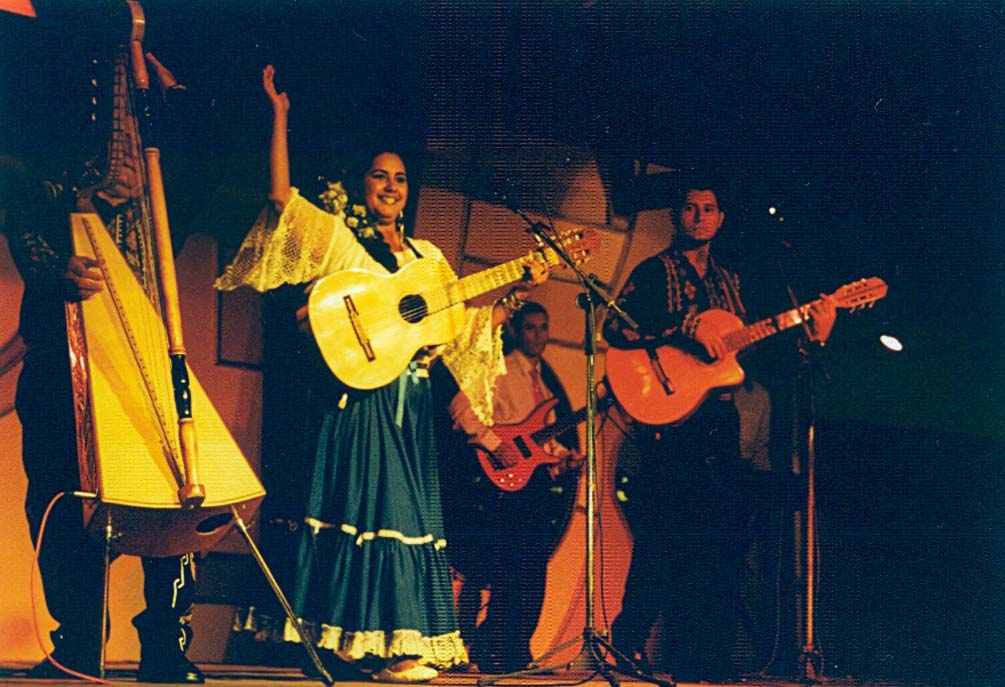
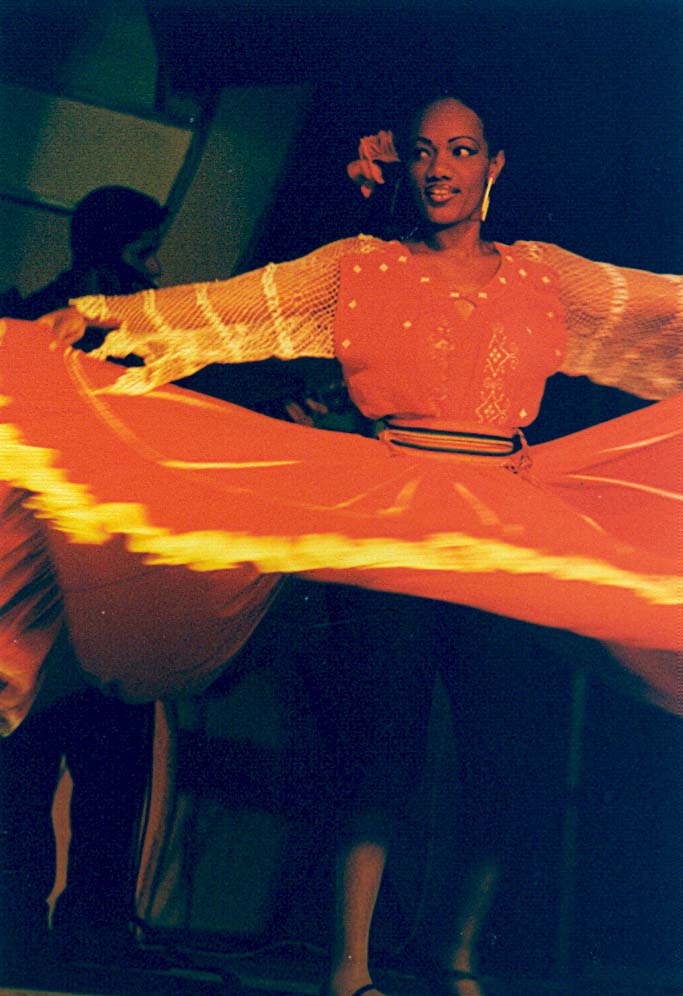
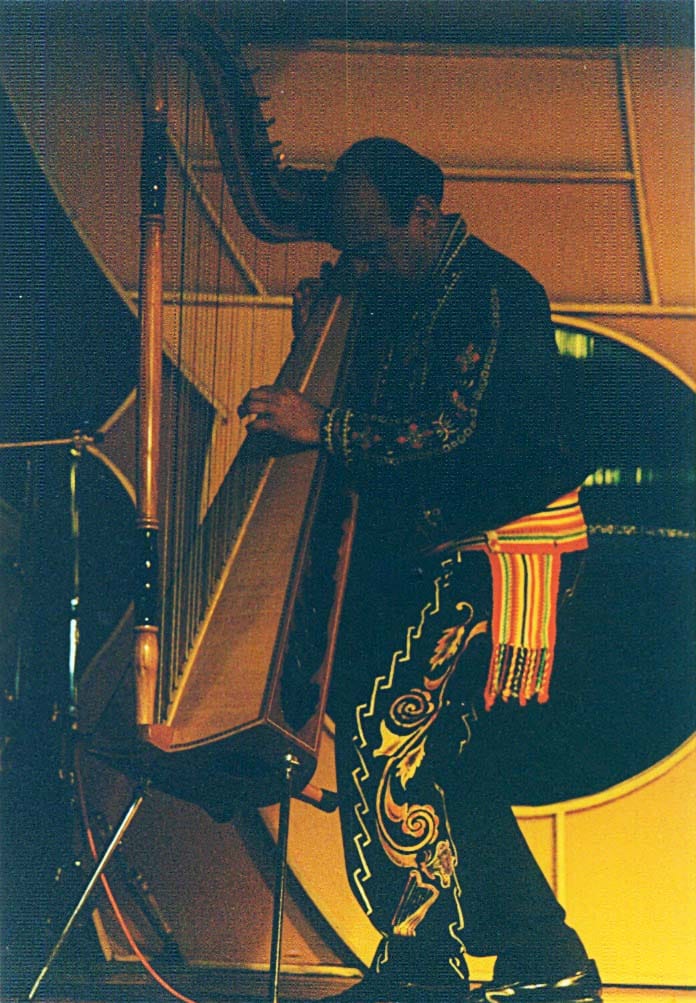
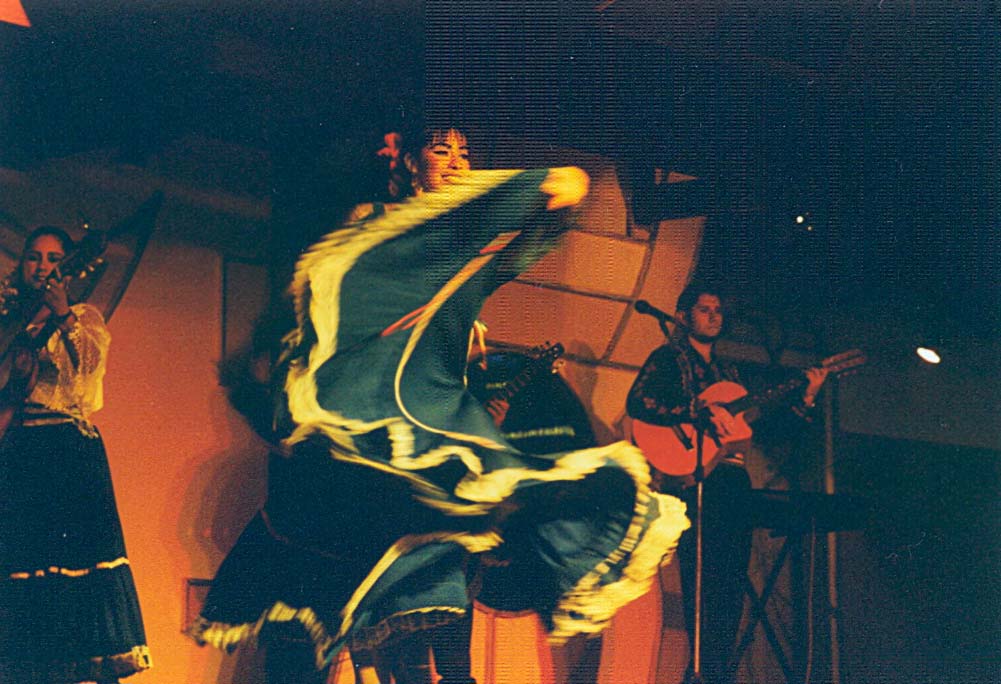
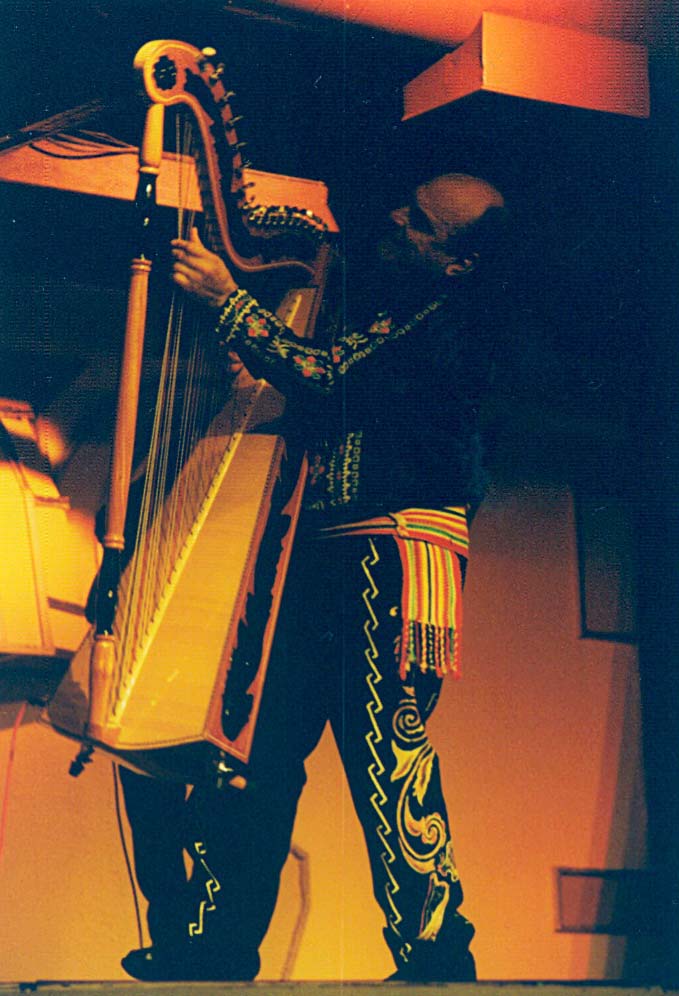
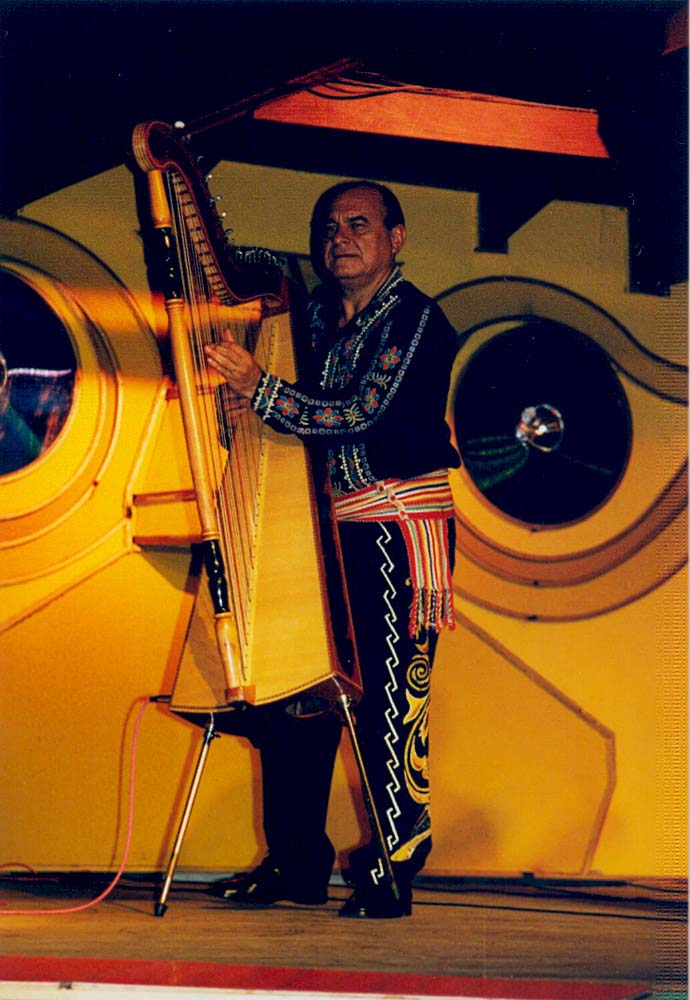
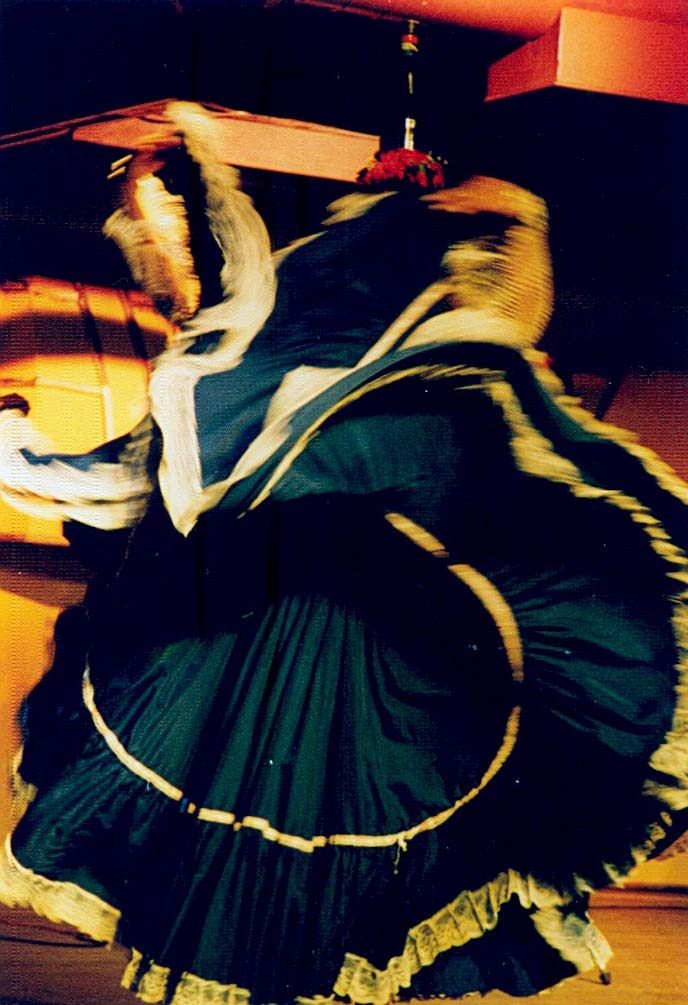
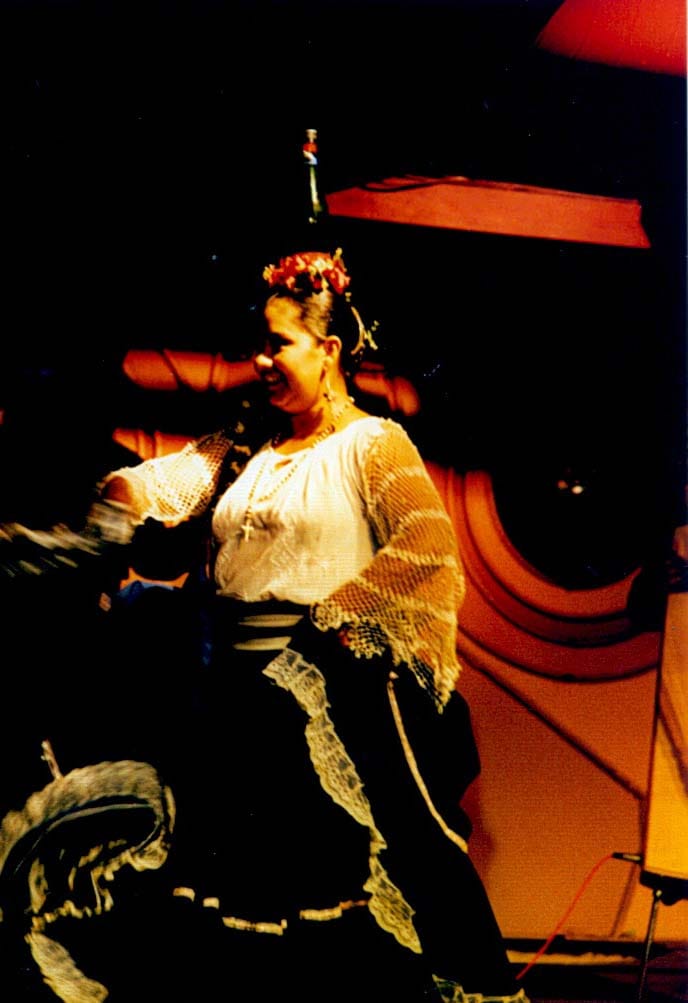
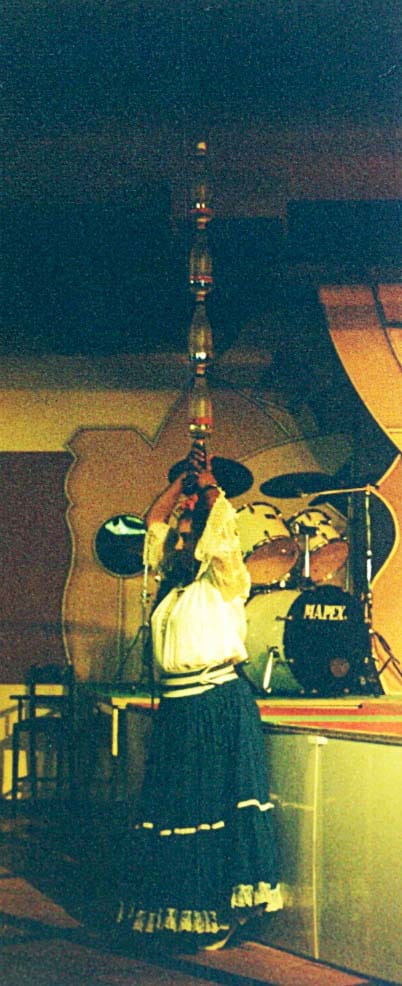
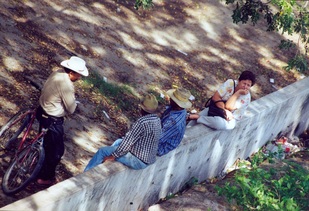
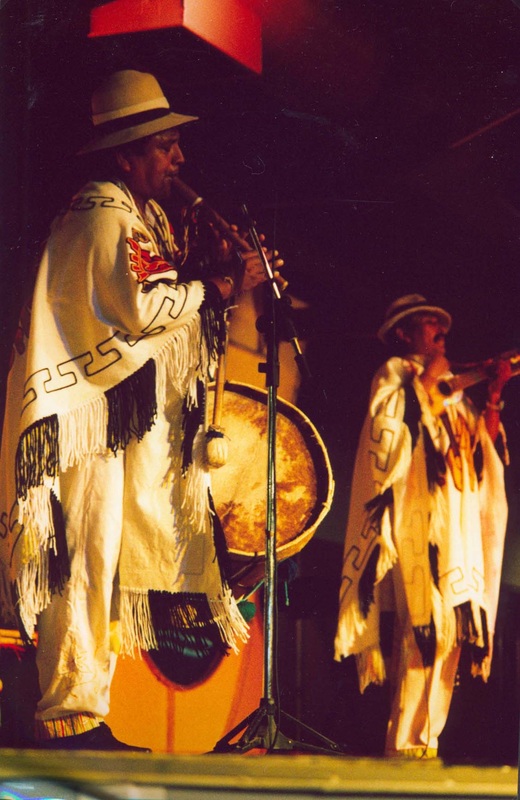
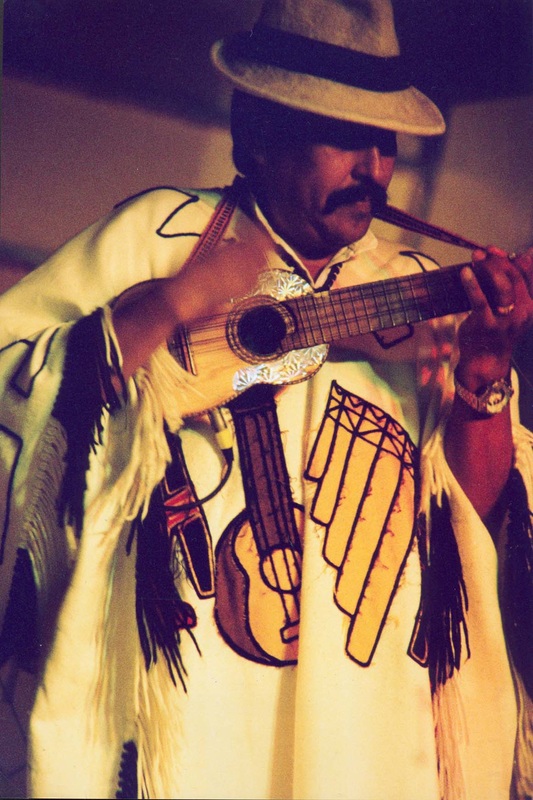
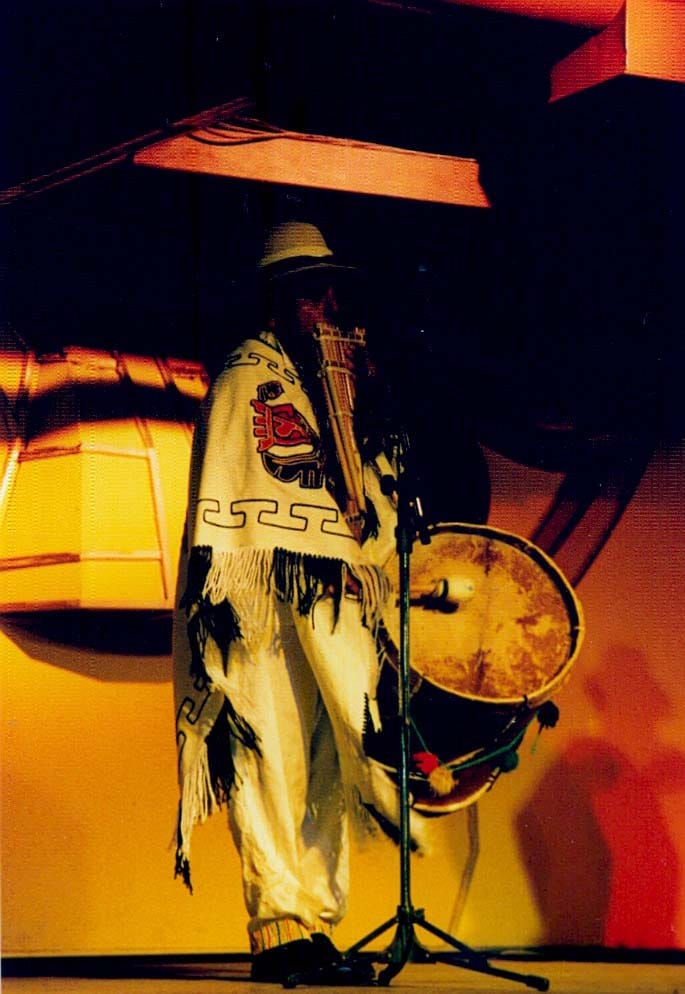
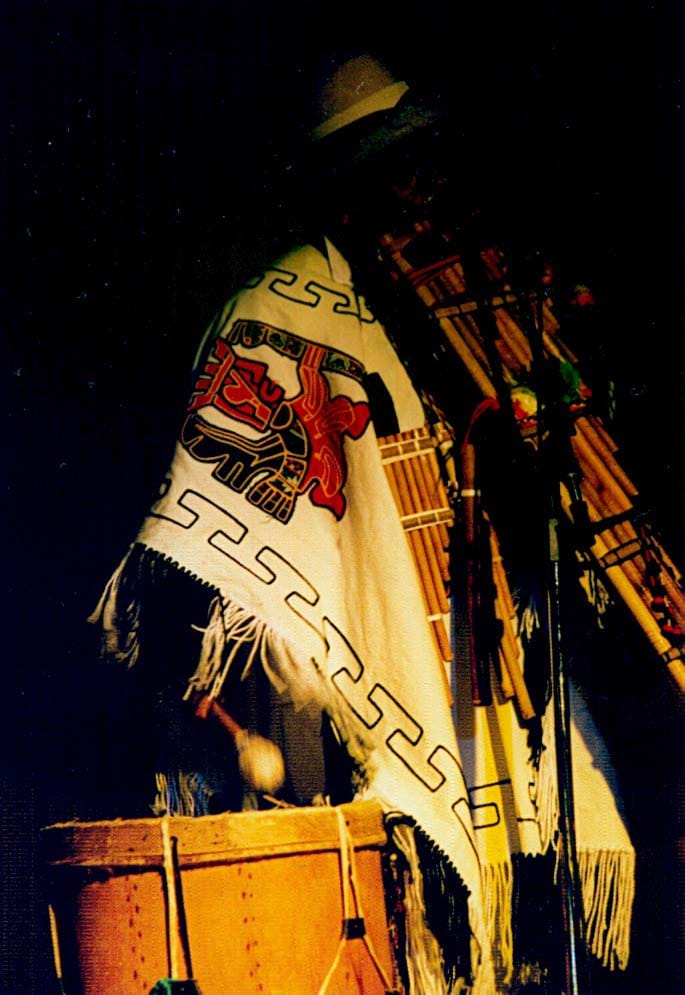
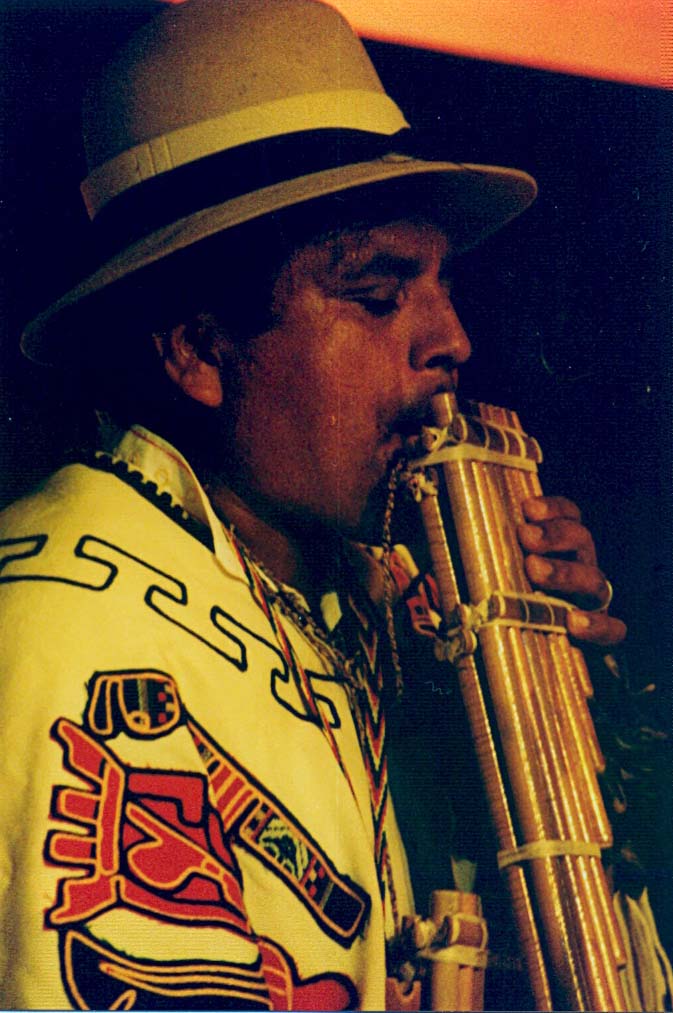
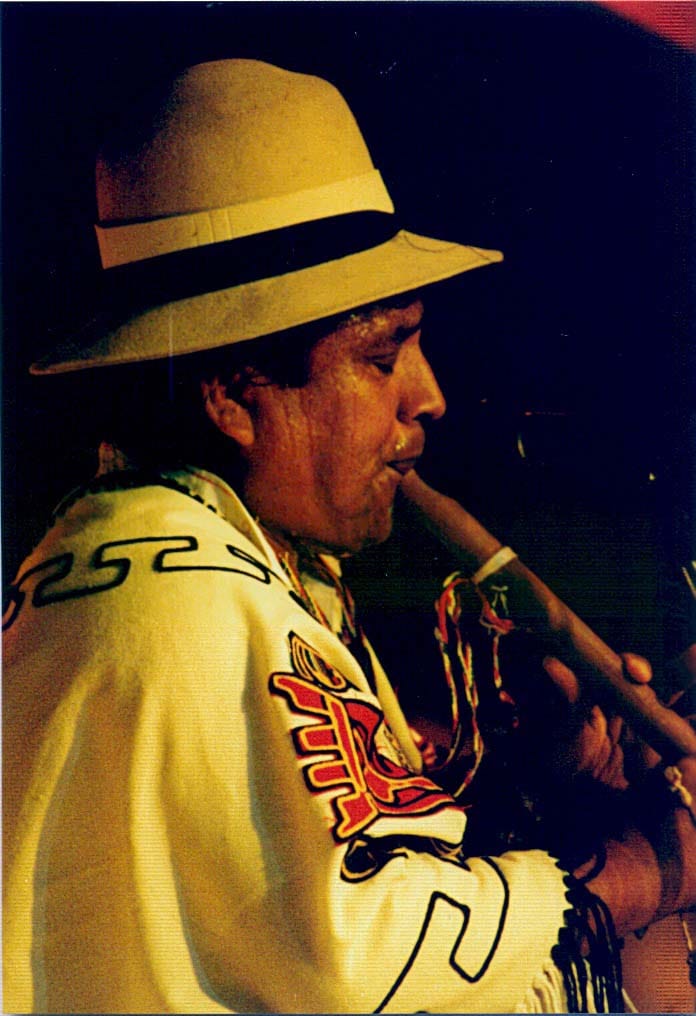
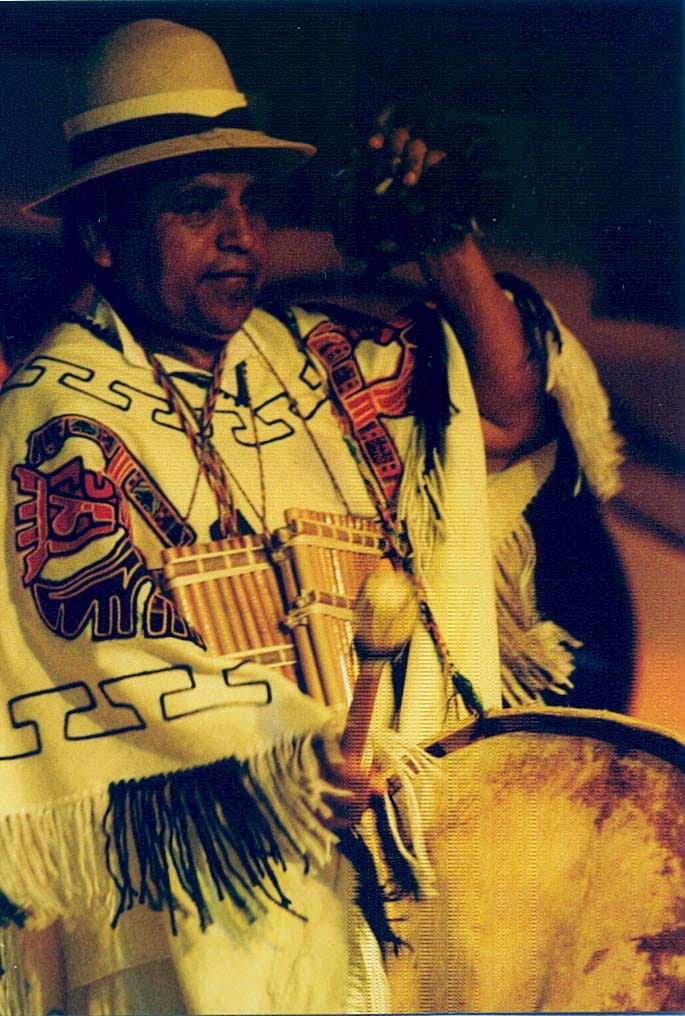
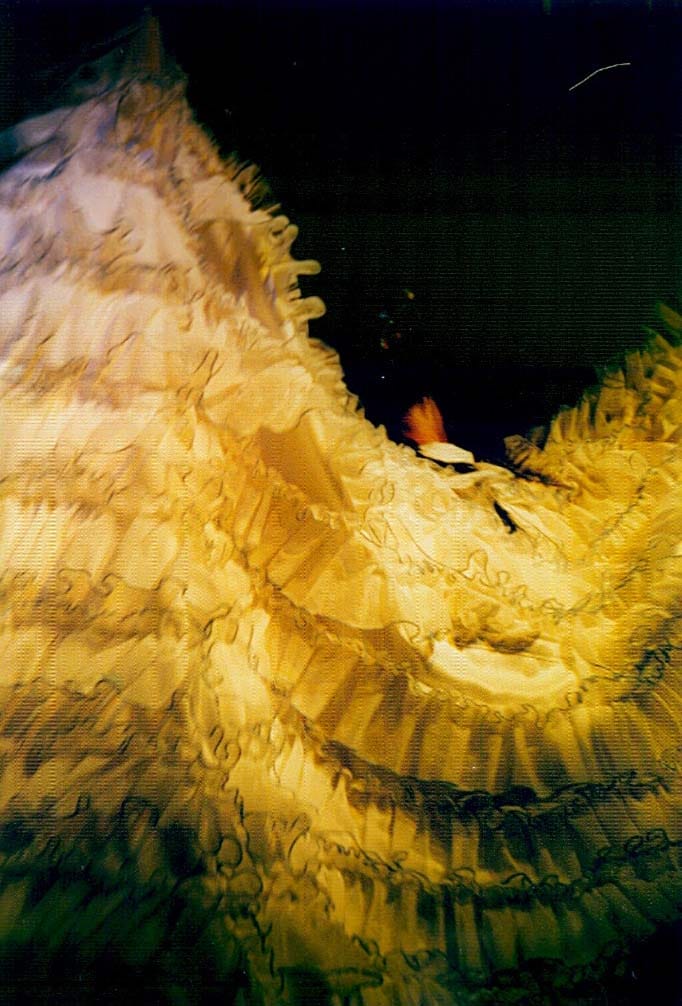
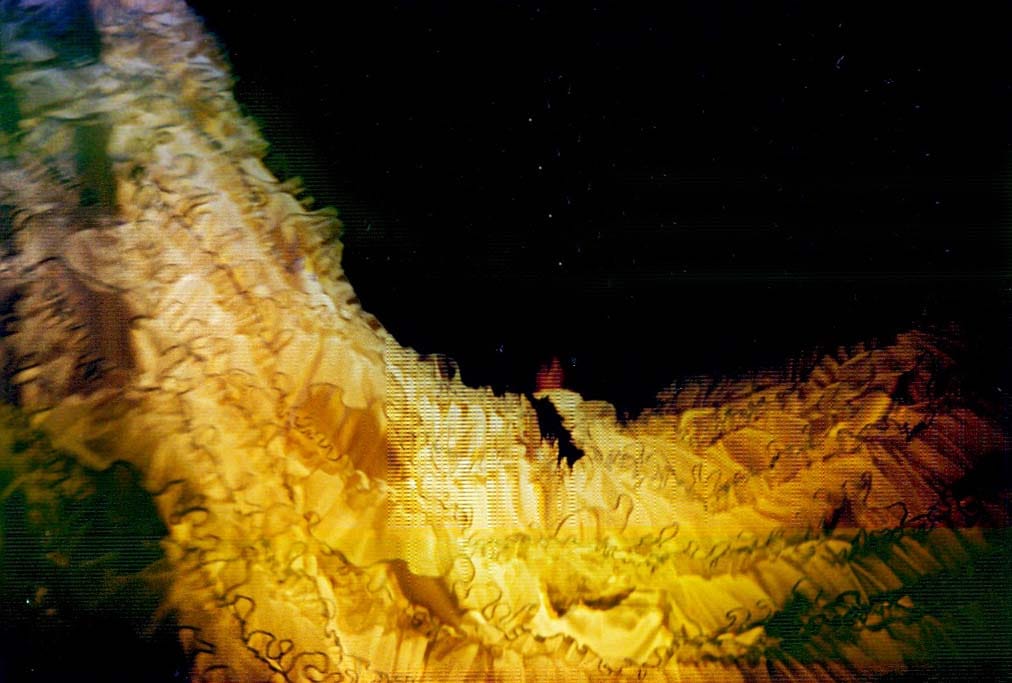
Traditional dance of Paraguay
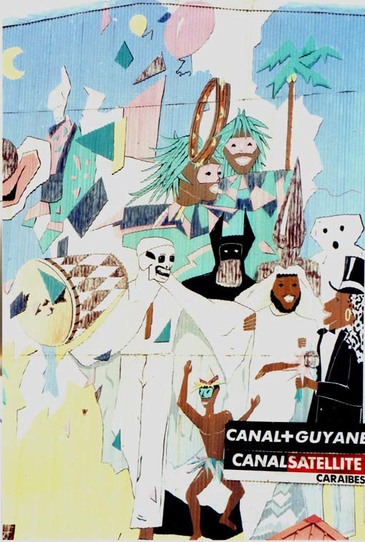
French Guianas
(2002)
Loan sharks, visa hassles, and a ticket to Europe in the middle of South America
When we landed in the Brazilian metropolis of Belém, we headed straight for the nearest travel agency. Although, as a Lufthansa employee, I enjoyed the unbeatable privilege of flying almost anywhere in the world on tickets with a 90% discount, planning the route through the Guianas was a real puzzle. While my friend Mo had to buy her tickets to the Caribbean at the regular price, I only needed a local flight with Surinam Airways from Belém to Suriname. From there, I already had a connecting flight to Trinidad & Tobago with British Indies.
But the plan didn’t work out. Yilda, the manager of our hotel, sent us to a friend’s travel agency. Aside from the usual language barriers—which I was fortunately able to bridge with my Spanish—that’s where the real trouble began. While Mo’s flights were booked quickly, the prices were steep. It later turned out she even had to pay extra due to incorrect information provided at the agency. Well, welcome to Latin America: nothing here goes according to plan.
I ran into a snag regarding the visa for my flight to Suriname. I knew a transit visa valid for a few days was available upon arrival, but the airline flatly refused to let me board without a confirmed visa. The travel agent immediately saw an opportunity; she was dead set on foisting an expensive, pre-booked ticket straight to Trinidad on me. I shut that down and suggested Guyana (formerly British Guiana) as an alternative. She promptly claimed I would need a visa for that, too. I knew she was lying—she simply wanted to make a big sale off me.
Across South America with the Euro: Departure for Cayenne
I left the office with Mo to talk things over. Only one option remained: French Guiana. Admittedly, it didn't fit in at all with my original British Indies itinerary, but at that moment, I didn't care about anything. I just wanted out of Brazil and away from those sharks.
The next day, we returned to the office. The clerk greeted us with a triumphant—almost pitying—smile. She thought I would back down now and buy the expensive ticket to Trinidad. But my counter-move caught her completely off guard: "Please issue me a ticket to French Guiana," I said with a smile. "That country is part of the European Union, and I hold an EU passport."
It is worth noting that French Guiana is French territory. Flights there count as domestic flights, and the official currency is the euro. The woman stared at me in utter shock. Since this short-haul flight was by far the cheapest option, I had won the battle of wills—and she had lost out on a hefty commission!
When we landed in the Brazilian metropolis of Belém, we headed straight for the nearest travel agency. Although, as a Lufthansa employee, I enjoyed the unbeatable privilege of flying almost anywhere in the world on tickets with a 90% discount, planning the route through the Guianas was a real puzzle. While my friend Mo had to buy her tickets to the Caribbean at the regular price, I only needed a local flight with Surinam Airways from Belém to Suriname. From there, I already had a connecting flight to Trinidad & Tobago with British Indies.
But the plan didn’t work out. Yilda, the manager of our hotel, sent us to a friend’s travel agency. Aside from the usual language barriers—which I was fortunately able to bridge with my Spanish—that’s where the real trouble began. While Mo’s flights were booked quickly, the prices were steep. It later turned out she even had to pay extra due to incorrect information provided at the agency. Well, welcome to Latin America: nothing here goes according to plan.
I ran into a snag regarding the visa for my flight to Suriname. I knew a transit visa valid for a few days was available upon arrival, but the airline flatly refused to let me board without a confirmed visa. The travel agent immediately saw an opportunity; she was dead set on foisting an expensive, pre-booked ticket straight to Trinidad on me. I shut that down and suggested Guyana (formerly British Guiana) as an alternative. She promptly claimed I would need a visa for that, too. I knew she was lying—she simply wanted to make a big sale off me.
Across South America with the Euro: Departure for Cayenne
I left the office with Mo to talk things over. Only one option remained: French Guiana. Admittedly, it didn't fit in at all with my original British Indies itinerary, but at that moment, I didn't care about anything. I just wanted out of Brazil and away from those sharks.
The next day, we returned to the office. The clerk greeted us with a triumphant—almost pitying—smile. She thought I would back down now and buy the expensive ticket to Trinidad. But my counter-move caught her completely off guard: "Please issue me a ticket to French Guiana," I said with a smile. "That country is part of the European Union, and I hold an EU passport."
It is worth noting that French Guiana is French territory. Flights there count as domestic flights, and the official currency is the euro. The woman stared at me in utter shock. Since this short-haul flight was by far the cheapest option, I had won the battle of wills—and she had lost out on a hefty commission!
The unplanned reunion above the clouds
The next morning, Mo and I headed to the airport with heavy hearts. We planned to say our goodbyes at the check-in counter, as we were absolutely convinced we would be taking completely different routes. However, once we reached the gate, we burst out laughing: bureaucracy had played a trick on us. The flight to Trinidad was actually a single "island-hopping" journey with three stops: French Guiana, Suriname, and Guyana. So, instead of a sad farewell, we spent the flight to Cayenne sitting comfortably side by side! That was where our paths finally diverged—until I was scheduled to pick Mo up in a Jeep at the Tobago ferry terminal four days later. But that is another story.
As I disembarked in Cayenne, I immediately found a new companion: Marcel, a likable Swiss man who lived in Brazil and had sat next to us on board. He was on his way to the European spaceport in Kourou to repair specialized machinery for business purposes.
Slapstick at the pass window
We headed toward the tiny terminal building along with a handful of other passengers. What awaited us at passport control was pure slapstick. There were two tiny, shuttered booths, with a cluster of impatient French travelers gathered in front of them. When the first customs officer finally sauntered over, he simply opened a side door. The French travelers immediately surged forward, waving their passports, and—after a perfunctory glance lasting mere seconds—were simply waved through.
Before I even realized what was happening, the door slammed shut again and the officer unlocked one of the regular passport control booths. There were five Brazilians standing in line ahead of me—and for them, the full interrogation routine began. Every visa was scrutinized, every intention questioned. It took ages.
When I finally placed my red passport on the counter, the official glanced at the eagle and shook his head in bewilderment. "Germany! EU! Why are you standing in line here? Just walk right through!" he said in broken English, grinning mischievously. It made perfect sense: there, in the middle of the South American jungle, my EU passport granted me complete freedom of movement.
Checkmate for Switzerland: The Border Dilemma
However, with Marcel—my Swiss companion—the customs officer fell right into a geography trap. Out of habit, he waved him through, saying: "Swiss! Europe! Go ahead!" Marcel stopped in bewilderment and hesitated—causing the officer to startle as if struck by lightning. "Stop!" he shouted in alarm. "Come back!" He had realized just in time that, while Switzerland lies in the heart of Europe, it is not actually an EU member. To save face, he promptly asked Marcel two stern, perfunctory questions, slammed the stamp onto the paper, and handed the passport back with a smile. Passport control cleared! After collecting our luggage, we headed for the exit.
The next morning, Mo and I headed to the airport with heavy hearts. We planned to say our goodbyes at the check-in counter, as we were absolutely convinced we would be taking completely different routes. However, once we reached the gate, we burst out laughing: bureaucracy had played a trick on us. The flight to Trinidad was actually a single "island-hopping" journey with three stops: French Guiana, Suriname, and Guyana. So, instead of a sad farewell, we spent the flight to Cayenne sitting comfortably side by side! That was where our paths finally diverged—until I was scheduled to pick Mo up in a Jeep at the Tobago ferry terminal four days later. But that is another story.
As I disembarked in Cayenne, I immediately found a new companion: Marcel, a likable Swiss man who lived in Brazil and had sat next to us on board. He was on his way to the European spaceport in Kourou to repair specialized machinery for business purposes.
Slapstick at the pass window
We headed toward the tiny terminal building along with a handful of other passengers. What awaited us at passport control was pure slapstick. There were two tiny, shuttered booths, with a cluster of impatient French travelers gathered in front of them. When the first customs officer finally sauntered over, he simply opened a side door. The French travelers immediately surged forward, waving their passports, and—after a perfunctory glance lasting mere seconds—were simply waved through.
Before I even realized what was happening, the door slammed shut again and the officer unlocked one of the regular passport control booths. There were five Brazilians standing in line ahead of me—and for them, the full interrogation routine began. Every visa was scrutinized, every intention questioned. It took ages.
When I finally placed my red passport on the counter, the official glanced at the eagle and shook his head in bewilderment. "Germany! EU! Why are you standing in line here? Just walk right through!" he said in broken English, grinning mischievously. It made perfect sense: there, in the middle of the South American jungle, my EU passport granted me complete freedom of movement.
Checkmate for Switzerland: The Border Dilemma
However, with Marcel—my Swiss companion—the customs officer fell right into a geography trap. Out of habit, he waved him through, saying: "Swiss! Europe! Go ahead!" Marcel stopped in bewilderment and hesitated—causing the officer to startle as if struck by lightning. "Stop!" he shouted in alarm. "Come back!" He had realized just in time that, while Switzerland lies in the heart of Europe, it is not actually an EU member. To save face, he promptly asked Marcel two stern, perfunctory questions, slammed the stamp onto the paper, and handed the passport back with a smile. Passport control cleared! After collecting our luggage, we headed for the exit.
80 euros for 15 minutes: Cayenne’s taxi price gouging
Marcel didn't hesitate to suggest we continue the journey together—he was planning to rent a car at the airport anyway. It was a godsend, as the local taxi drivers were quoting absolutely absurd prices for the short trip: a cool 80 euros! What’s more, Marcel was immediately open to trying the hotel I recommended—by far the cheapest place to stay in all of Cayenne. French Guiana is an incredibly expensive place; even at the cheapest dive in the city center, rates for extremely basic rooms started at 27.50 euros.
However, at the car rental desk, we immediately hit another bureaucratic wall. It was almost a slapstick scenario: Marcel and I offered the ladies at the counter an impressive repertoire of six languages—German, Spanish, Portuguese, English, Italian, and Swiss German. The reaction? A stubborn, shrugging response in French. That classic French attitude toward language—even in the middle of the South American jungle. Yet, through wild gesticulation and using our hands and feet, we eventually managed to make the ladies understand that we preferred the small, compact "piggy bank on wheels" rather than the expensive luxury car they were trying to foist on us. As we left, the woman at the information desk did at least press a free road map into our hands. We mustn't forget, it was a time without GPS or sat-nav.
In the fading daylight, the search for the car felt like a mini treasure hunt. While I marched ahead with the map and Marcel maneuvered the luggage cart across the gravelly parking lot, we wandered around looking for it. Only after asking a few helpful security guards did we finally locate the car, toss our luggage inside, and speed off toward the city center.
Once there, we burst into laughter all over again at the route we’d taken. It was almost ridiculously short: three roundabouts, four turns, a roll over a barely noticeable bridge, and seven parallel streets to cross. We reached our destination in exactly 15 minutes. When I looked out the window, I could hardly believe my eyes: the cluster of a few wooden shacks calling itself the “capital” didn't even deserve to be called a village. And the taxi drivers at the airport had seriously wanted 80 euros for that?! Absolutely absurd.
Shacks and a big meal at the Chinese place
The effort had been worth it, though. Our hotel was simple but incredibly charming, the receptionist was super friendly, and that first cold beer hit the spot. Since the hotel kitchen had already closed for the night, we headed out hungry into the town center—which essentially consists of just five streets. However, the steep prices on the local restaurant menus (not to mention the fact that there were only two restaurants to begin with) made our appetites vanish in seconds. In the end, we took a pragmatic approach and settled on a Chinese restaurant, where we got huge, satisfying portions for a fair price.
Marcel didn't hesitate to suggest we continue the journey together—he was planning to rent a car at the airport anyway. It was a godsend, as the local taxi drivers were quoting absolutely absurd prices for the short trip: a cool 80 euros! What’s more, Marcel was immediately open to trying the hotel I recommended—by far the cheapest place to stay in all of Cayenne. French Guiana is an incredibly expensive place; even at the cheapest dive in the city center, rates for extremely basic rooms started at 27.50 euros.
However, at the car rental desk, we immediately hit another bureaucratic wall. It was almost a slapstick scenario: Marcel and I offered the ladies at the counter an impressive repertoire of six languages—German, Spanish, Portuguese, English, Italian, and Swiss German. The reaction? A stubborn, shrugging response in French. That classic French attitude toward language—even in the middle of the South American jungle. Yet, through wild gesticulation and using our hands and feet, we eventually managed to make the ladies understand that we preferred the small, compact "piggy bank on wheels" rather than the expensive luxury car they were trying to foist on us. As we left, the woman at the information desk did at least press a free road map into our hands. We mustn't forget, it was a time without GPS or sat-nav.
In the fading daylight, the search for the car felt like a mini treasure hunt. While I marched ahead with the map and Marcel maneuvered the luggage cart across the gravelly parking lot, we wandered around looking for it. Only after asking a few helpful security guards did we finally locate the car, toss our luggage inside, and speed off toward the city center.
Once there, we burst into laughter all over again at the route we’d taken. It was almost ridiculously short: three roundabouts, four turns, a roll over a barely noticeable bridge, and seven parallel streets to cross. We reached our destination in exactly 15 minutes. When I looked out the window, I could hardly believe my eyes: the cluster of a few wooden shacks calling itself the “capital” didn't even deserve to be called a village. And the taxi drivers at the airport had seriously wanted 80 euros for that?! Absolutely absurd.
Shacks and a big meal at the Chinese place
The effort had been worth it, though. Our hotel was simple but incredibly charming, the receptionist was super friendly, and that first cold beer hit the spot. Since the hotel kitchen had already closed for the night, we headed out hungry into the town center—which essentially consists of just five streets. However, the steep prices on the local restaurant menus (not to mention the fact that there were only two restaurants to begin with) made our appetites vanish in seconds. In the end, we took a pragmatic approach and settled on a Chinese restaurant, where we got huge, satisfying portions for a fair price.
Lufthansa meets Air France: SITA hacking in the jungle
The next morning, Marcel disappeared to his missile base at the crack of dawn. I treated myself to an authentic French breakfast—croissant and café au lait—before setting off. My plan for the day: explore the “capital” and track down the local Air France office to sort out my ticket dilemma.
It turned out to be a real treasure hunt. Cayenne feels like it consists of just a handful of houses, yet the French national airline's office had seemingly vanished into thin air. Only after two hours of wandering aimlessly did I finally find it, tucked away in a small side street.
The staff there were incredibly nice and could hardly believe their eyes: a Lufthansa colleague wanting to check in—using a standby ID ticket—right in the middle of the South American jungle and fly to Trinidad! To them, it was a truly unusual situation. The station manager gave me the green light in principle but suggested that a quick confirmation from my department in Germany would be a good idea, just to be safe.
Packed to the rafters: The classic pre-performance jitters
As an airline insider, I didn’t waste any time: I sat down at their terminal and tried to contact my home base in Germany directly via the global SITA network. Unfortunately, the connection failed. After an hour, I gathered my things and said goodbye. The ladies were encouraging, saying the colleagues at the airport would surely wave the ticket through the next day. The flight was absolutely packed, they admitted, but they’d somehow manage to squeeze me on board. Of course, they also had a “generous” offer up their sleeves: for a cool 270 euros, I could have bought a confirmed ticket—an offer I, as a true travel industry professional, naturally declined with thanks. I spent the rest of the day mentally preparing for the standby adventure awaiting me the next day.
The €32 insider deal at the ticket booth
The big day of departure had arrived. I took a taxi to the airport—which cost a pleasant 35 euros this time, compared to the extortionate 80 euros for the trip there. I joined the check-in line, full of anticipation. Although there were only about twenty passengers ahead of me, the process felt like it took hours. The reason: everyone was lugging around nearly 50 kilos of massive excess baggage. Since my meager 12 kilos of hand luggage made me look like a total anomaly, several people promptly tried to foist their bags onto me. I politely declined. After all, it wasn't even certain that I would get a seat on the plane myself.
The great standby nail-biting began when the station manager skeptically examined my Lufthansa ticket. Half an hour before boarding came the shock: "I'm sorry, we can't take you on this ticket." I pulled out all the stops of a desperate traveler's plea: I fibbed that I was absolutely broke (a regular ticket was up to 240 euros by then), reminded her of the code of honor among airline colleagues, and talked a mile a minute. It worked! She pondered for a moment and offered me the ultimate insider deal: she simply issued me a local Air France staff ticket. It cost me a ridiculous 32 euros—a saving of over 200 euros off the regular price!
A dash through customs: "I don't understand French!"
Now began a real race against the clock. The woman at the ticket counter was moving in slow motion and demanded cash, while the airport’s only ATM seemed to be fast asleep. Exactly 15 minutes before departure, I rushed back to the check-in counter—completely out of breath—just as they were about to close up shop. Checked in at the very last minute!
What followed was a mad dash—worthy of a movie scene—through passport control and security. On my way to the gate, an official-looking man suddenly shouted loudly at me in French. I ignored him completely and just kept running. When I reached the departure gate, the flight attendant looked at me inquiringly: "Where is your proof of payment for the departure tax?" I put on my most innocent tourist expression: "Oh, I see! Did you mean the gentleman who was running after me, gesturing wildly? I’m sorry, I don’t speak French, and I was just in a huge rush to catch my flight!"
The First Class Seat: Head into your next adventure with a prime seat.
She smiled, turned a blind eye, and two minutes before takeoff, I boarded the plane—relieved and having saved some money. The highlight came once I was on board the small, 35-seat aircraft: I had actually been assigned the very last available seat in the front row—Seat 1A! That meant first-class legroom, being the first to be served the in-flight meal, and being the first to disembark after landing. What incredible luck!
As the engines roared and the plane took off, I looked down out the window at French Guiana. I had arrived with a firm promise to return. This country had given me so many amusing stories, absurd experiences, and helpful people. Yet the next adventure was already waiting on the horizon: Trinidad & Tobago!
The next morning, Marcel disappeared to his missile base at the crack of dawn. I treated myself to an authentic French breakfast—croissant and café au lait—before setting off. My plan for the day: explore the “capital” and track down the local Air France office to sort out my ticket dilemma.
It turned out to be a real treasure hunt. Cayenne feels like it consists of just a handful of houses, yet the French national airline's office had seemingly vanished into thin air. Only after two hours of wandering aimlessly did I finally find it, tucked away in a small side street.
The staff there were incredibly nice and could hardly believe their eyes: a Lufthansa colleague wanting to check in—using a standby ID ticket—right in the middle of the South American jungle and fly to Trinidad! To them, it was a truly unusual situation. The station manager gave me the green light in principle but suggested that a quick confirmation from my department in Germany would be a good idea, just to be safe.
Packed to the rafters: The classic pre-performance jitters
As an airline insider, I didn’t waste any time: I sat down at their terminal and tried to contact my home base in Germany directly via the global SITA network. Unfortunately, the connection failed. After an hour, I gathered my things and said goodbye. The ladies were encouraging, saying the colleagues at the airport would surely wave the ticket through the next day. The flight was absolutely packed, they admitted, but they’d somehow manage to squeeze me on board. Of course, they also had a “generous” offer up their sleeves: for a cool 270 euros, I could have bought a confirmed ticket—an offer I, as a true travel industry professional, naturally declined with thanks. I spent the rest of the day mentally preparing for the standby adventure awaiting me the next day.
The €32 insider deal at the ticket booth
The big day of departure had arrived. I took a taxi to the airport—which cost a pleasant 35 euros this time, compared to the extortionate 80 euros for the trip there. I joined the check-in line, full of anticipation. Although there were only about twenty passengers ahead of me, the process felt like it took hours. The reason: everyone was lugging around nearly 50 kilos of massive excess baggage. Since my meager 12 kilos of hand luggage made me look like a total anomaly, several people promptly tried to foist their bags onto me. I politely declined. After all, it wasn't even certain that I would get a seat on the plane myself.
The great standby nail-biting began when the station manager skeptically examined my Lufthansa ticket. Half an hour before boarding came the shock: "I'm sorry, we can't take you on this ticket." I pulled out all the stops of a desperate traveler's plea: I fibbed that I was absolutely broke (a regular ticket was up to 240 euros by then), reminded her of the code of honor among airline colleagues, and talked a mile a minute. It worked! She pondered for a moment and offered me the ultimate insider deal: she simply issued me a local Air France staff ticket. It cost me a ridiculous 32 euros—a saving of over 200 euros off the regular price!
A dash through customs: "I don't understand French!"
Now began a real race against the clock. The woman at the ticket counter was moving in slow motion and demanded cash, while the airport’s only ATM seemed to be fast asleep. Exactly 15 minutes before departure, I rushed back to the check-in counter—completely out of breath—just as they were about to close up shop. Checked in at the very last minute!
What followed was a mad dash—worthy of a movie scene—through passport control and security. On my way to the gate, an official-looking man suddenly shouted loudly at me in French. I ignored him completely and just kept running. When I reached the departure gate, the flight attendant looked at me inquiringly: "Where is your proof of payment for the departure tax?" I put on my most innocent tourist expression: "Oh, I see! Did you mean the gentleman who was running after me, gesturing wildly? I’m sorry, I don’t speak French, and I was just in a huge rush to catch my flight!"
The First Class Seat: Head into your next adventure with a prime seat.
She smiled, turned a blind eye, and two minutes before takeoff, I boarded the plane—relieved and having saved some money. The highlight came once I was on board the small, 35-seat aircraft: I had actually been assigned the very last available seat in the front row—Seat 1A! That meant first-class legroom, being the first to be served the in-flight meal, and being the first to disembark after landing. What incredible luck!
As the engines roared and the plane took off, I looked down out the window at French Guiana. I had arrived with a firm promise to return. This country had given me so many amusing stories, absurd experiences, and helpful people. Yet the next adventure was already waiting on the horizon: Trinidad & Tobago!
Venezuela
(2001)
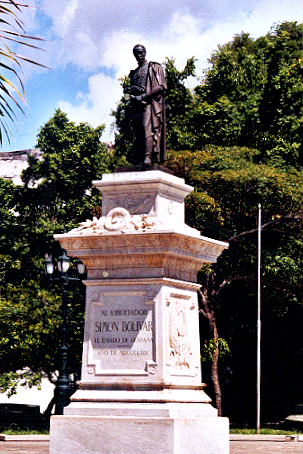
Ciudad Bolivar
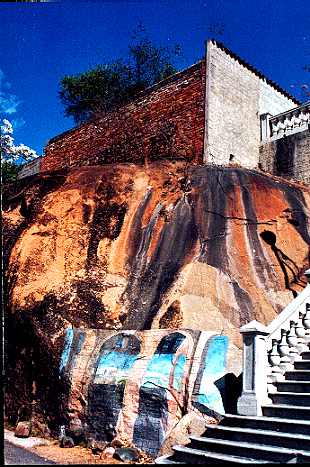
Venezuela 2001: The starting point of an unforgettable trip with my best friend Maria! Our adventure began with a complete change of pace and an absolutely mammoth transit.
No Break in Paradise: From Frankfurt to Ciudad Bolívar in Continuous Transit
After completing the long direct flight from Frankfurt to Caracas, the last thing on our minds was checking in and taking it easy. No, the true backpacker lifestyle means powering right through. We grabbed our backpacks at the terminal and immediately hopped on the bus to Ciudad Bolívar.
Permanent transit to Ciudad Bolívar
After completing the long direct flight from Frankfurt to Caracas, the last thing on our minds was checking in and taking it easy. No, the true backpacker lifestyle means powering right through. We grabbed our backpacks at the terminal and immediately hopped on the bus to Ciudad Bolívar.
Facts about Ciudad Bolívar
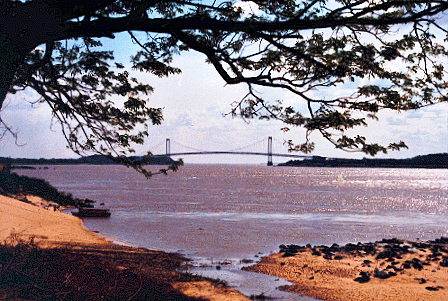
Historical name: Founded in 1764 as Angostura (Spanish for "narrows").
Name change: Renamed in 1846 in honor of the freedom fighter Simón Bolívar.
Historical name: Founded in 1764 as Angostura (Spanish for "narrows").
Name change: Renamed in 1846 in honor of the freedom fighter Simón Bolívar.
Geography: Situated at a distinctive narrow point of the mighty Orinoco River.
Invention: Home to the world-famous bar classic, Angostura bitters.
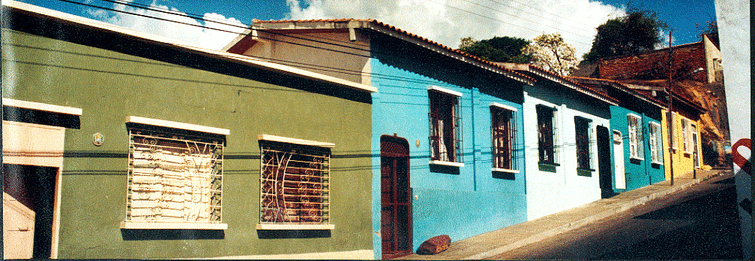
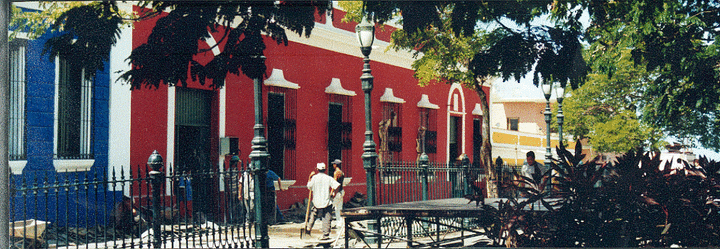
Colonial charm: Known for a colorful, well-preserved historic old town (Casco Histórico).
Invention: Home to the world-famous bar classic, Angostura bitters.
Colonial charm: Known for a colorful, well-preserved historic old town (Casco Histórico).
Waterfront promenade: The Paseo Orinoco offers kilometers of walking paths right along the river.
Landmark: The Puente de Angostura, one of South America's most important suspension bridges.
Las Cascatas de Canaima
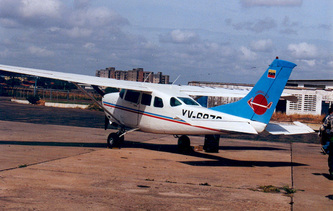
From Ciudad Bolívar, we were set to continue to the breathtaking Cascadas de Canaima. Little did we know that the real thrill awaited us not at the waterfall, but on the airstrip.
Overlanding to Canaima
As airport employees, Maria and I know exactly how meticulously the balance between weight, luggage, and fuel must be calculated. However, what we encountered while boarding our small Cessna was pure Venezuelan slapstick. The weight distribution went like this:
Cockpit: Maria got to take the seat right up front next to the pilot (or was forced to).
Back seat: I was squeezed in at the very back alongside a five-year-old child.
Luggage net: A gigantic suitcase—weighing an estimated 100 kilos—loomed right next to our heads.
The icing on the cake: The child’s mother tipped the scales at a hefty 200 kilos, meaning she arguably weighed more than the pilot and the Cessna combined. But the pilot is carrying a good 200 kg by himself.
Nose up, head out! Our absolutely bottomless Cessna flight
We were hopelessly and criminally overloaded. This had an absolutely absurd consequence: due to the extreme weight in the tail, the plane’s nose pitched up so steeply during takeoff that the pilot couldn't see a thing through the windshield! To have even the slightest sense of orientation during departure, he actually had to stick his head out the side window to the left—a truly comical sight.
As airport employees, Maria and I know exactly how meticulously the balance between weight, luggage, and fuel must be calculated. However, what we encountered while boarding our small Cessna was pure Venezuelan slapstick. The weight distribution went like this:
Cockpit: Maria got to take the seat right up front next to the pilot (or was forced to).
Back seat: I was squeezed in at the very back alongside a five-year-old child.
Luggage net: A gigantic suitcase—weighing an estimated 100 kilos—loomed right next to our heads.
The icing on the cake: The child’s mother tipped the scales at a hefty 200 kilos, meaning she arguably weighed more than the pilot and the Cessna combined. But the pilot is carrying a good 200 kg by himself.
Nose up, head out! Our absolutely bottomless Cessna flight
We were hopelessly and criminally overloaded. This had an absolutely absurd consequence: due to the extreme weight in the tail, the plane’s nose pitched up so steeply during takeoff that the pilot couldn't see a thing through the windshield! To have even the slightest sense of orientation during departure, he actually had to stick his head out the side window to the left—a truly comical sight.
We were hopelessly and criminally overloaded. This had an absolutely absurd consequence: due to the extreme weight in the tail, the plane's nose pitched up so steeply during takeoff that the pilot couldn't see a thing through the windshield! To have even the slightest sense of orientation during departure, he actually had to stick his head out the side window to the left—a truly comical sight.
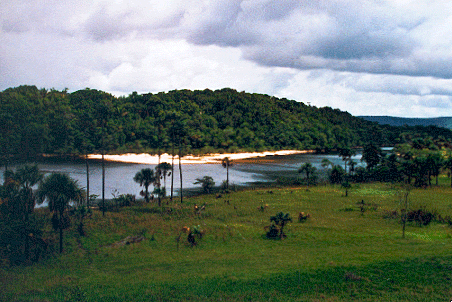
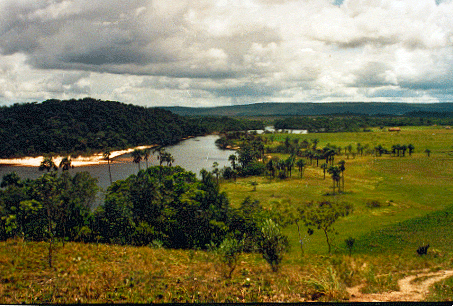
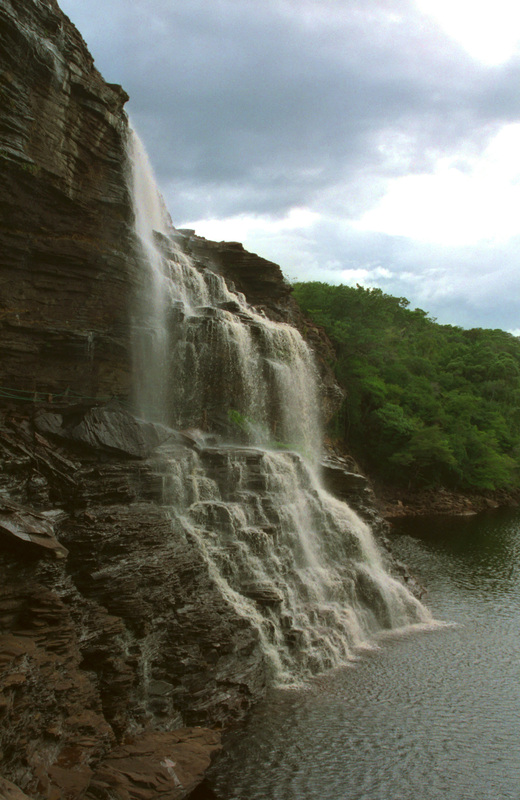
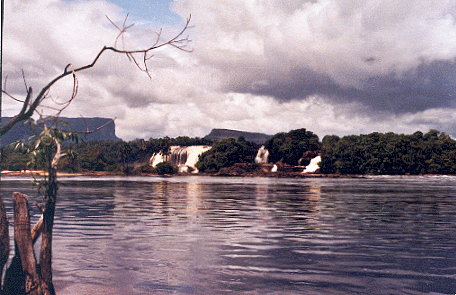
"Saltos Hacha"- on the first day of our trip -
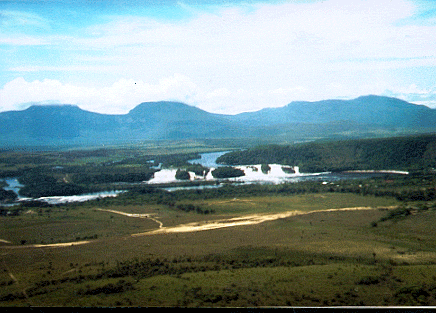
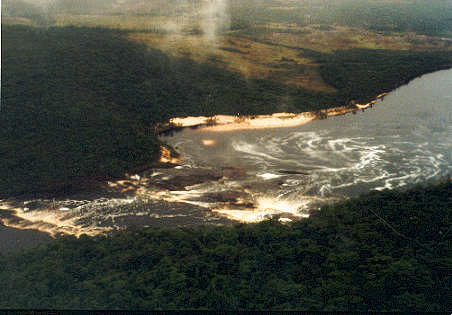
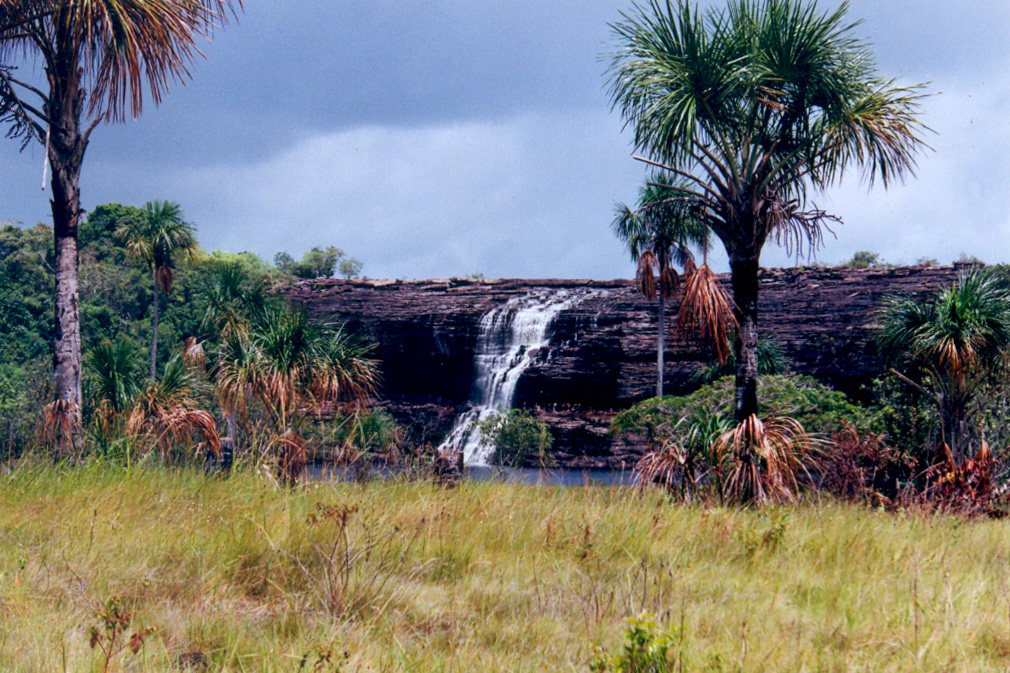
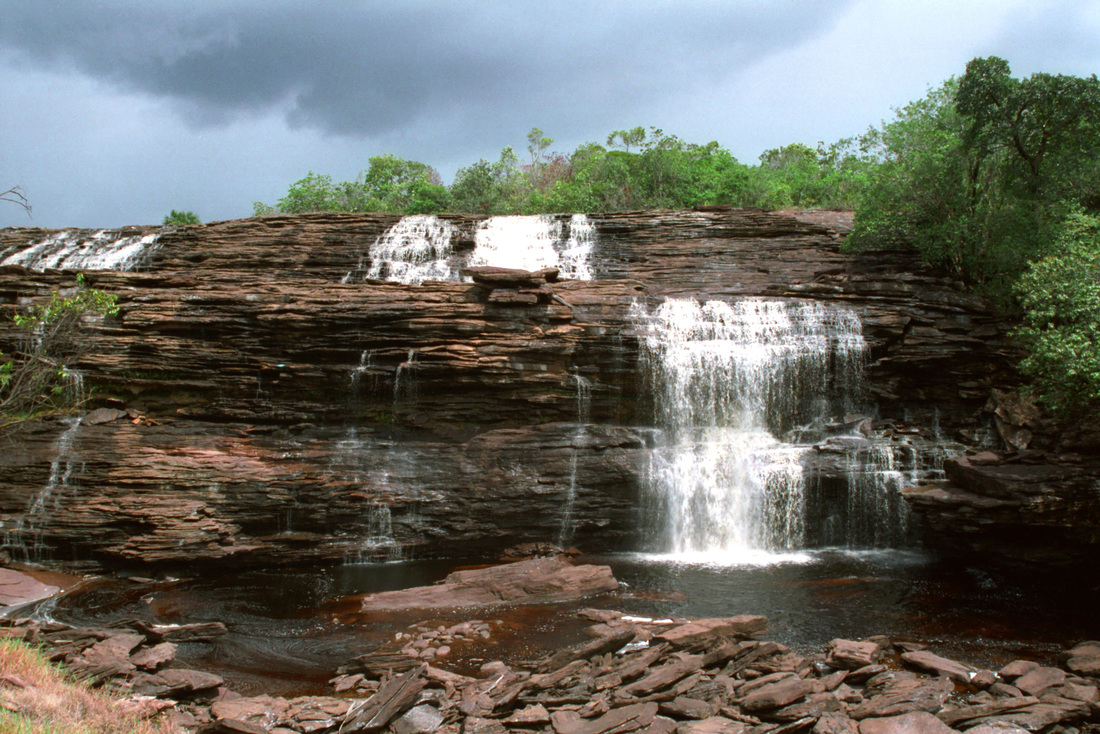
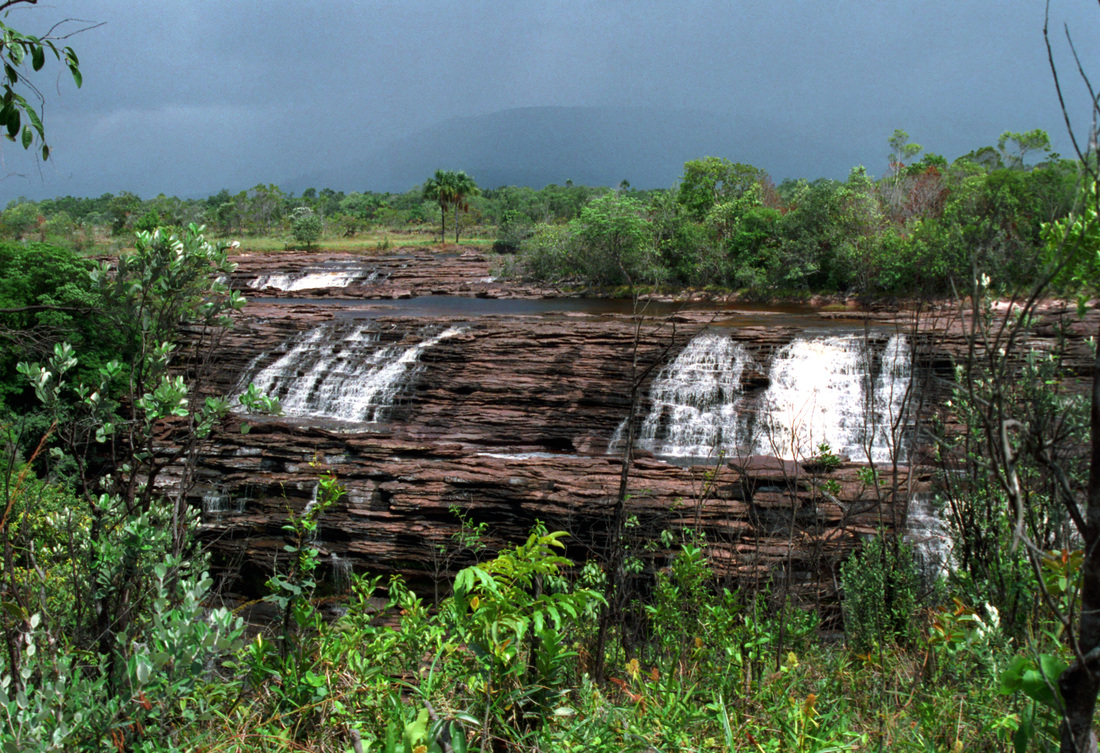
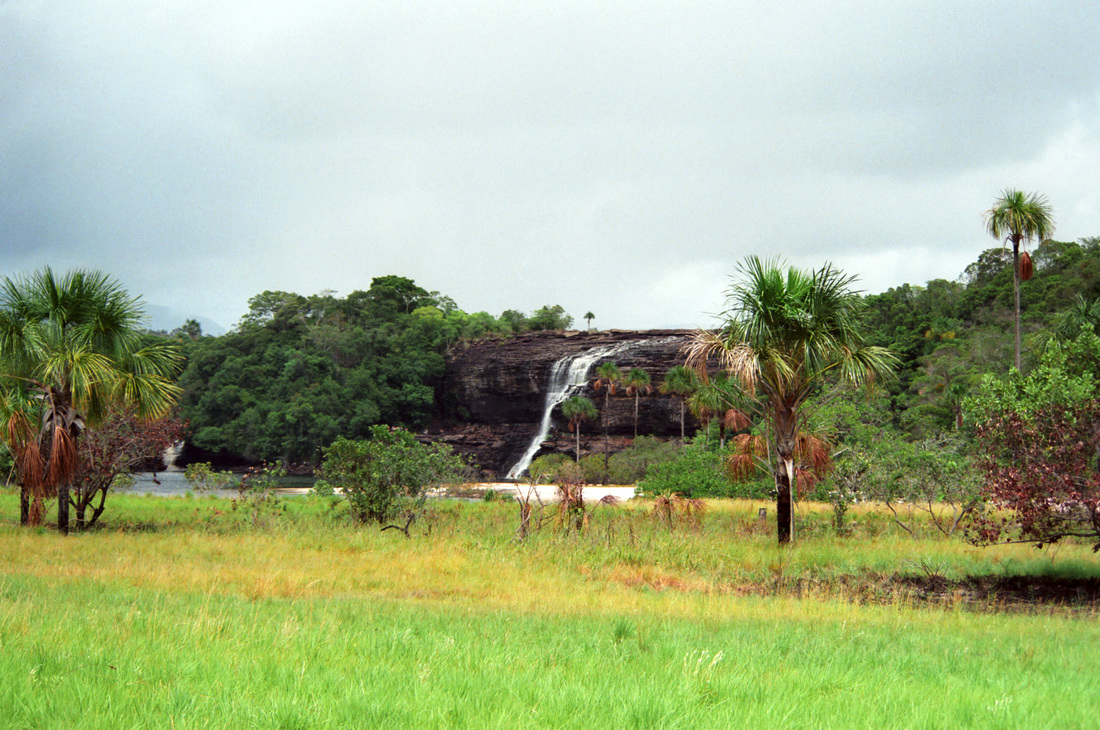
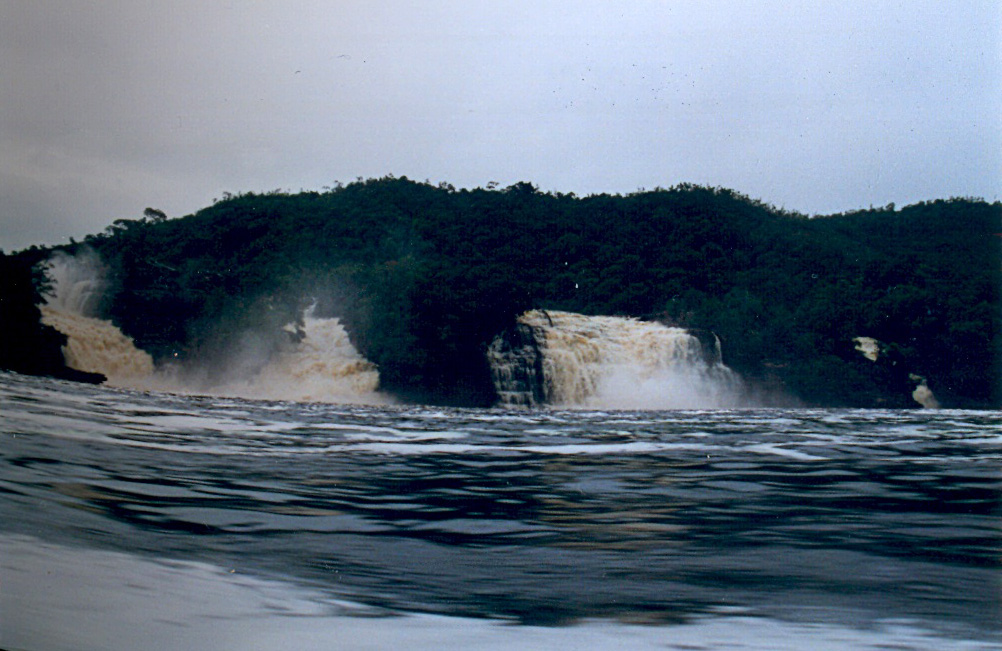
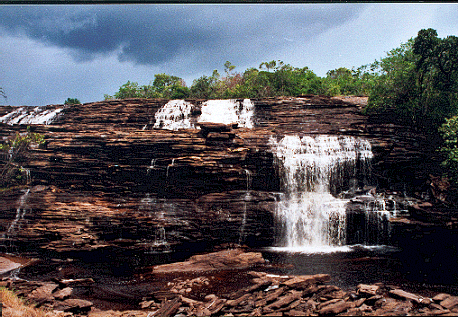
After surviving the bumpy flight, our first order of business was to catch our breath and enjoy nature. Upon our arrival, however, the famous Salto El Hacha waterfalls showed a rather shy side—at that moment, the water flow was extremely low.
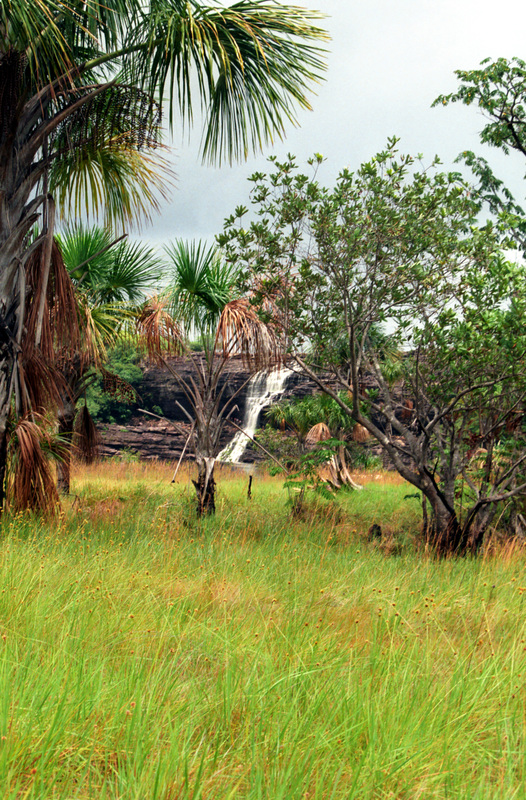
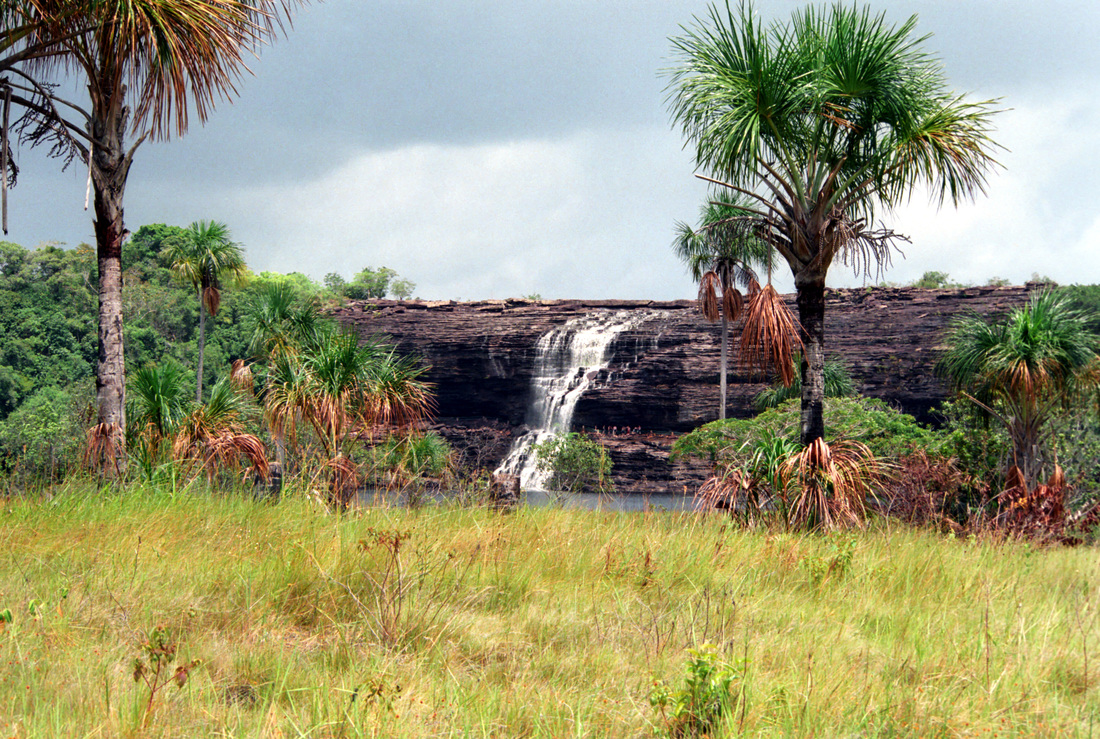
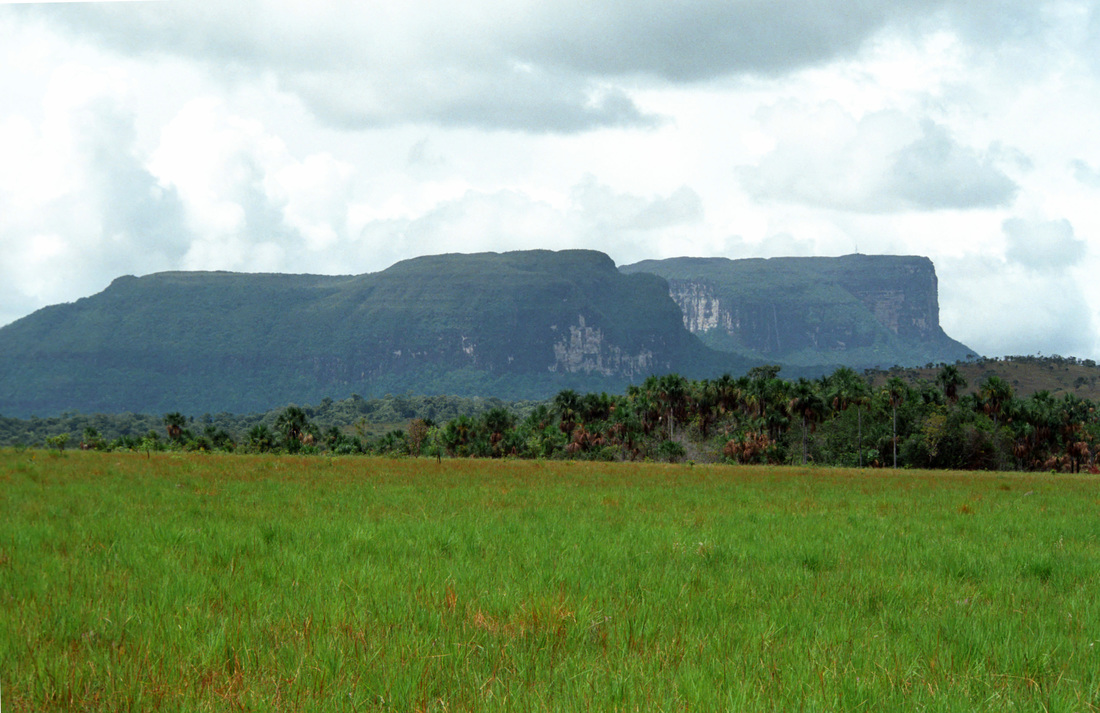
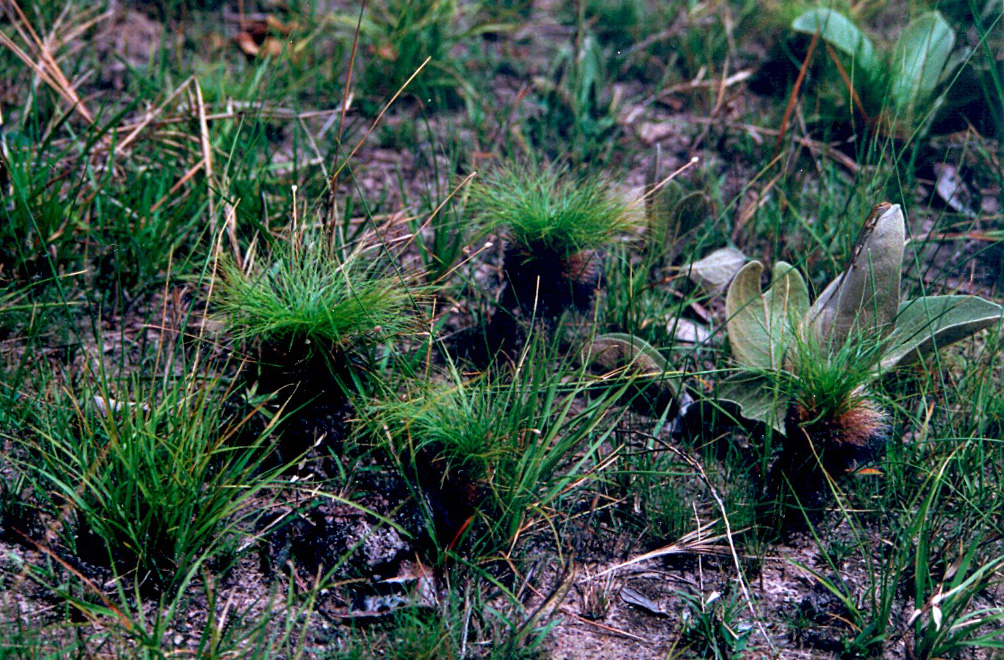
"El Sapito" waterfalls "Tepuis", the name of the flat-topped hills
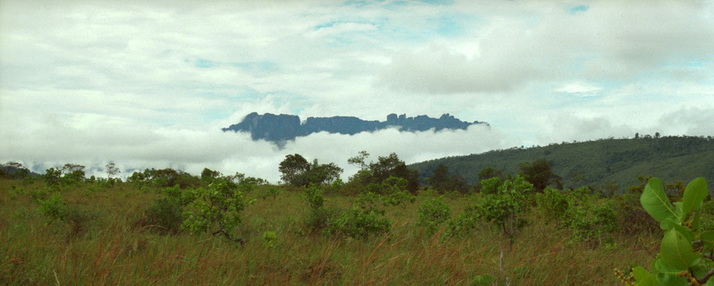
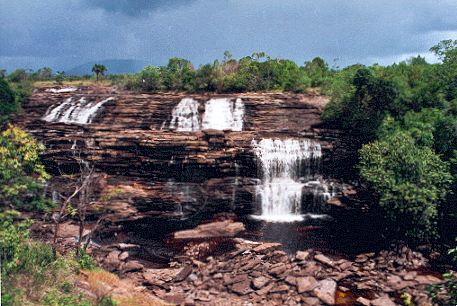
From Trickle to Force of Nature: The Transformation of Salto El Hacha
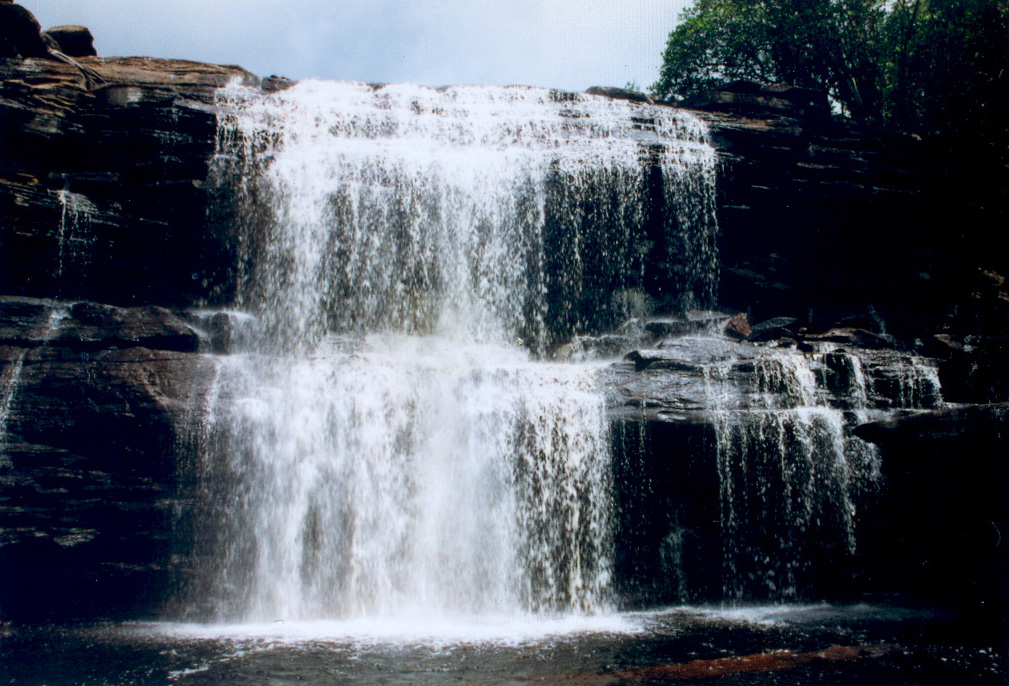
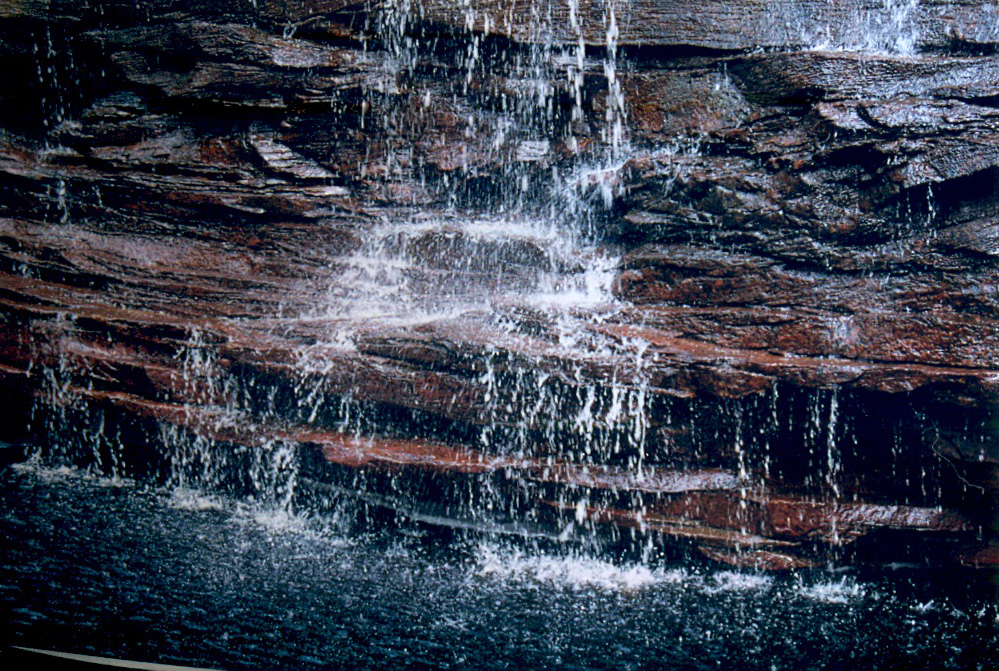
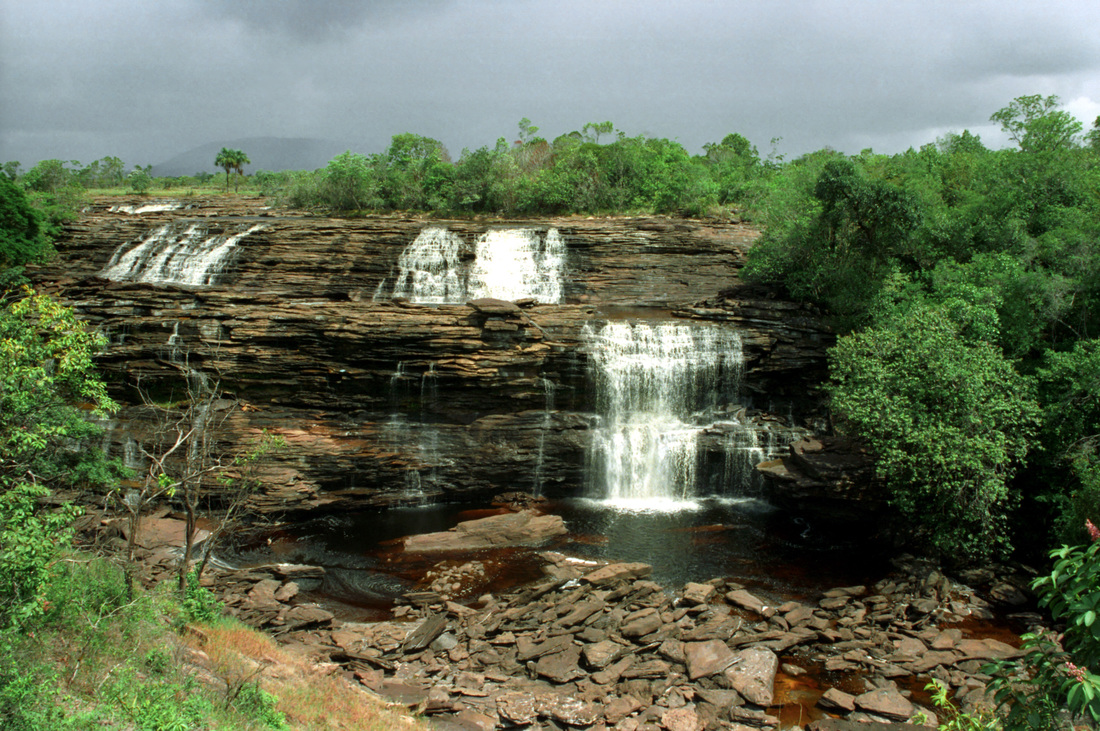
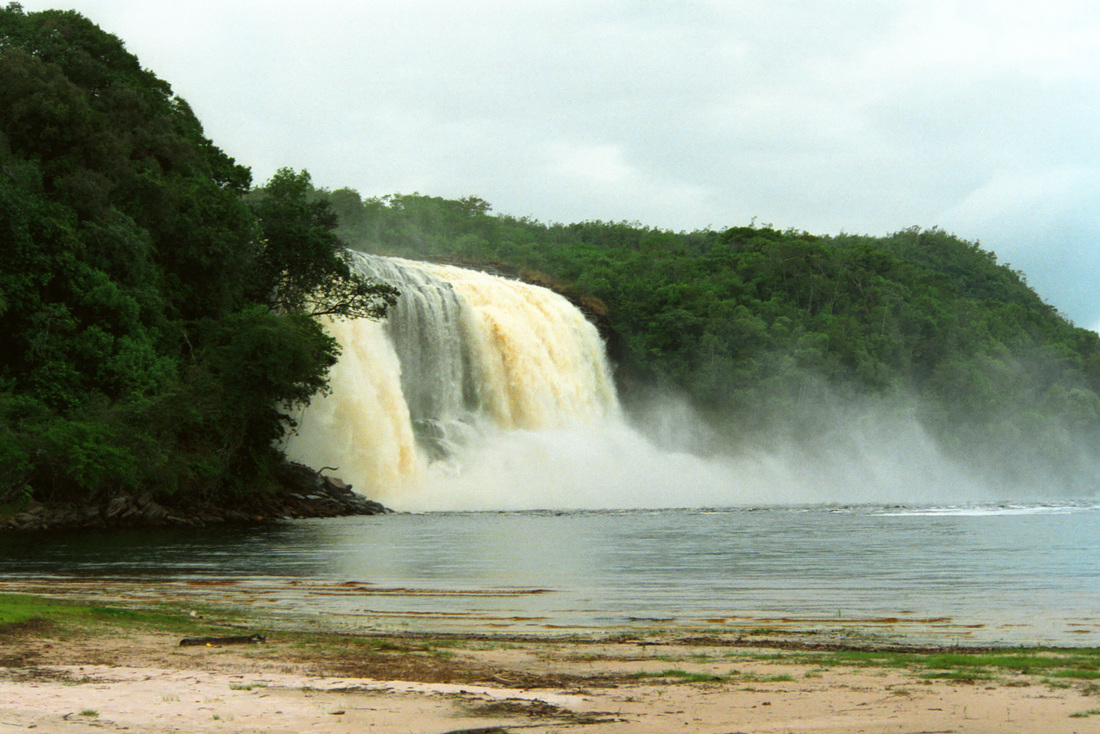
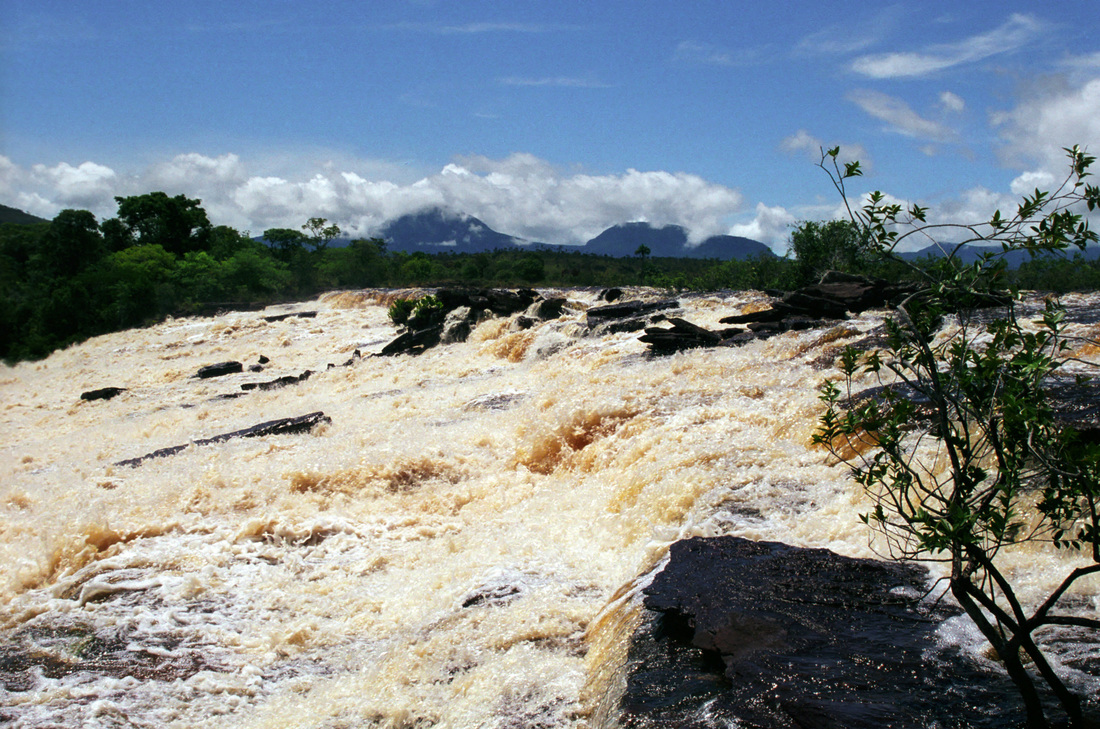
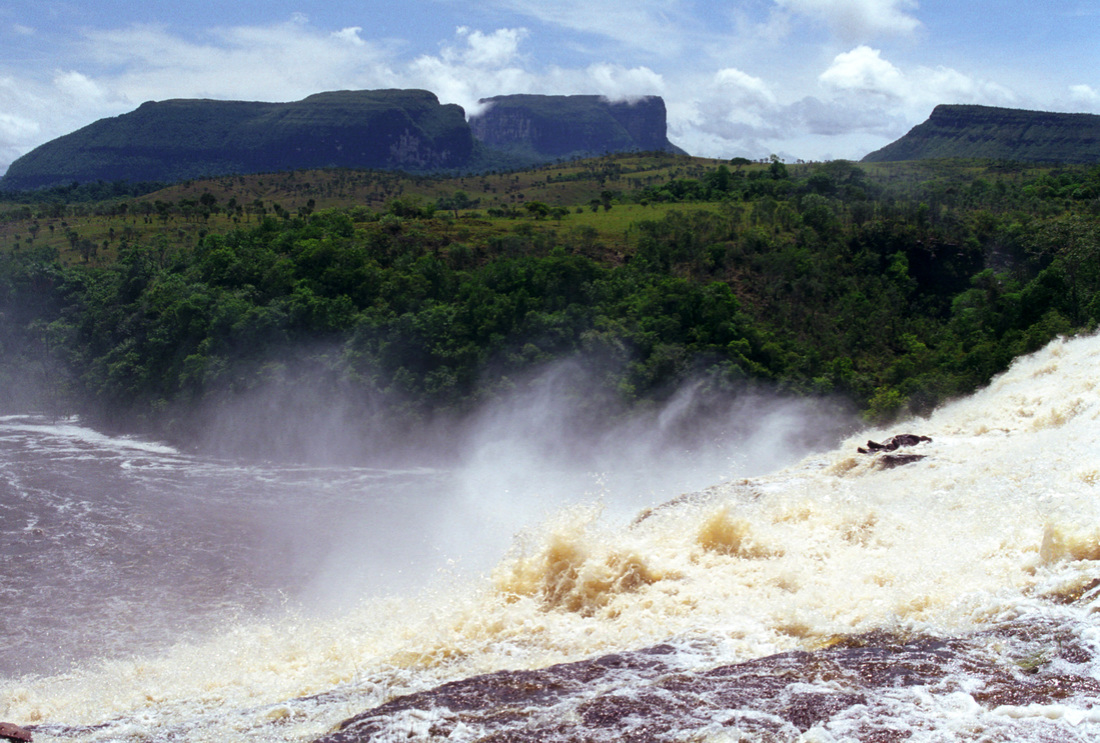
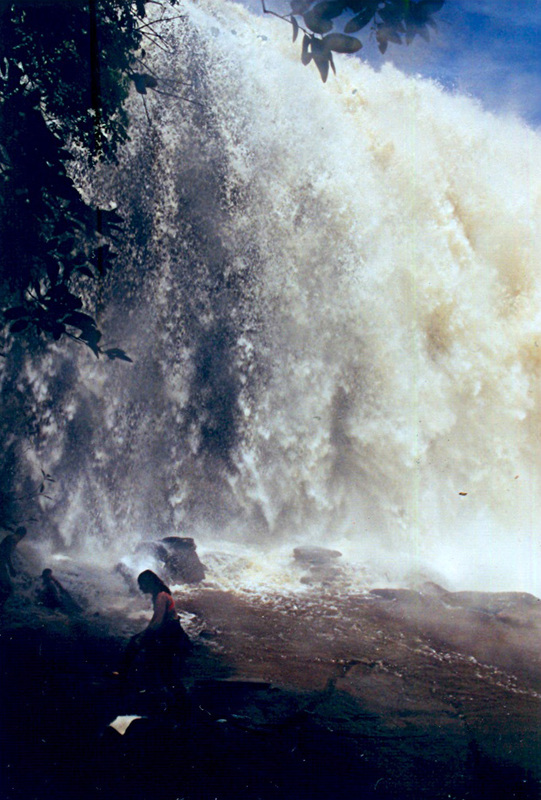
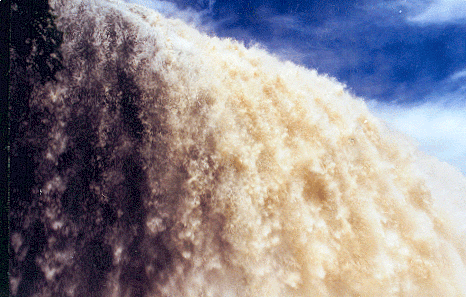
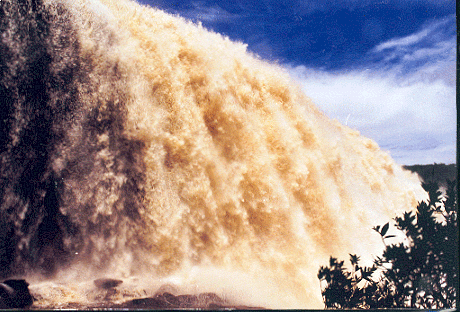
However, that was to change rapidly. Over the next three nights, the heavens above the jungle opened up, and the rain poured down in torrents. When we returned to the falls on the third day, we could hardly believe our eyes: the landscape had been transformed dramatically. Where gentle rivulets had previously trickled, unimaginable, massive volumes of roaring water now thundered into the depths. It was the sheer, deafening power of nature!
"Salto el Sapo" & "Saltos Hacha" on our third day (it had rained very heavily every night)—and the differences are striking!!!
The seal dilemma of Canaima
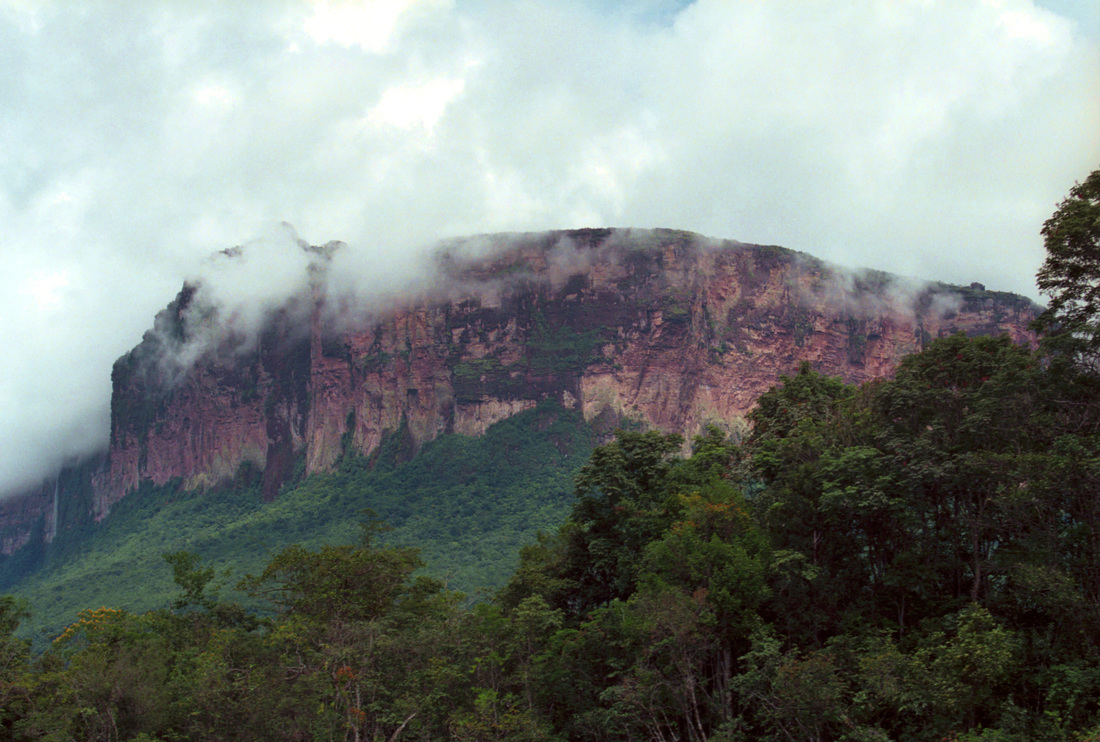
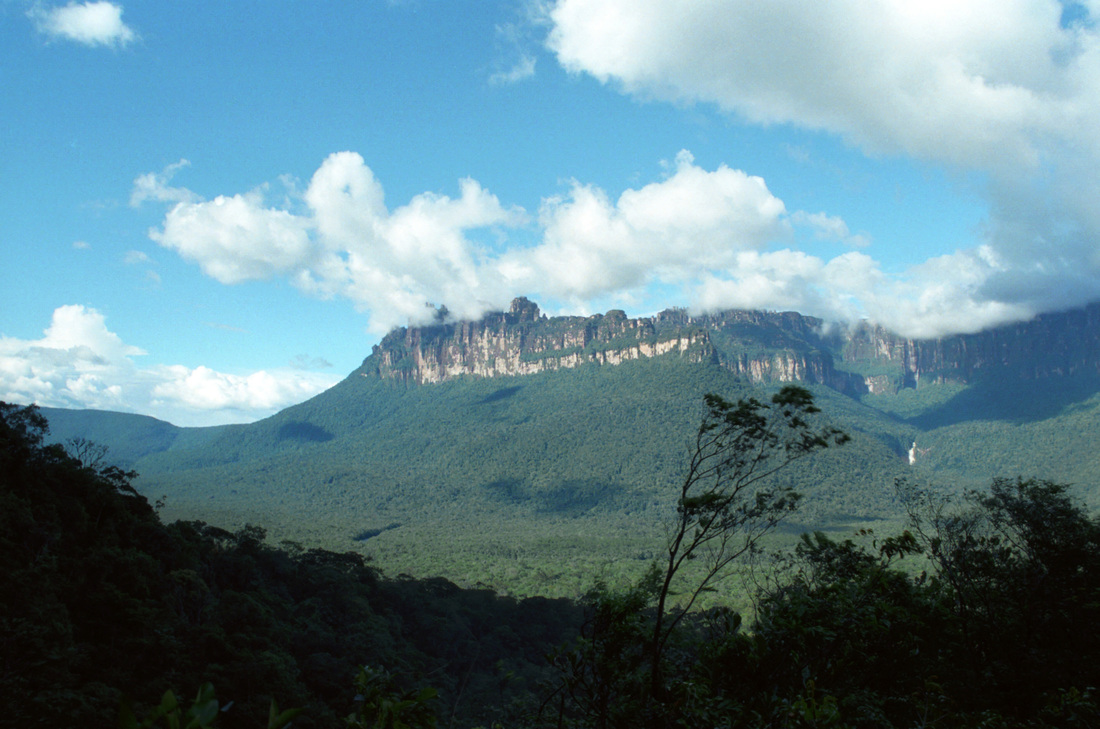
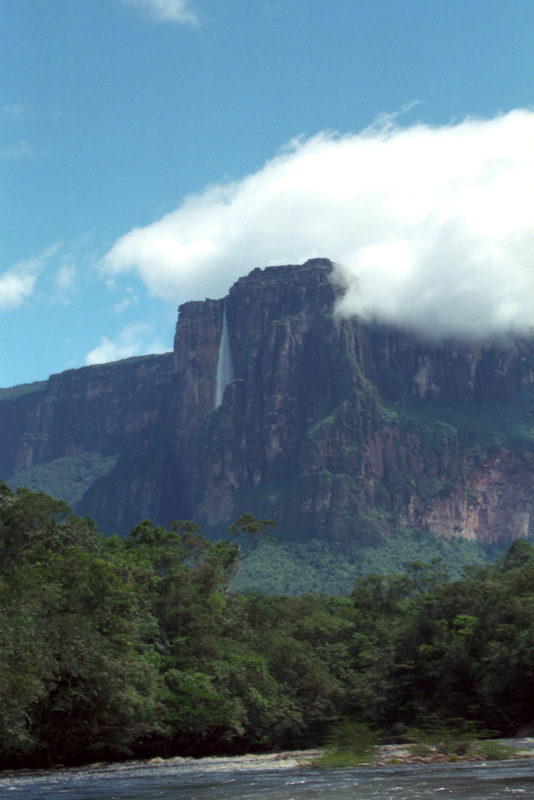
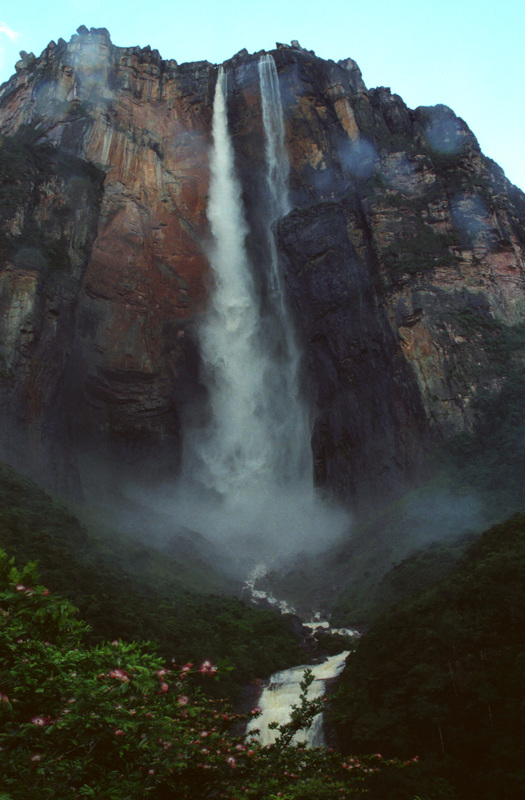
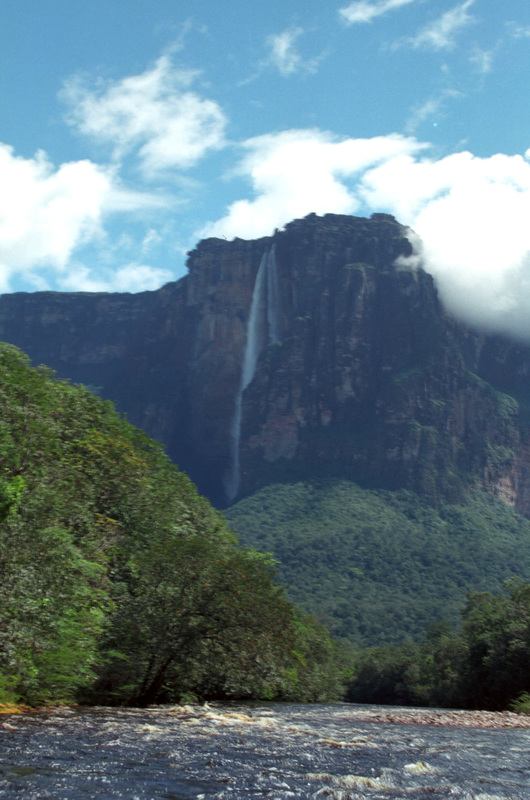
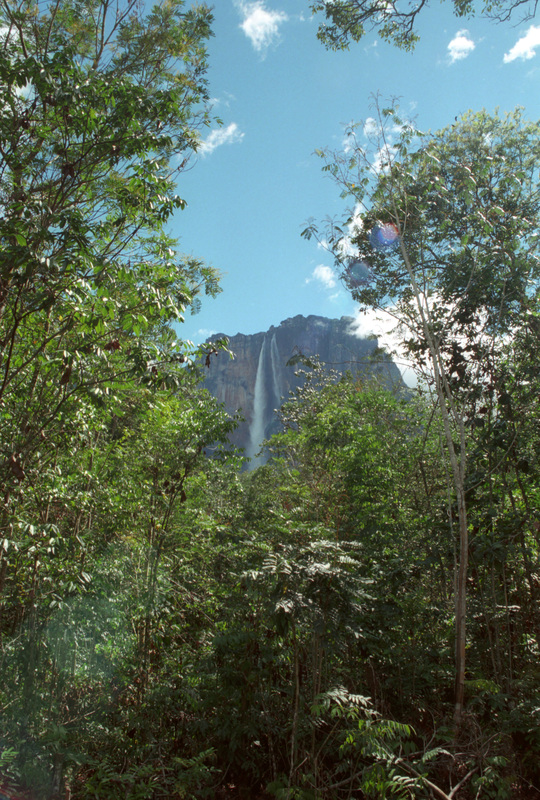
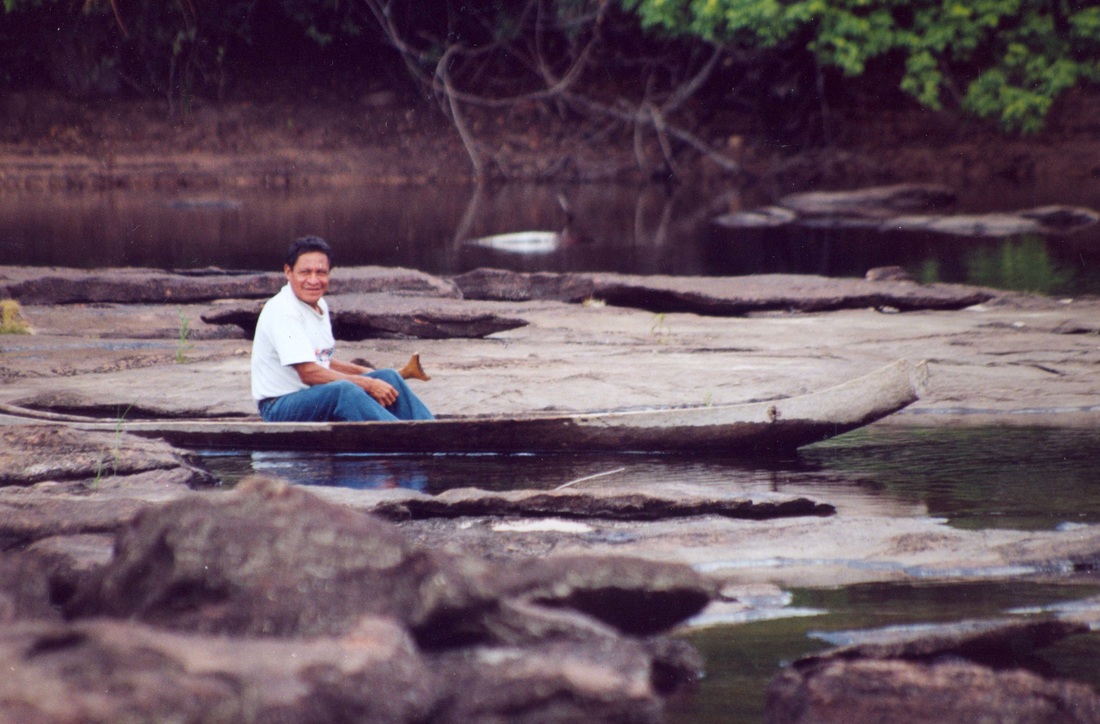
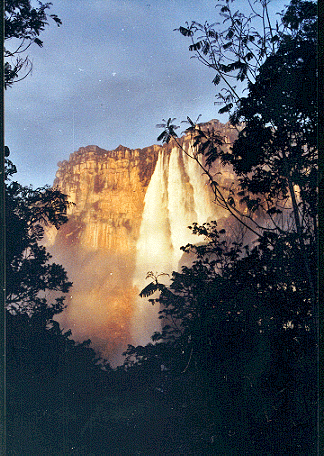
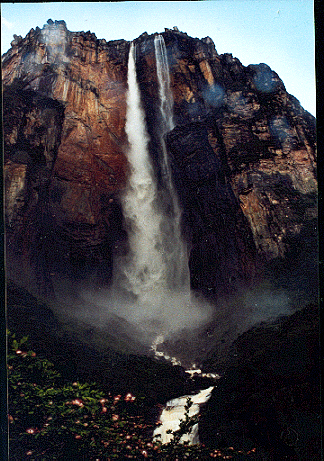
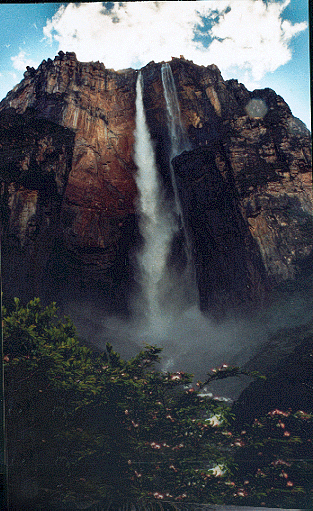
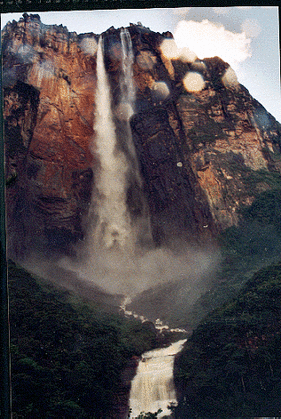
The next adventure wasn't long in coming, as we set off on an expedition to the legendary Angel Falls (Salto Ángel)—the highest free-falling waterfall on Earth. There are no roads to these sites. You can only reach the base camp (as I and Maria did) by taking an adventurous, hours-long journey upstream through the jungle in local dugout canoes. We spent the night at a camp right near the jungle. It is standard practice there to sleep in traditional hammocks; for me, this was no problem at all, but for my best friend Maria, it was sheer torture.
You see, Maria is a dedicated belly sleeper. Anyone who has ever tried to roll onto their stomach in a hammock knows how that ends: she was completely contorted, totally unable to move, and—honestly—looked just like a stranded seal! We laughed until we cried. However, our local guides had huge hearts (and plenty of sympathy): right in the middle of the deepest, most rugged jungle, they miraculously managed to get Maria a real, proper mattress. Now that’s what I call five-star luxury in the rainforest!
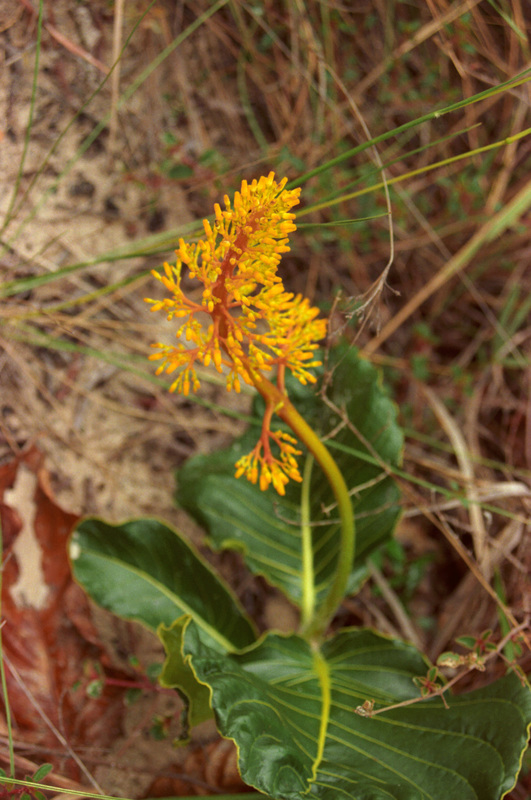
We were absolutely delighted with "Grandfather's little tree".
La Cascata de los Angeles (almost 1,000-meter vertical drop!!!)
- World record: With a total height of 979 meters, it is the undisputed highest free-falling waterfall on Earth.
- The namesake: It was not named after celestial angels, but after the US pilot Jimmie Angel, who rediscovered the waterfall from the air in 1933 while prospecting for gold.
- Indigenous name: The native Pemón people call it Kerepakupai Vená, which translates roughly to "place of the deepest jump."
- The table mountain: Water cascades down the sheer rock faces of Auyán-Tepui. In the indigenous language, the name of this vast, mystical table mountain means "Devil's Mountain."
- UNESCO World Heritage Site: The waterfall lies deep within the rugged Canaima National Park, which is a UNESCO World Natural Heritage Site due to its unique geology.
Turbulence on the Jungle Express
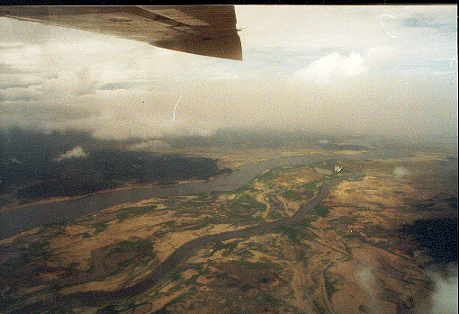
After the unforgettable days at the waterfalls, the return flight finally lay ahead of us. Anyone who thought the first flight couldn't be topped was in for a rude awakening. Waiting for us—as was only to be expected—was another Cessna.
Once again, the weight distribution was an absolute adventure in itself. This time, it wasn't the mother but the pilot himself who tipped the scales at an estimated—and impressive—200 kilos. To top it all off, four other backpackers—along with their massive, incredibly heavy trekking packs—were crammed into the tiny cabin alongside Maria and me. Once again, the aircraft was teetering right on the edge of its absolute maximum weight limit.
However, the real difference compared to the outbound flight only became apparent once we were in the air. Tropical winds gave our small prop plane a real shaking. While Maria and I—thanks to our airport experience—had stomachs that were fairly resistant to the weather, three of our fellow passengers who had just boarded fared absolutely disastrously. The violent up-and-down motion caused by air pockets wreaked such havoc on their stomachs that the return flight turned into a rather unpleasant and noisy affair.
Everyone was glad when we finally arrived. What an unforgettable finale to our jungle trip!
After the unforgettable days at the waterfalls, the return flight finally lay ahead of us. Anyone who thought the first flight couldn't be topped was in for a rude awakening. Waiting for us—as was only to be expected—was another Cessna.
Once again, the weight distribution was an absolute adventure in itself. This time, it wasn't the mother but the pilot himself who tipped the scales at an estimated—and impressive—200 kilos. To top it all off, four other backpackers—along with their massive, incredibly heavy trekking packs—were crammed into the tiny cabin alongside Maria and me. Once again, the aircraft was teetering right on the edge of its absolute maximum weight limit.
However, the real difference compared to the outbound flight only became apparent once we were in the air. Tropical winds gave our small prop plane a real shaking. While Maria and I—thanks to our airport experience—had stomachs that were fairly resistant to the weather, three of our fellow passengers who had just boarded fared absolutely disastrously. The violent up-and-down motion caused by air pockets wreaked such havoc on their stomachs that the return flight turned into a rather unpleasant and noisy affair.
Everyone was glad when we finally arrived. What an unforgettable finale to our jungle trip!
Los Llanos
Facts about Los Llanos and its wildlife:
The landscape: Los Llanos (Spanish for "the plains") is a vast, sprawling savanna landscape that stretches across Venezuela and Colombia. It undergoes extreme fluctuations, alternating between months of drought and massive flooding during the rainy season.
An animal paradise: The region is considered one of the best areas in the world for wildlife viewing (often referred to as the "Pantanal of Venezuela").
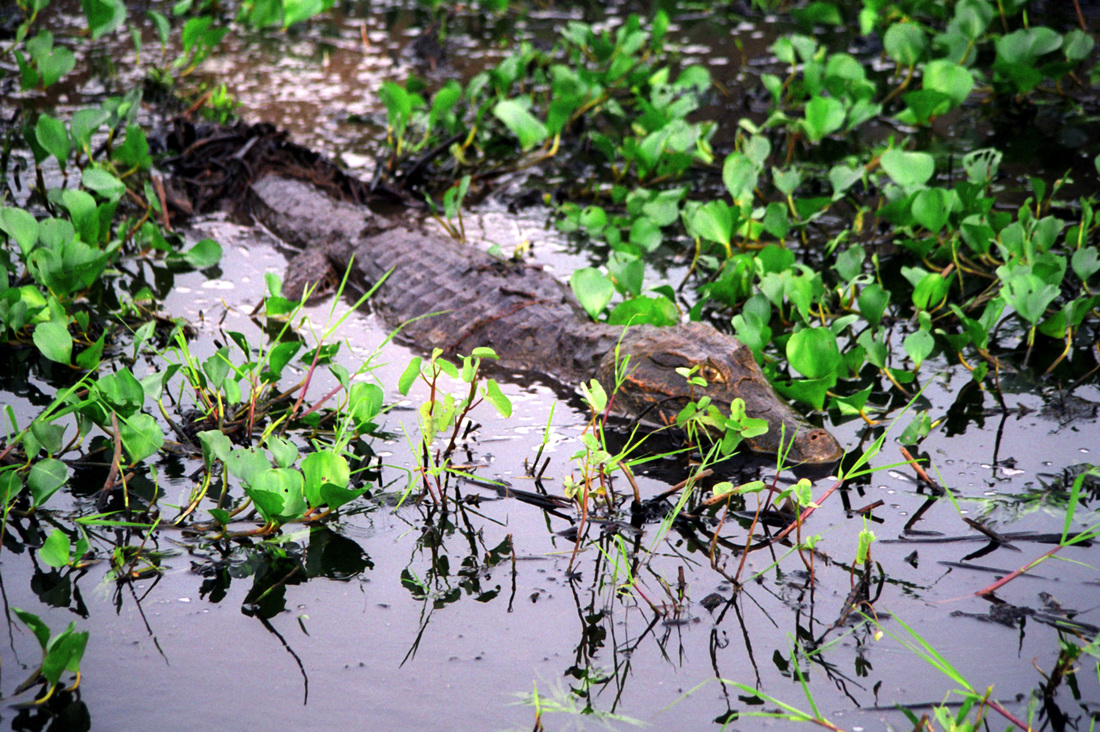
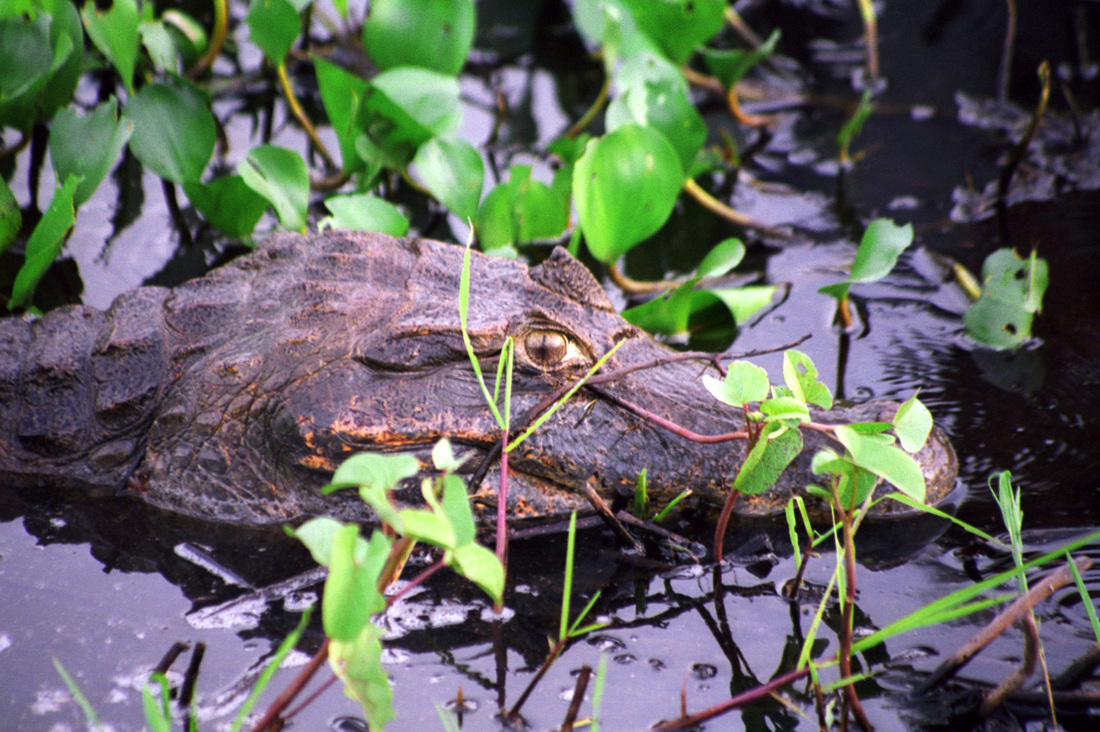
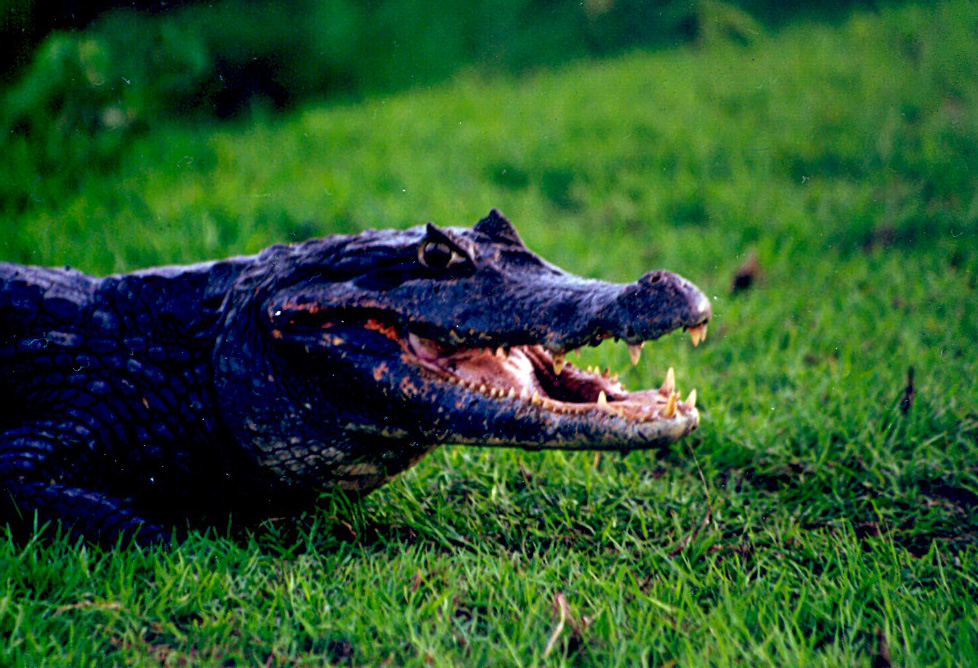
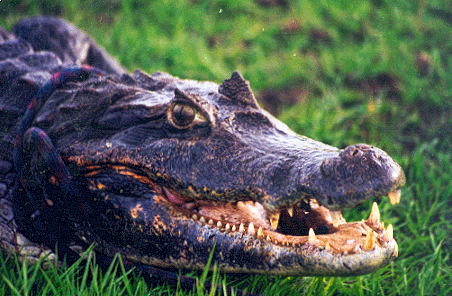
The Alligators: The rivers and lagoons teem with spectacled caimans and the rare, giant Orinoco crocodile.
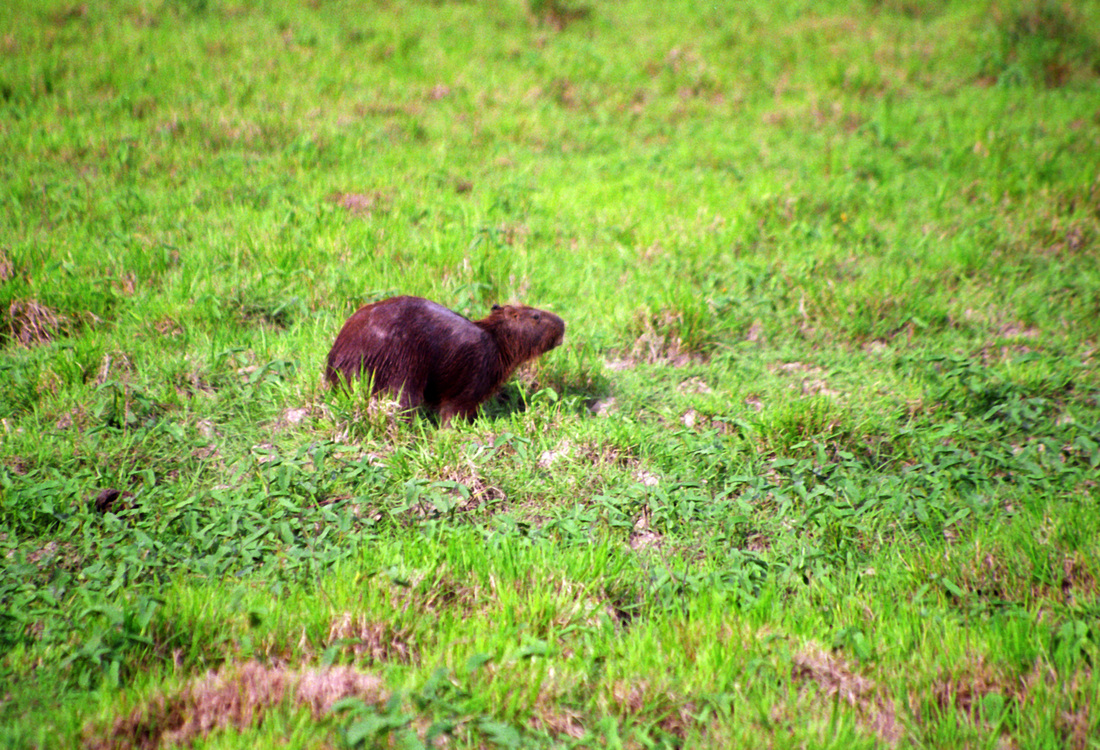
The giant hamsters: You are absolutely right! The "monster hamsters" are called capybaras (known in German as *Wasserschweine* or by the local dialect name *Chigüires*). They are indeed the largest living rodents on Earth.
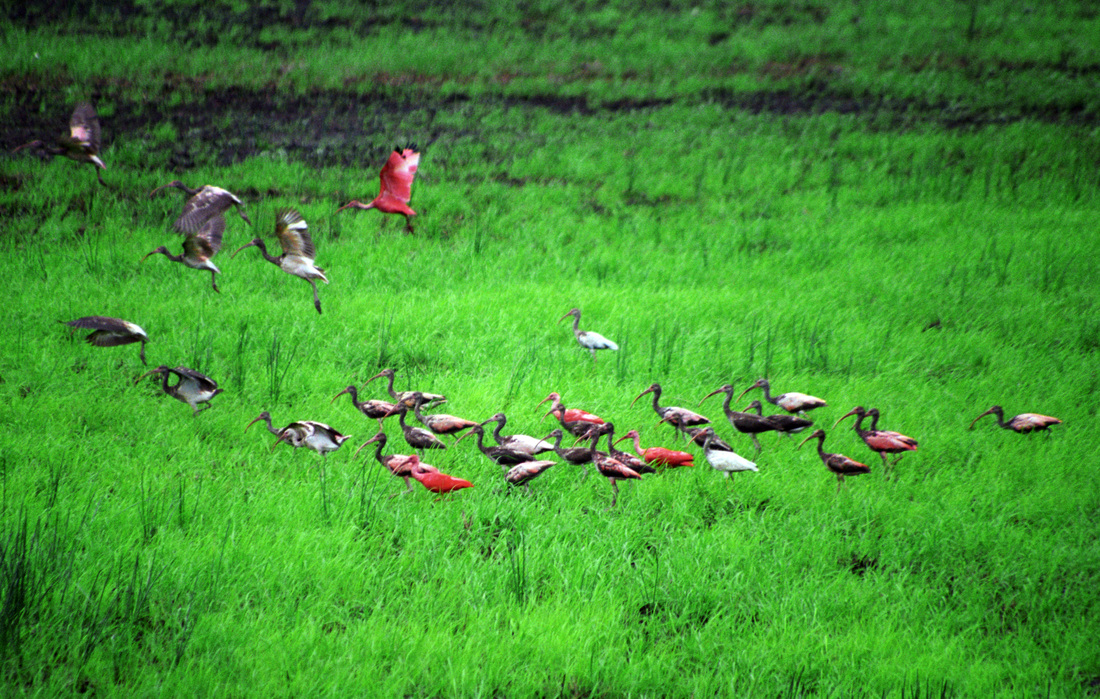
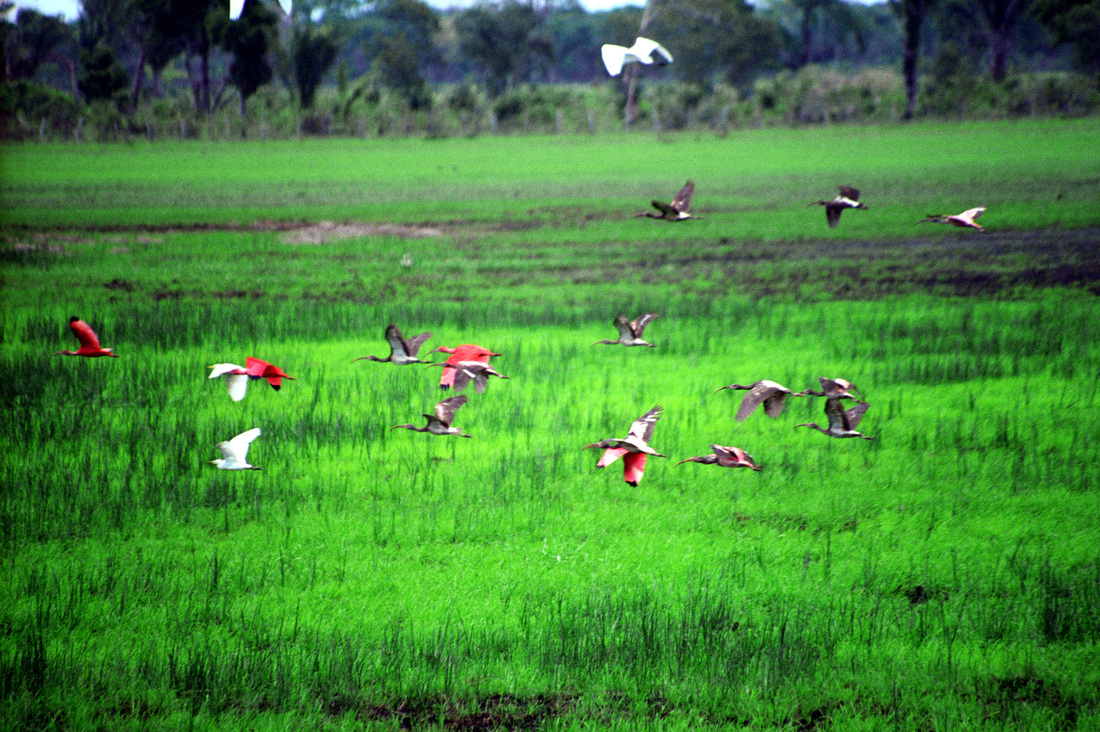
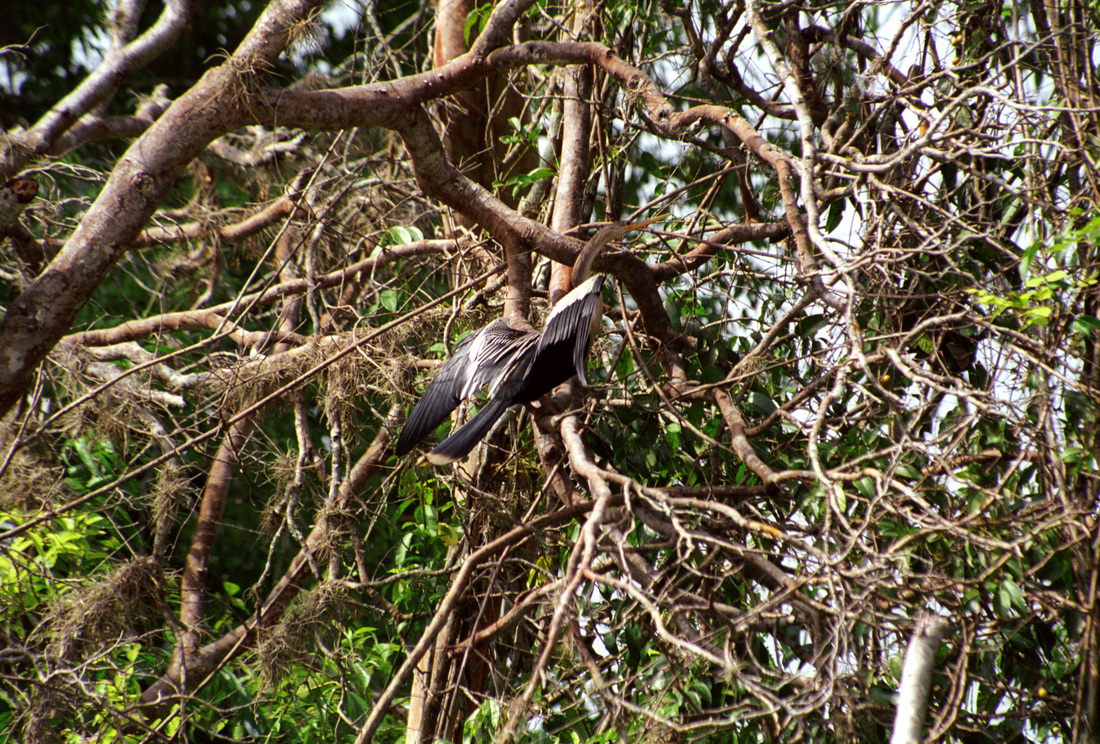
A bird paradise: With hundreds of bird species (such as the scarlet ibis, giant storks, and countless herons), the region is an absolute dream for ornithologists.
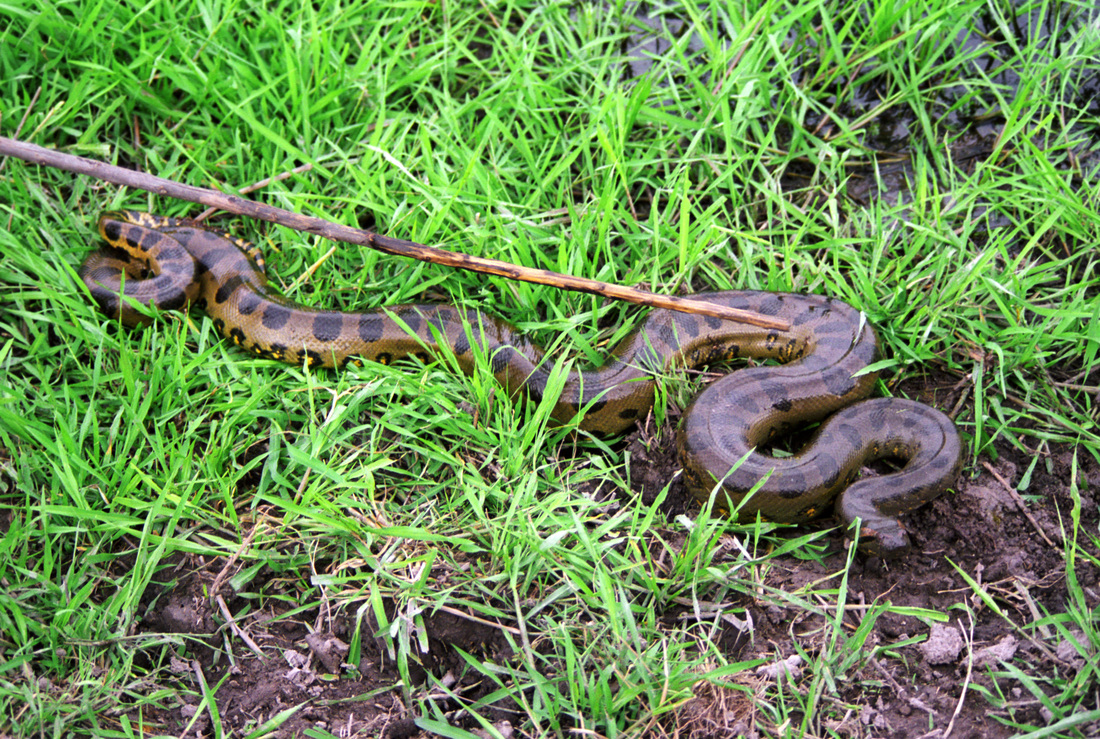
The Anacondas: The wetlands are home to the green anaconda, one of the heaviest and largest constrictor snakes in the world.
The landscape: Los Llanos (Spanish for "the plains") is a vast, sprawling savanna landscape that stretches across Venezuela and Colombia. It undergoes extreme fluctuations, alternating between months of drought and massive flooding during the rainy season.
An animal paradise: The region is considered one of the best areas in the world for wildlife viewing (often referred to as the "Pantanal of Venezuela").
The Alligators: The rivers and lagoons teem with spectacled caimans and the rare, giant Orinoco crocodile.
The giant hamsters: You are absolutely right! The "monster hamsters" are called capybaras (known in German as *Wasserschweine* or by the local dialect name *Chigüires*). They are indeed the largest living rodents on Earth.
A bird paradise: With hundreds of bird species (such as the scarlet ibis, giant storks, and countless herons), the region is an absolute dream for ornithologists.
The Anacondas: The wetlands are home to the green anaconda, one of the heaviest and largest constrictor snakes in the world.
Monster hamsters and raging beasts: Our animal-filled savanna trip
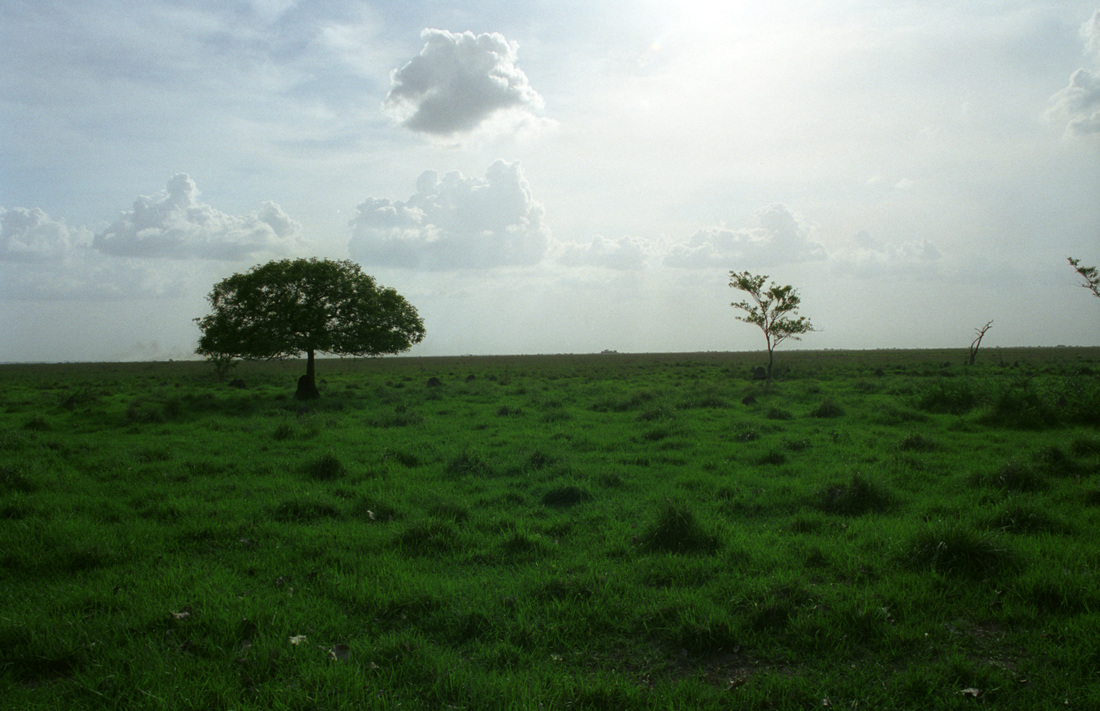
Our next destination was Los Llanos—a seemingly endless, wild savanna landscape considered a true wildlife paradise. And the wilderness did not disappoint: we were constantly amazed.
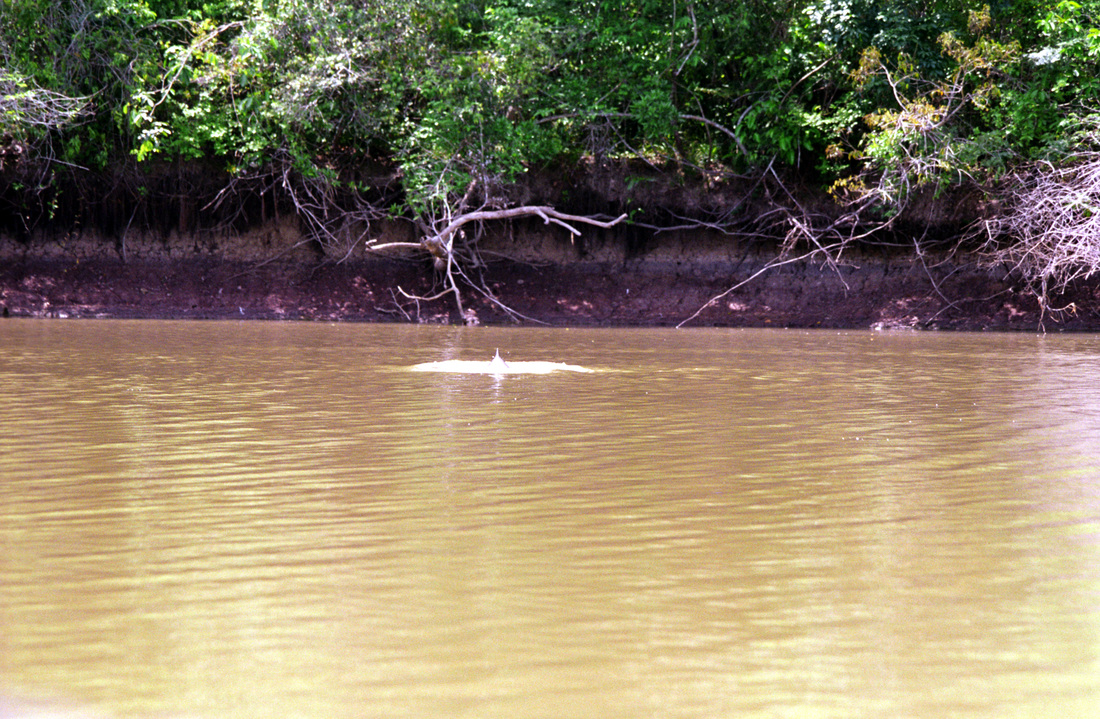
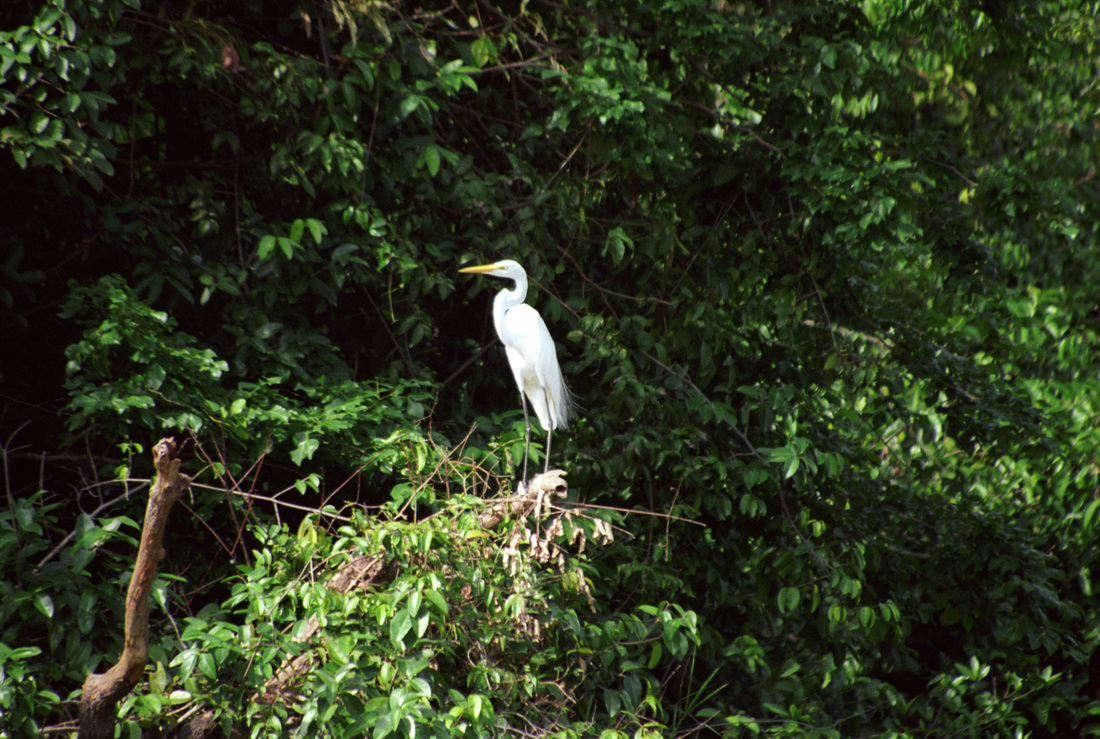
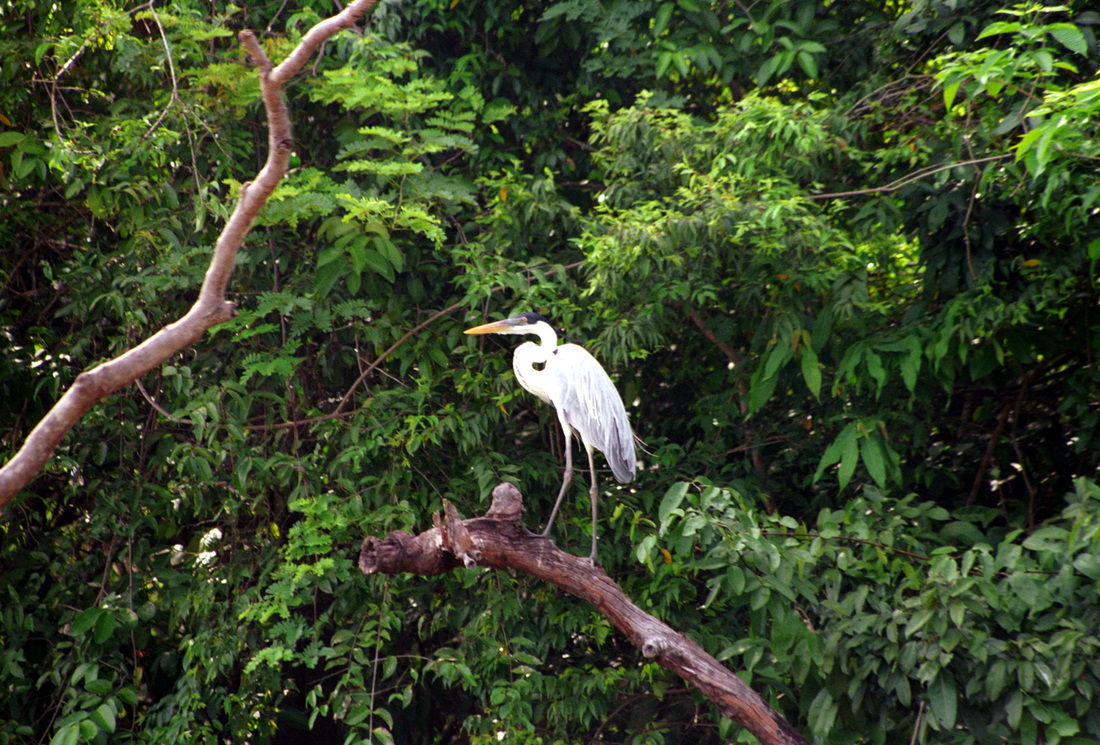
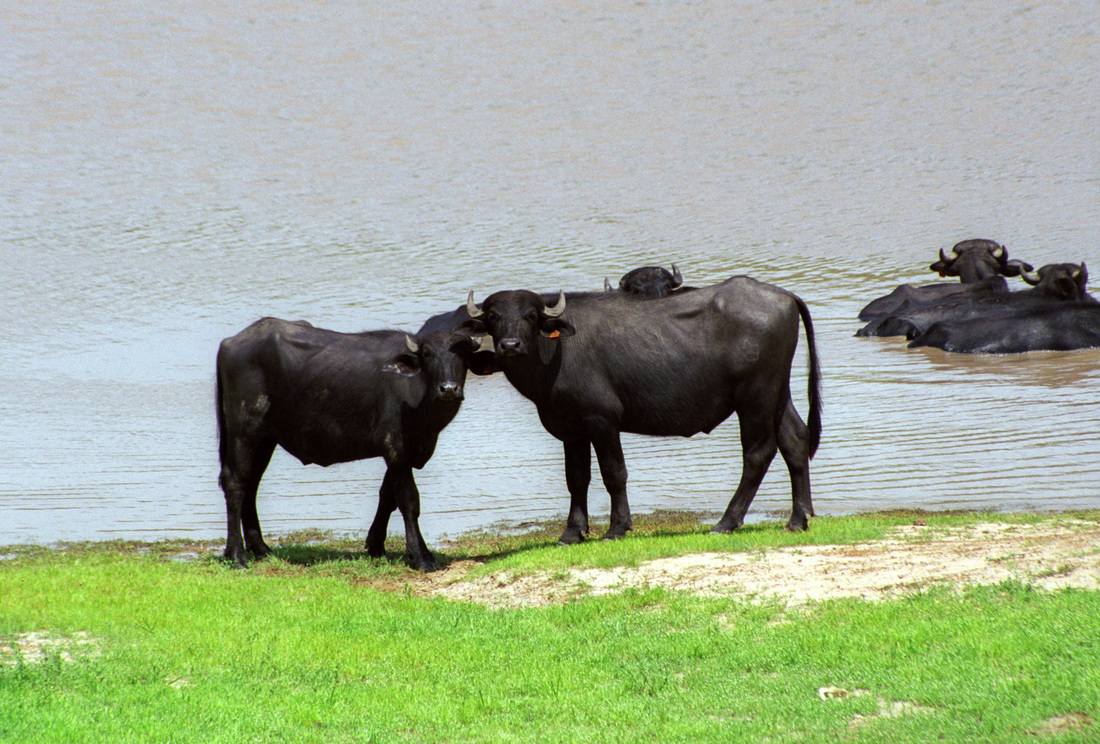
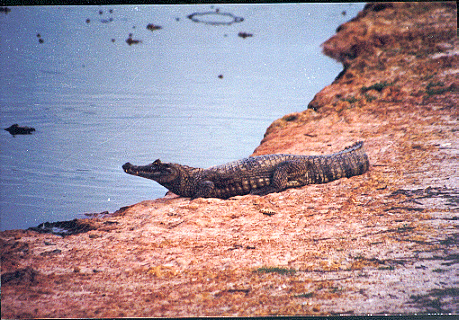
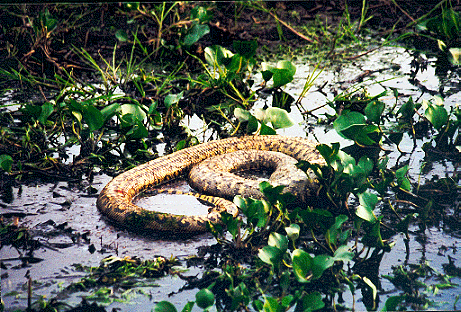
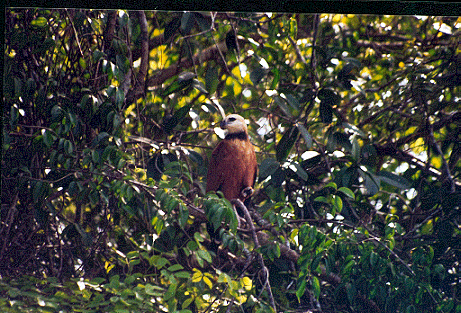
Life teemed everywhere. We saw huge alligators lurking sluggishly in the lagoons and even caught sight of a massive anaconda. But my personal highlight was the capybaras—those laid-back "monster hamsters" that are actually the world's largest rodents. On top of that, countless flocks of colorful birds crisscrossed the sky. Nature in its purest form!
Our next destination was Los Llanos—a seemingly endless, wild savanna landscape considered a true wildlife paradise. And the wilderness did not disappoint: we were constantly amazed.
Life teemed everywhere. We saw huge alligators lurking sluggishly in the lagoons and even caught sight of a massive anaconda. But my personal highlight was the capybaras—those laid-back "monster hamsters" that are actually the world's largest rodents. On top of that, countless flocks of colorful birds crisscrossed the sky. Nature in its purest form!
Fear in the Saddle: How the “Slowest Horse in Venezuela” Left Me Behind
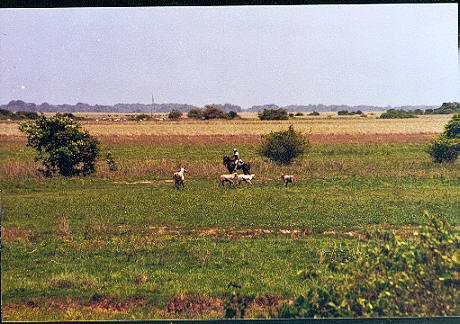
On the second day, a classic excursion was on the agenda: a guided horseback ride. The problem? I’ve been terrified of horses ever since I nearly fell off one when I was four. The whole group—guides included—knew about my phobia. But everyone tried to reassure me: "Don't worry, you'll get the slowest, laziest horse of the lot; nothing at all will happen!"
Well, fat chance! No sooner was I in the saddle than my supposed "sleepy nag" decided it had no intention of trotting along leisurely. The horse completely freaked out, whinnying wildly and tearing off with me at a full gallop! Terrified, I clung on for dear life as the animal raced across the savanna like a mad thing. The guides and Maria immediately sped up to catch me—but there was no chance; my horse was in full-on race mode and left everyone else in the dust.
The racing beast only slammed to a halt in front of a dense thicket of thorny bushes, where the others caught up with me, completely out of breath. Thank God I hadn't been hurt! But my trust in the animal kingdom was well and truly shattered for the day. I dismounted right then and there and walked the entire way back to camp—a trek of several kilometers. From sitting rigidly in the saddle for hours, frozen with fear, my backside was so sore by evening that I couldn't sit without pain for days. In any case, I’ve had my fill of horseback riding excursions for the next 20 years!
On the second day, a classic excursion was on the agenda: a guided horseback ride. The problem? I’ve been terrified of horses ever since I nearly fell off one when I was four. The whole group—guides included—knew about my phobia. But everyone tried to reassure me: "Don't worry, you'll get the slowest, laziest horse of the lot; nothing at all will happen!"
Well, fat chance! No sooner was I in the saddle than my supposed "sleepy nag" decided it had no intention of trotting along leisurely. The horse completely freaked out, whinnying wildly and tearing off with me at a full gallop! Terrified, I clung on for dear life as the animal raced across the savanna like a mad thing. The guides and Maria immediately sped up to catch me—but there was no chance; my horse was in full-on race mode and left everyone else in the dust.
The racing beast only slammed to a halt in front of a dense thicket of thorny bushes, where the others caught up with me, completely out of breath. Thank God I hadn't been hurt! But my trust in the animal kingdom was well and truly shattered for the day. I dismounted right then and there and walked the entire way back to camp—a trek of several kilometers. From sitting rigidly in the saddle for hours, frozen with fear, my backside was so sore by evening that I couldn't sit without pain for days. In any case, I’ve had my fill of horseback riding excursions for the next 20 years!
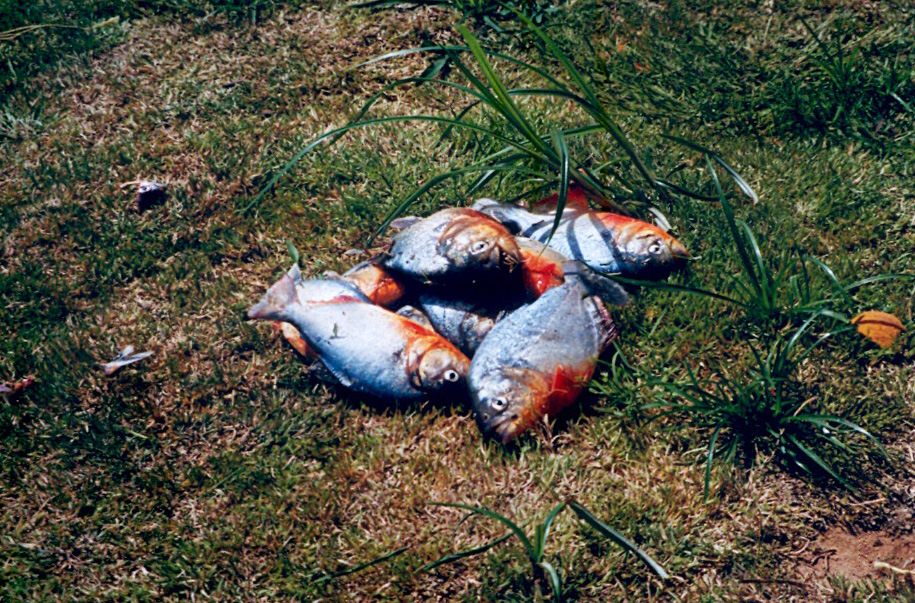
Piranhas on the plate!
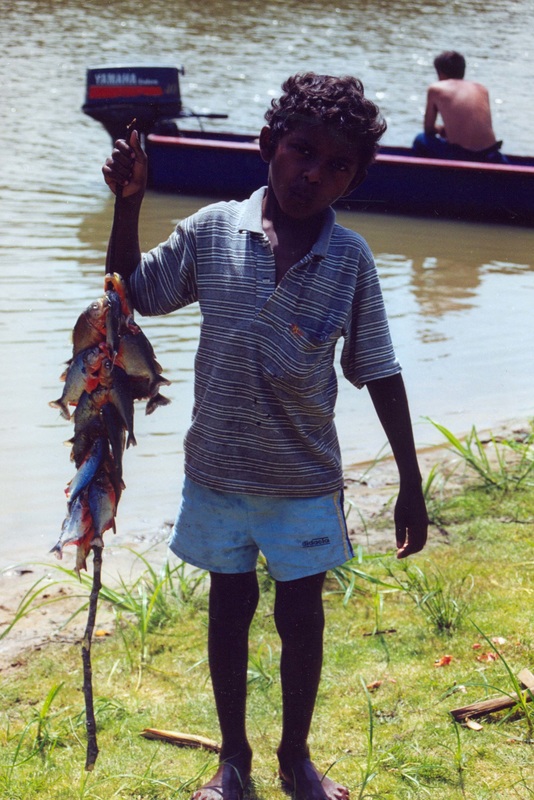
As a brief, conciliatory conclusion to this wild day, we were at least treated to a culinary highlight: fresh-caught piranha for dinner at the camp. After all that terror, it felt damn good to turn the tables and simply devour South America’s sharpest teeth ourselves!
Merida
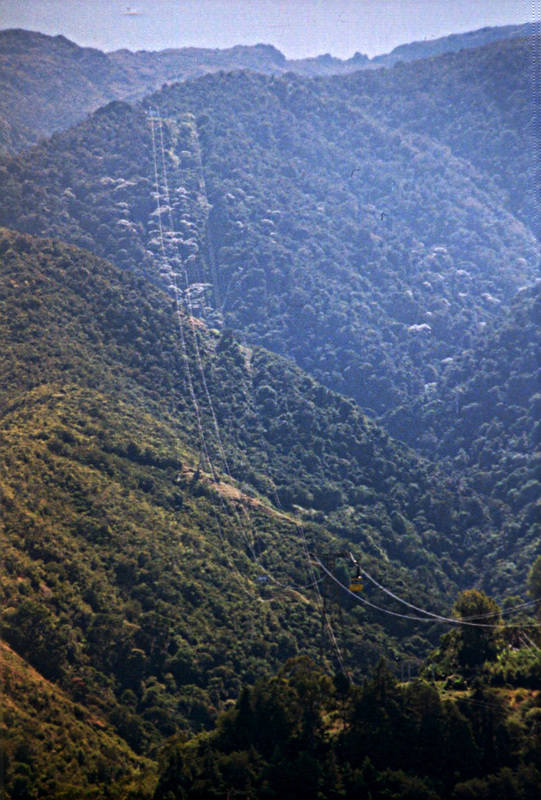
Teleferico (cable car) in Merida
Facts about the cable car: Mérida is home to the Teleférico de Mérida (Mukumbarí)—the world's highest cable car, reaching an altitude of 4,765 meters, and, at approximately 12.5 kilometers in length, one of the most spectacular—which transports passengers directly from the city up to the icy peaks of the Andes.
Cloud Forests and Abandoned Paths: Our Andean Adventure in Mérida
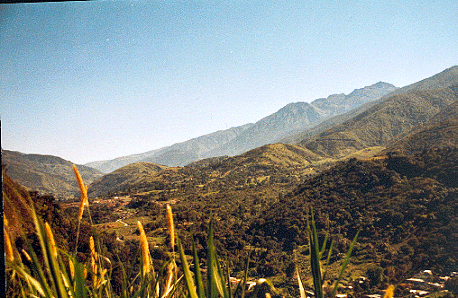
From the endless expanses of the hot Llanos plains, our travel compass set a direct course for the majestic Andes. Our destination: Mérida, the city of eternal spring.
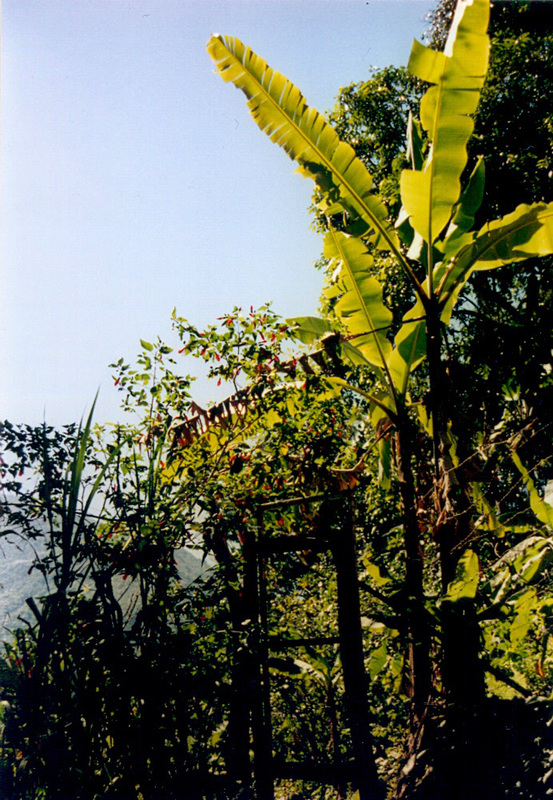
The cool mountain air felt incredibly good after the sweltering days in the savanna. We used the time for extensive explorations of the surrounding area. First, we hiked to a hidden, massive waterfall, whose spray provided an ice-cold, welcome refreshment.
From the endless expanses of the hot Llanos plains, our travel compass set a direct course for the majestic Andes. Our destination: Mérida, the city of eternal spring.
The cool mountain air felt incredibly good after the sweltering days in the savanna. We used the time for extensive explorations of the surrounding area. First, we hiked to a hidden, massive waterfall, whose spray provided an ice-cold, welcome refreshment.
A Journey Back in Time in the Jungle: Tracing an Abandoned Coffee Plantation
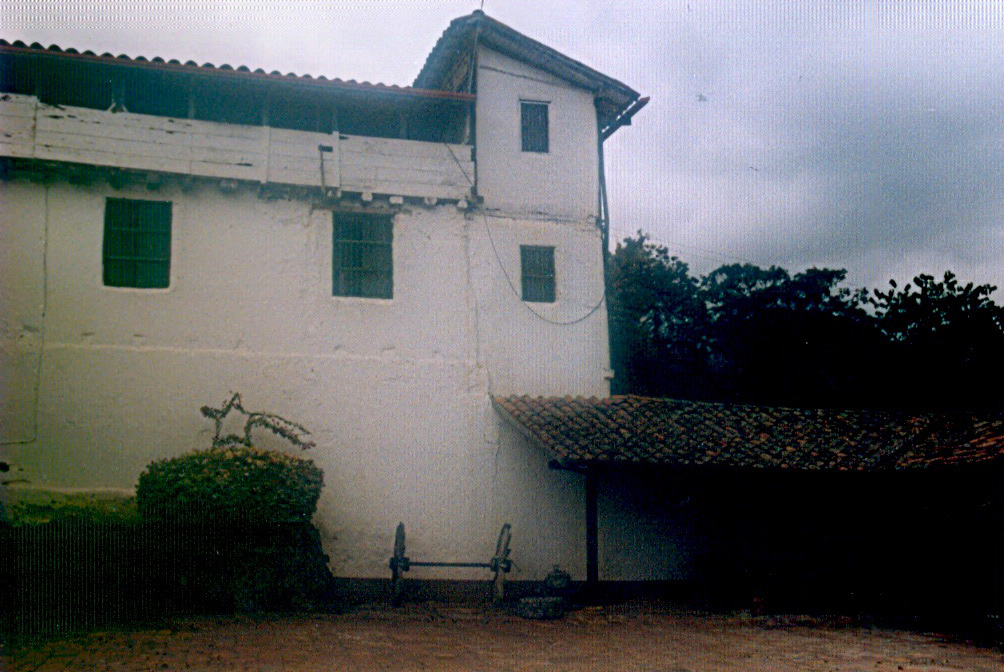
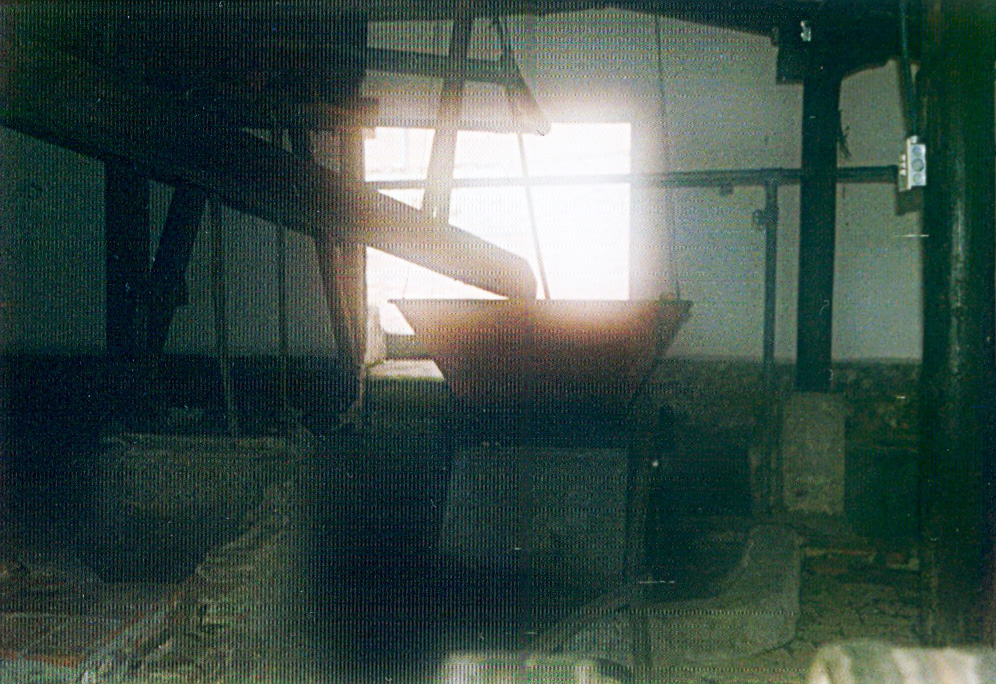
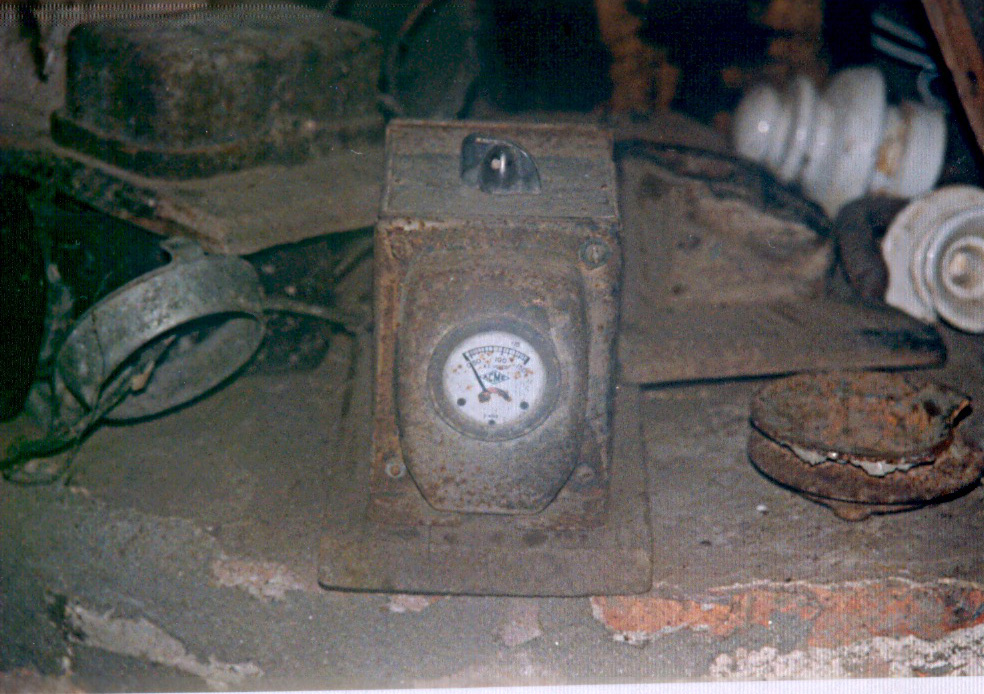
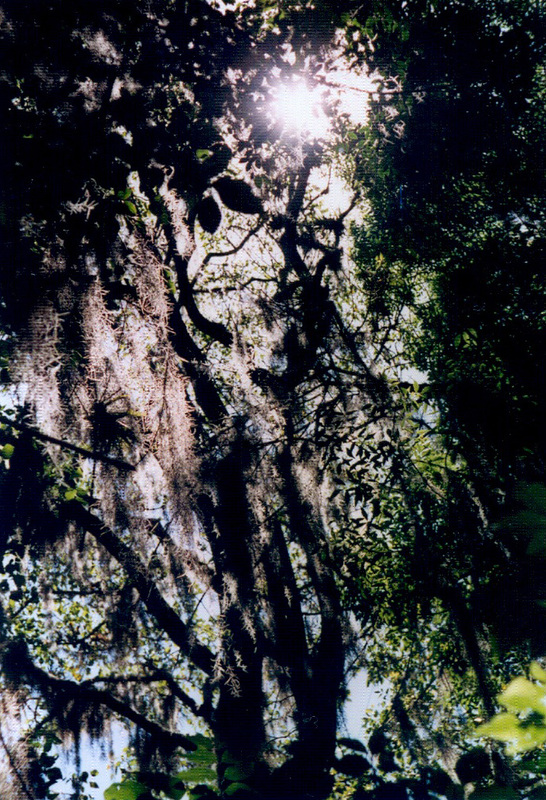
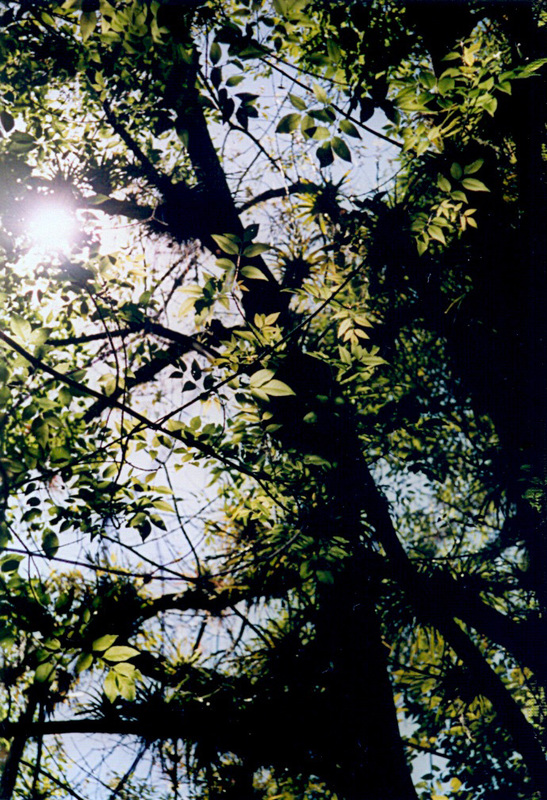
A complete change of pace followed immediately: we explored a historic, abandoned coffee plantation. A very special kind of silence hung amidst the moss-covered walls, rusty colonial-era machinery, and wildly overgrown coffee plants. You could almost sense how vibrant this place must have been decades ago, before nature gradually reclaimed its territory—a true adventure for explorers!
|
Fleeing the Gunshots: How a Wild Protest Drove Me into a Floral Paradise In 2002, I returned to Mérida a second time—though this time, I was traveling entirely on my own. But as is often the case with backpacking, you never stay alone for long. At my hostel, I met two really nice guys with whom I hit it off immediately. That turned out to be a stroke of incredible luck, because the day took a dramatic turn. |
A heated political demonstration suddenly erupted in the city streets. When we heard the unmistakable, sharp cracks of several gunshots ringing out in the distance, a sense of foreboding seized us: we had to get out of there immediately! We made a quick escape, fleeing the turbulent city for the dense, rugged mountain forests nearby.
Flower photos instead of barricades
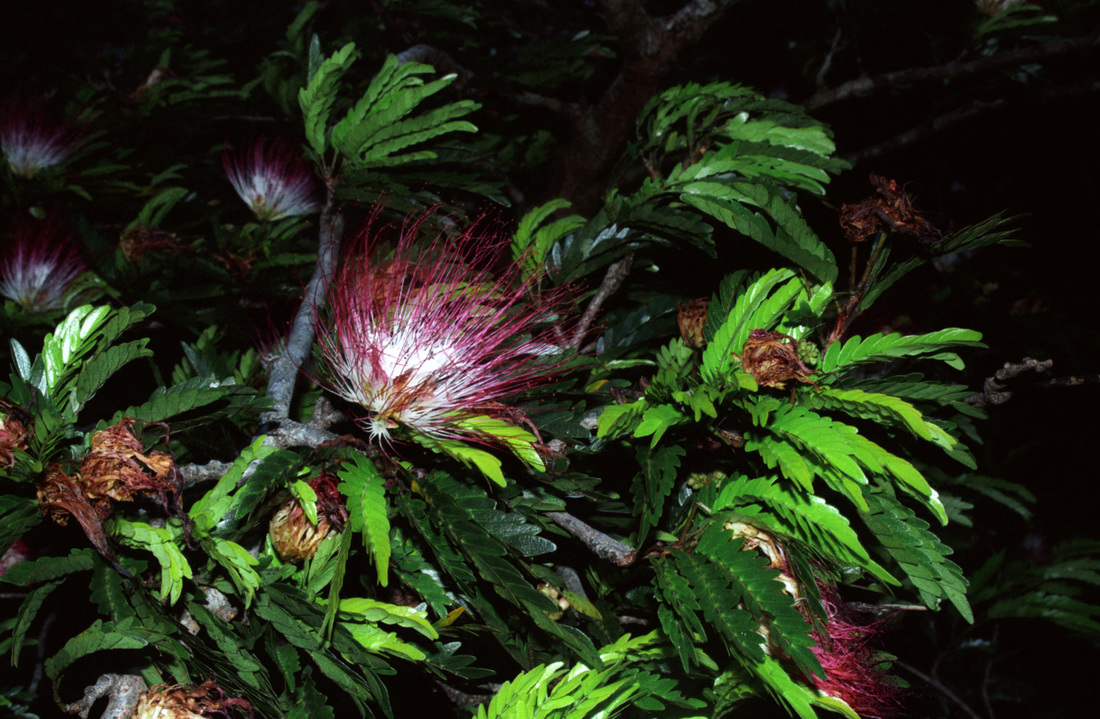
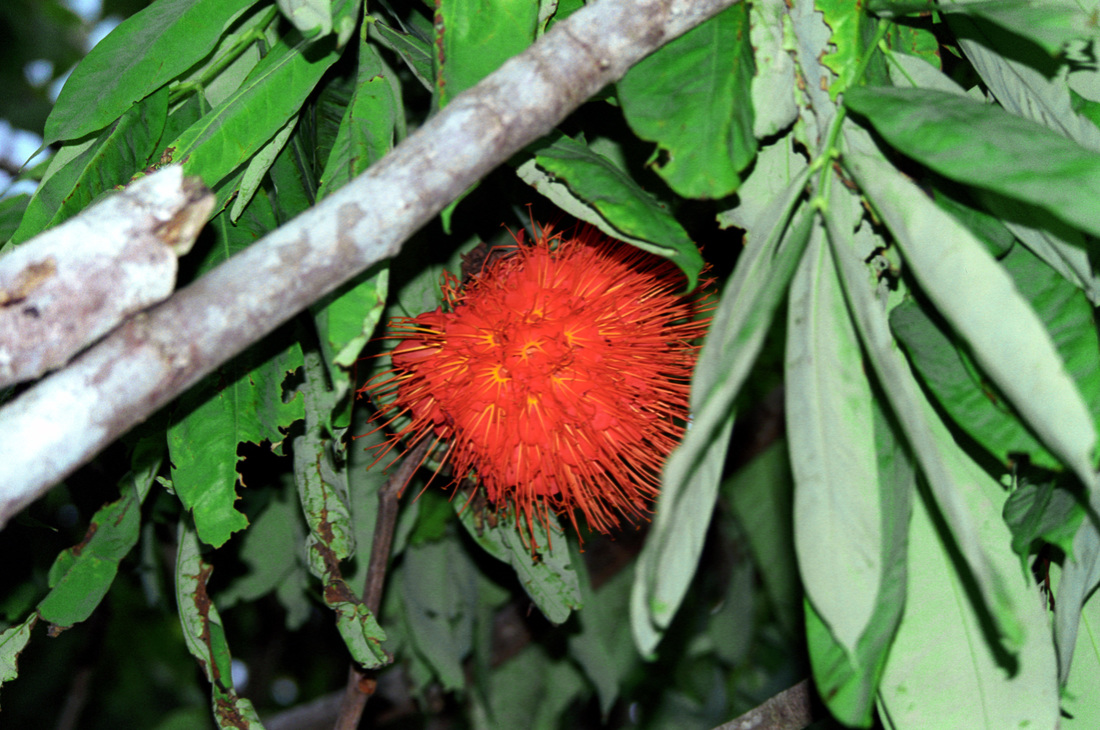
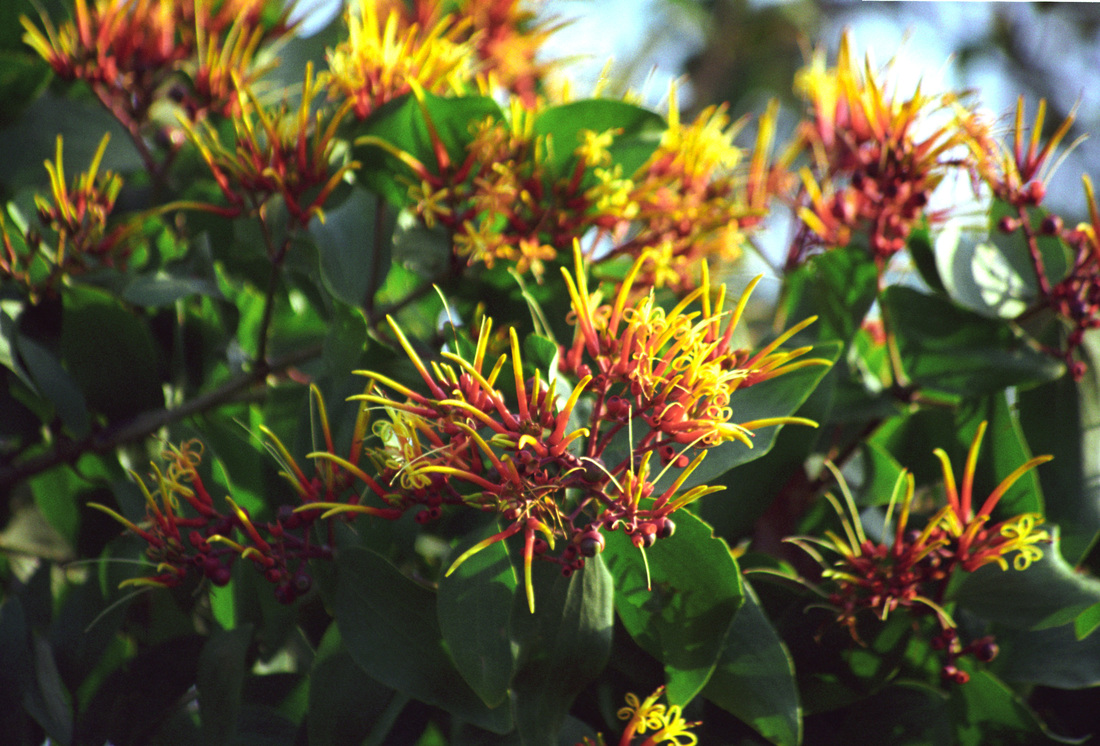
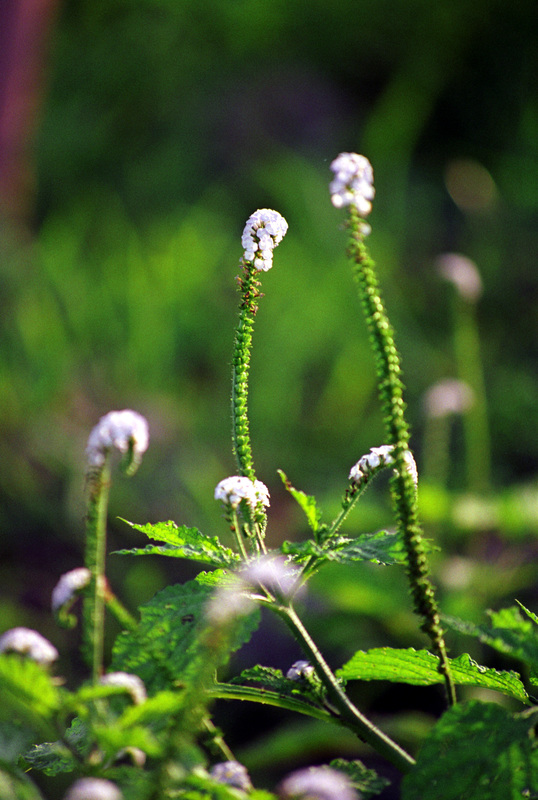
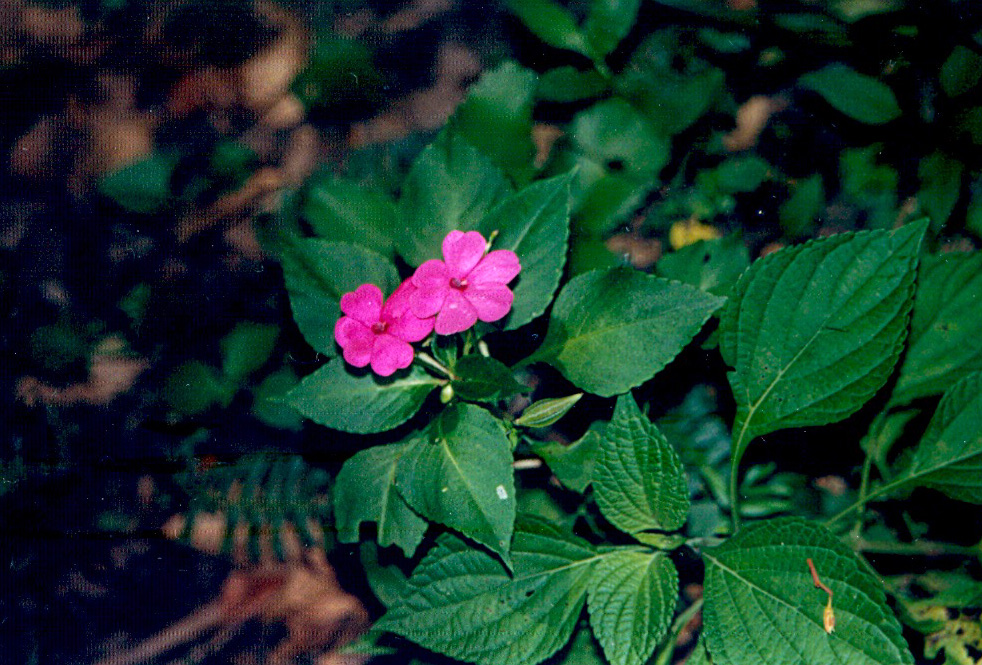
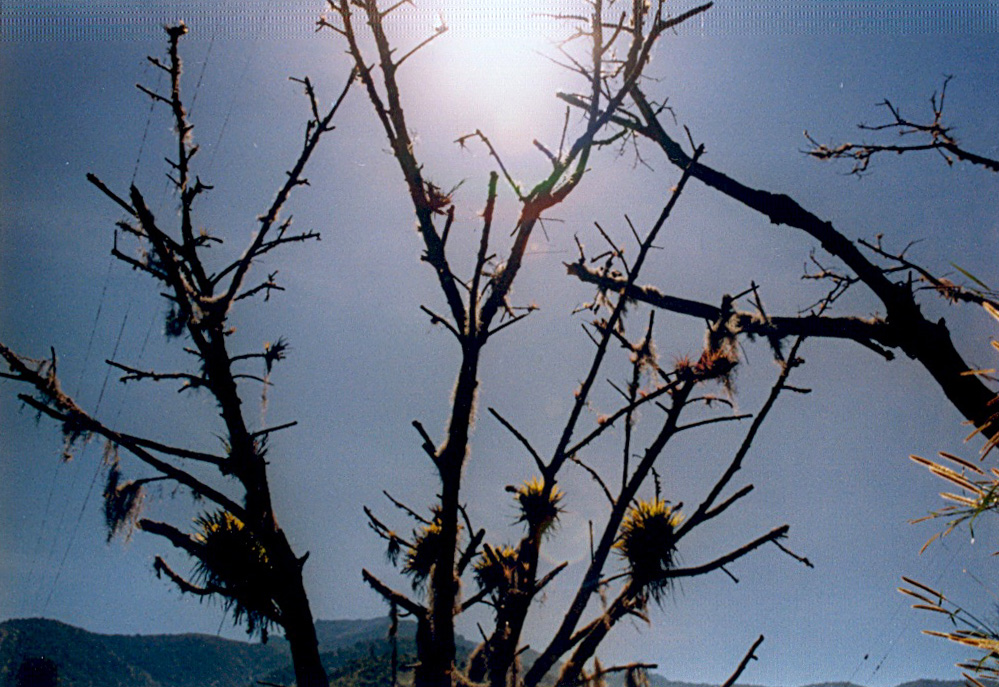
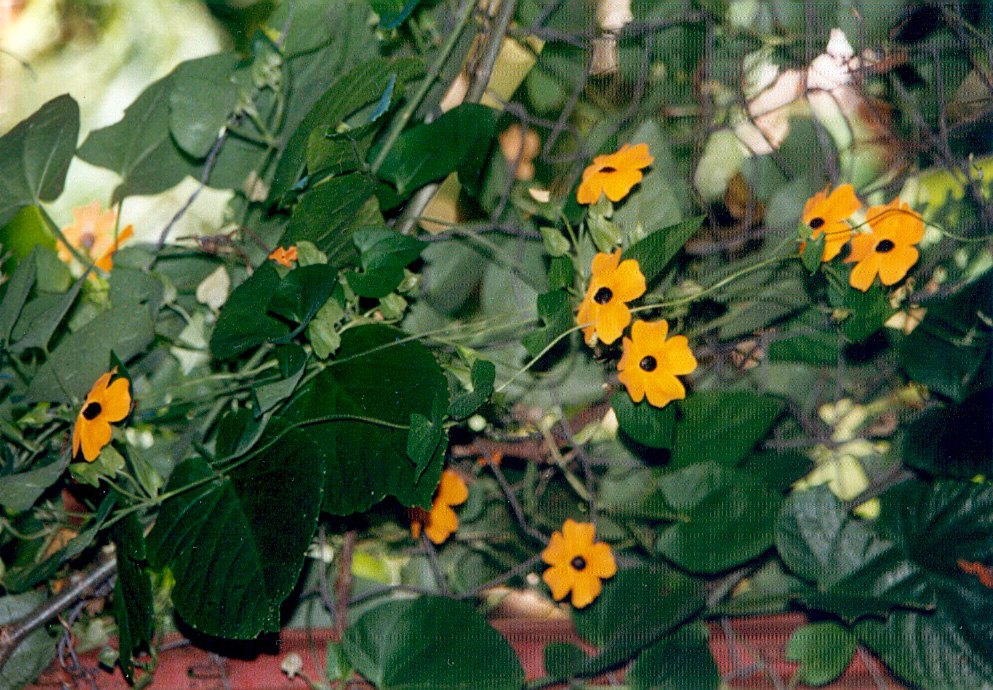
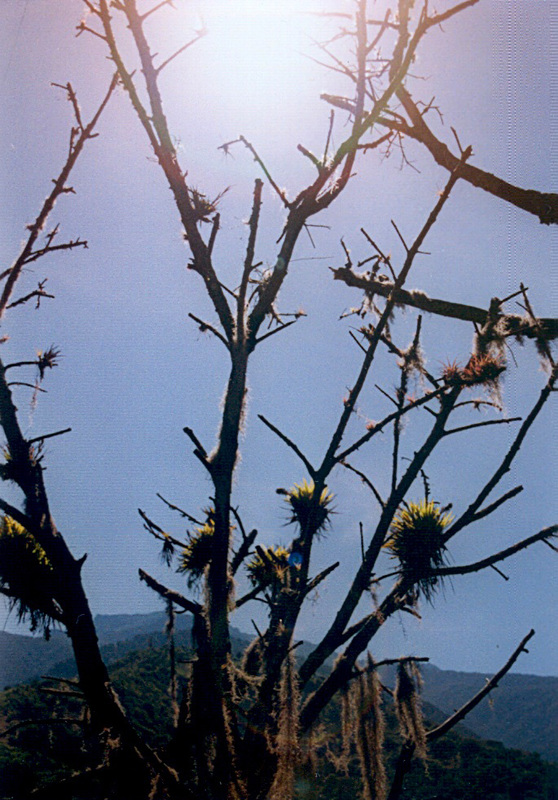
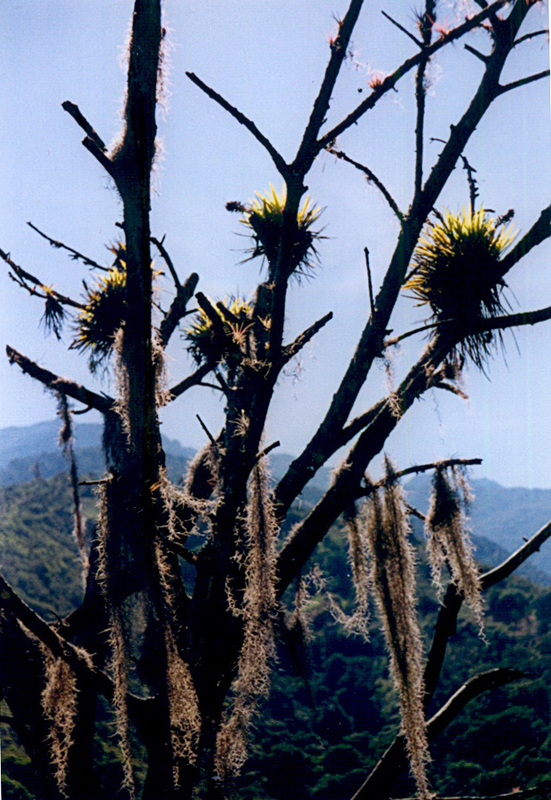
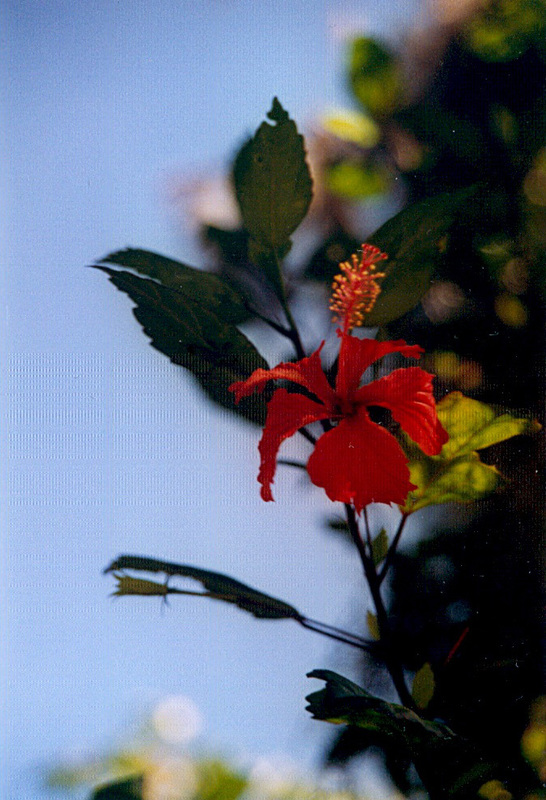
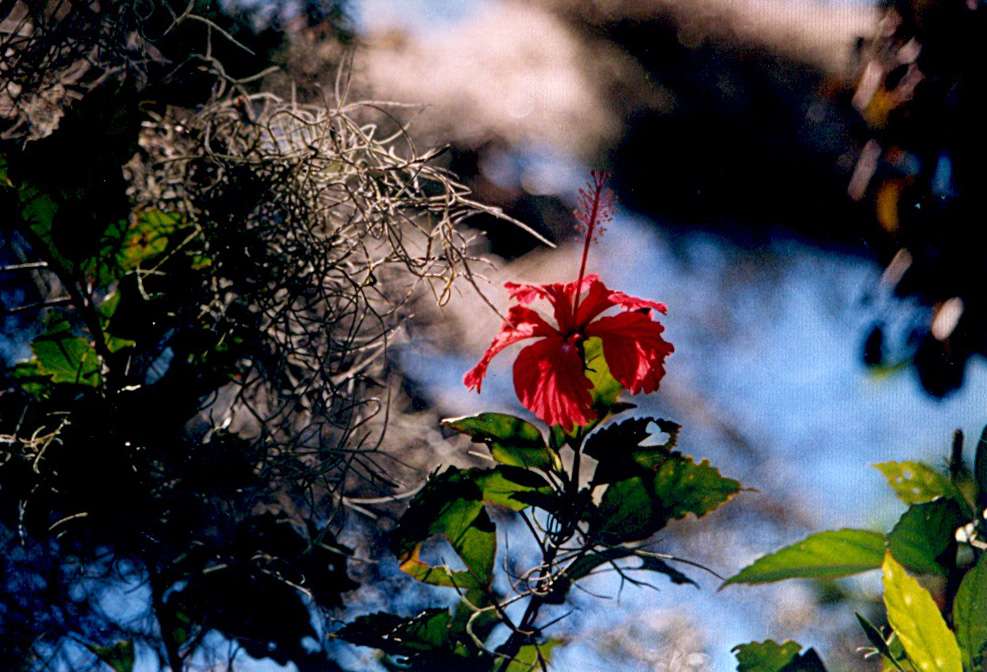
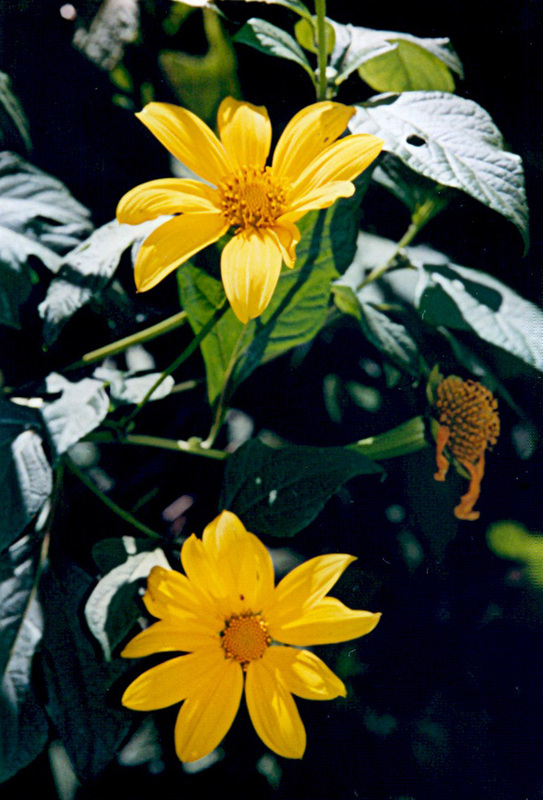
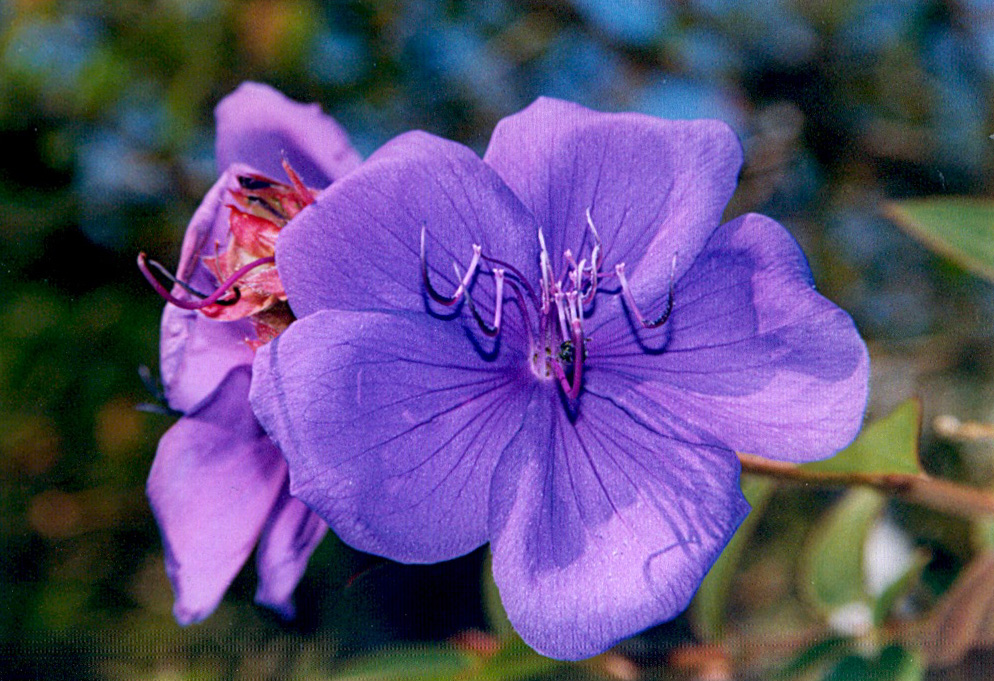
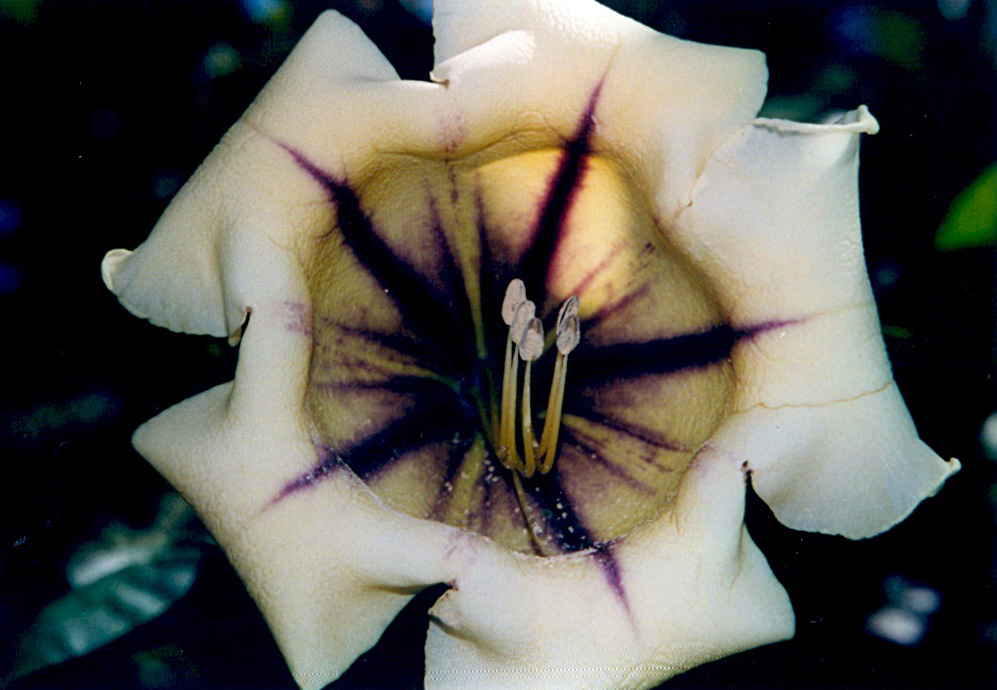
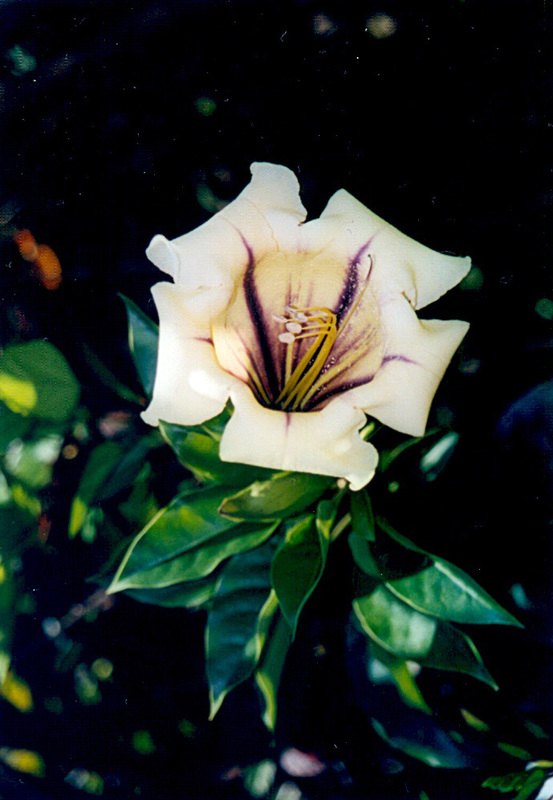
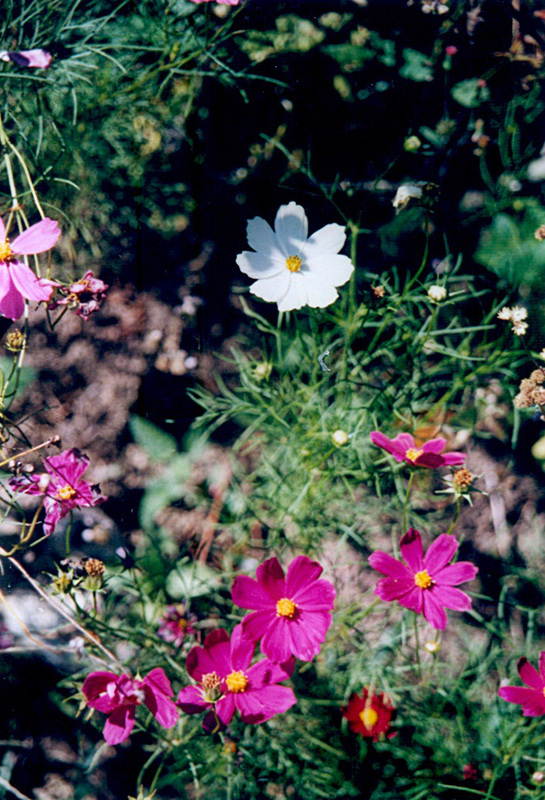
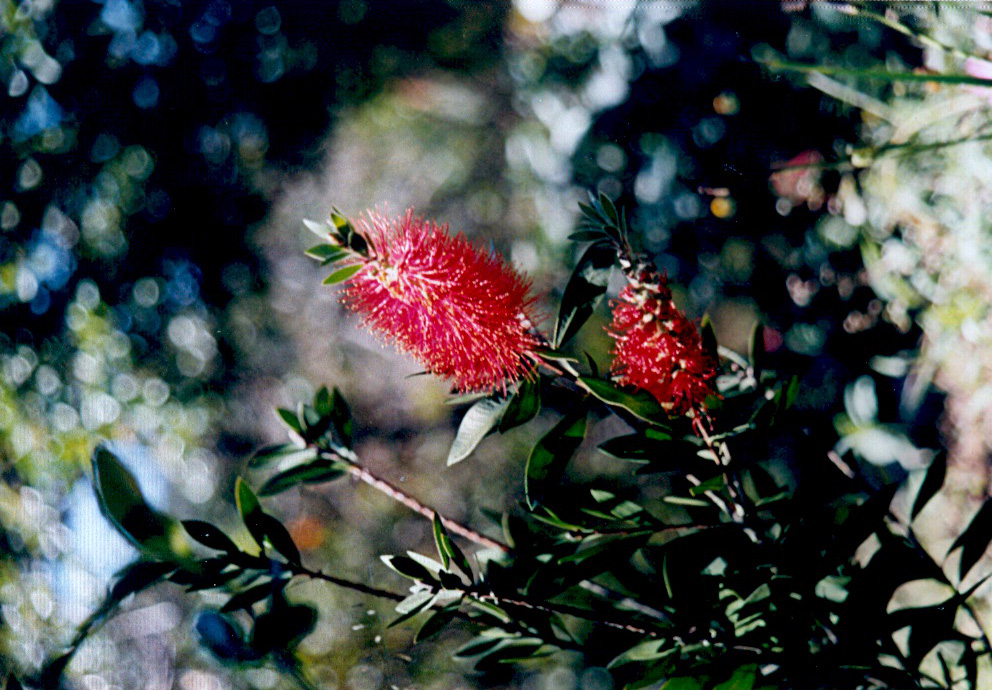
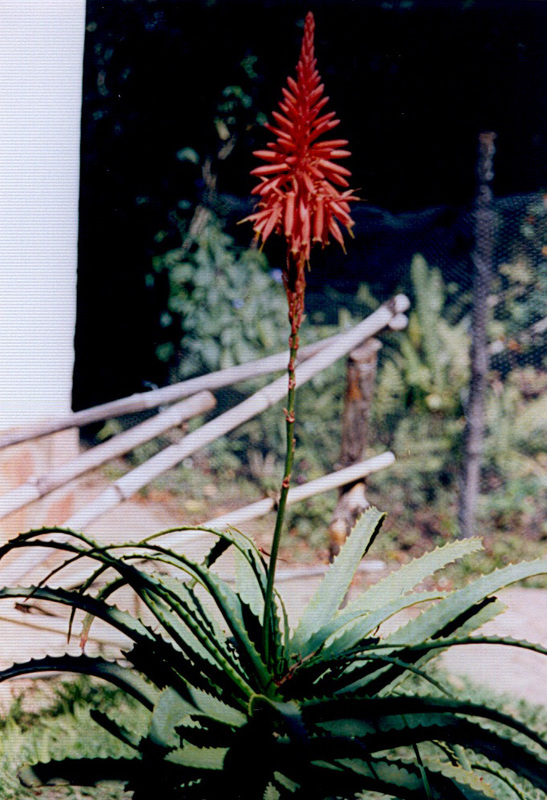
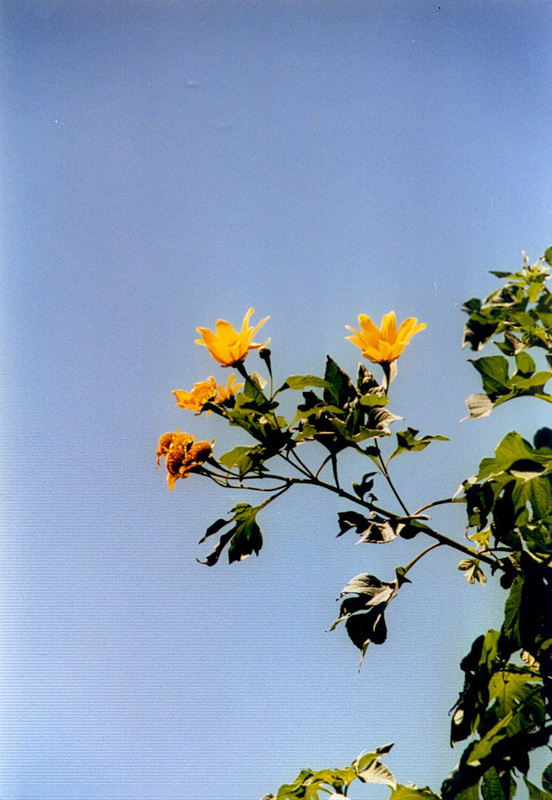
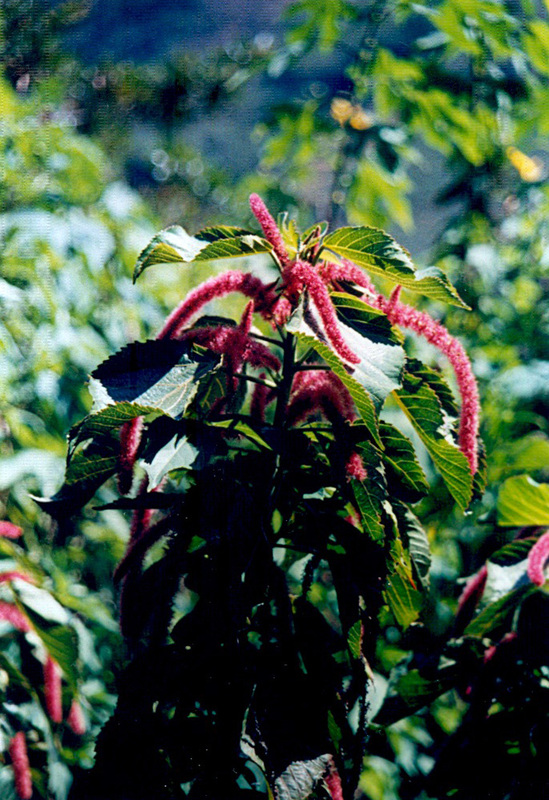
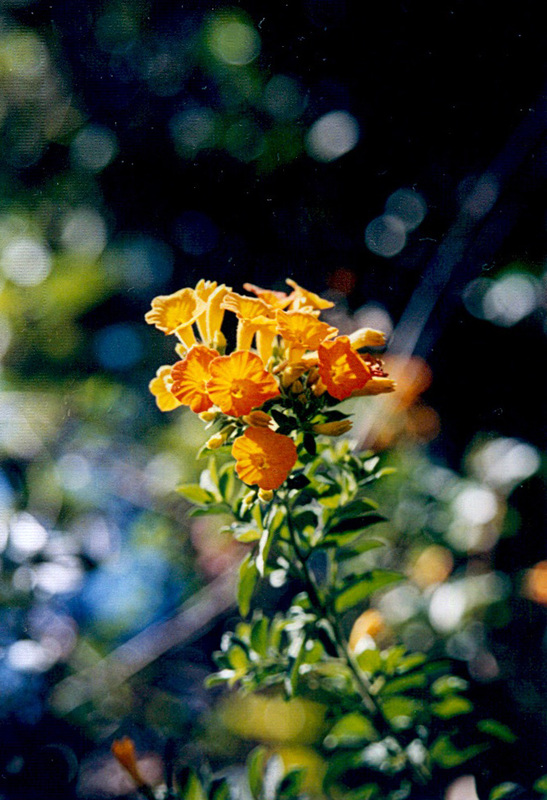
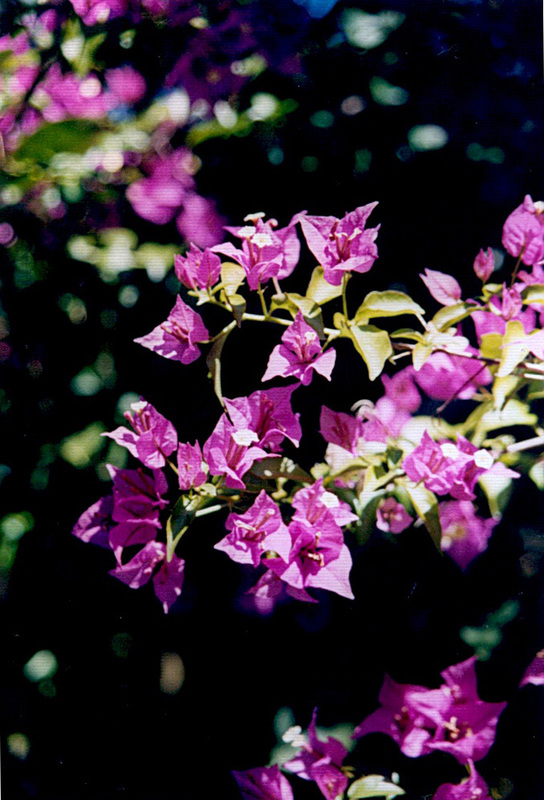
It was the best decision ever. While chaos reigned in Mérida, we immersed ourselves in a completely different, almost magical world. The cloud forest was a true oasis of peace. We hiked for hours through unspoiled nature, and instead of finding ourselves in dicey situations, I discovered an absolute paradise for my camera: the landscape was dotted with the most magnificent, colorful wildflowers. To this day, I still have quite a few beautiful photos of flowers from that adventurous day of escape—a peaceful memento of a rather nerve-wracking day!
Flower photos instead of barricades
It was the best decision ever. While chaos reigned in Mérida, we immersed ourselves in a completely different, almost magical world. The cloud forest was a true oasis of peace. We hiked for hours through unspoiled nature, and instead of finding ourselves in dicey situations, I discovered an absolute paradise for my camera: the landscape was dotted with the most magnificent, colorful wildflowers. To this day, I still have quite a few beautiful photos of flowers from that adventurous day of escape—a peaceful memento of a rather nerve-wracking day!
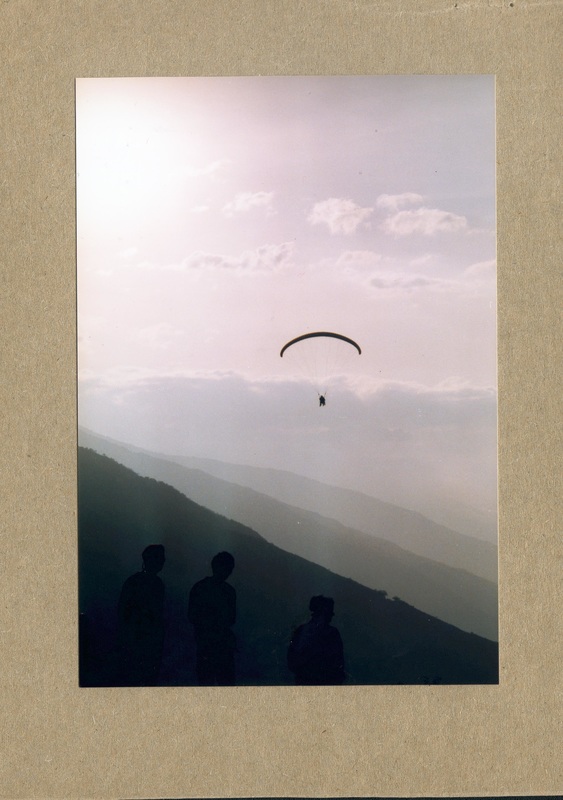
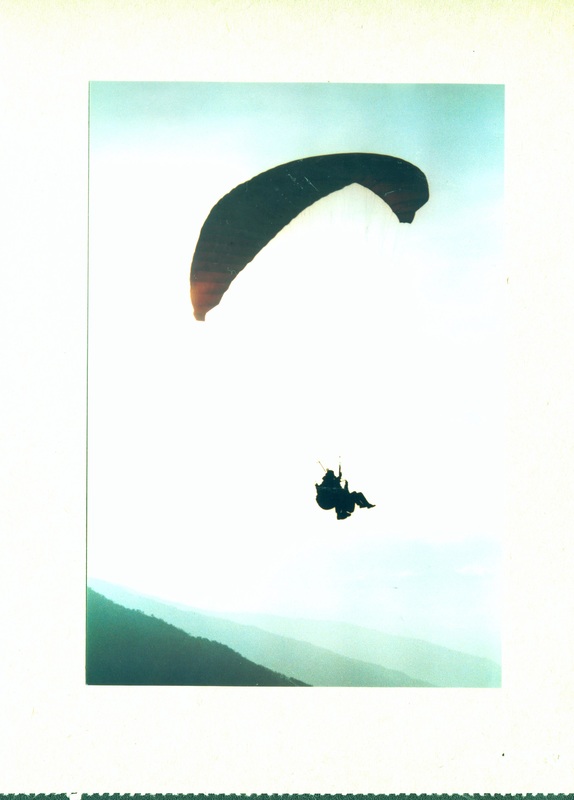
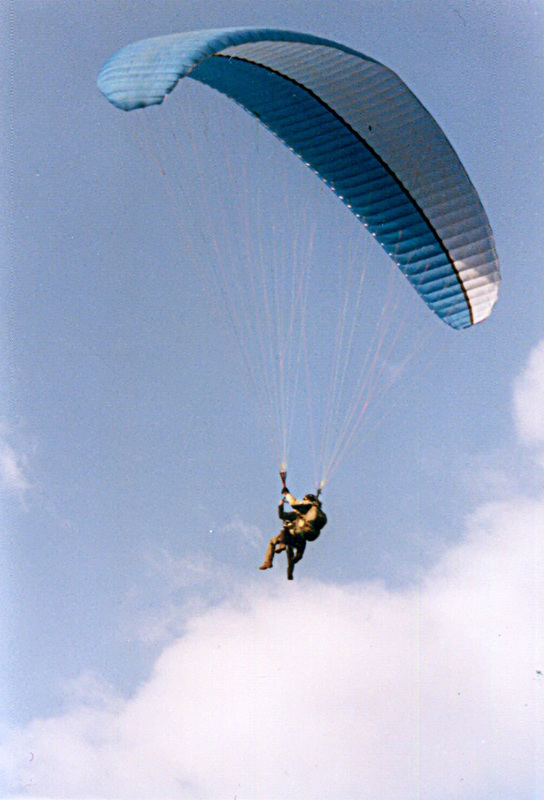
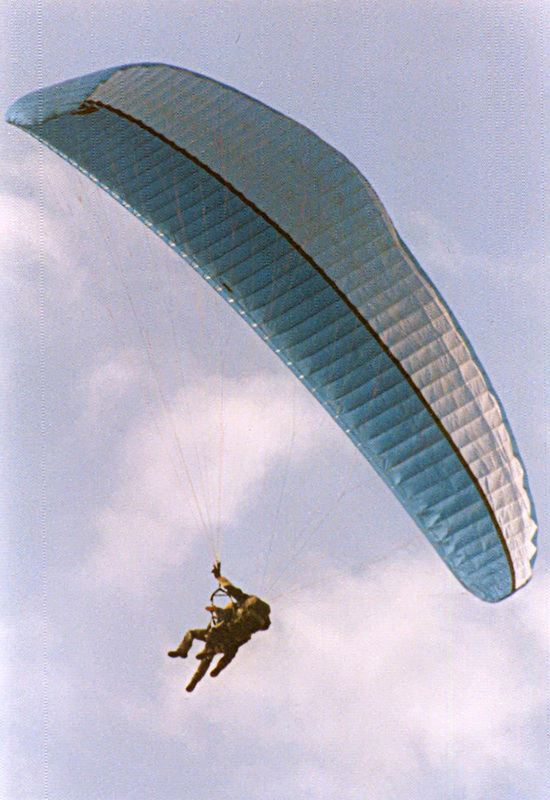
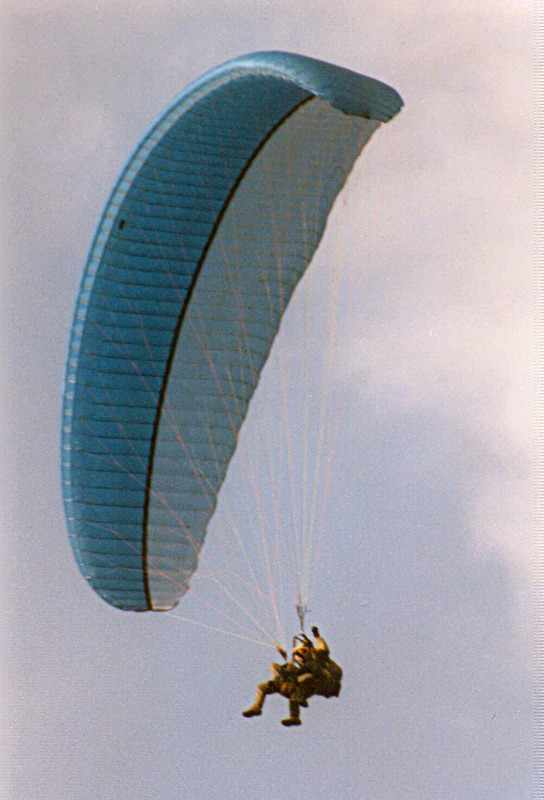
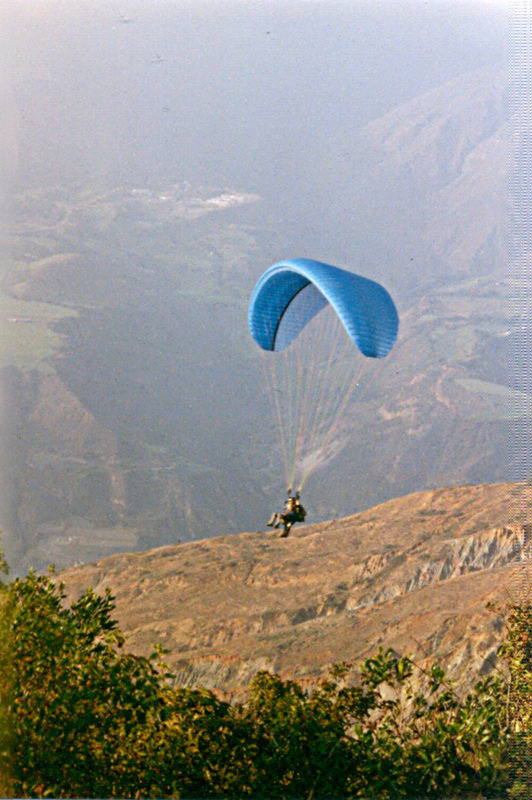
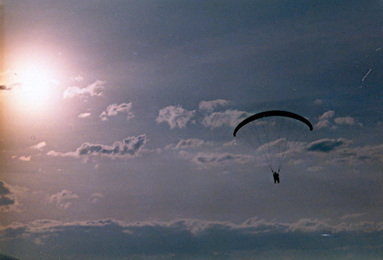
Paragliding in the mountains of Mérida (2002)
Aside from fleeing the gunfire in the city center, my solo trip to Mérida in 2002 held another absolutely nerve-wracking adventure in store for me: my very first—and definitely my very last—time paragliding!
An incredible view and weak knees: Why I learned to love the ground in Mérida
Mérida, nestled in the Andes, is a true mecca for paragliders, and in a moment of daring, I booked a tandem flight. As we finally lifted off and the ground vanished from beneath my feet, it hit me instantly: this was—damn it—a bit too high for my nerves! My heart sank right into my boots, and pure adrenaline surged through my veins.
Aside from fleeing the gunfire in the city center, my solo trip to Mérida in 2002 held another absolutely nerve-wracking adventure in store for me: my very first—and definitely my very last—time paragliding!
An incredible view and weak knees: Why I learned to love the ground in Mérida
Mérida, nestled in the Andes, is a true mecca for paragliders, and in a moment of daring, I booked a tandem flight. As we finally lifted off and the ground vanished from beneath my feet, it hit me instantly: this was—damn it—a bit too high for my nerves! My heart sank right into my boots, and pure adrenaline surged through my veins.
At times, I really had to force myself to keep my eyes open. But I have to admit: the view up there was simply incredible! You float weightlessly above the deep green valleys of the Andes, while the mighty mountain peaks seem close enough to touch. It was a truly massive, almost surreal vista. I was immensely relieved when I finally had solid, secure ground beneath my feet again. It was an unforgettable experience, but one thing is certain for me: once was enough—never again!
¡Adiós, Venezuela!
¡Adiós, Venezuela!