MARYsCOMIX
  • Mary's Page
  • Airbrush Metal Stuff
  • Airbrush Projects
  • Street Art
  • Felix Projects
  • Old School Comix
  • Trip Gallery
  • Artist Infos
  • Legal Notice / IMPRESSUM
  • Right of Withdrawal
  • Data Protection
  • General terms and conditions of business
  • Blog

Isla de Pascua - Easter Island
Chile's most mysterious island
​(2001)
​

Picture
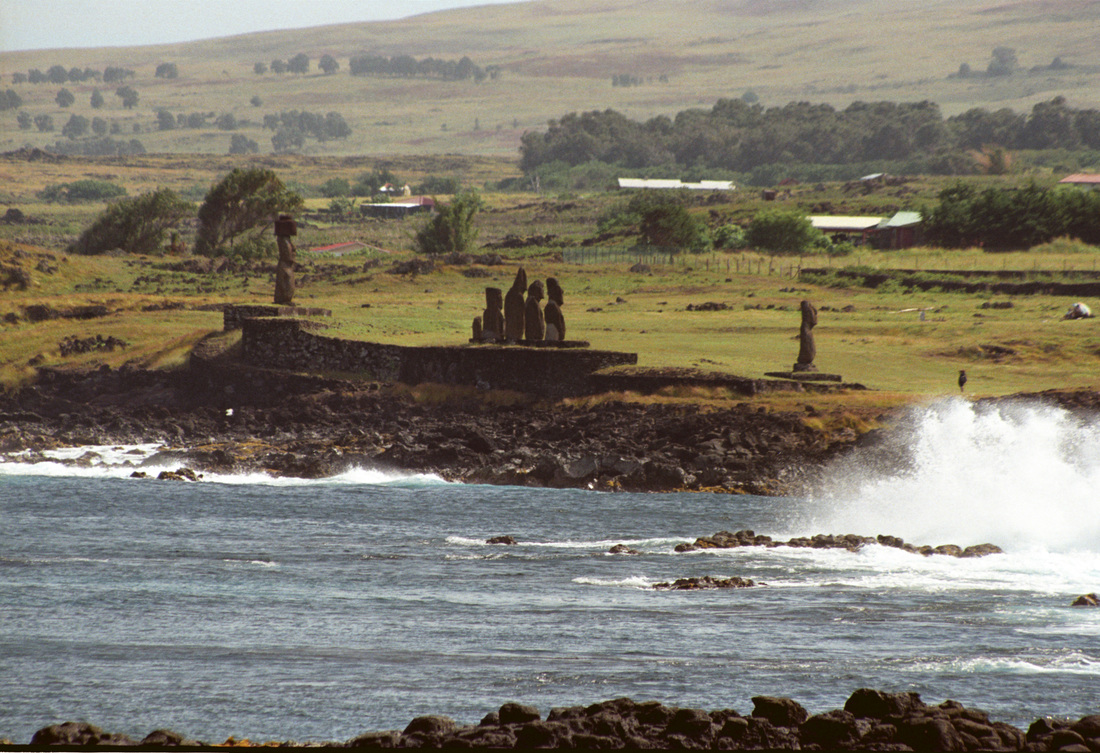
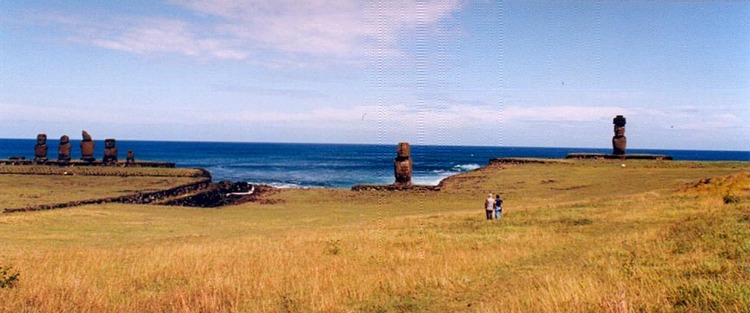
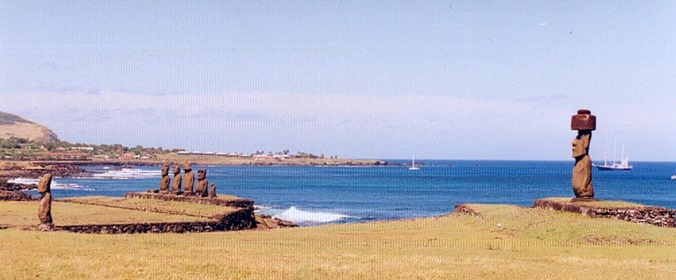
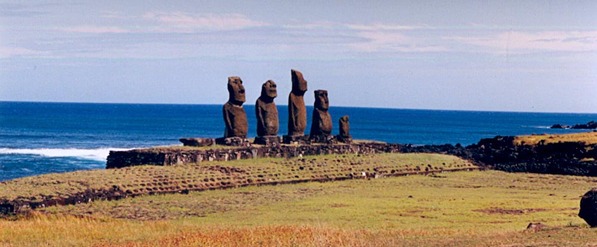
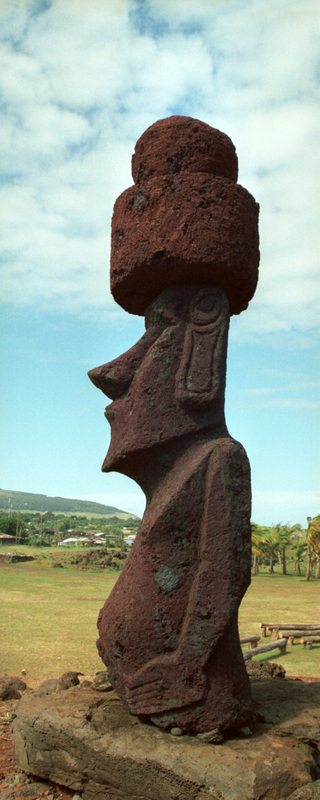
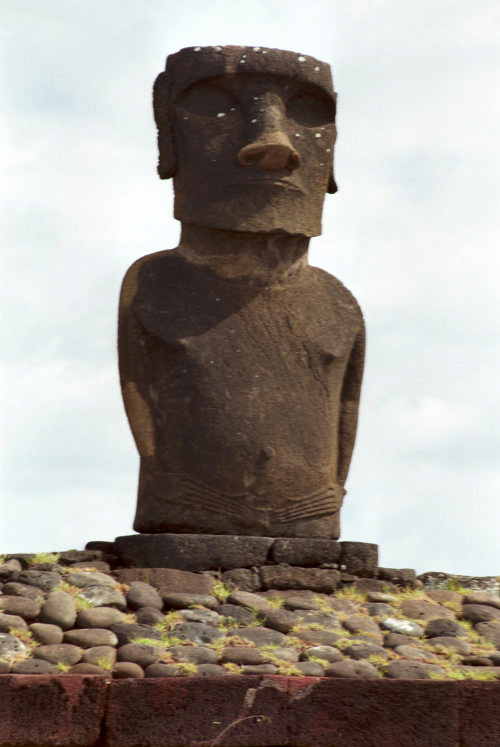
Moai at the harbor of Ahu Tahai
The loneliest patch of land on Earth: Welcome to Rapa Nui​
After the dust of the Atacama and the long bus ride back to Santiago, I headed to where the world truly ends: Easter Island, known to the locals as Rapa Nui.
The island is one of the most isolated inhabited places on the entire planet. It is a full 3,700 kilometers by air to the Chilean mainland in the east, and the nearest inhabited island (Pitcairn) lies more than 2,000 kilometers to the west in the deep blue Pacific.
The island itself is essentially a volcanic triangle measuring just 163 square kilometers—formed by the eruptions of three main volcanoes: Terevaka, Poike, and Rano Kau. Upon arrival, you realize immediately: this is no longer South America. This is pure Polynesia, in the middle of nowhere.
The island was settled—an estimated time between 800 and 1200 AD—by Polynesian seafarers who conquered the ocean in simple double-hulled canoes. They named their new home *Te Pito te Henua*—the navel of the world.
Today, the island is best known for its gigantic stone statues—the *moai*—and its mysterious ceremonial sites (*ahu*). By the time the Dutch explorer Jakob Roggeveen "discovered" the island for the Western world on Easter Sunday in 1722 (hence the name), its once-great civilization had already collapsed due to internal warfare and resource scarcity. Back in 2001—long before the advent of mass tourism—one could still experience this rugged, windswept volcanic island in all its mystical tranquility.
​​HANGA ROA  + AHU TAHAI 
Dusty roads and the first giant: On foot in Hanga Roa and Ahu Tahai
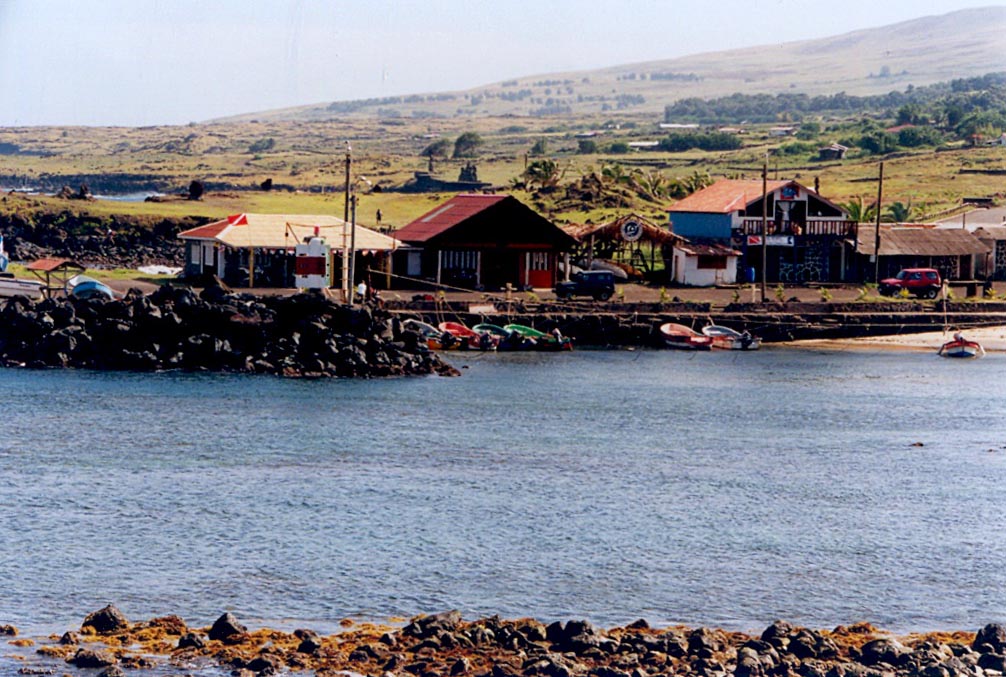
​My first day on Rapa Nui began quite unassumingly—on foot. In 2001, Hanga Roa, the island’s only real village, was a wonderfully sleepy backwater. All of the streets were still unpaved, roosters crowed in competition, and one could immediately catch the Polynesian spirit of the roughly 3,300 inhabitants. There wasn't a hint of haste—just the right atmosphere for settling in.
Picture
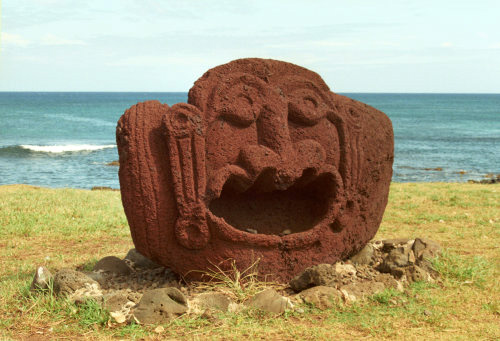
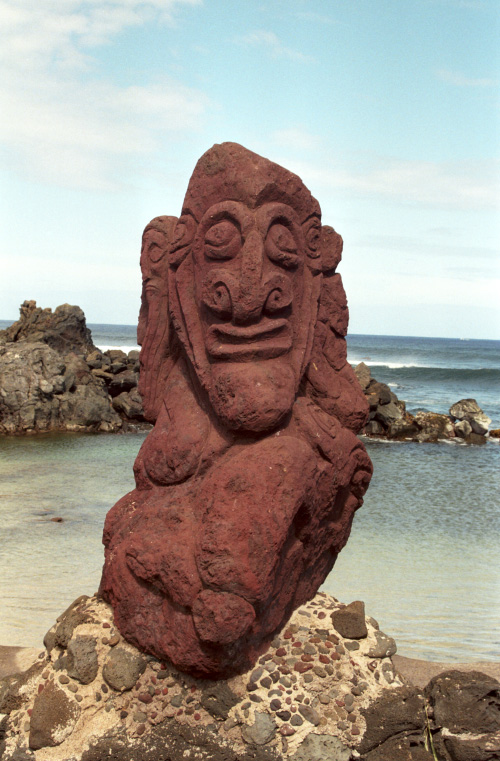
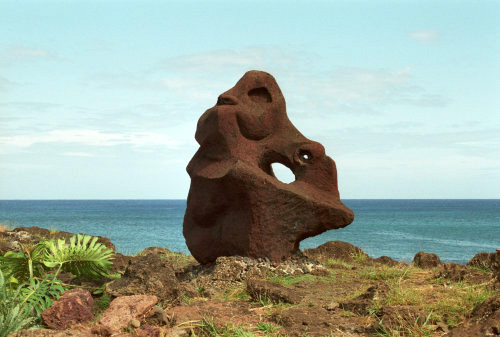
Polynesian Modernism by the Wayside: The Red Secrets of Hanga Roa
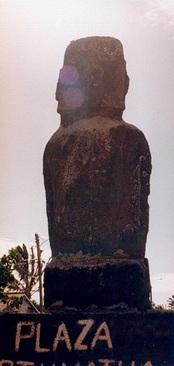
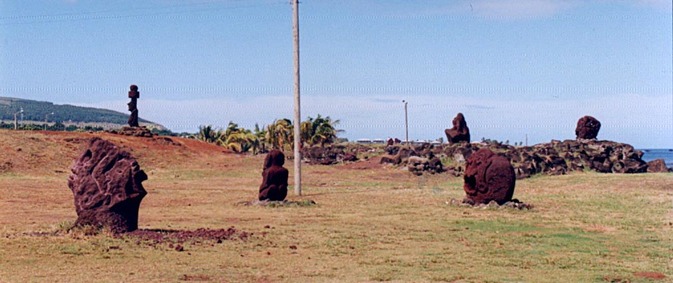
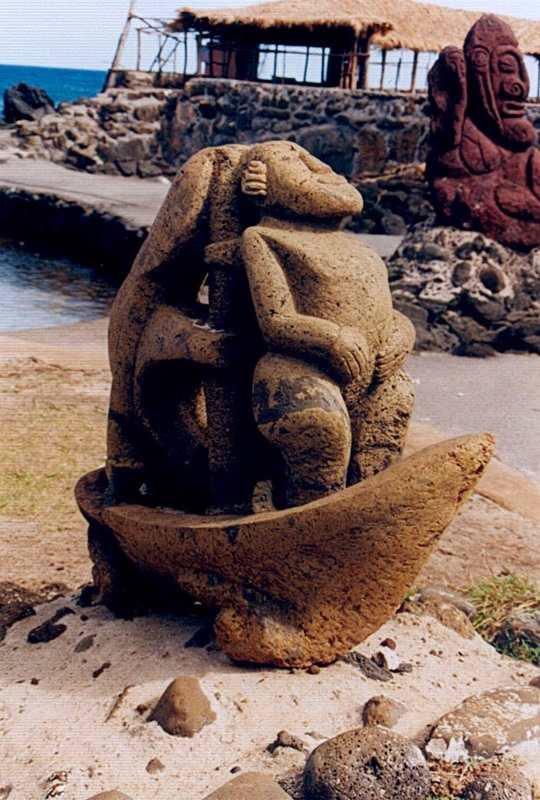
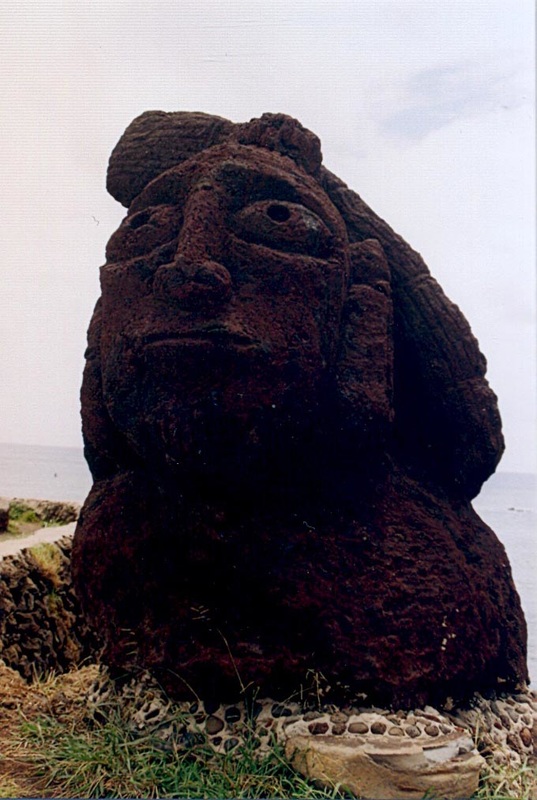
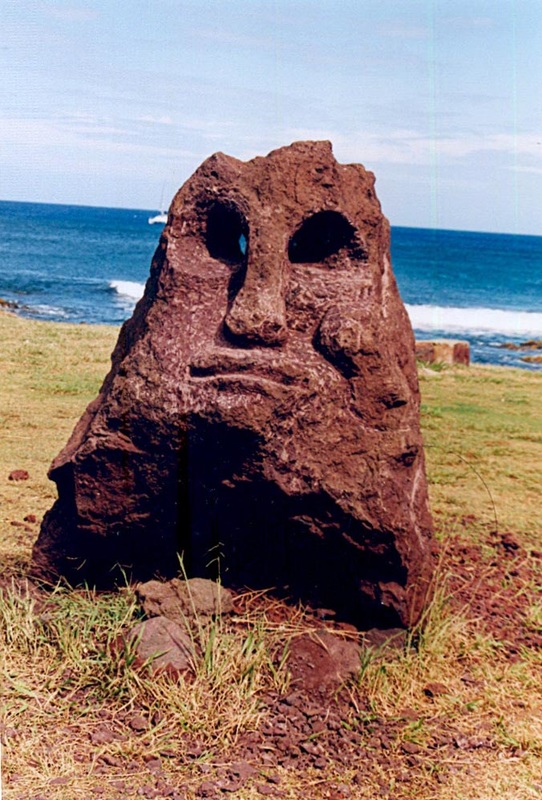
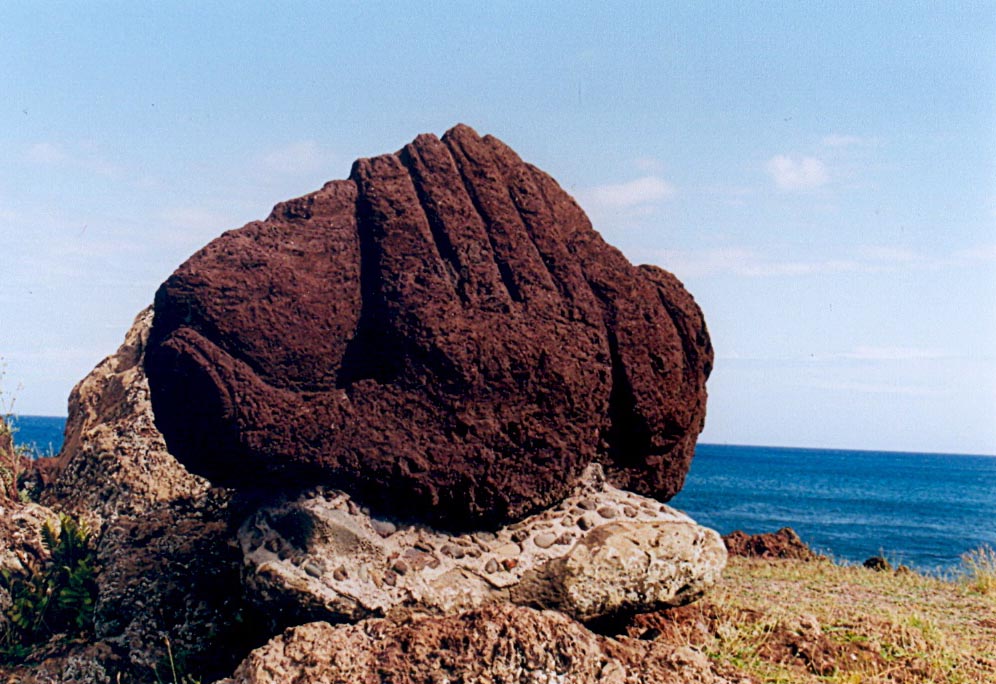
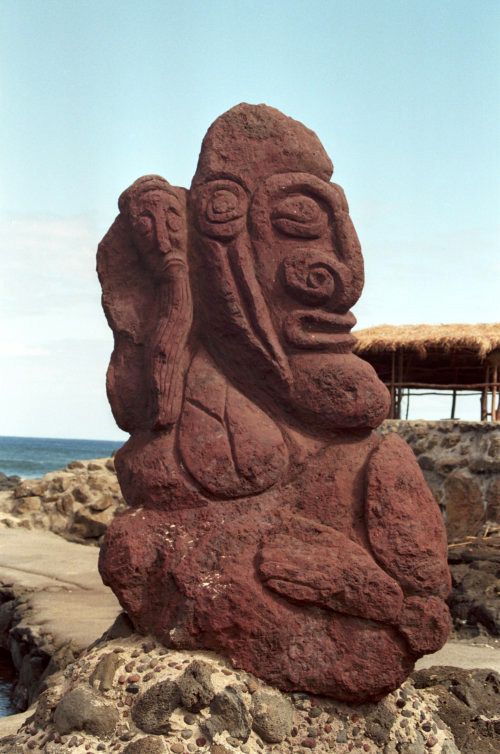
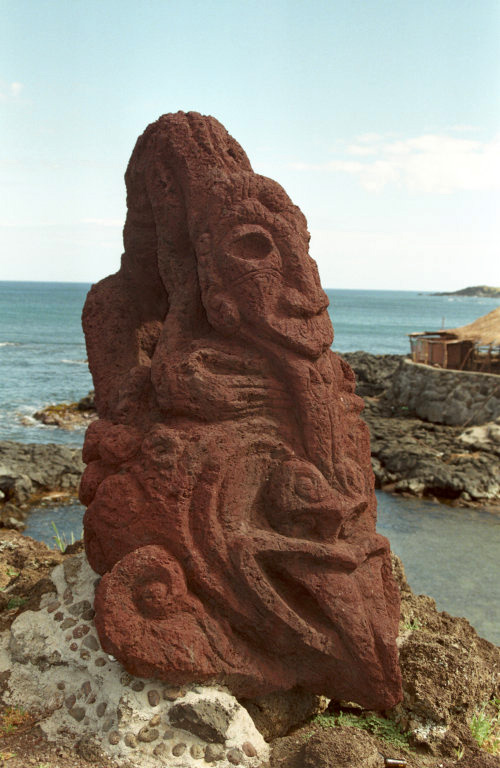
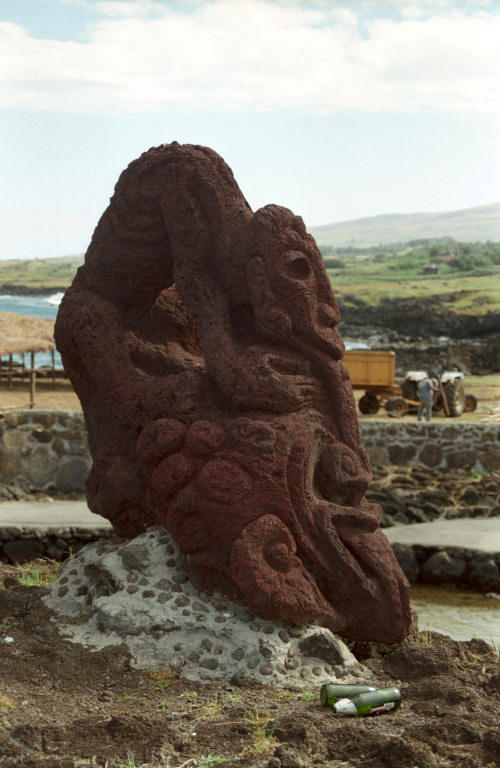
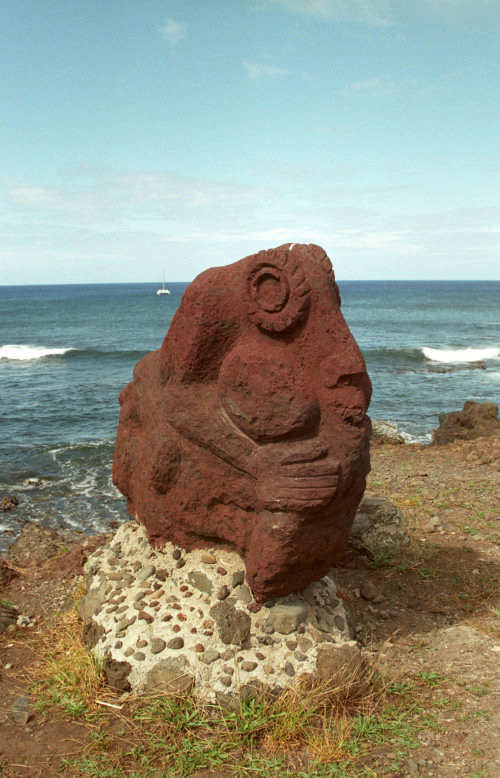
Anyone strolling through the dusty streets of Hanga Roa will inevitably stumble upon a very different kind of stone art. Alongside the world-famous, historic Moai, the village is home to numerous modern sculptures created by local artists and installed in central squares, markets, and at intersections. During my wanderings, I photographed a total of 15 of these red guardians—each completely unique.
The fact that these statues deliberately all look different—completely breaking with the rigid design of the Moai—has a profound reason: the sculptors use red volcanic scoria to bring the island’s multifaceted Polynesian mythology to life.
Back in 2001, you could still stroll past these red guardians completely undisturbed and admire the deep chisel marks in the harsh sunlight. It is brilliant proof that the art of carving on Rapa Nui never died out, but simply found new paths.

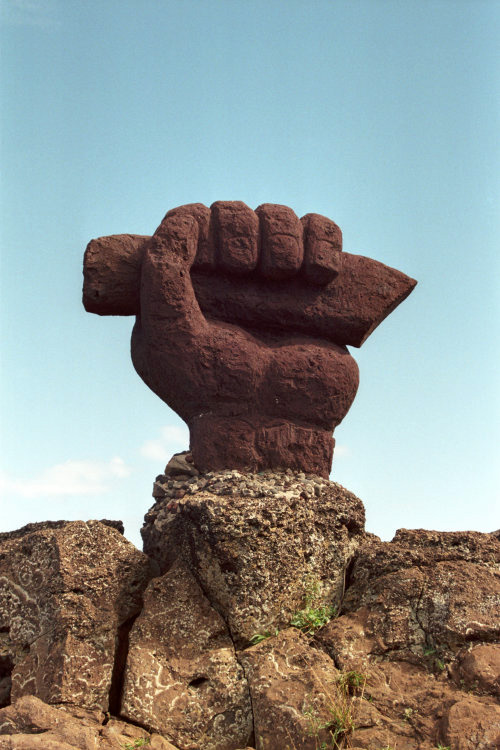
The fist that shaped history: the sculptor’s monument.
Right at the edge of the Tahai complex, another red monument catches the eye, telling a truly fundamental story. My analog photograph shows a monumental, clenched fist firmly gripping a large stone tool. This is a *toki*—the traditional hand chisel of the Rapa Nui.
This sculpture stands as a direct monument to the unimaginable feat achieved by ancient sculptors. Using nothing more than simple chisels fashioned from hard volcanic rock, artisans spent years of back-breaking labor carving the colossal, multi-ton Moai figures from the crater walls. The sculpture perfectly captures this raw power: a hand subduing the raw stone to create art and honor ancestral culture. Set against the coastline, where the surf crashes against the rocks, this stone arm appears like a greeting from the past.
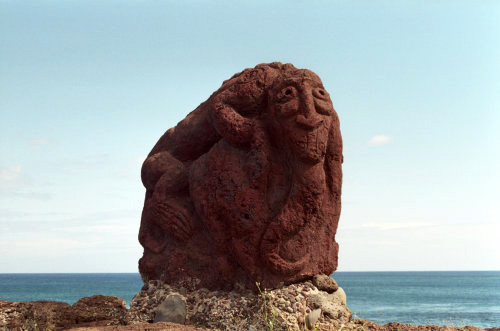
 Each sculpture is a visual history book:
  • The World of Spirits and Ancestors (Aku Aku): My photo clearly shows a smaller, bearded figure with sunken cheeks clinging to the neck of a large face. This is a typical depiction of the *Aku Aku*—clan guardian spirits that, according to legend, roam invisibly through nature and can be either benevolent or quite mischievous. The carvers model these figures on historical *Moai Kavakava* wooden carvings.
  • Tattoos as Status Symbols: The deep spirals and lines carved into the faces represent traditional tattoos (*Ta-Kona*). On Rapa Nui, a tattoo was not a fashion statement but a chronicle etched onto the skin; it told the story of the subject's lineage, deeds, and spiritual protection (*Mana*).
  • Legends and Hybrid Creatures: Among the other 15 statues in the village, one encounters the creator god Make-Make, depictions of the legendary Birdman (*Tangata Manu*), and marine creatures such as turtles and whales, which were sacred to Polynesian seafarers.
Picture
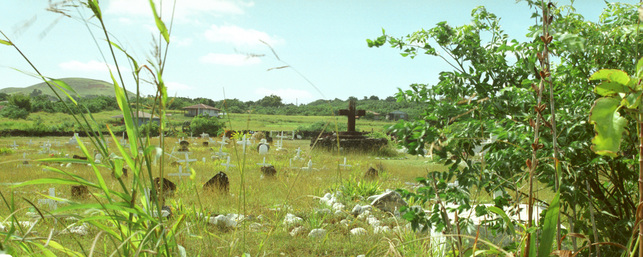
Hanga Roa Cemetery

​The 3 AHUs from TAHAI and the unlike brothers

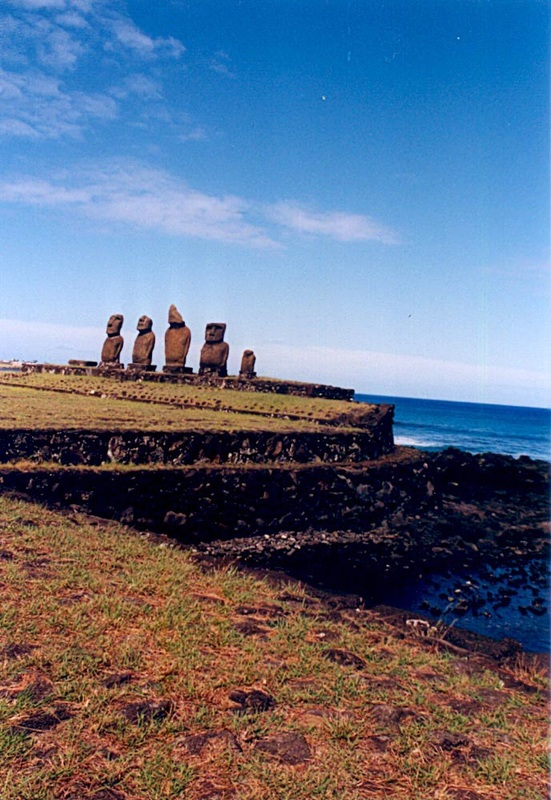
From the village, I simply hiked north along the rugged coast until I stood before the ceremonial site of Ahu Tahai. It is the perfect place for a first encounter with the gigantic stone statues. What makes this site special is that it actually consists of three separate platforms (ahu).
Picture
Picture
​AHU TAHAI
​
(The solitary figure that gives the site its name) 
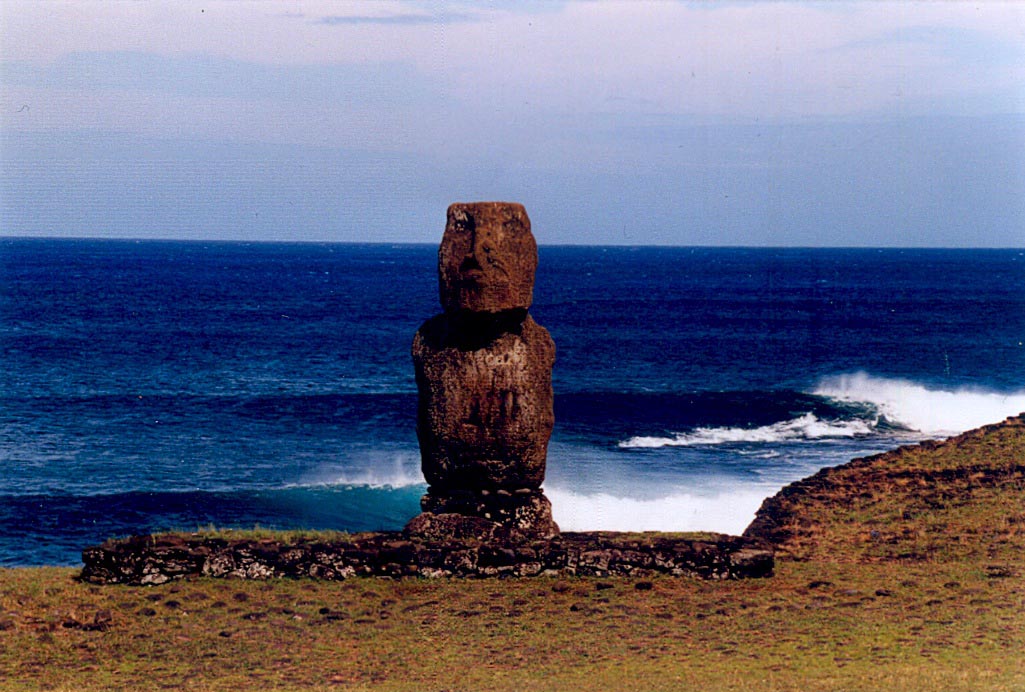
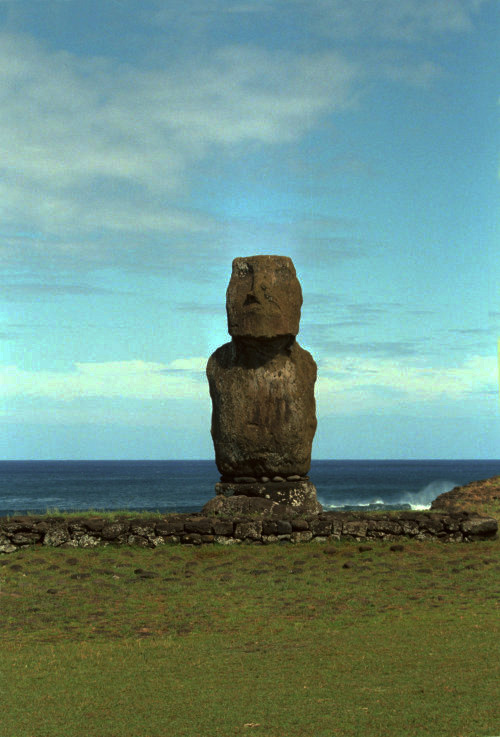
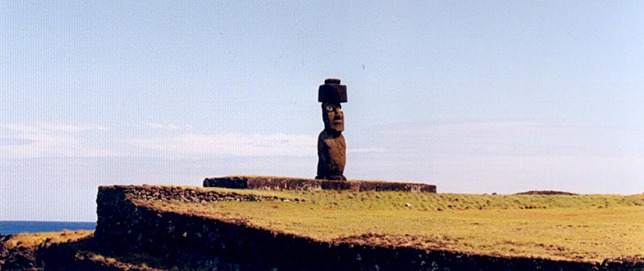
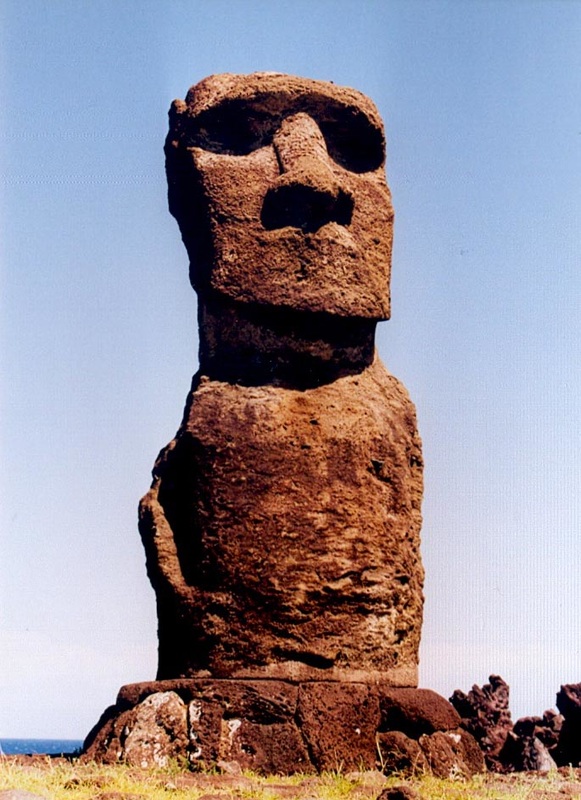
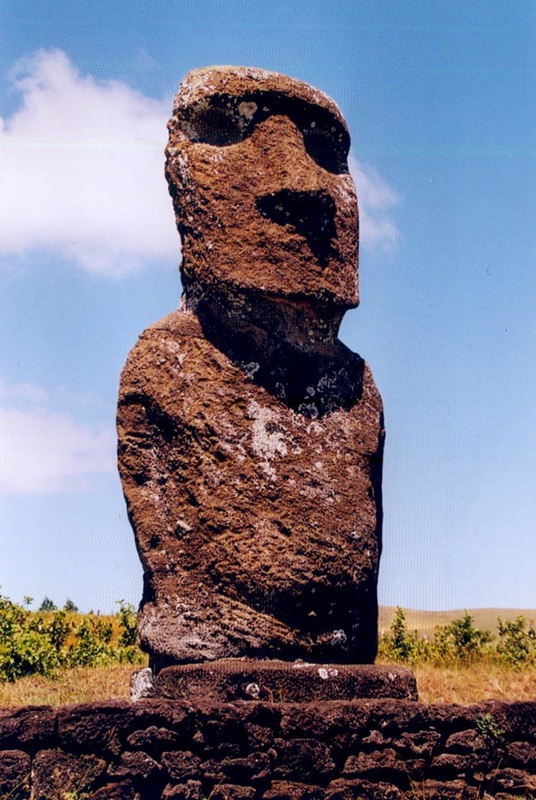
A single, imposing moai stands on its platform in the center. It has neither a topknot nor eyes, yet appears extremely dignified thanks to its massive, proud proportions.

The Significance of Ahu Tahai 
The Name: In the Rapa Nui language, "Tahai" translates simply to "Where the sun sets" or "Dusk."
​The site is located on the west coast and remains the island's most legendary spot for photographing the sunset directly behind the silhouettes of the moai.
The significance of the site: Ahu Tahai was not merely a burial ground or a purely ceremonial site; it was the political and religious heart of a powerful clan. Surrounding the platforms, archaeologists have found the remains of *hare paenga* (the typical Polynesian boat-shaped houses where chiefs resided), cooking pits (*umu*), and even a ramp for launching canoes into the sea.


AHU VAI URI 
​
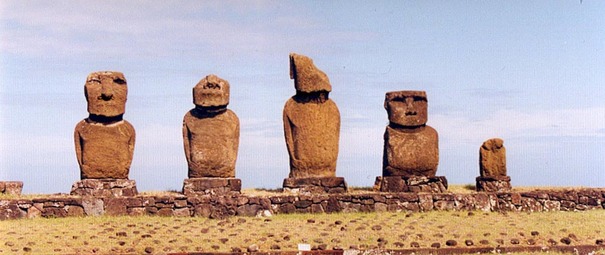
(The Five-Headed Gang)
Picture
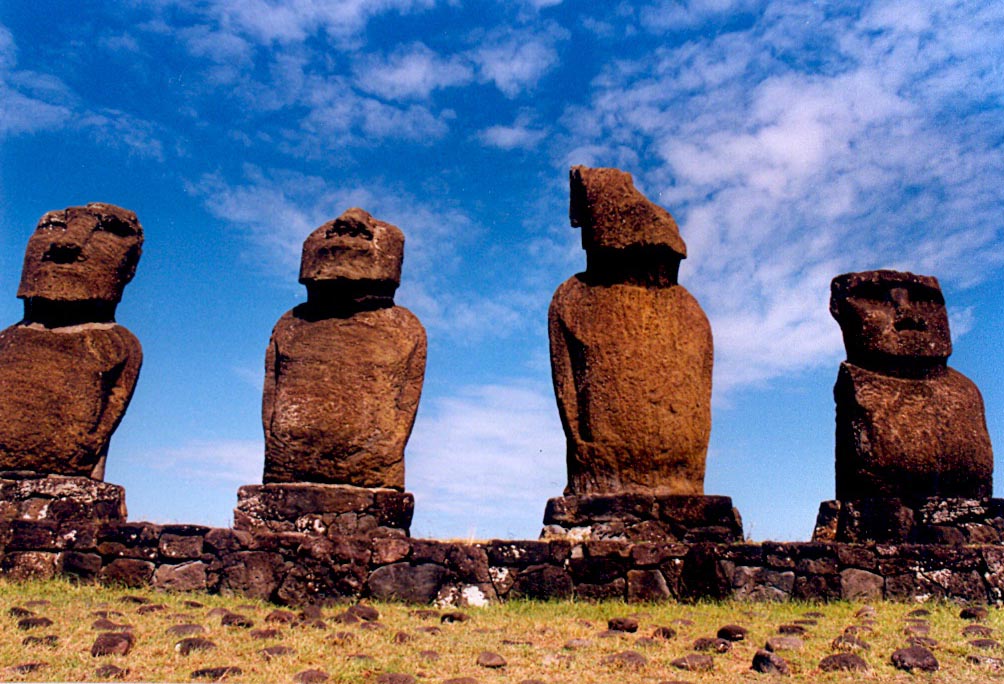
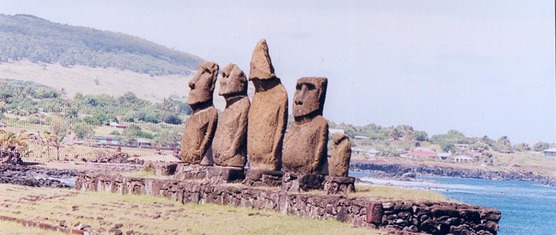
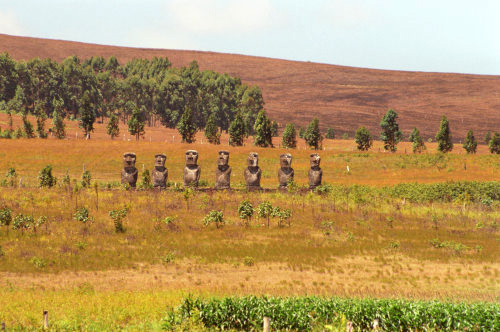
As you approach the site, your gaze is immediately drawn to this platform. Five moai stand here in a row—or at least what time has left of them. They vary in size and are, in places, heavily weathered, eroded, and damaged. This clearly illustrates how the harsh Pacific wind has gnawed away at the soft tuff rock over the centuries.
The Meaning of Ahu Vai Uri
The Name: "Vai Uri" translates to "Dark Water" or "Black Water."
The Significance of the Site: This name has a very practical, life-sustaining origin. Freshwater springs flow underground from the volcano and emerge near the coast, right next to the platform. In the extremely porous volcanic landscape of Easter Island—where rivers and lakes are virtually non-existent—access to this "dark" freshwater was vital for the clan's survival. Thus, the five moai guarded not only the ancestors but also the tribe's most precious resource.
Picture
Picture
​AHU KO TE RIKU
(The Model Moai)
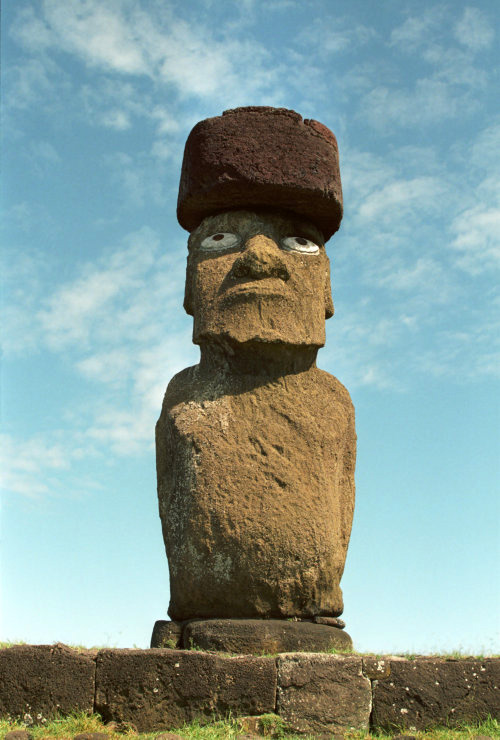
The undisputed star of the site is Ahu Ko Te Riku. It is the only moai on the entire island to which archaeologists have restored the eyes—crafted from white coral limestone with pupils of dark obsidian volcanic glass. It also proudly wears its *pukao*—that massive, red volcanic-rock topknot—atop its head. As you sit alone in the grass, with the Pacific wind whistling around your ears and this stone giant gazing steadfastly inland with its reanimated eyes, you know for certain: you have arrived at the navel of the world. My analog camera certainly had its work cut out for it here in the low afternoon sun.
Picture
General: Why do the Moai face inland?
​Almost all the Moai on the island stand with their backs to the sea. They face the village because they represent reincarnated ancestors and chiefs. Through their gaze, they cast their *mana* (their spiritual protective energy and power) over the living members of the clan to protect and bless them.
Daily life at Ahu Tahai​
The ceremonial ground was not a dead place, but the pulsating center of a tribe.
Facts about Ahu Tahai and its infrastructure:
  • The "boat houses" (Hare Paenga): On the lawn, one can see foundations made of black basalt stones shaped like an overturned boat. In the past, flexible branches were inserted into the holes and covered with thatch. These houses represented pure luxury and were reserved exclusively for the chiefs (Ariki) and priests.​
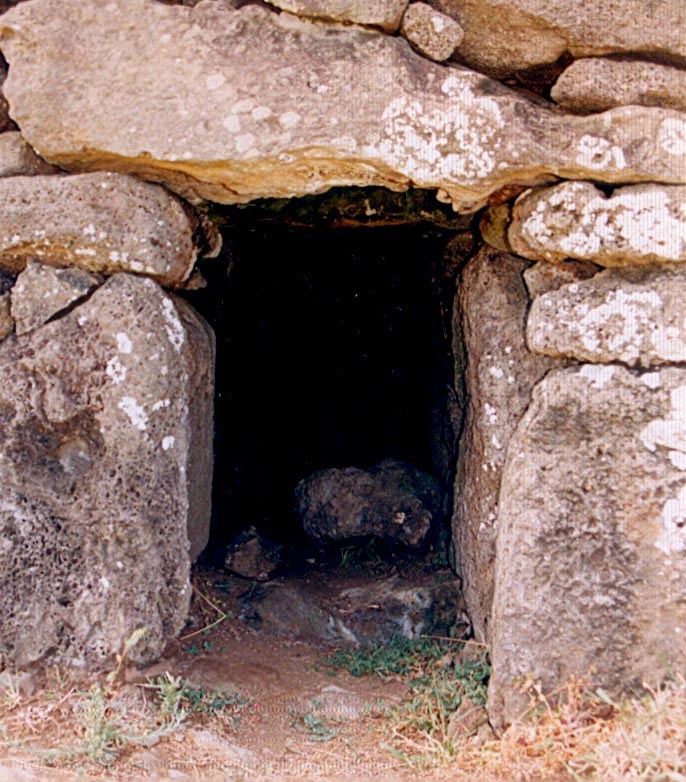
  • The dwelling caves (*ana*): The common people lived somewhat apart—often in the numerous natural lava tubes and caves found throughout the landscape, a result of the island's volcanic origins. At the Tahai complex, small cave entrances can be found right on the site. These served as permanent living quarters, offered shelter from the relentless Pacific winds, and—during the island's later, dark periods of tribal warfare—acted as secure hiding places.​
  • The infrastructure: Between the caves and boathouses, one finds stone chicken coops (*hare moa*), Polynesian earth ovens (*umu pae*), and hollows carved into the rock (*taheta*) for collecting precious rainwater.


​AHU ROA ROA
​Red crowns and stone tattoos: the craftsmanship of the Moai
Anyone photographing the gigantic stone statues on Rapa Nui can easily lose themselves in the sheer scale of the colossi.
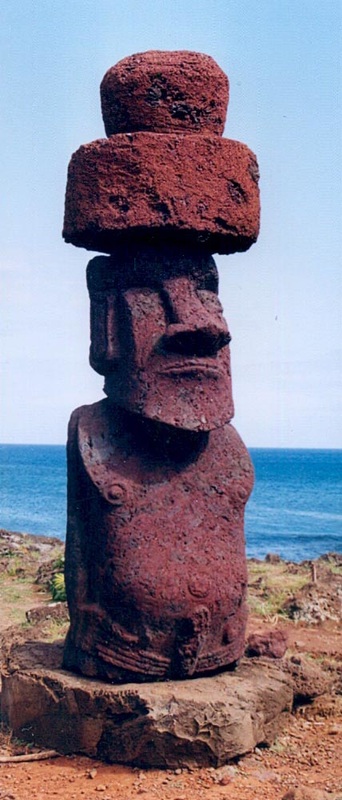
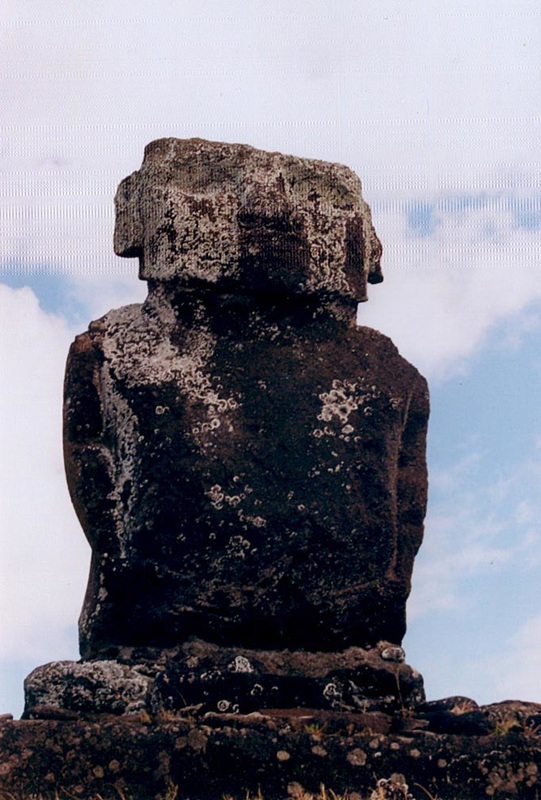
​The red hat on top is known as a *pukao*. This massive work of art was not carved from the same material as the body; instead, it originated in a completely separate crater called Puna Pau, where the rock glows a fiery red. What is striking in my photo is the shape: the topknot is carved in two tiers, resembling a majestic double crown. How the islanders managed to balance these massive red blocks—weighing tons—atop the statues' towering heads without modern crane technology remains one of humanity's great unsolved mysteries.


The second highlight is tucked away at the very base of the stone figure. A close look reveals fine lines carved into the soft volcanic tuff. These are not random scratches but traditional back tattoos and relief carvings depicting the *maro* (a ritual loincloth) and tribal affiliation. For the Rapa Nui, a moai was not merely an inanimate statue; these carved markings imbued the ancestor with spiritual power (*mana*). It is a fascinating piece of body art that has endured in the stone, withstanding the harsh Pacific winds for centuries.


Picture
Picture


​The English Chauffeur and the Banana Cave: Road Trip to Ana Te Pahu

Day two on the island kicked off with a good dose of humor. I had rented a Land Rover with three Englishmen. The problem? The guys were absolutely terrified—scared to drive on Rapa Nui! Apparently, they were worried about driving on the left and having the steering wheel on the "wrong" side. Anyone familiar with the island back in 2001 knows that’s a total joke—there were hardly any other cars around, let alone road signs or confusing intersections. So, I simply took the wheel myself and drove the guys over the bumpy, pothole-riddled dirt tracks.
ANA TE PAHU
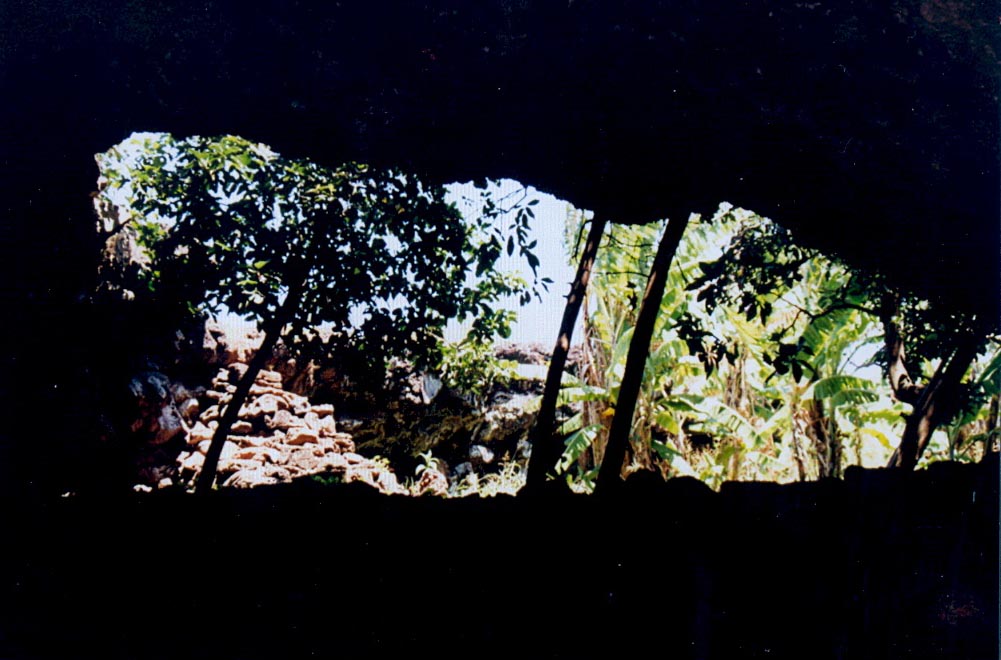
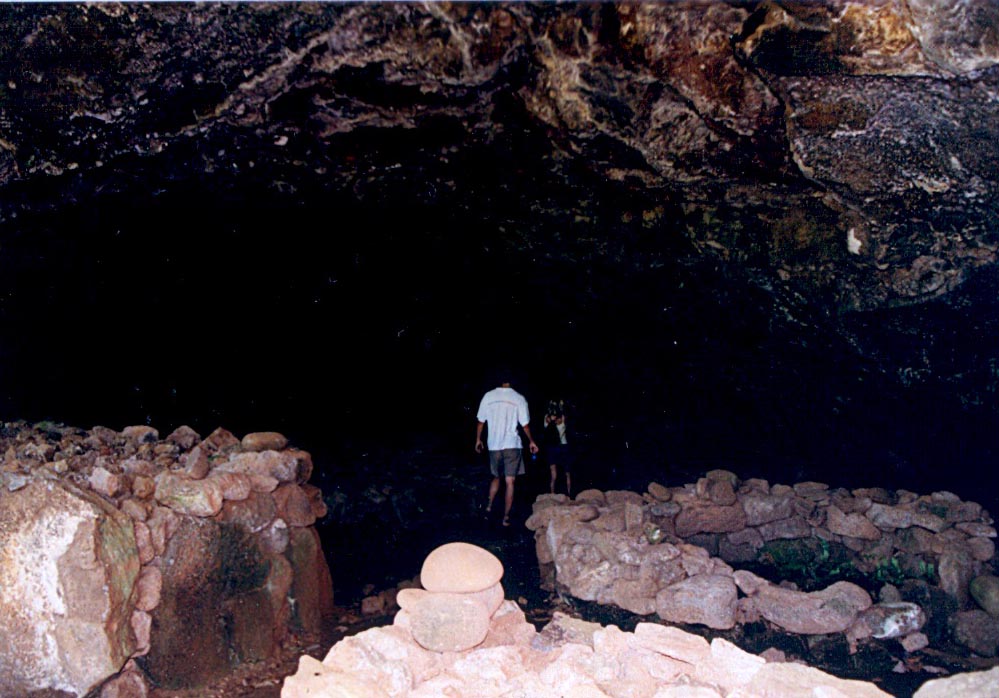
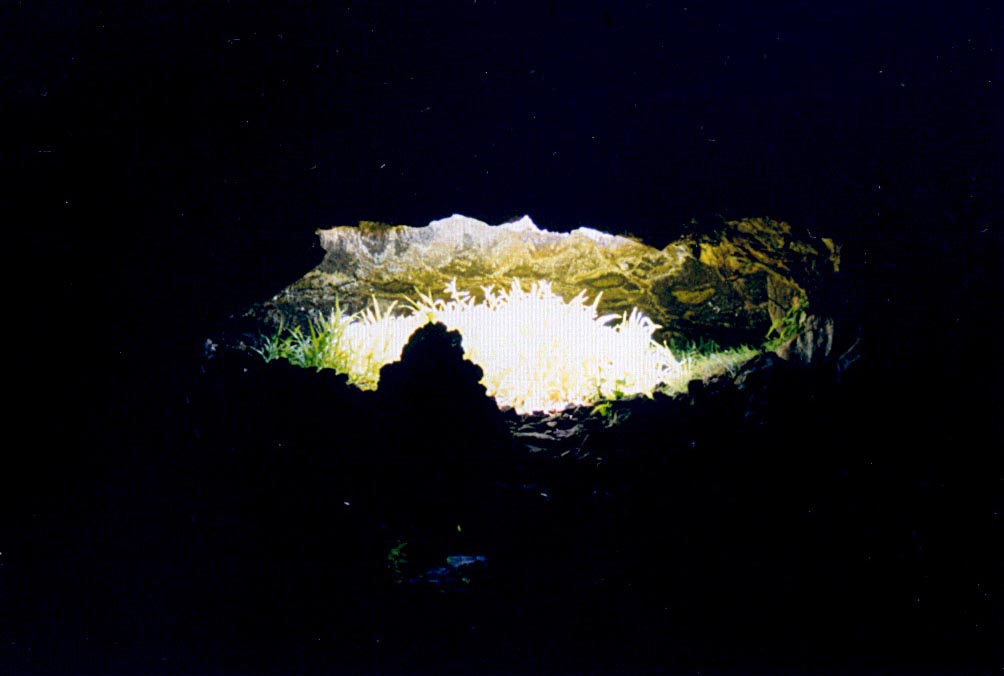
Our first stop: Ana Te Pahu. This isn't just an ordinary pile of rocks; it is the island's largest cave system. Essentially, it is a massive underground lava tube formed millennia ago as the Terevaka volcano cooled. Because the roof has collapsed in places, daylight streams in. The fascinating part is that the indigenous people used these sheltered sinkholes as underground greenhouses. As we descended from the hot, windy, desert-like surface, we suddenly found ourselves in the midst of a green oasis filled with lush banana trees, taro plants, and grapevines—a striking contrast to the barren landscape above.

AHU AKIVI or "Siete Moai"
Picture
Calendar giants and the finale at the palm-fringed beach: Ahu Akivi and Anakena
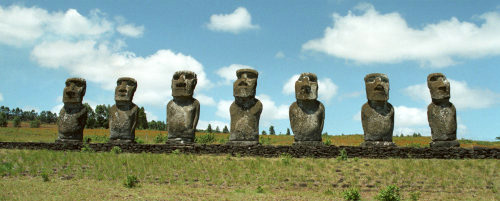
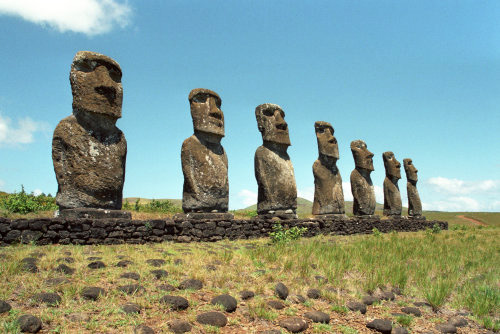
Navigating Rapa Nui in 2001 requires no GPS gimmicks—just a solid four-wheel drive. After getting my English tour group back into the Land Rover, the pothole rally continued to Ahu Akivi, better known as the "Siete Moai" (the seven Moai). Standing before these seven magnificent figures, you immediately notice something: something isn't quite right here! Unlike almost all other Moai on the island, these seven guys stand right in the middle of the interior and—get this—look directly out to sea.
This is no coincidence, but rather a brilliant astronomical feat by the ancient Rapa Nui. The statues were aligned precisely so that, during the spring and autumn equinoxes, they face exactly toward the sunset. They thus served the clan as a gigantic stone calendar, marking the perfect time for sowing crops. According to another legend, the seven giants represent the scouts whom the first king sent ahead to explore the island.
Picture

Ahu Huri a Urenga
The Four-Handed Astronomy Mystery: Ahu Huri a Urenga
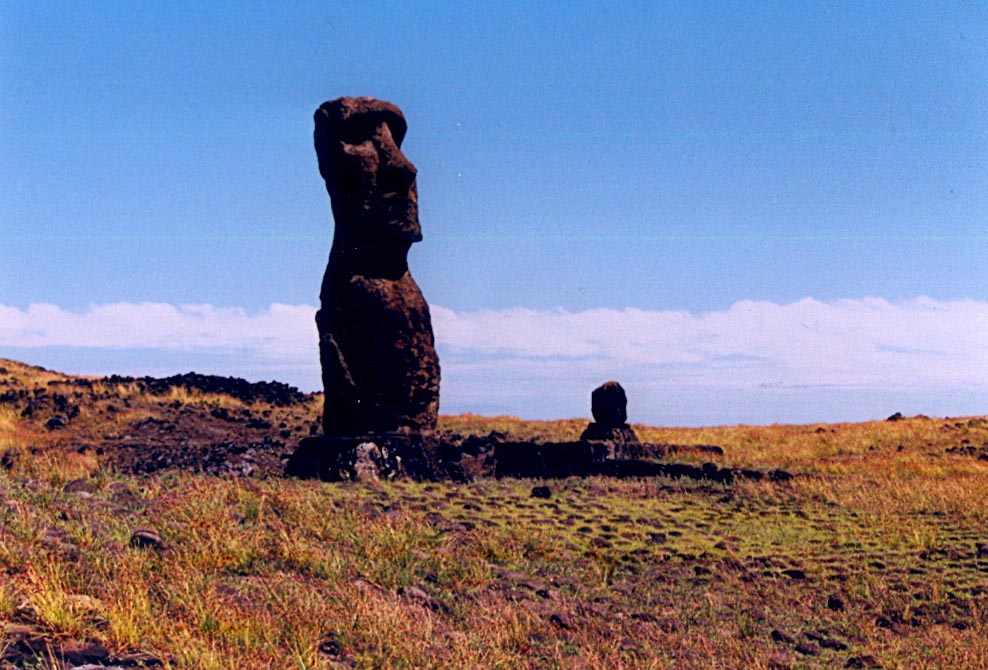
Anyone navigating the island’s interior, away from the coastline, stumbles upon a genuine archaeological mystery: Ahu Huri a Urenga. My analog photo captures a solitary moai that continues to leave researchers baffled to this day. If you look very closely, you spot a bizarre detail: this moai is the only statue on all of Easter Island that actually has two pairs of hands—four hands in total—carved into its stone body! Whether this was intended to symbolize superhuman spiritual power, or if the sculptors simply had to correct a major mistake made in the soft volcanic tuff, is something no one knows anymore.
Yet the fellow was not merely an oddity to look at; it was a high-precision stone observatory. The ancient Rapa Nui deliberately built the platform at an angle within the landscape. The statue was aligned with a deviation of less than one degree so that, on the winter solstice—the shortest day of the year—it gazes precisely at the rising sun. For the local clan, therefore, the colossus served as the ultimate calendar for tracking time.
​To the right of the Giant, a small stone structure rises from the dry grass. It is a historic cremation platform—a ritual hearth used for cremations. Back in 2001, this four-armed astronomical rebel stood in a state of absolute, undisturbed solitude that translates incredibly well on film.

​Bahia de Anakena: AHU NAU NAU
​From the domestic calendar to a South Sea dream: Anakena Beach and Ahu Nau Nau
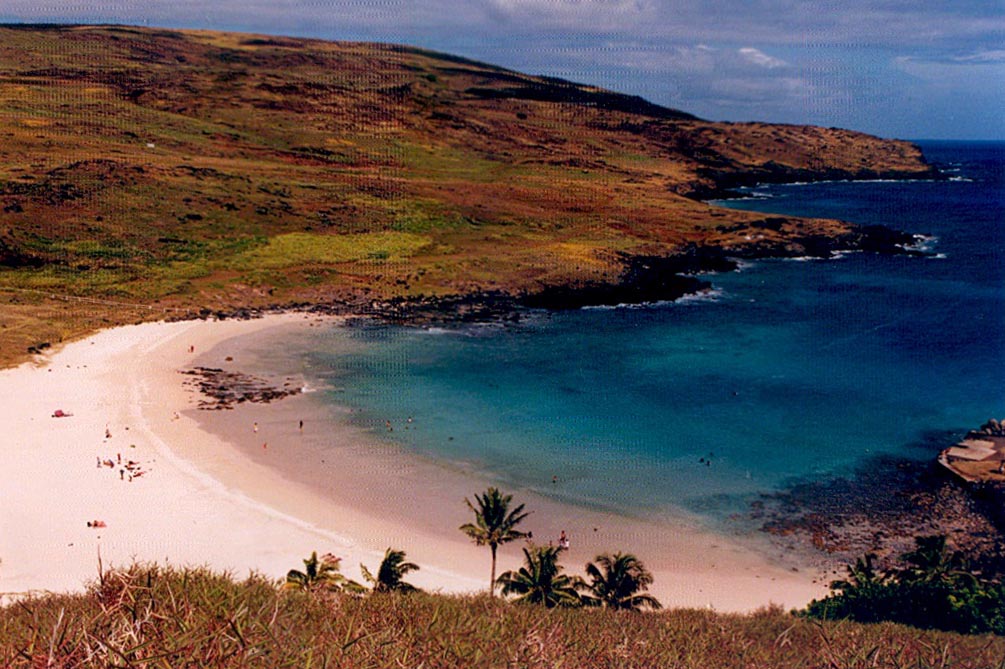
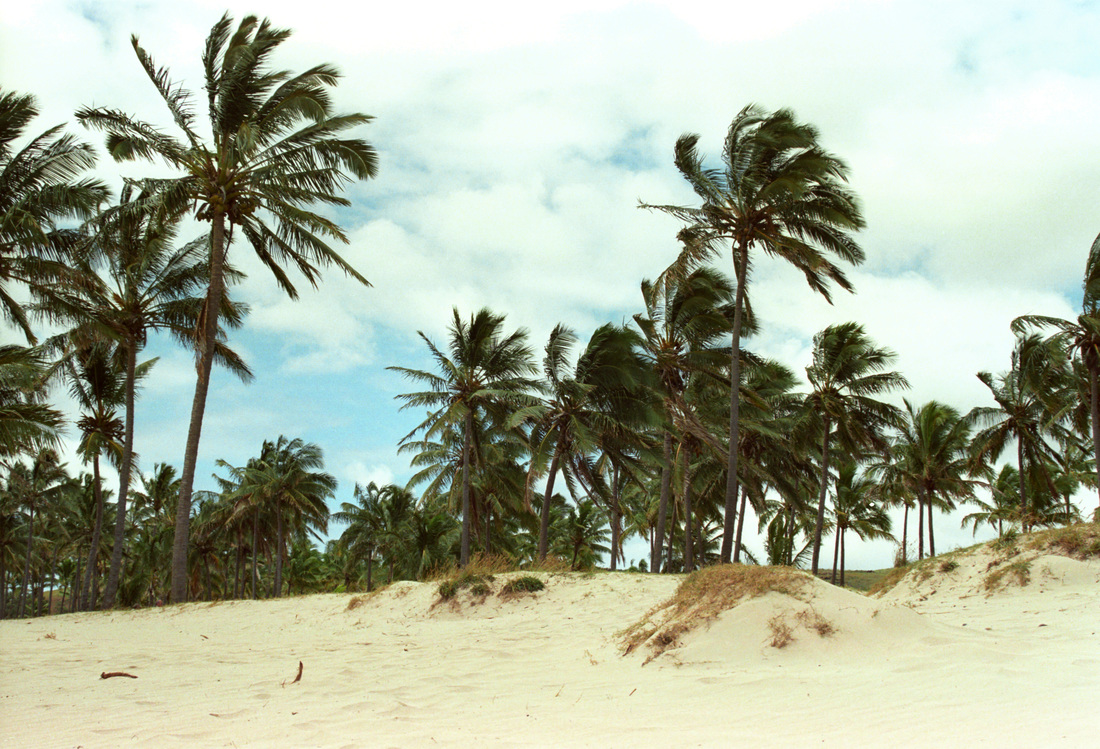
​After the dusty volcanic craters in the island's interior, I stepped on the Land Rover’s gas pedal again. Our off-road rally across the island finally deposited us on the north coast—and suddenly, we found ourselves in the midst of a picture-perfect Polynesian dream: Bahía de Anakena. White coral sand, swaying coconut palms, and turquoise waters. According to Rapa Nui legend, this is precisely where the mythical first king, Hotu Matu’a, came ashore in his double-hulled canoes to settle the island.
Picture
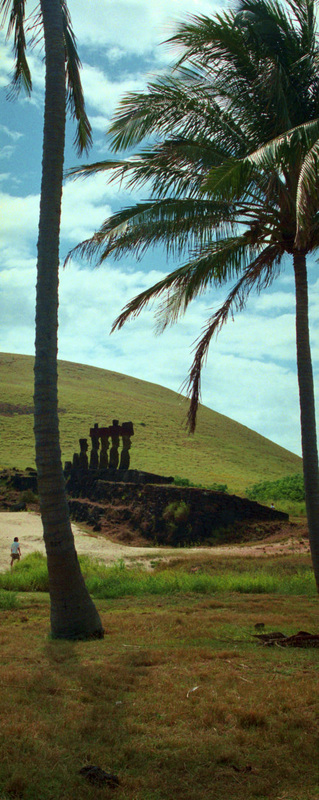
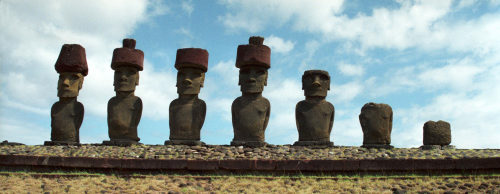
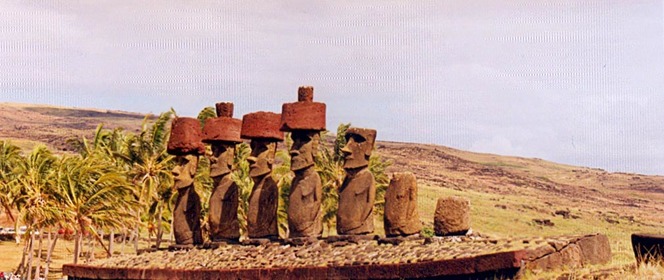
And it is on this very beach that the majestic Ahu Nau Nau stands enthroned with its seven moai. Anyone arriving here from the "topless" counterparts at Ahu Akivi will spot the difference immediately: unlike the bare-headed giants of the interior, four of the figures here proudly wear their massive red topknots (*pukao*)—carved from volcanic rock—atop their heads.
The fact that these statues are so remarkably well-preserved and show hardly any signs of weathering is due to a stroke of historical good fortune. When the clans toppled each other's statues during the great tribal wars of the 18th century, these *moai* fell gently onto the fine beach sand and were completely buried by drifting sand over the centuries. The sand acted like a giant time capsule, protecting them from the relentless Pacific winds and salty air.
Picture
Stepping behind the platform reveals the real highlight for the analog lens: because the rear sides were preserved in the sand, one can still see razor-sharp, intricate rock carvings directly in the stone, depicting ritually engraved belts and traditional body tattoos. It was right here in 1978 that archaeologists made the discovery of the century when they unearthed fragments of white coral eyes from the sand—until then, the world had believed the Moai always had empty eye sockets. Back in 2001, you could still shake the dust from your desert boots here, sit in the shade of the palm trees, and capture this historic setting on film in absolute, undisturbed peace.
Picture

´​
On the way from Bahía de Anakena to Bahía La Perouse

Te Pito o te Henua
Compass Chaos and Sacred Stones: At the Navel of the World​
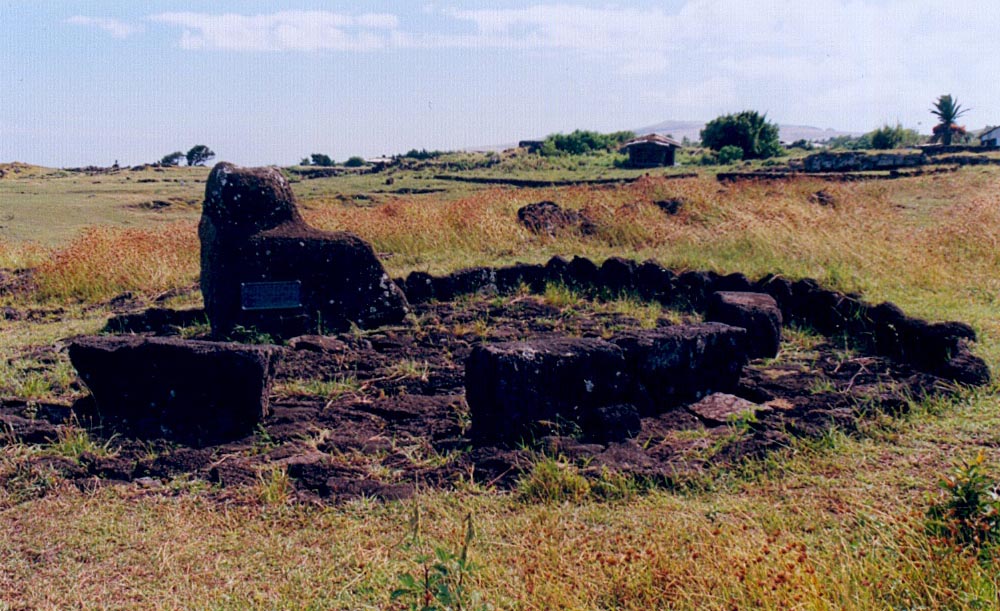
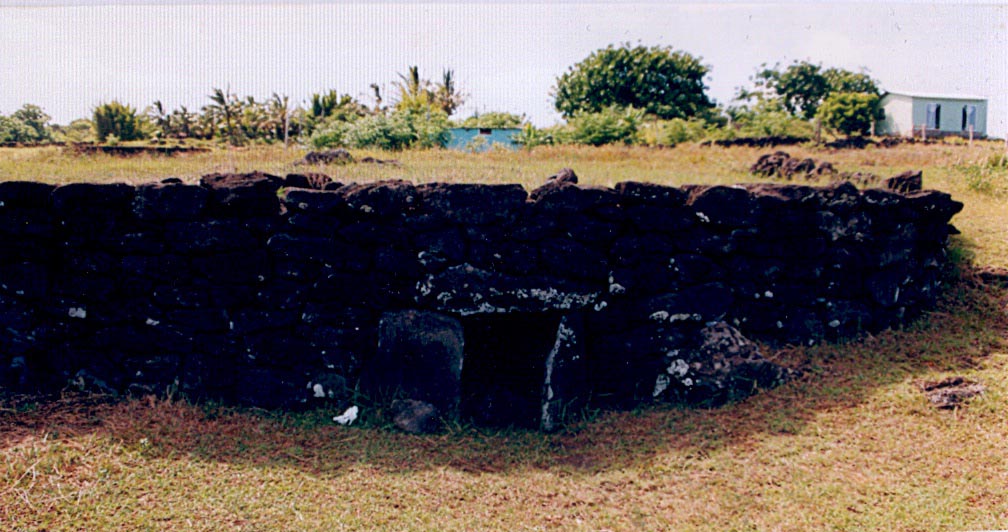
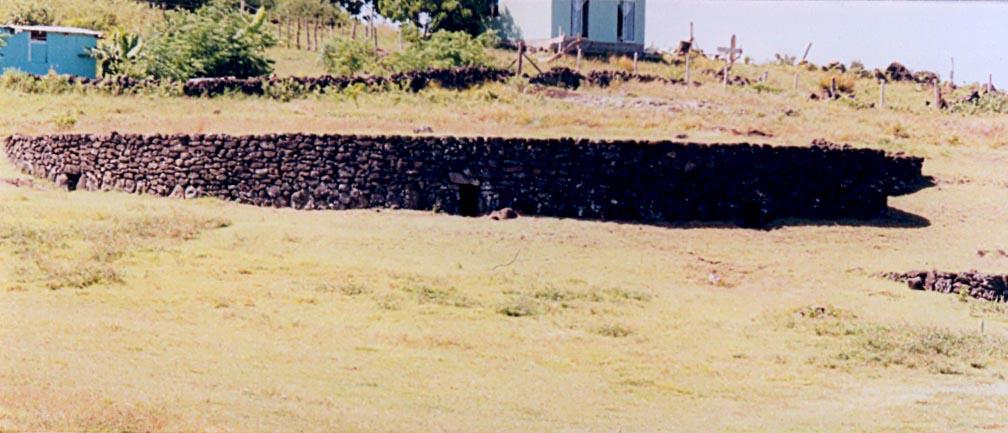
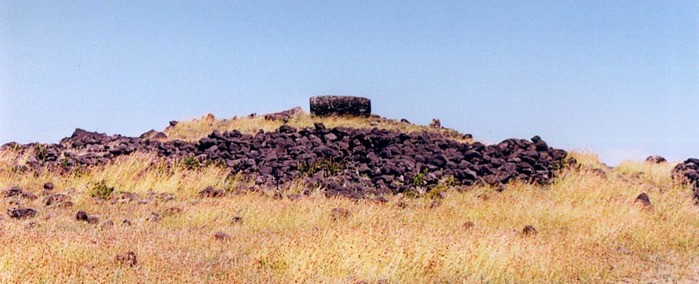
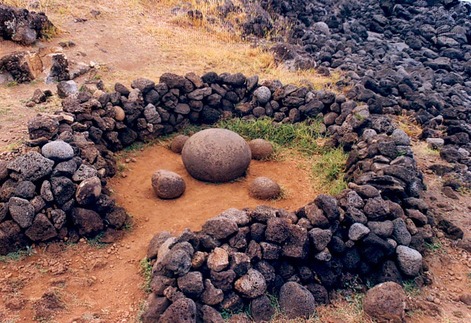
​Our Land Rover expedition carried us on to the rugged north coast, not far from Ovahe Bay. Hidden here is a place that, for the ancient Rapa Nui, was the absolute center of the universe: Te Pito o te Henua—simply translated as "The Navel of the World." Stepping off the dusty track, one finds oneself before a circular stone wall; in its center lies a large lava stone, polished to a perfectly smooth finish.
The massive rock is not only a visual highlight for an analog camera but also a physical curiosity. If you place a compass on the stone, the needle goes haywire. The large central stone is guarded by four smaller stones that mark the exact cardinal directions. Legend has it that the first king transported the sacred stone across the Pacific in a canoe. Back in 2001, you could still place your hands undisturbed on the sun-warmed stone to drive the desert chill from your bones. In any case, my three English companions in the back seat and I were left speechless after this spiritual stopover.
Picture
Facts about Te Pito o te Henua
  • The magnetic phenomenon: The "Navel" is a large, perfectly round lava stone—smoothed by the sea—encircled by a circular stone wall. If you place a compass directly on the central stone, the needle begins to spin wildly! This is due to the lava rock's extremely high iron content, which affects the magnetic field. For the indigenous people, this was proof of concentrated spiritual energy (*mana*).
  • The four cardinal directions: The large stone in the center is framed by four smaller stones. These symbolize the four cardinal directions and represent the Polynesian worldview, in which this bay was the absolute center of the universe.
  • The King’s Gift: According to legend, the first king, Hotu Matu’a, personally brought this magical stone by canoe from Hiva, the Polynesian ancestral homeland.

AHU TE PITO KURA
The 80-ton wreck in the dust: Moai Paro - The largest colossus that ever stood
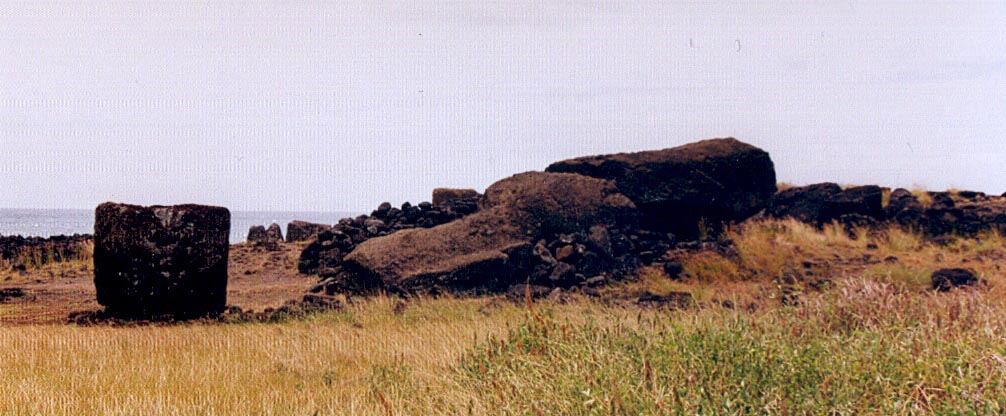
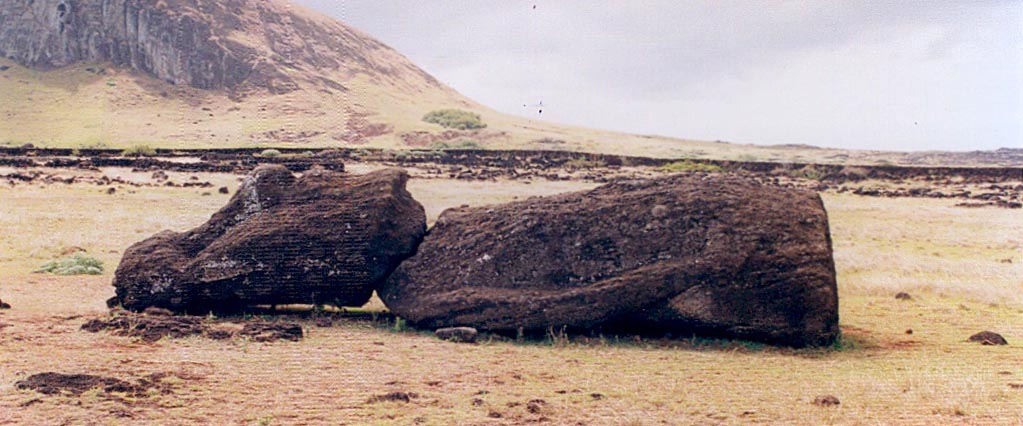
Right next to the magnetic stone, one stumbles upon the remains of a true giant: Ahu Te Pito Kura. Anyone standing before these ruins in 2001 was looking at a record-breaking monument for the island. It was on this platform that the Moai Paro once stood—the largest Moai the Rapa Nui ever successfully transported from the quarry and erected.​
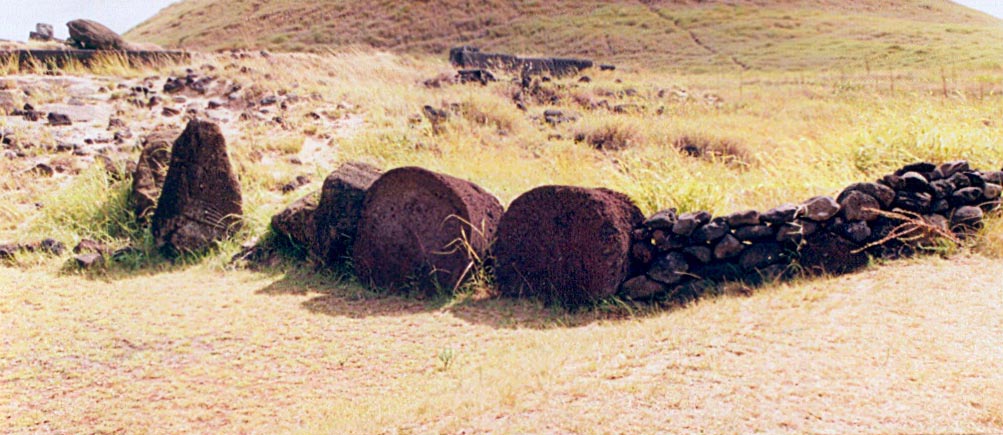
The thing is a massive colossus: the stone body measures an impressive 10 meters and tips the scales at a whopping 80 tons! Its red topknot (pukao) alone—lying in the dust nearby like a giant wheel of cheese—weighs about 12 tons.​
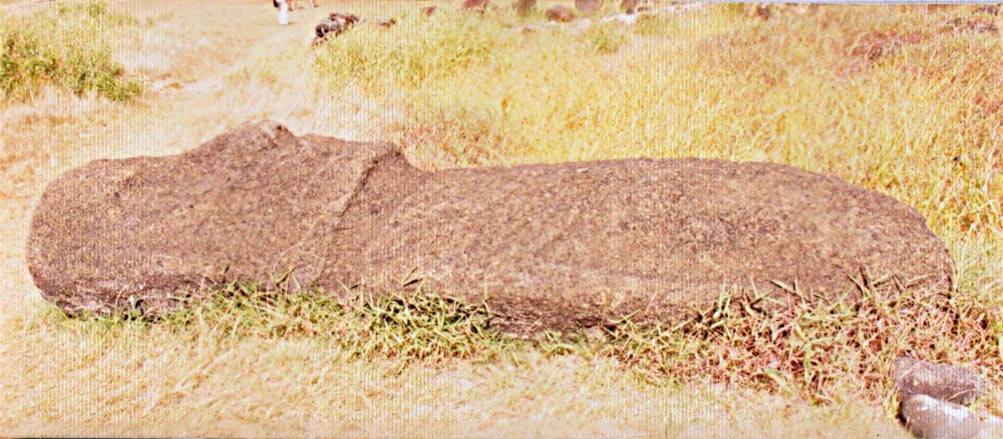
Today, however, the giant no longer stands tall. Around 1840, during the last great tribal wars, it was toppled by a rival clan. As it fell, the massive body—weighing tons—snapped clean in two. To this day, it lies face-down in the desert sand, revealing the unvarnished, harsh reality of the island’s history. It is a truly impressive wreck that, when captured on analog film, showcases the sheer, monumental power of the ancient builders. The British travelers in my Land Rover certainly stared in wide-eyed amazement at such immense proportions.

Bahia La Perouse
The Hideout in the Volcanic Rock: The Cave World of La Perouse Bay​
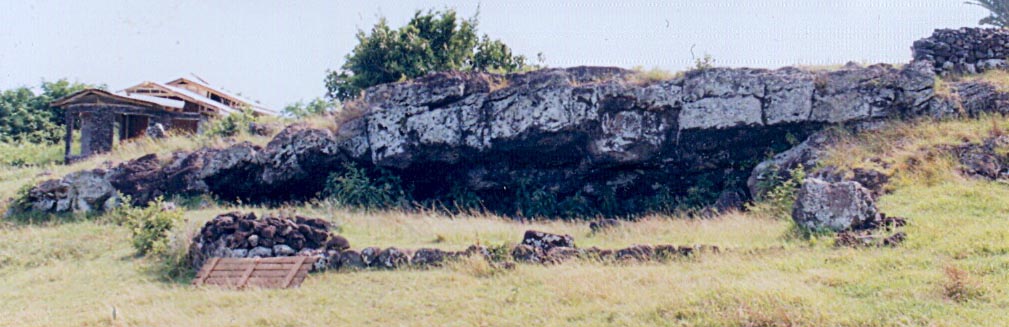
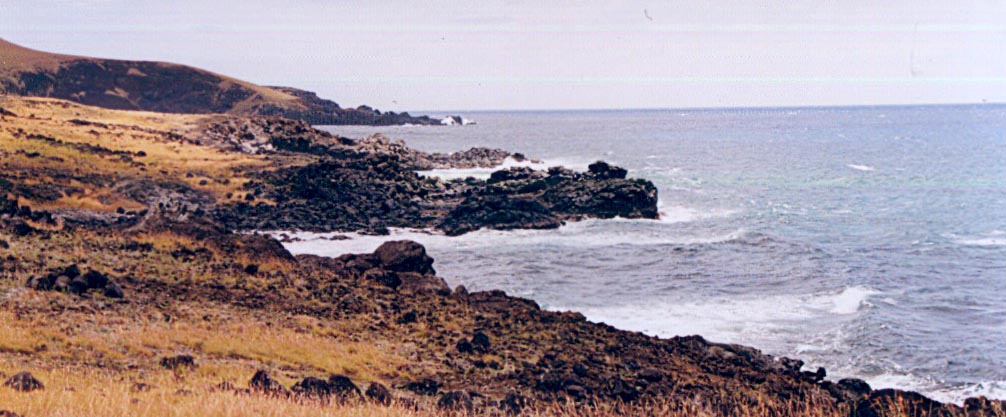
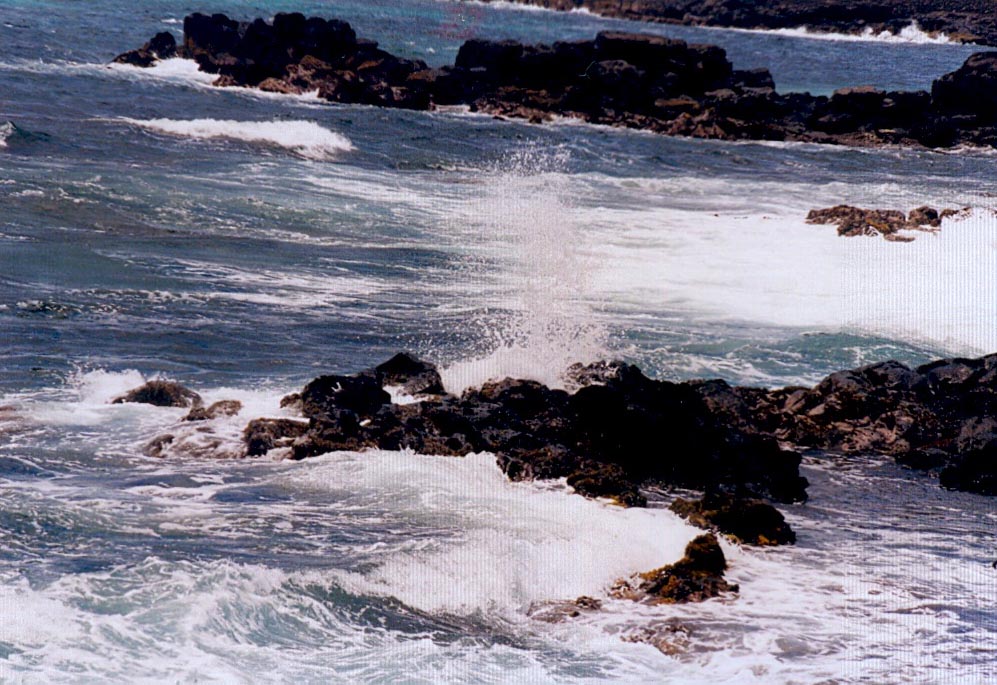
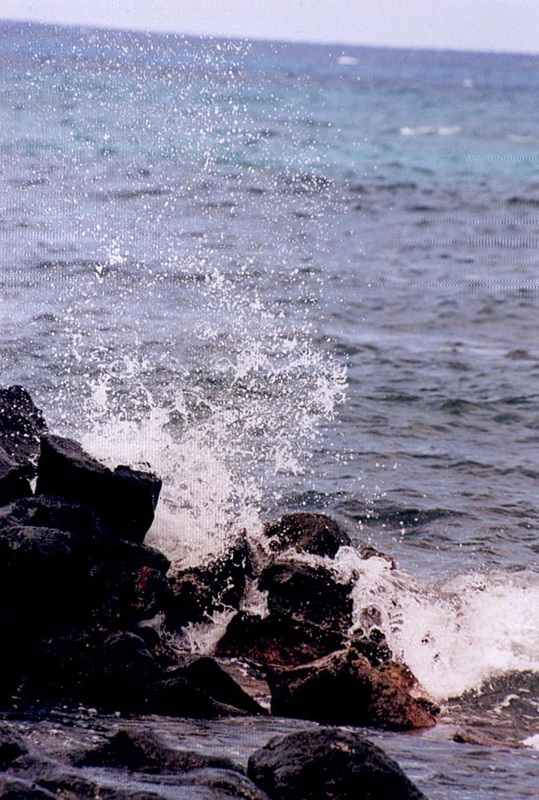
Our Land Rover rumbled on toward the wild northeast coast and Bahía La Perouse. Anyone standing on the rocky shore here back in 2001 could feel the raw power of nature firsthand—waves crashing unchecked against the black volcanic rocks and the wind whistling fiercely around your ears. The bay was named after the French explorer Count La Pérouse, who dropped anchor here in 1786. While most people visit solely for the nearby *moai* ruins, I focused my analog lens on the cliffs and the ground.
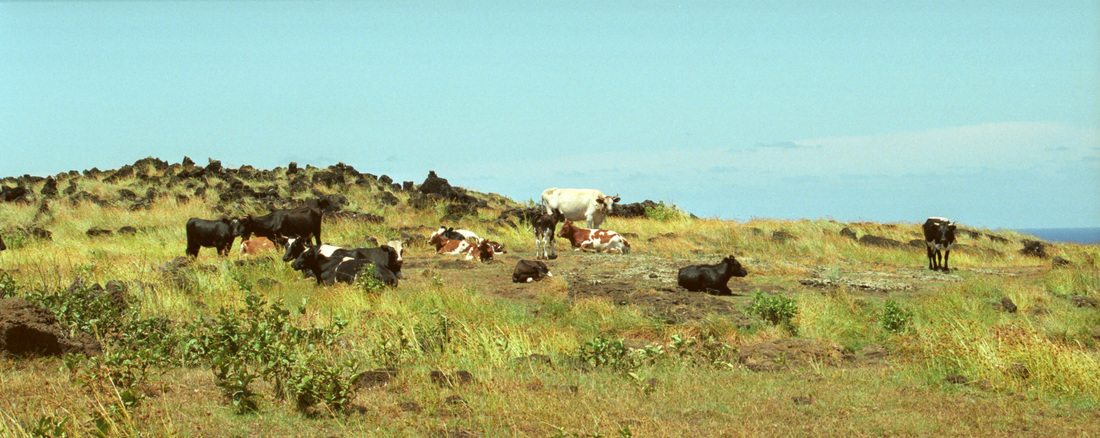
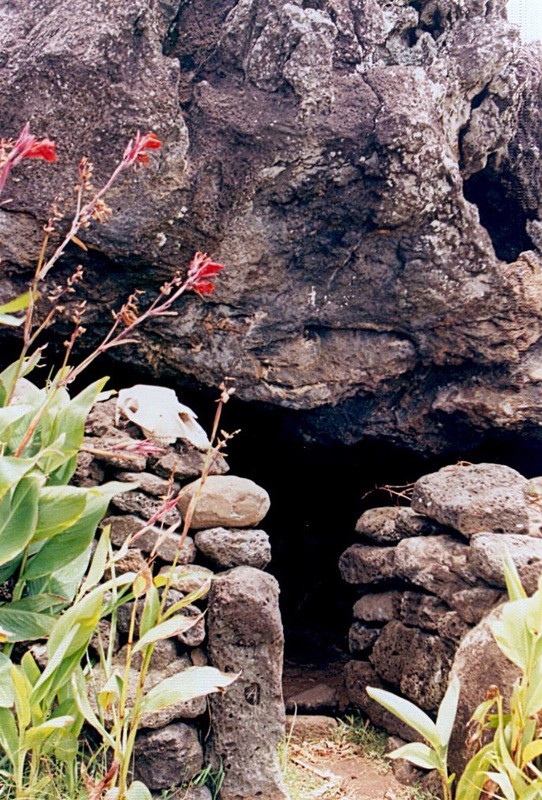
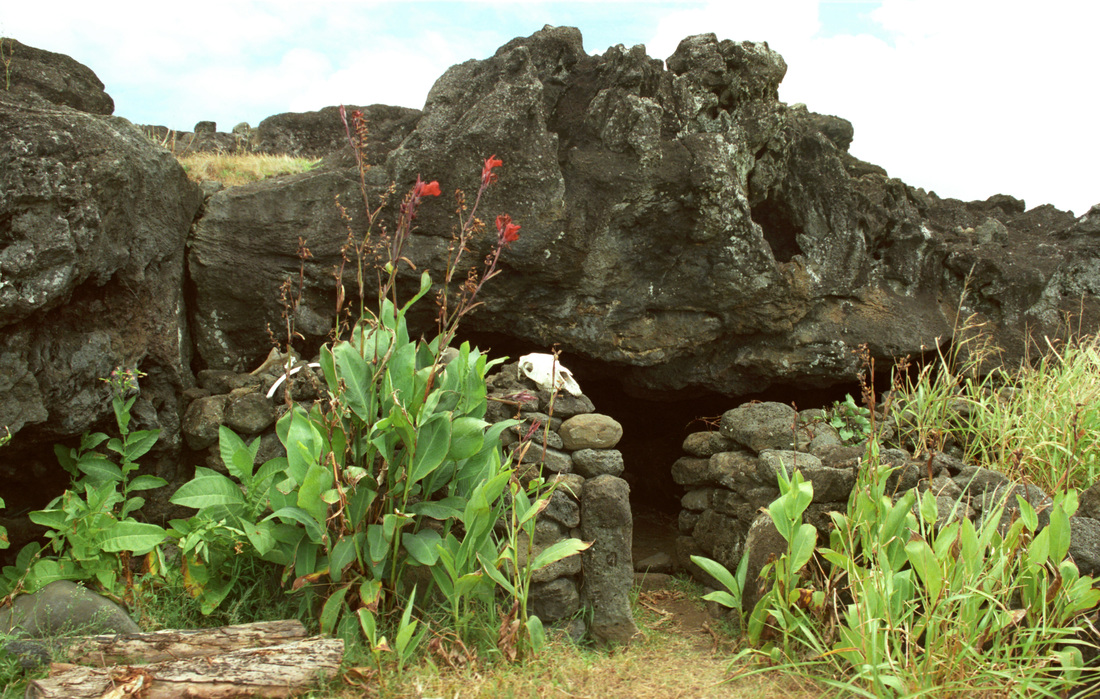
The real highlight here actually lies underground: the clans' former cave dwellings (*ana*). Easter Island’s volcanic rock is extremely porous; like a giant, fossilized sponge, it is riddled with hundreds of subterranean lava tunnels. During the island's turbulent history, when tribal wars raged, the indigenous people retreated into these very passages. Inside the cool darkness, clean fresh water collected, and people were completely safe from enemy scouts. They even built stone earth ovens (*umu pae*) at the cave entrances and used the damp, sheltered ground to cultivate crops. Back in 2001, if you climbed into these narrow passages with a flashlight, you could explore it all in complete solitude, with no barriers or fences standing in your way.

Picture
Ahu Tongariki
Polynesia's Largest Stone Puzzle: 15 Giants Silhouetted Against the Light

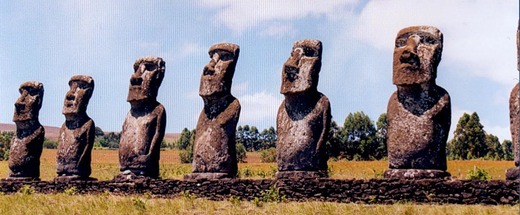
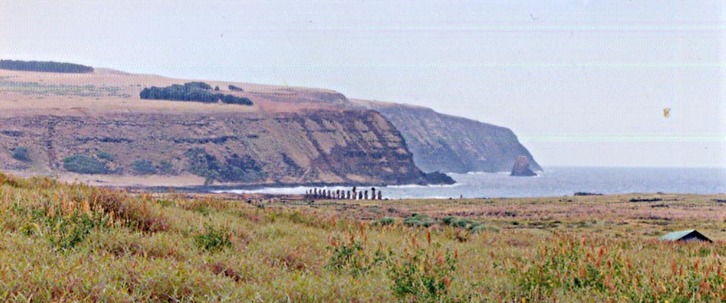
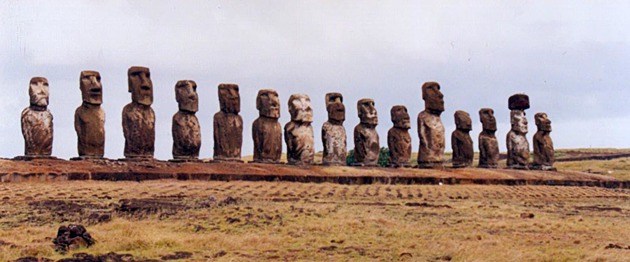
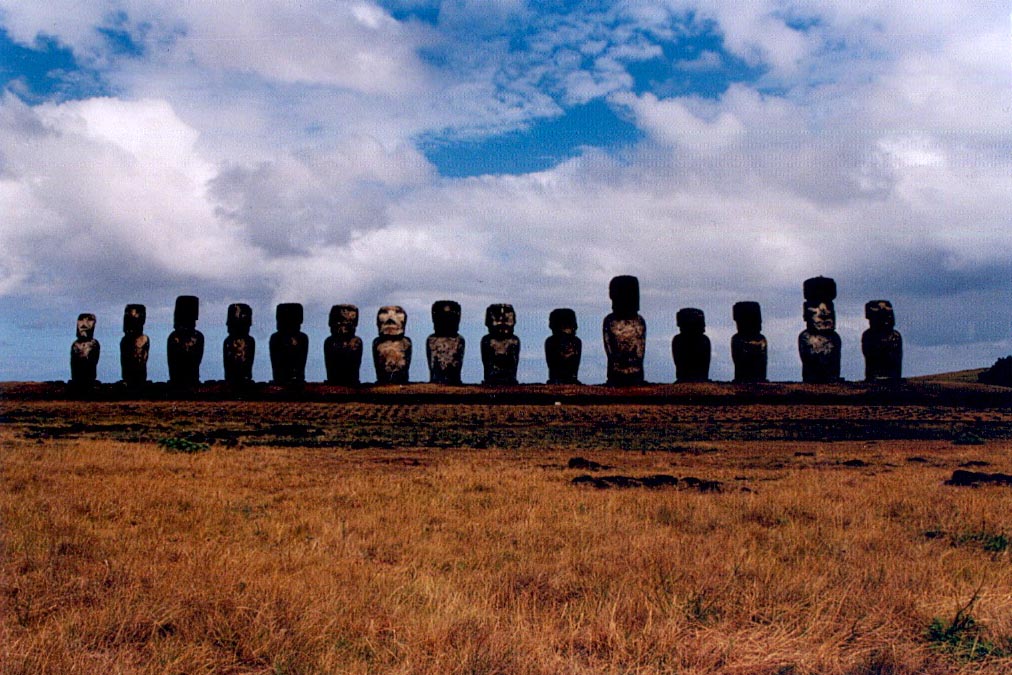
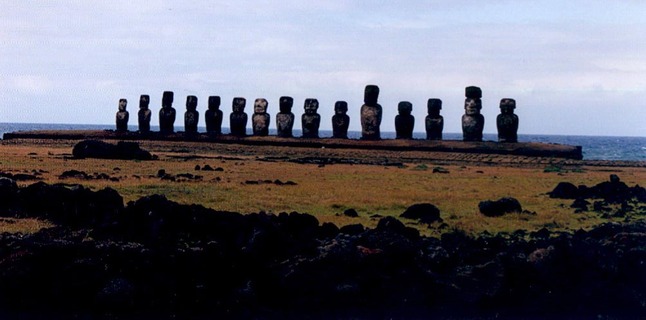
​When you round the bend in the Land Rover and brake in front of Ahu Tongariki, your jaw simply drops. This is the absolute heavyweight of Easter Island: fifteen massive moai stand in a perfect row on a platform over 200 meters long.
The history of this place is pure drama. The statues were not only toppled by warring clans in the 18th century; a brutal tsunami also struck here in 1960. The massive tidal wave flattened the entire site and swept the stone giants hundreds of meters inland. It was not until the 1990s that a Japanese company arrived with heavy-duty cranes to painstakingly re-erect the "15 brothers." Back in 2001, you could still sit in the grass here completely undisturbed and let the sheer power of these giants wash over you; there wasn't another soul in sight for miles around. Incidentally, only one of them proudly wears its red topknot (*pukao*) again—the rest of the gang remains bareheaded.
Picture
Picture
Facts about Ahu Tongariki
  • An Unconquerable Clan Power: Ahu Tongariki was the main ceremonial site of the powerful Hotu Iti clan, which controlled the entire eastern part of the island. The 15 moai were not merely spiritual ornaments but a bold display of power aimed at rival tribes to the west. Anyone passing by was meant to see immediately: this is a clan you do not want to mess with.
  • The Petrified Rulers: Each of the 15 moai represents a real, deceased chief (Ariki) or a significant ancestor of that clan. They vary in height and width, as they reflect the individual features and the significance of the respective person.
  • Their protective gaze turned toward the village: the statues all stand with their backs to the vast Pacific, staring fixedly inland. A massive settlement once lay directly in front of the platform. The Rapa Nui believed that the statues radiated their spiritual protective energy—*mana*—over the living inhabitants of the village through their eye sockets, shielding the tribe from evil spirits and famine.
Picture
Picture

Rano Raraku
The Moai Quarry
Picture
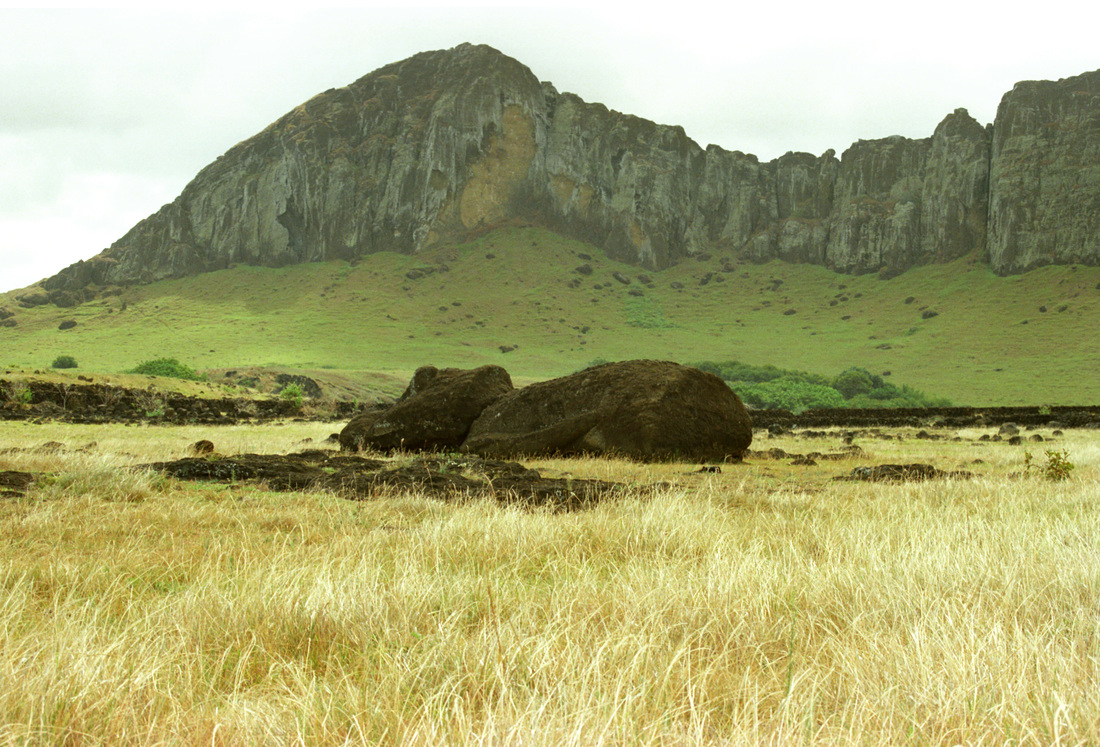
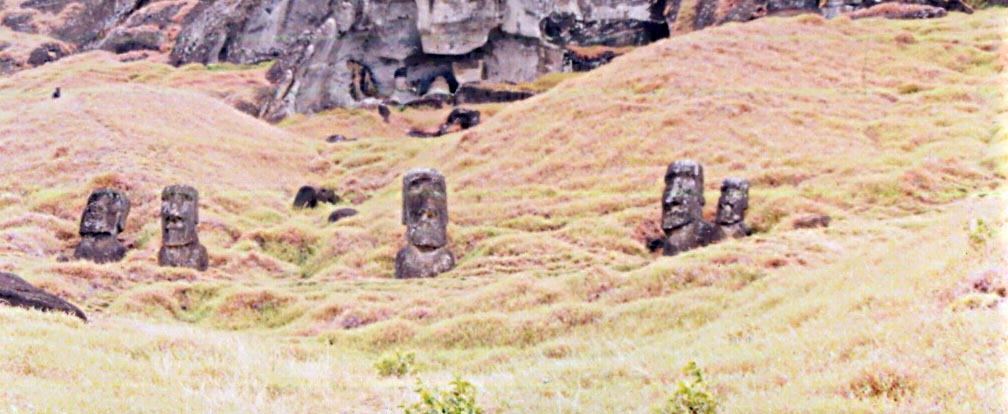
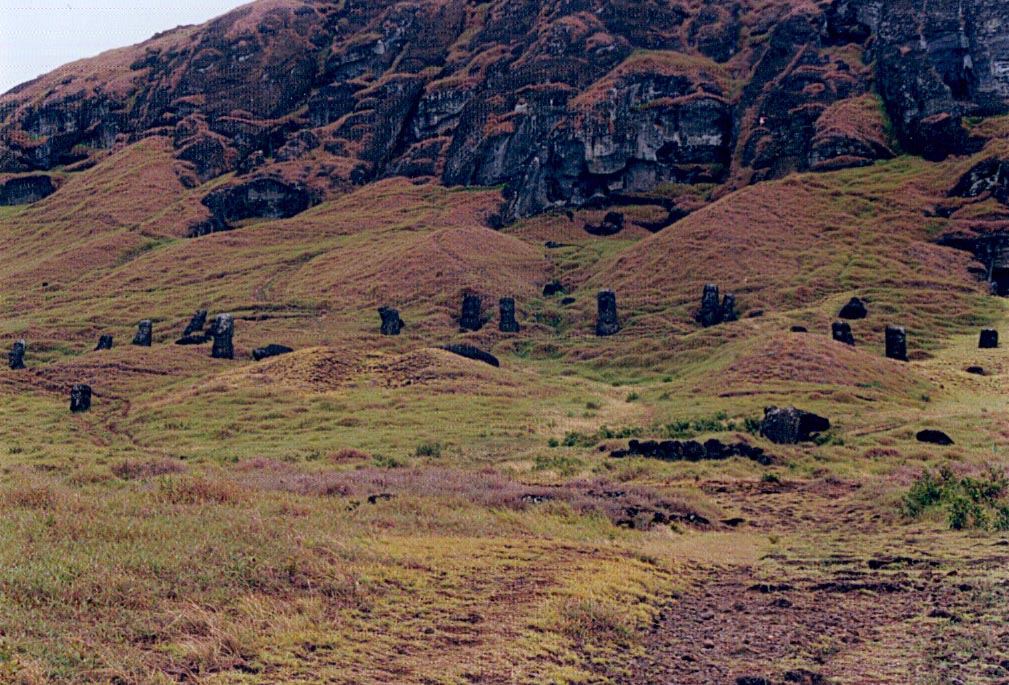
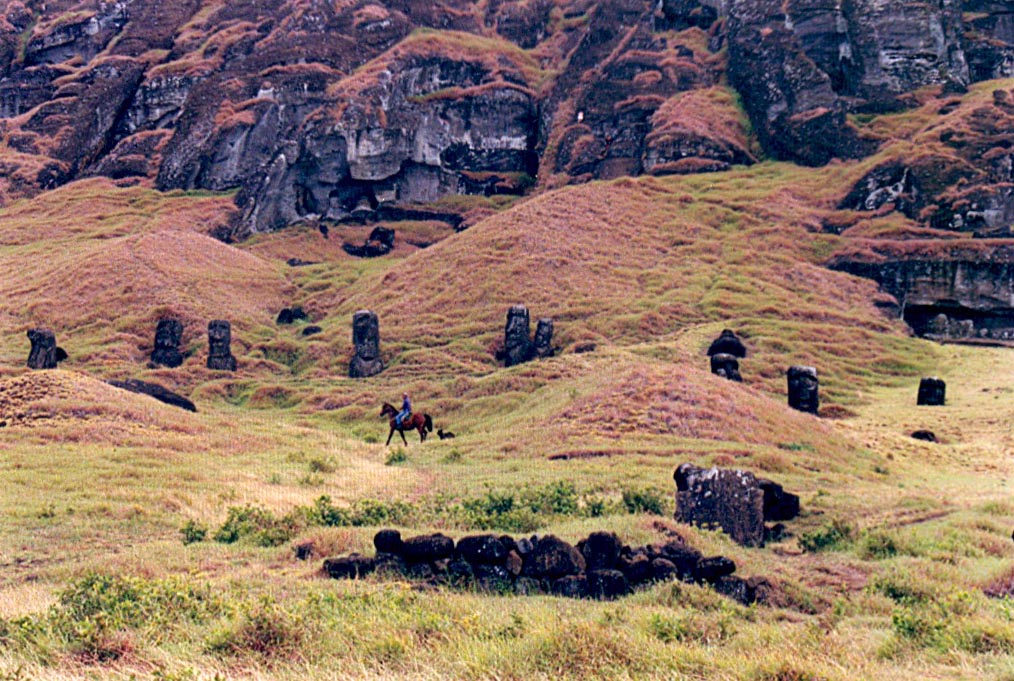
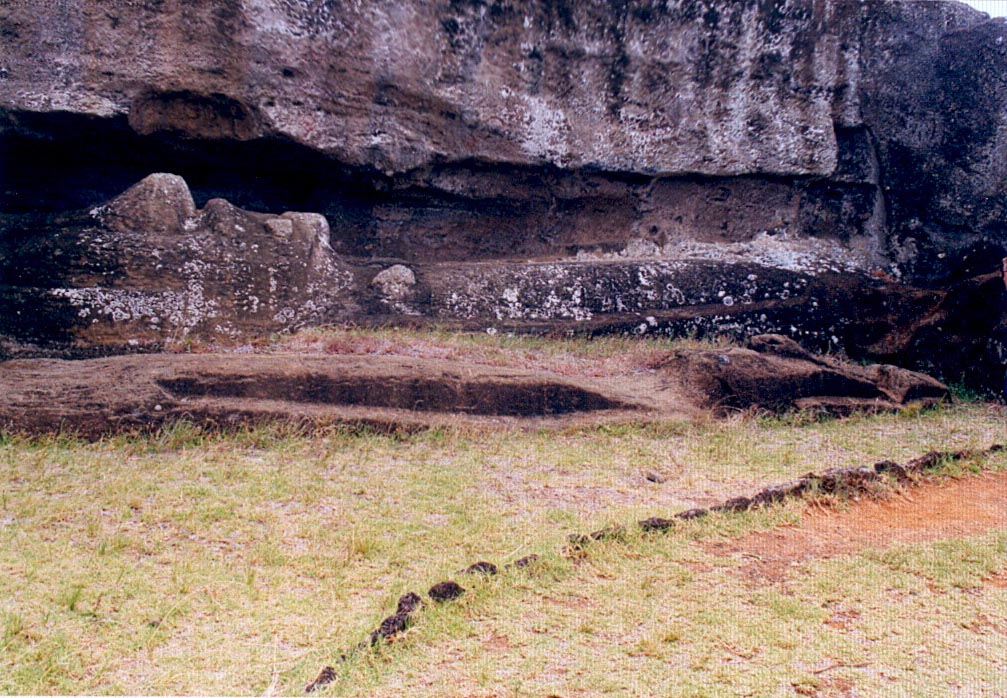
The day the chisels fell silent: The Rano Raraku sculptor’s workshop is not a museum, but a gigantic, unfinished open-air workshop
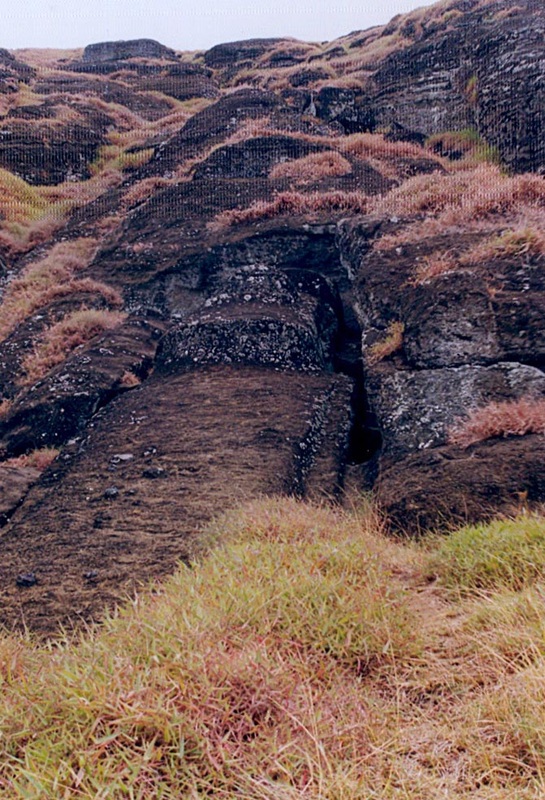
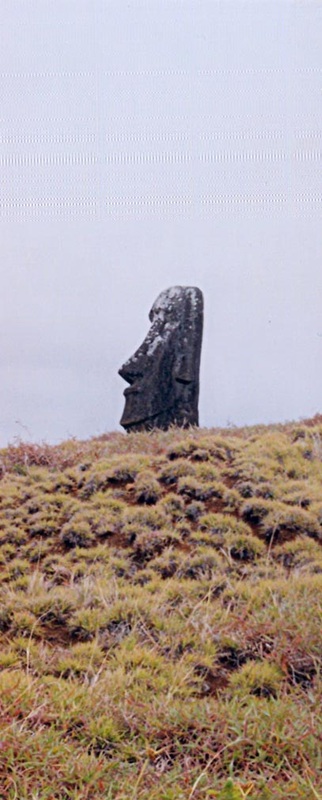
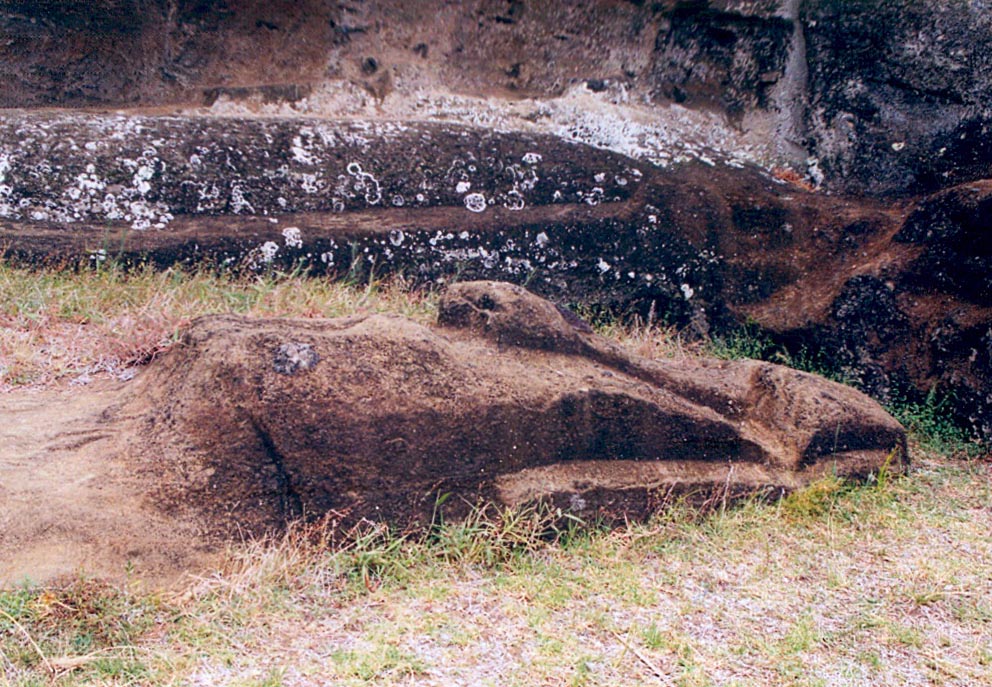
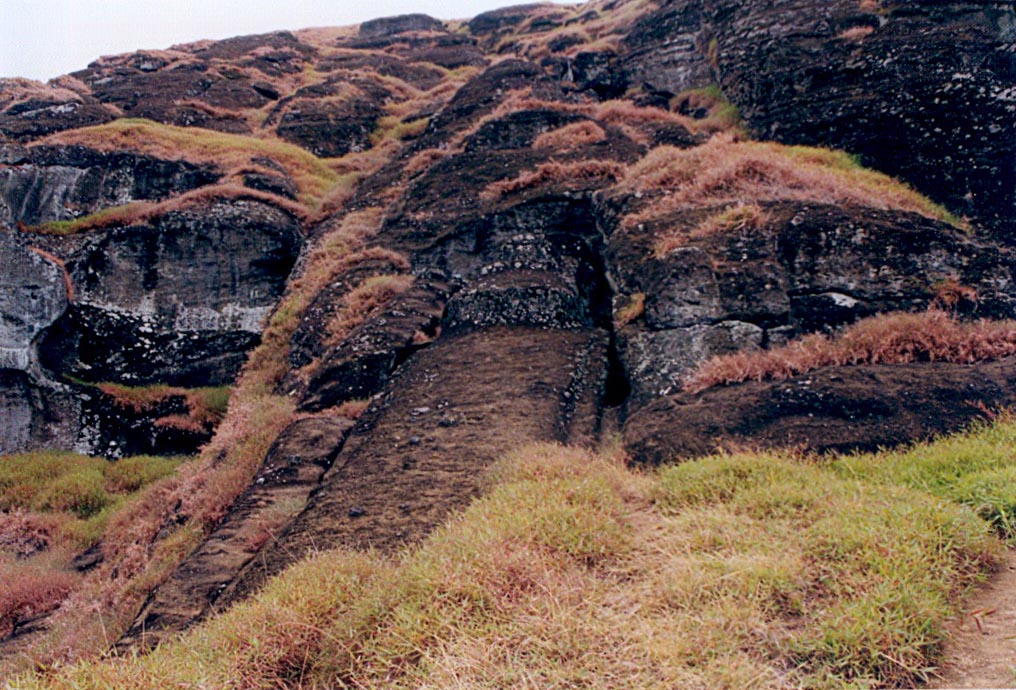
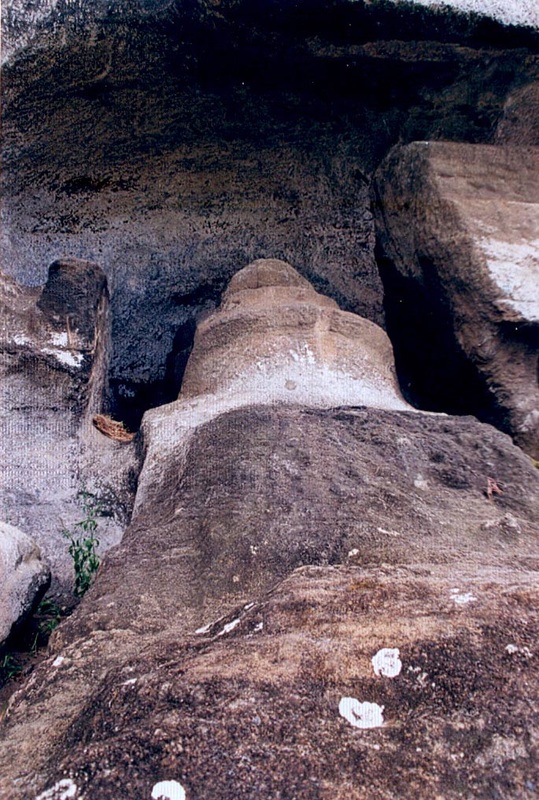
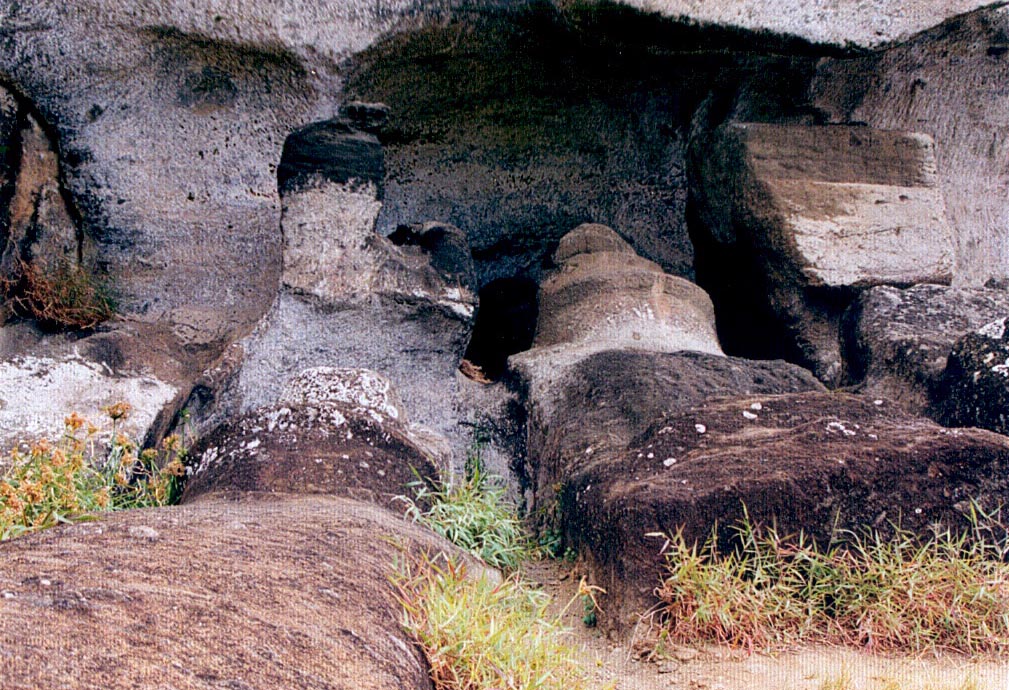
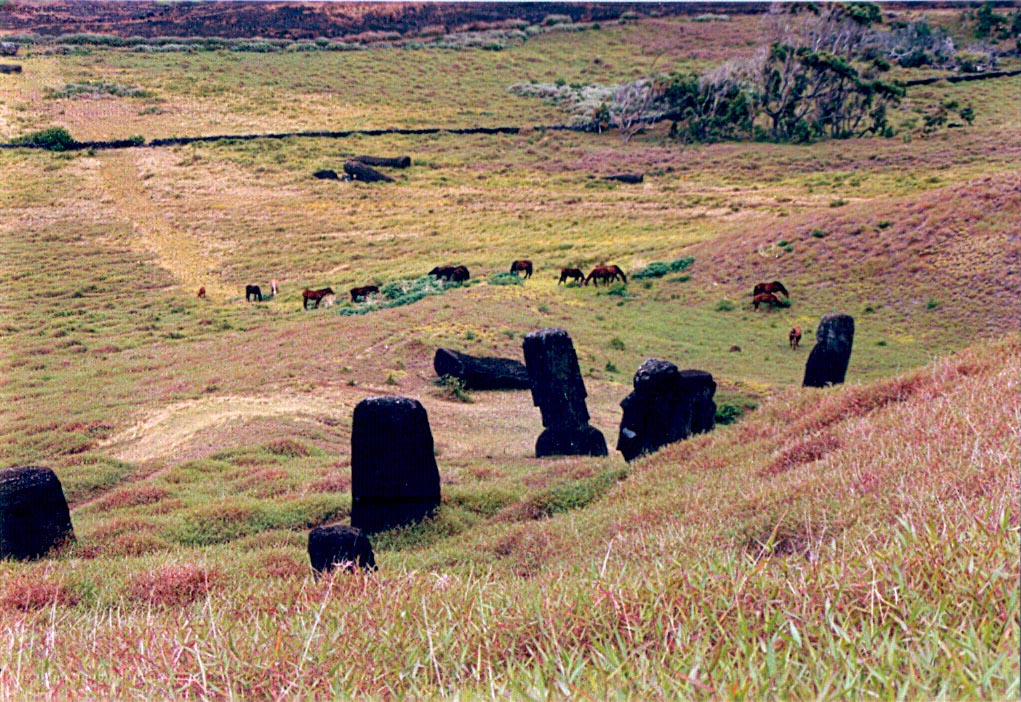
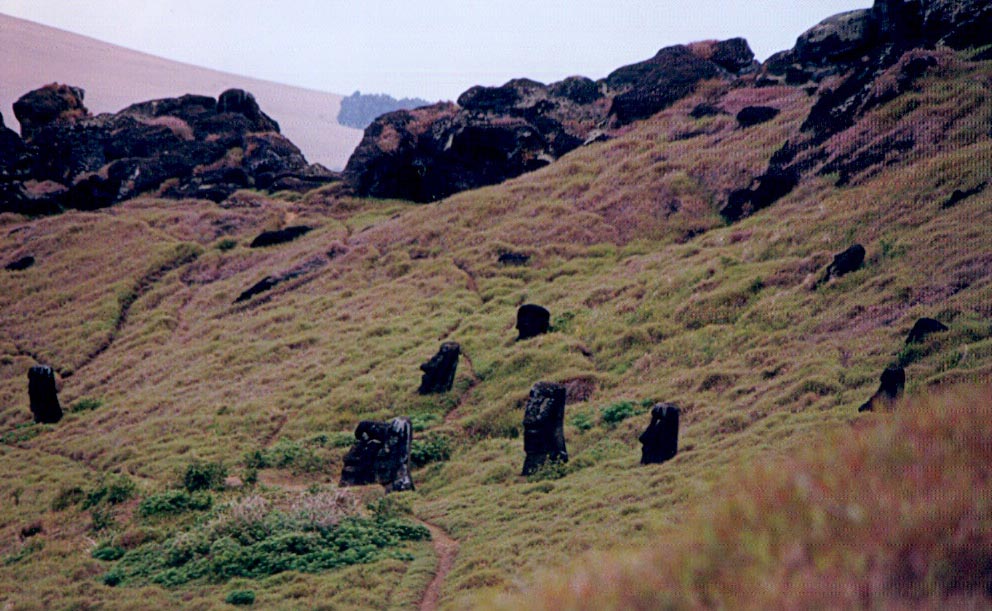
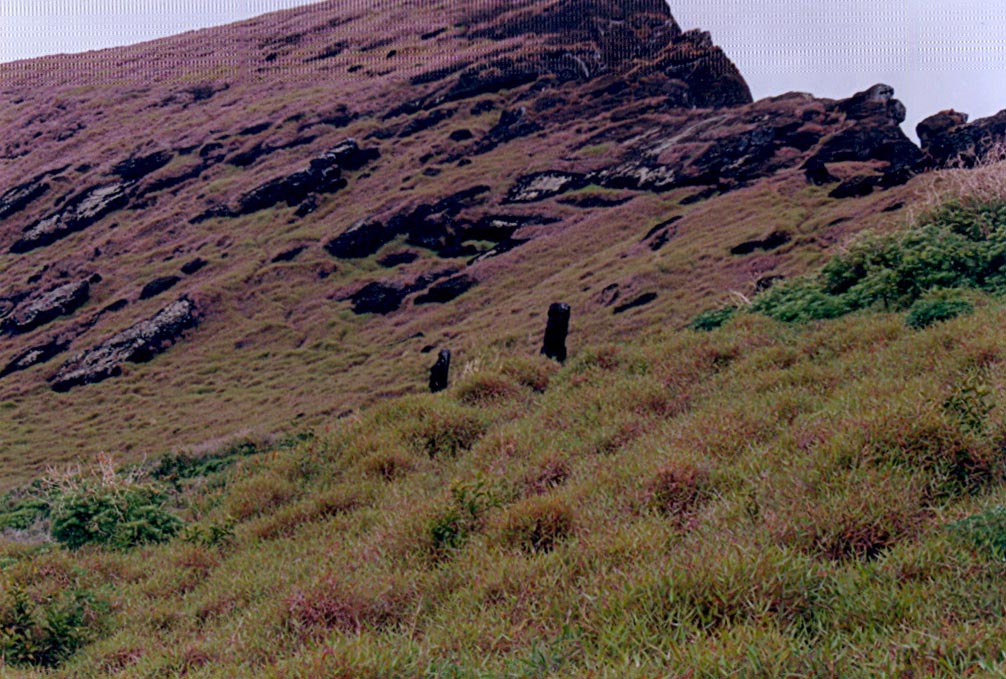
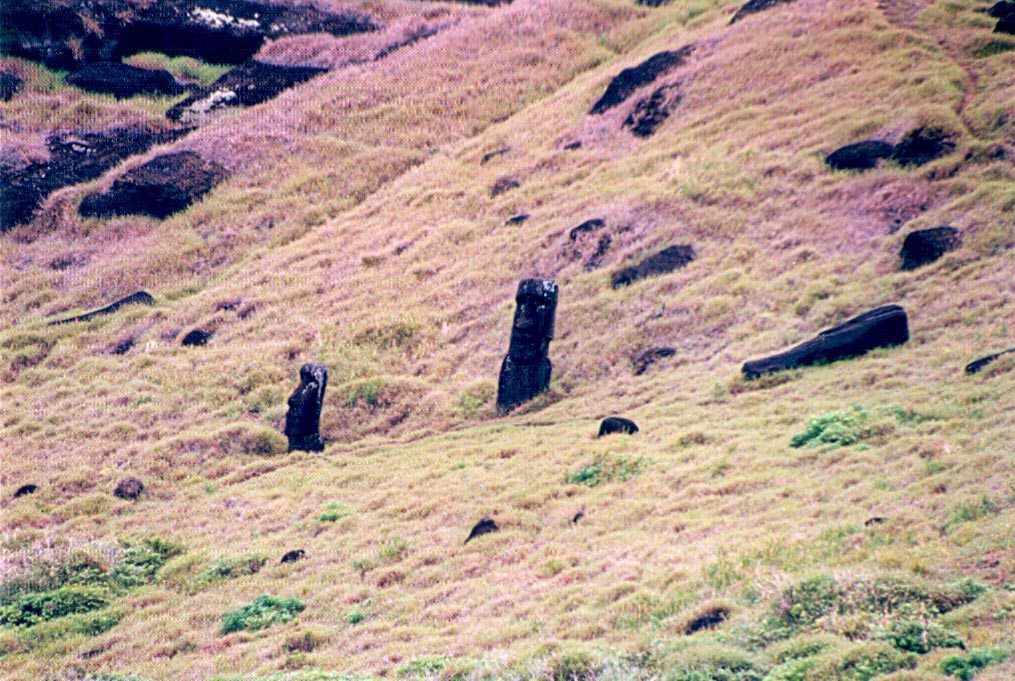
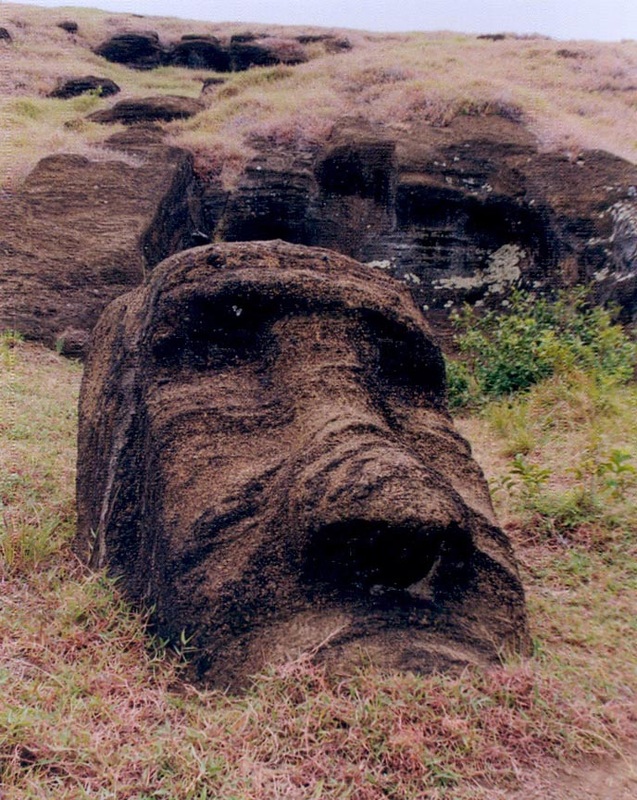
Here, the ancient Rapa Nui carved these giants out of the bare rock using simple stone chisels—back-breaking, grueling labor. As you walk along the crater walls, you see moai still half-trapped in the stone, as if waiting to be set free.
​
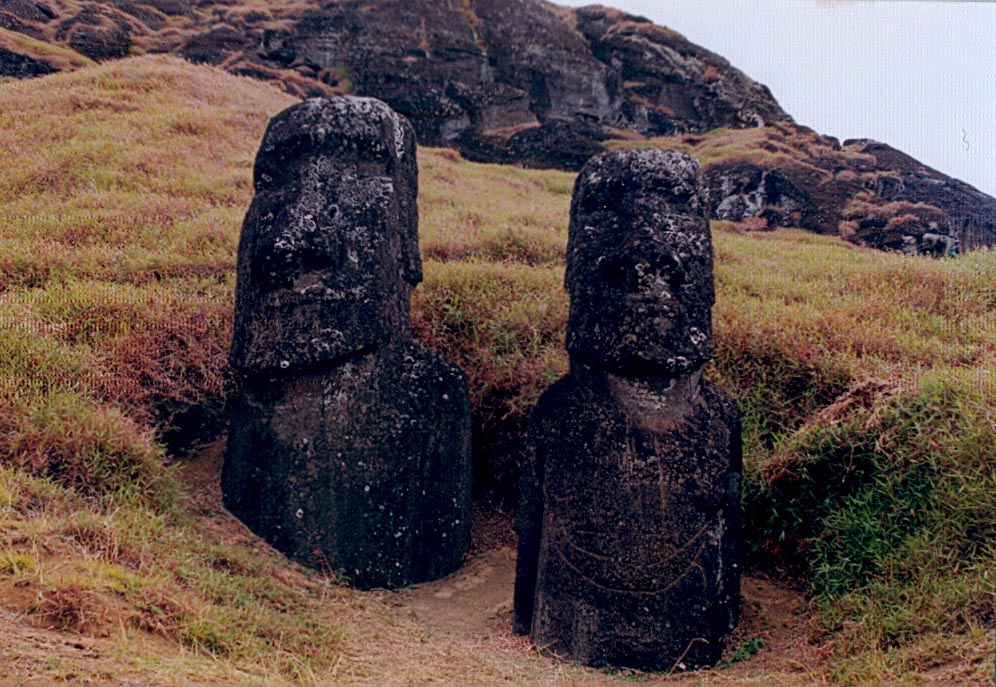
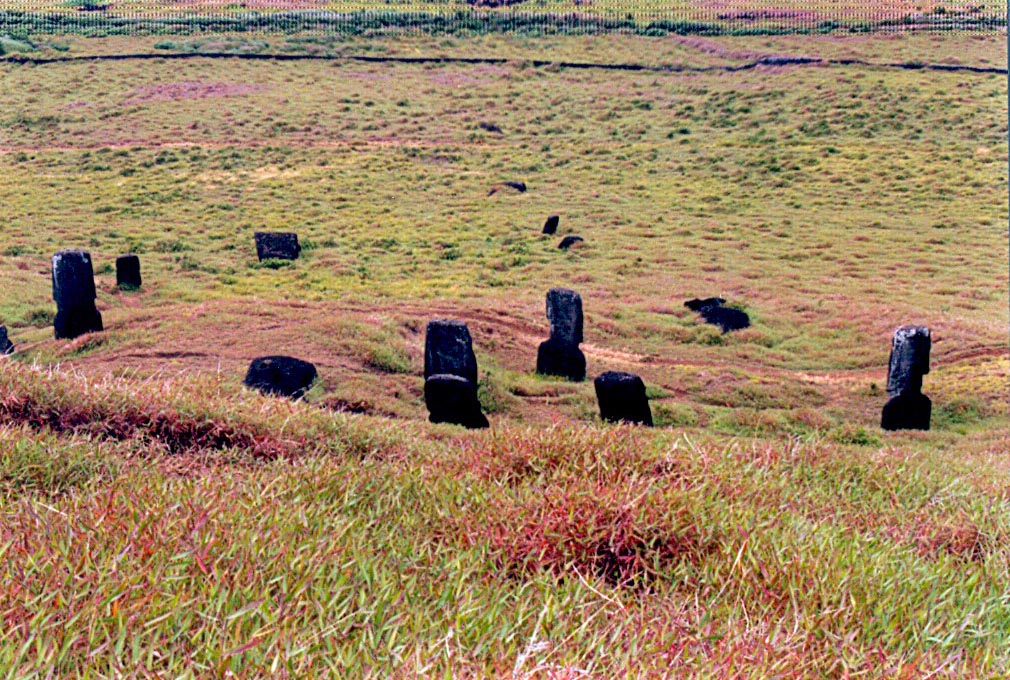
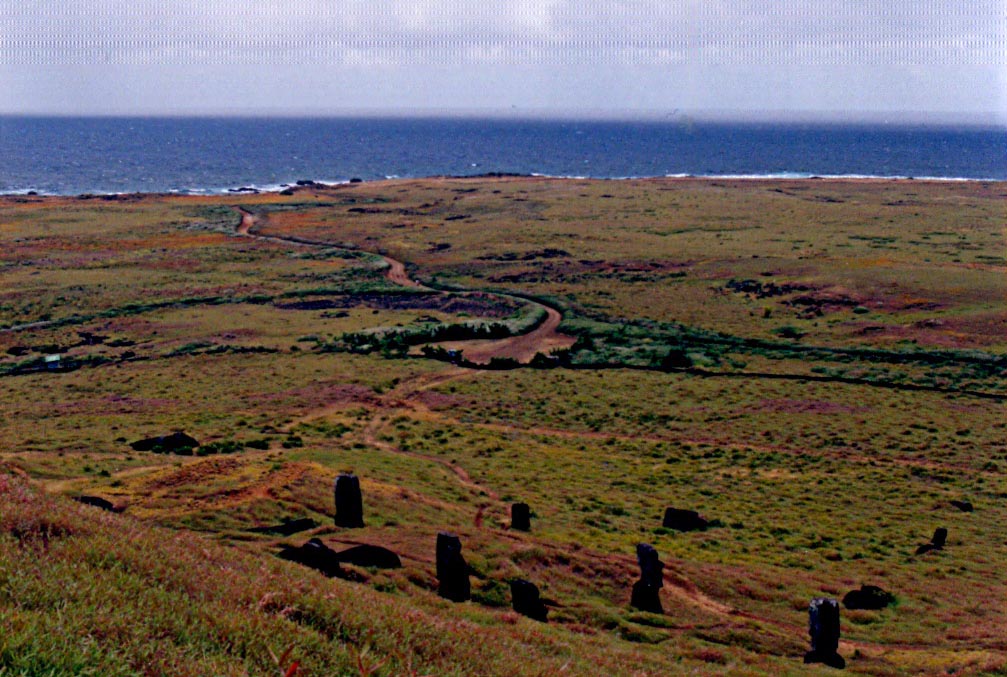
The site is best known for the countless heads protruding from the green grass like stone asparagus. But appearances are deceptive: beneath the surface, gigantic, complete bodies are attached—figures that were simply buried over the centuries by eroded desert sand and volcanic soil.
The absolute showstopper in the quarry is El Gigante—an unfinished Moai measuring a massive 21 meters in length and weighing an estimated 270 tons! At some point, the builders realized that this behemoth was impossible to transport and simply left it lying in the rock. When I hiked through these slopes with the British group back in 2001, the sense of solitude was almost palpable. You could stand right next to these unfinished giants and grasp how this people literally worked themselves to death for their ancestors.

TUTURI
- the only kneeling Moai -
​

The bearded rebel on his knees: the finale with Tukuturi
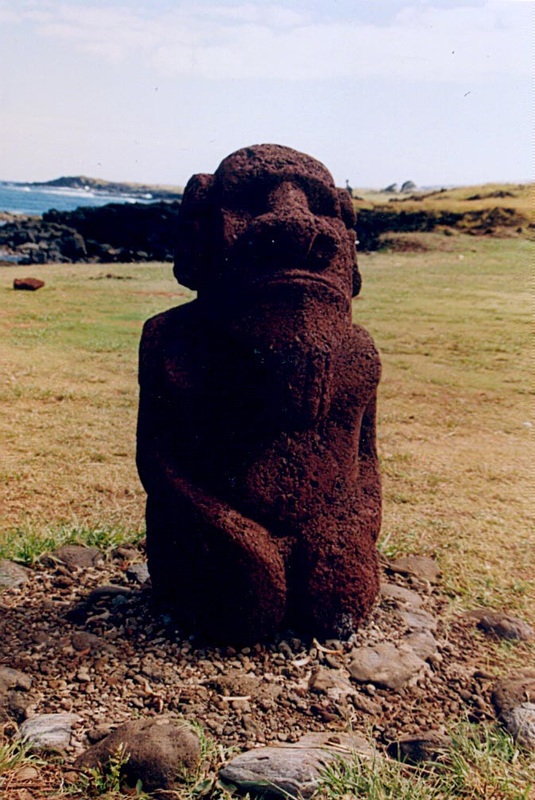
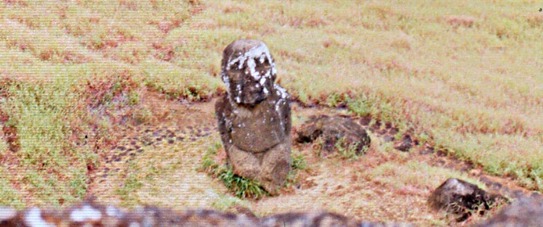
For the absolute grand finale of our Land Rover expedition to the Rano Raraku volcano, a genuine archaeological mystery awaited my analog lens: the Moai Tukuturi (or simply Tuturi). Anyone who thinks they have grasped the design principles of the Easter Island giants after seeing hundreds of statues will find their assumptions completely upended by this fellow. Tukuturi, you see, flouts every single one of the island's design rules.​
If you look closely at my photo, you’ll spot the oddity immediately: he is the only moai on all of Easter Island that has visible legs and is kneeling! He sits on his heels in a traditional Polynesian posture, with his hands pressed flat against his thighs. As if that weren’t unusual enough, the sculptors gave him an atypically round face and an unmistakable, prominent full beard.
Picture
His stance, too, is a genuine act of protest: unlike his brethren standing hundreds of meters away, he does not stare fixedly inland but gazes directly out to sea. This bearded rebel was only unearthed in 1955 by the famous explorer Thor Heyerdahl. A truly brilliant, rugged, and characterful figure amidst the sparse grass, he marked the perfect conclusion to our tour with the English group in 2001.

​One more fact about Tukuri:

The connection to the Birdman cult: Archaeologists suspect that Tukuturi is much older than the other statues, or that it dates from the transitional phase leading to the later Birdman cult (Tangata Manu)

Picture
Rano Raraku Crater Lake
Rano Kau Crater Lake & the Sacred Village of Orongo

​Between crater wall and precipice: The motorcycle rally to Orongo
After returning the Land Rover and saying goodbye to the British group, a real adventure was on the agenda for the next day. I had met a local on the first day who offered to take me up to the Rano Kau crater lake and the sacred village of Orongo on his motorcycle. It was nothing like the comfortable Jeep—on the bike, you feel every bump in the road and the relentless Pacific wind firsthand.
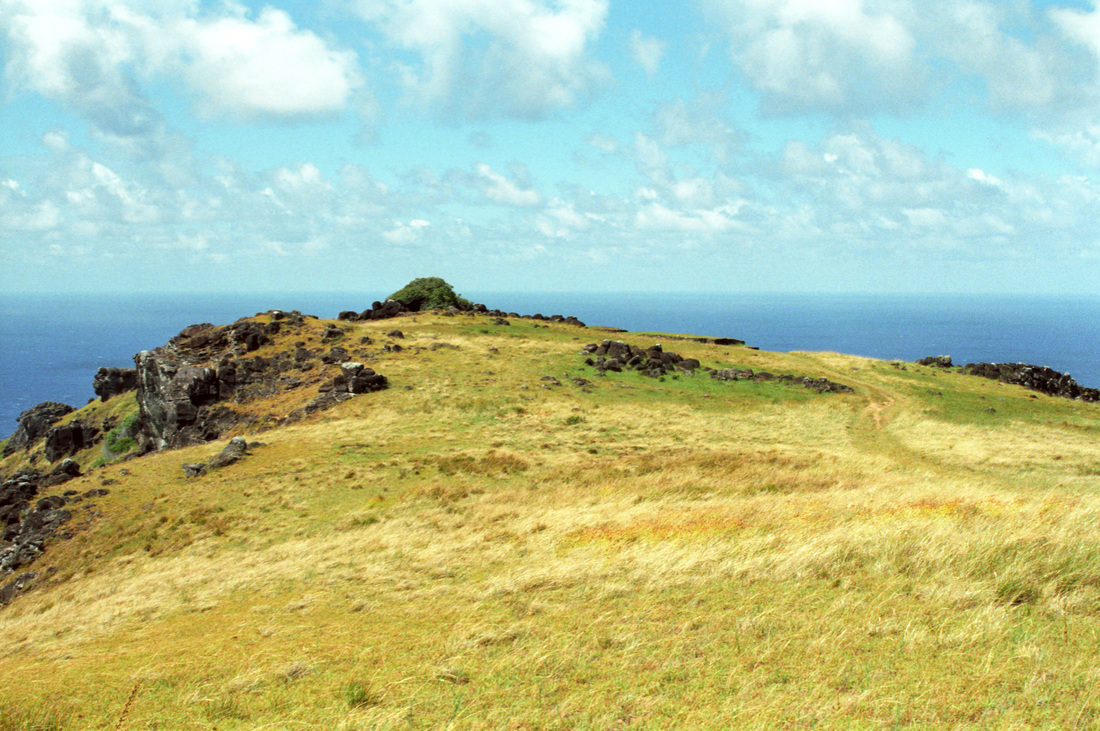
The journey to that sacred village up there is spectacular in itself—and not for the faint of heart. Before you even reach the village, an entirely exposed footpath winds along the cliff’s edge. The path offers absolutely no shelter from the ferocious gusts blasting up unchecked from the sea. As you walk, you have to brace your entire body weight against the wind just to keep from being blown right off the cliffs. One wrong step and you’d end up taking a plunge—hundreds of meters down into the deep blue ocean. Back in 2001, I kept a death grip on my analog camera as the wind tore at my clothes.
Picture
The sea of ​​green reeds and the stone bunkers: Rano Kau and Orongo
After the wind-whipped ride as a motorcycle passenger, a scene opens up atop the volcanic ridge—one you won't soon forget.

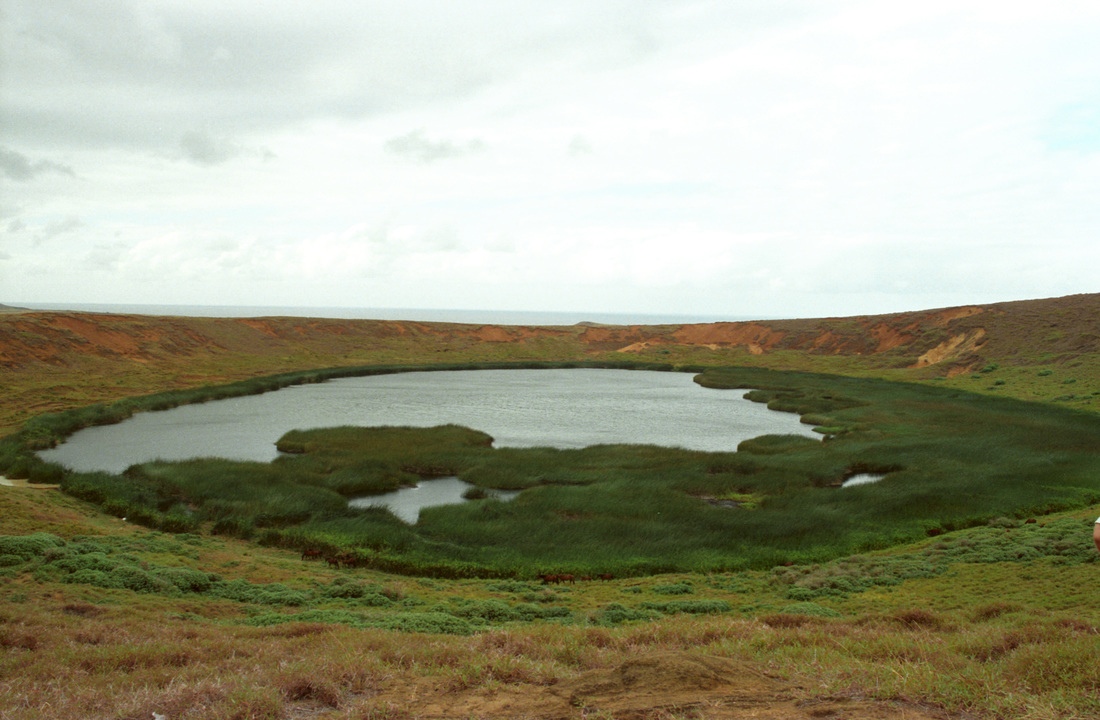
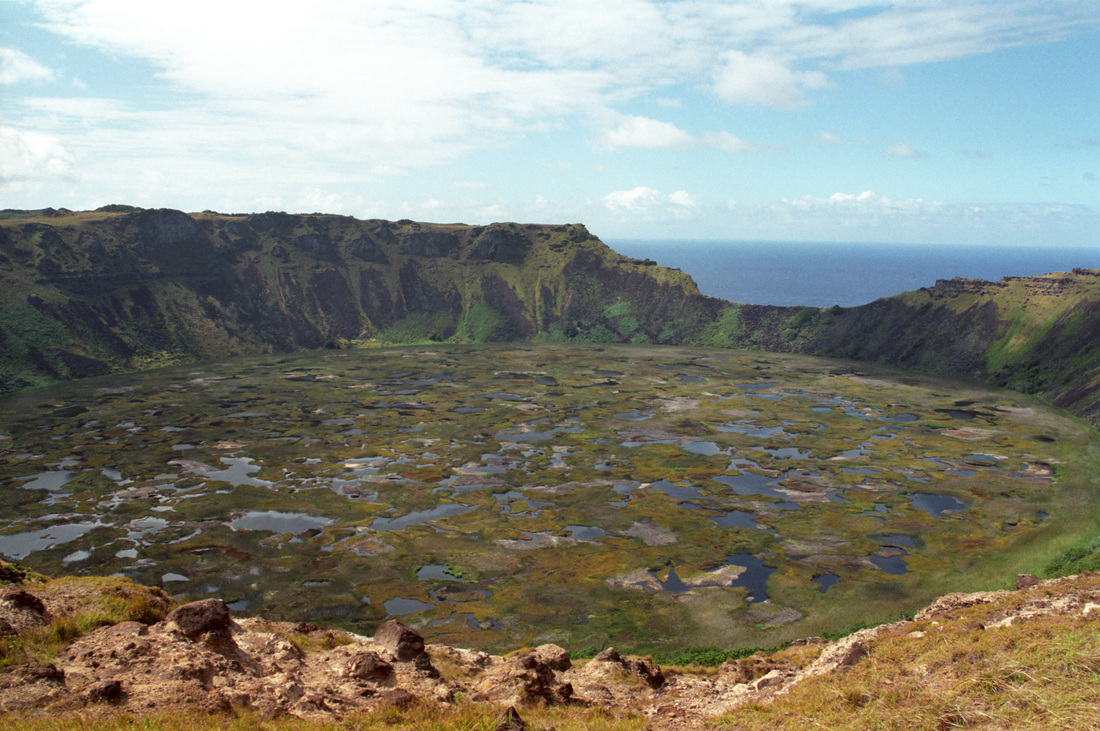
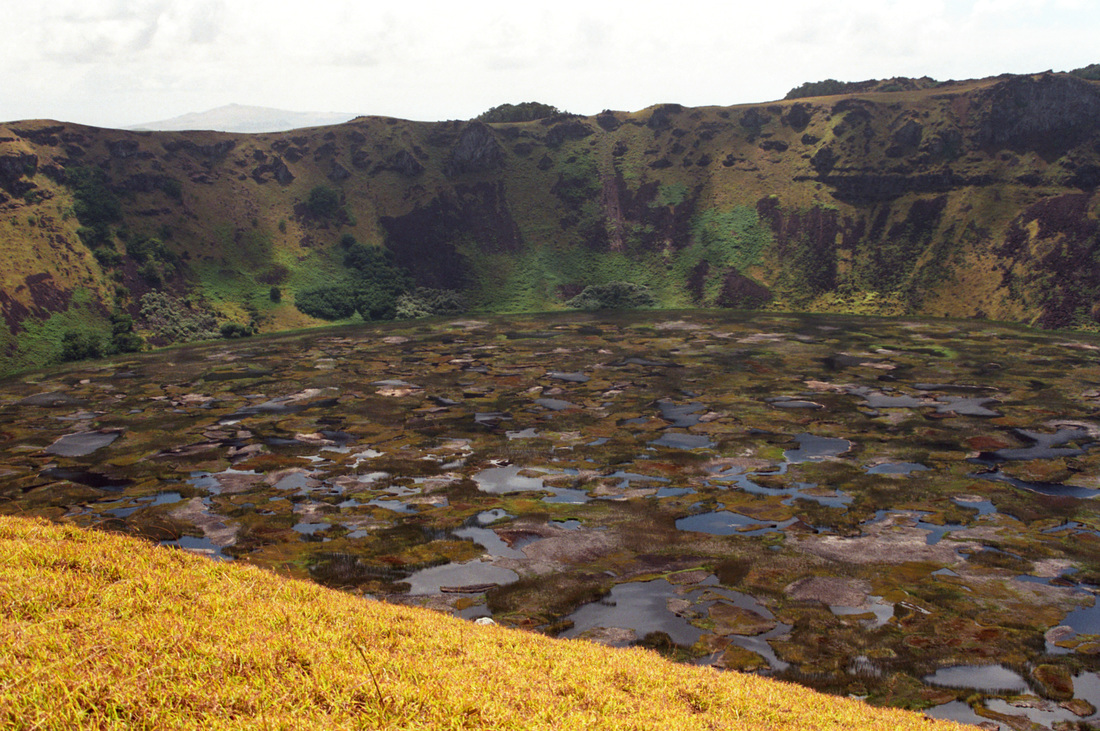
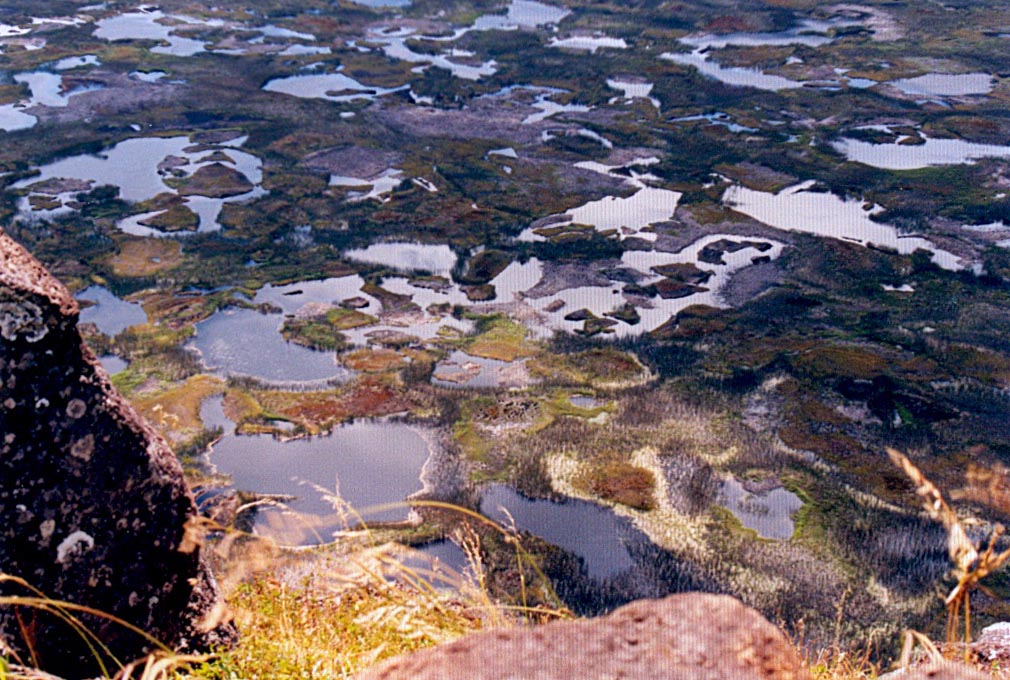
First, you stand at the edge of Rano Kau. The view into this extinct volcano is absolutely surreal: a crater 1.6 kilometers wide, with a deep lake almost entirely covered by floating islands of green totora reeds. Because the steep crater walls block the whipping Pacific winds, a unique, humid microclimate prevails down below. For the Rapa Nui, this vast basin served for centuries as the most important and secure freshwater reserve on the entire island.
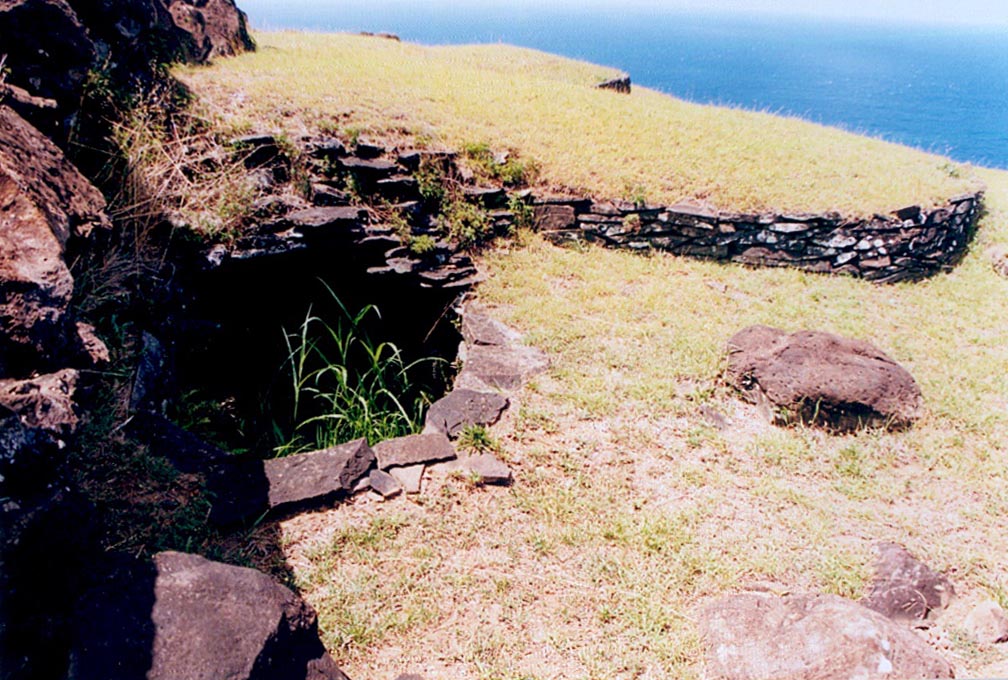
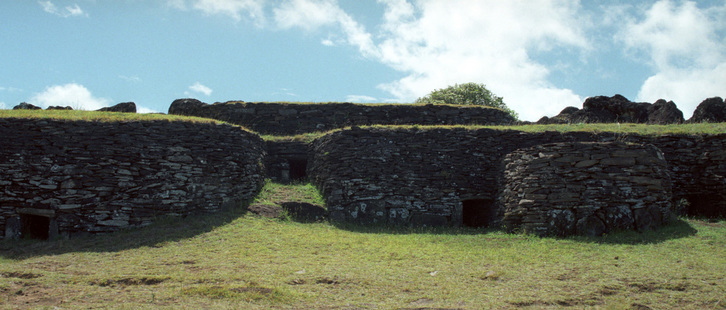
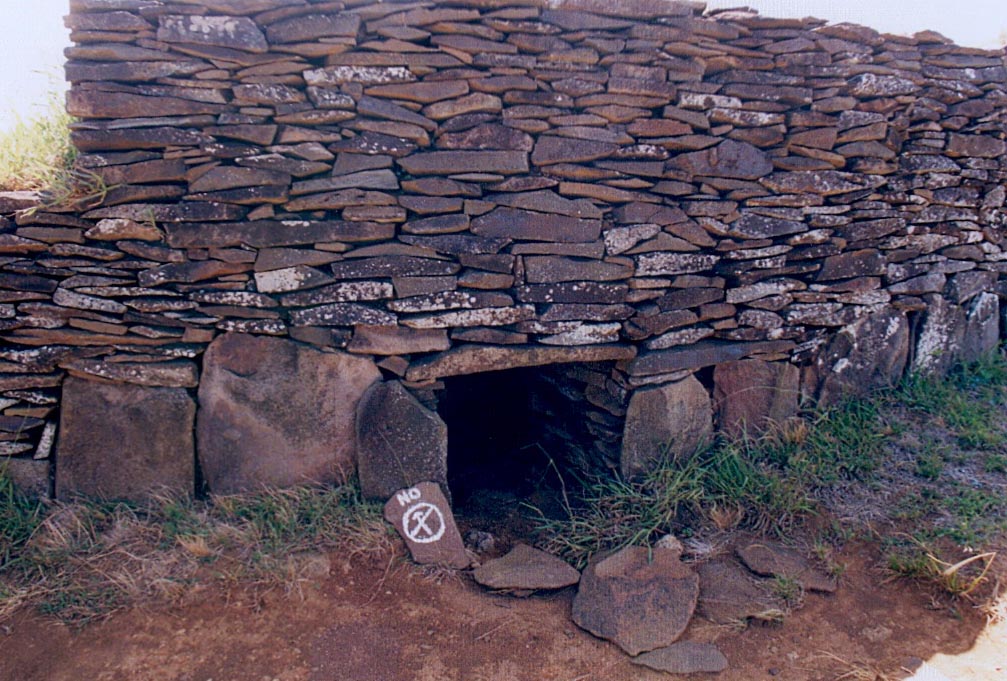
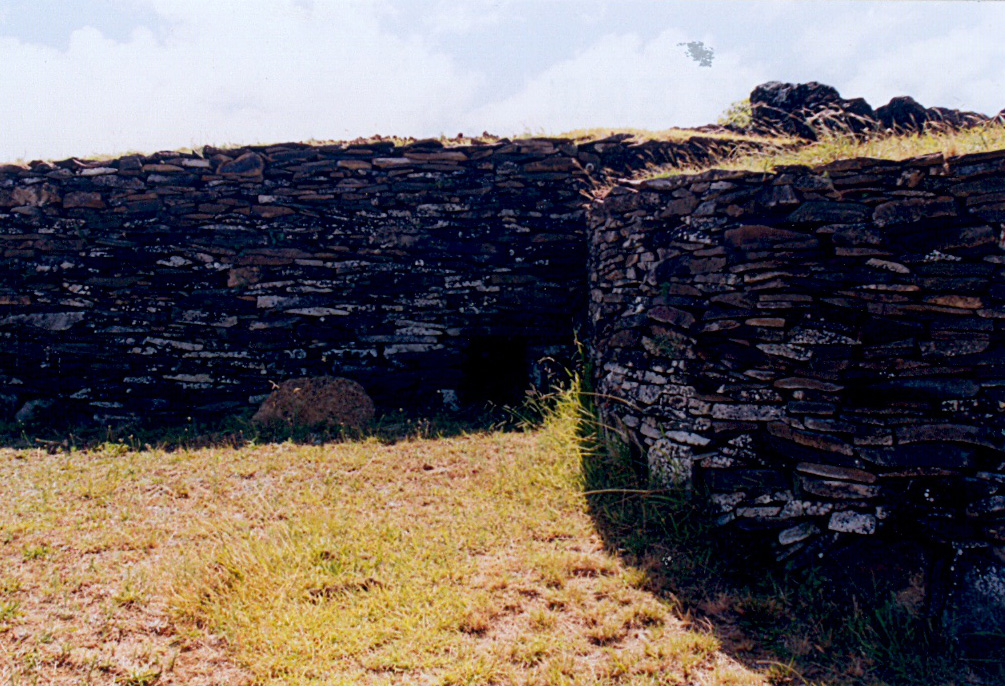
Right next to it, on the narrowest ridge between the crater wall and the sheer cliff, the sacred village of Orongo nestles into the landscape. The huts here look like upturned boats and are true masterpieces of pragmatism. To offer no point of attack to the brutal storm that constantly rages up here, the 53 houses were built extremely low. The walls consist of stacked basalt slate slabs – completely without mortar – and the roofs are thickly covered with earth and grass. The entrances are so tiny that you practically have to crawl in on all fours. A perfect system for giving nature the cold shoulder. In 2001, you could still walk around here completely undisturbed among these stone desert ships.

​
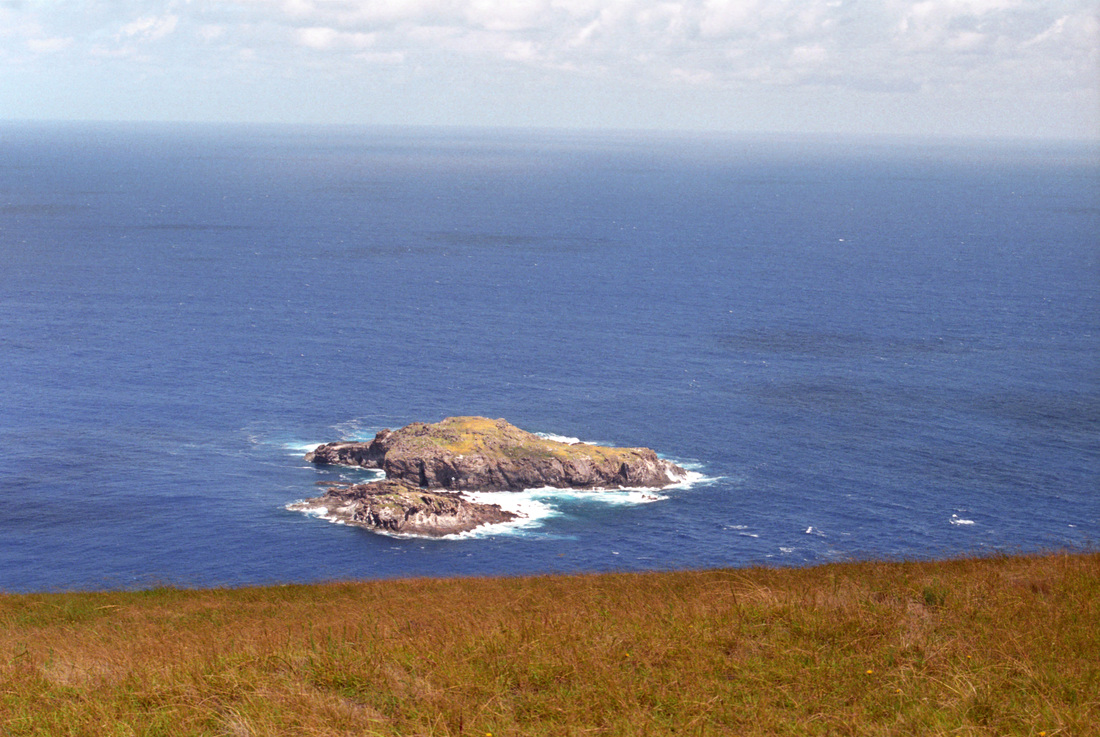
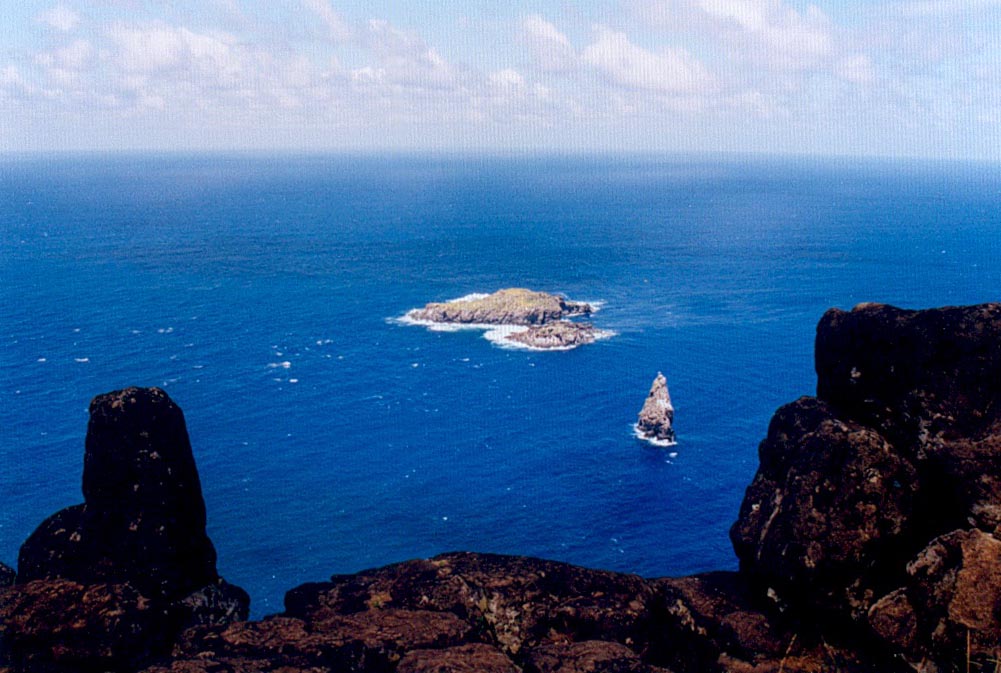
The 3 Islands: Motu Kao Kao, Moti Iti & Motu Nui
Sharks, eggs, and the ruler for a year: the murderous Birdman cult of Orongo
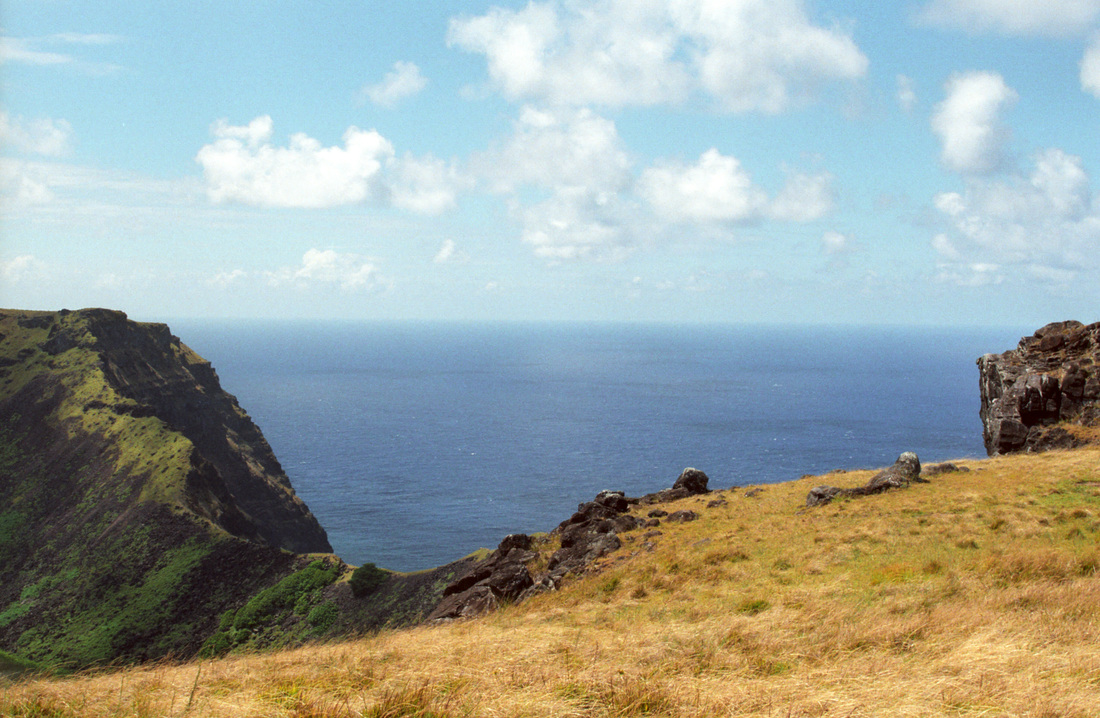
Standing on the cliff’s edge at Orongo and looking down, you gaze directly at the setting of one of the craziest and bloodiest competitions in human history. My photograph captures the three small, rugged islets in the midst of the deep-blue Pacific that were once the destination of this madness: Motu Nui, Motu Iti, and the pointed rock spire of Motu Kao Kao.
​

When the era of the Moai builders collapsed amidst the chaos of tribal warfare, the Rapa Nui sought a new system for distributing power on the island. The result was the Tangata Manu—the Birdman cult. Once a year, in September, when sooty terns arrived on the islands to lay their eggs, clan chiefs sent their strongest warriors (*hopu manu*) to compete.
The task sounds simple, but it was a truly suicidal mission: the men had to climb down 300-meter, near-vertical, wind-lashed cliffs, plunge into the surf, and swim through waters teeming with sharks to reach islands nearly two kilometers away. Once there, they had to wait for the first bird to lay an egg. Whoever managed to secure the first egg intact would strap it into a small headband and swim the entire perilous journey back. During the climb up the sharp-edged cliffs, men frequently died of exhaustion or fell to their deaths.
The warrior who was the first to deliver the egg unharmed to the summit at Orongo made his clan chief the sacred ruler of the entire Easter Island for exactly one year.

Petroglyphs of Mata Ngarau
The Stone Visage of the Creator God: The Petroglyphs of Make-Make
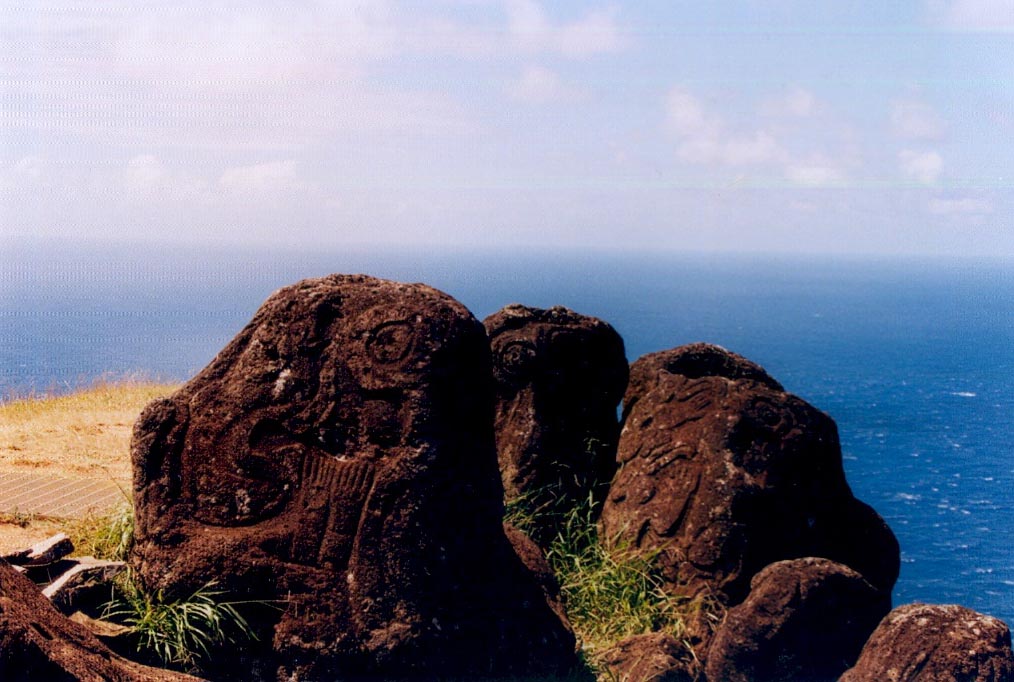
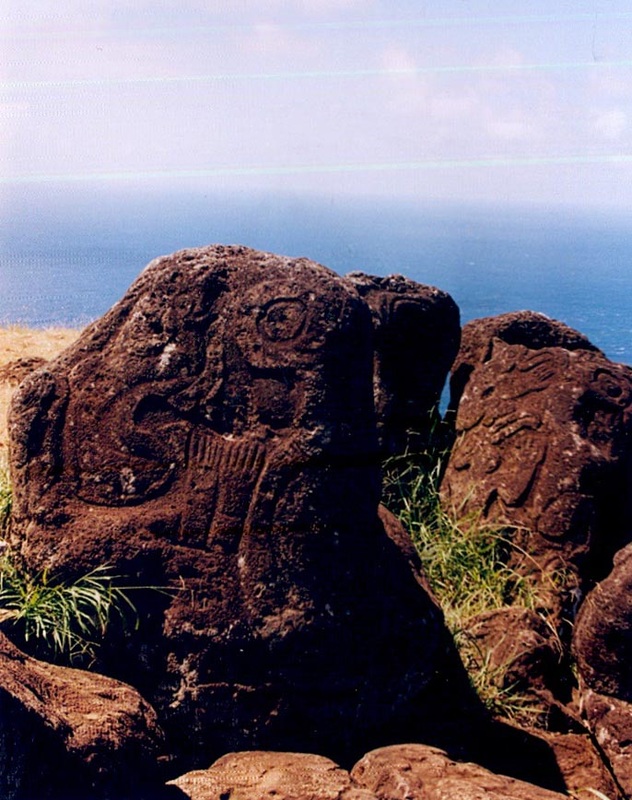
Anyone stepping right up to the cliff’s edge at Orongo encounters the most uncanny artworks on all of Easter Island within the sacred complex of Mata Ngarau. My analog photograph captures the petroglyphs—carved deep into the dark basalt rock—that preside directly over the entrance to ritual crevices and caves overlooking the abyss. This is the stone face of Make-Make, the undisputed creator god of the Rapa Nui.
If you look closely, you can make out the mask-like face with its huge, staring eye sockets and broad nose. For the islanders, this god was the absolute ruler of nature and the seabirds. Carved into the stone right next to the god’s grimacing features are the famous Birdman figures—hybrid beings with human bodies and the long, curved beaks of frigatebirds.
These rocks were the island’s sacred vantage point: while warriors swam for their lives in the shark-infested Pacific below, the priests sat up here for days in the merciless storm, chanting ritual songs and carving a new Birdman relief into the stone for each new winner of the competition.

Tropical blossoms, giant tuna, and a lifelong friendship: saying goodbye to Rapa Nui
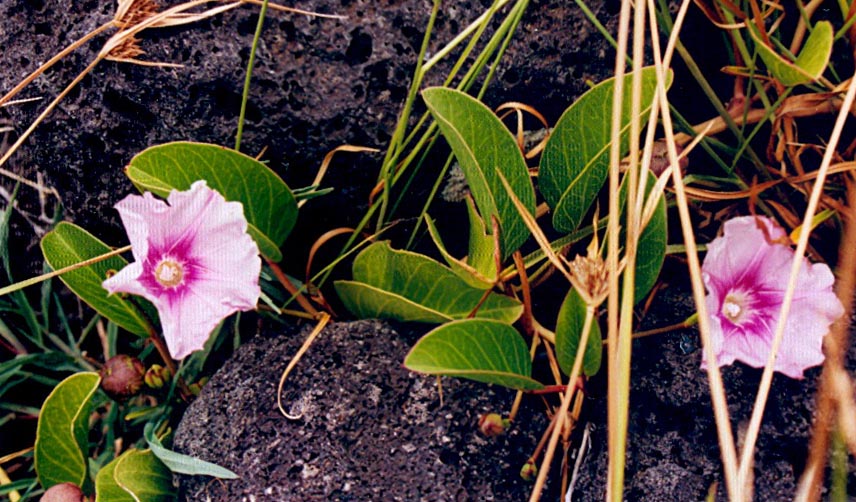
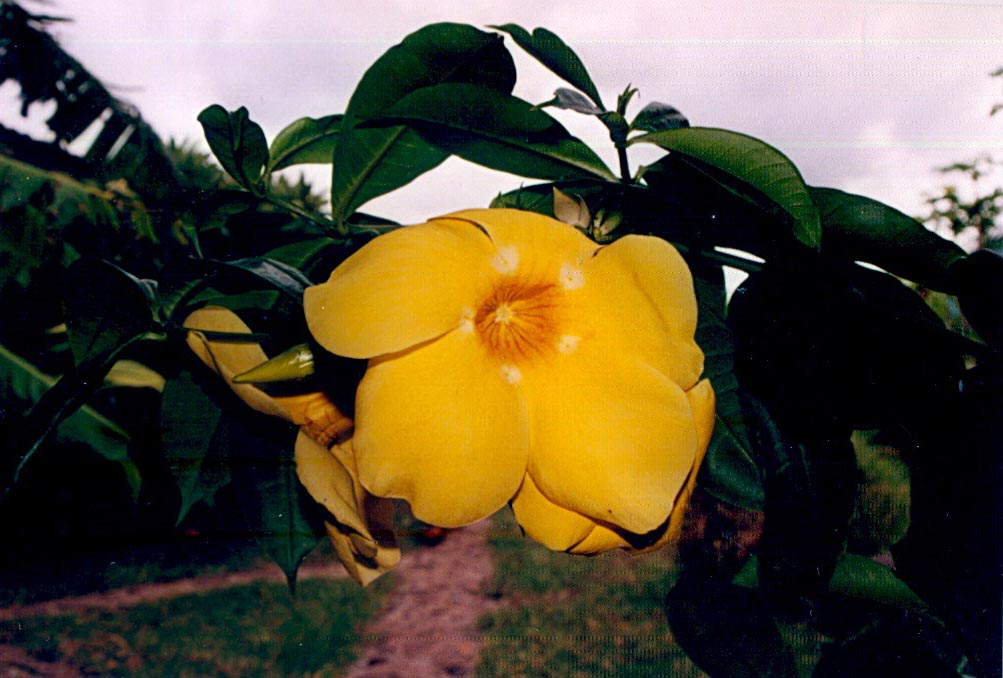
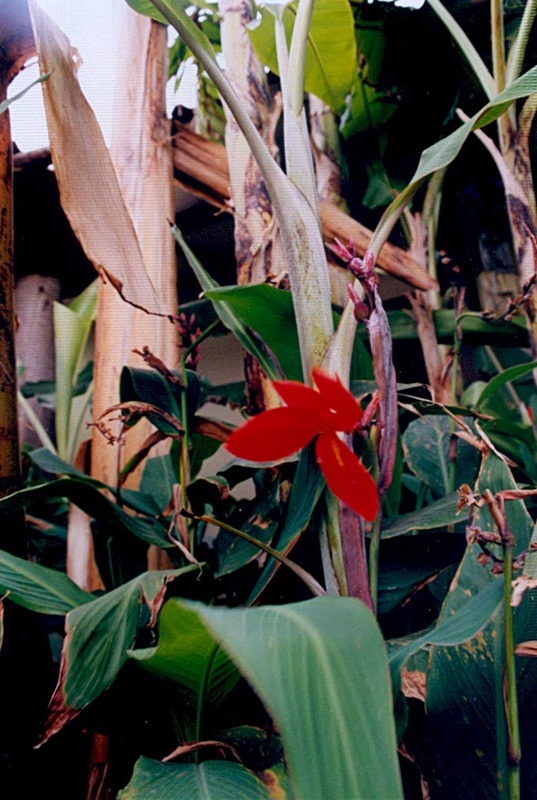
After the wind-whipped adrenaline rush atop the volcano, the return journey to Hanga Roa took place on the back of a motorcycle. The raw wind against my face and the swirling desert dust made for a fitting farewell to the cliffs. Once back down in the village, Easter Island suddenly revealed its gentle, colorful South Sea side. Brightly colored tropical flowers—such as hibiscus and bougainvillea—bursting forth from the locals' garden walls everywhere and leaving a sweet fragrance in the narrow streets.
To cap off this brilliant trip, I enjoyed the island’s culinary highlight: my very first authentic Pacific tuna fillet. Anyone familiar with the puny slices found in German supermarkets would be absolutely blown away by this. What landed on my plate was a massive, freshly caught steak—buttery soft, brought straight from the harbor by local fishermen and grilled over an open fire. It was a dream for the palate after days filled with dust and sand.
While eating, I met two Germans who, just like me, were traveling off the beaten path. We struck up a lively conversation and exchanged contact details—and what can I say? That chance encounter in 2001 at the navel of the world blossomed into a deep friendship that remains rock-solid to this day, more than a quarter of a century later. Rapa Nui doesn’t simply let you go; it leaves you with stories and people that stay with you for a lifetime.

Trips Gallery
Powered by Create your own unique website with customizable templates.