MARYsCOMIX
  • Mary's Page
  • Airbrush Metal Stuff
  • Airbrush Projects
  • Street Art
  • Felix Projects
  • Old School Comix
  • Trip Gallery
  • Artist Infos
  • Legal Notice / IMPRESSUM
  • Right of Withdrawal
  • Data Protection
  • General terms and conditions of business
  • Blog

AUSTRALIA
(2000)
​"Hey, that was the wild turn of the millennium—the memories are hazy, but I’ll never forget that one story!"

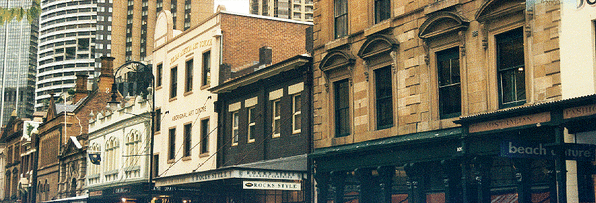
Sydney
No Plan, A Heavy Backpack, and a 300-Meter Taxi Ride

Fresh off the plane from Bangkok. Year 2000. I am standing outside the Sydney airport terminal, humidity hitting my face. In my hands: travel guides. In my head: absolutely zero plans. I have no hostel booked. I don't even know which bus to take.
The first bus rolls up. I look at the driver. "Where should I go?" He shrugs. "Take the one to Kings Cross." Done. I hop on, find a window seat, and just let the city drift by.
Eventually, the vibes outside change. Time to get off. I step onto the pavement, the heavy backpack digging into my shoulders. I am tired, but I still refuse to open my maps. I just walk. Until I’ve had enough. I flag down a taxi and ask for the nearest hostel. The driver looks at me, amused. "There’s one just 300 meters away." My response? "I don't care. Drive me." Best 300-meter taxi ride of my life. That’s how I conquered Sydney.
Picture
Kings Cross
Flashback Fact:
 Back in 2000, Kings Cross was Sydney’s ultimate, gritty red-light district and the bohemian heart of the city. Before it turned into a trendy hotspot, it was famous for its glittering neon Coca-Cola sign, underground nightlife, and a wild history dating back to its days as a glamorous 1920s artistic hub.
Surviving Sydney 2000: Party Till 8 AM and the Great Escape
Sydney in 2000 was wild. The city was electric, and Kings Cross was a non-stop party machine. The routine? Dance, drink, and swap stories with hundreds of backpackers from around the globe until 6 or 8 AM. Sleep? A luxury we couldn't afford.
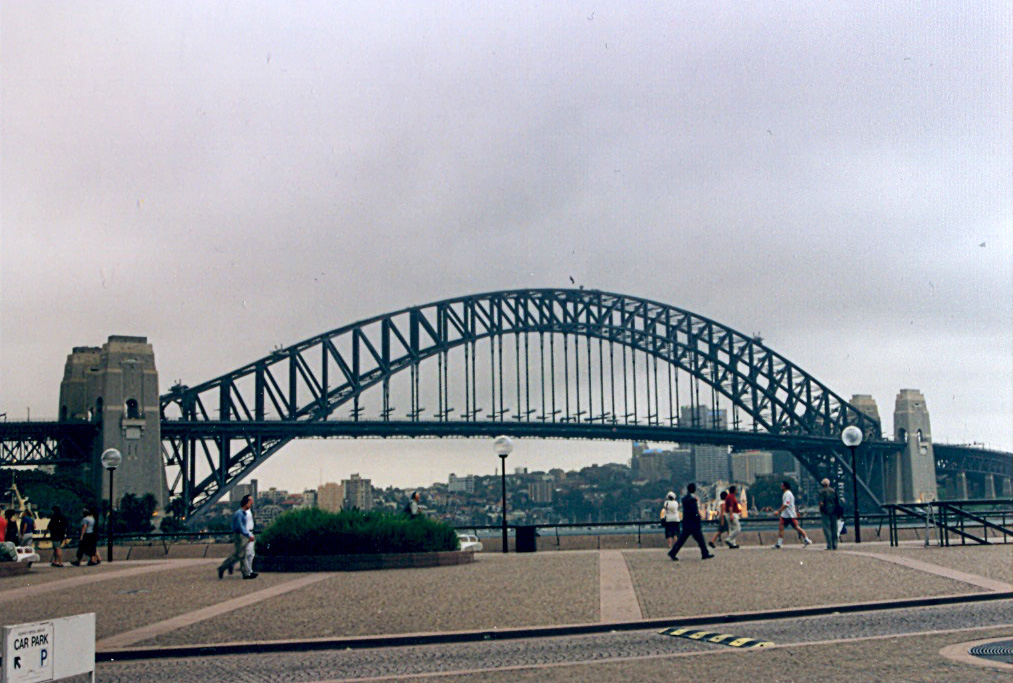
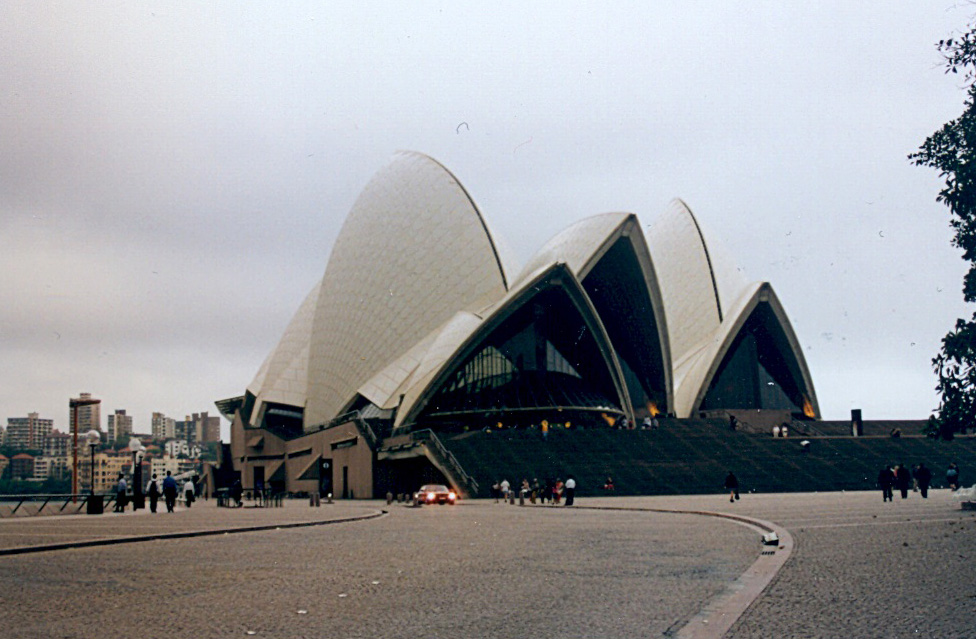
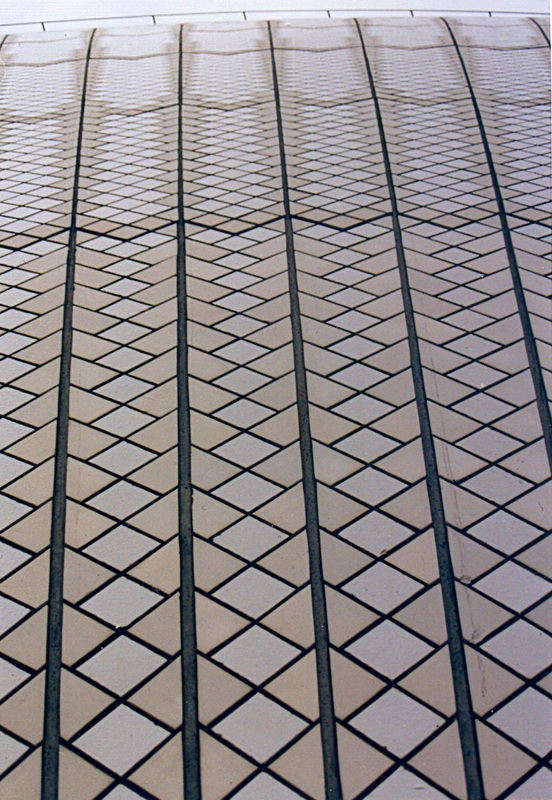
By day, we dragged our hungover bodies through the streets for some mandatory sightseeing. Squinting in the bright Australian sun, I stared up at the massive steel arches of the Harbour Bridge and the white sails of the Opera House. Magnificent, even through blurry eyes. 
​

History Check: The Sydney Opera House was actually a historical drama before it became an icon. Opened in 1973, its Danish architect, Jørn Utzon, famously quit the project mid-way and left Australia forever after massive political fights and budget overruns. He never saw his finished masterpiece in person.
Hanging with Celebrities: The Hangover Cure at the Australian Museum
Let’s be honest. When you’ve been partying in Kings Cross until sunrise, traditional sightseeing hurts. The bright Australian sun feels like a personal attack. I needed a hiding spot. That’s how I ended up in the local museum. Best decision ever.
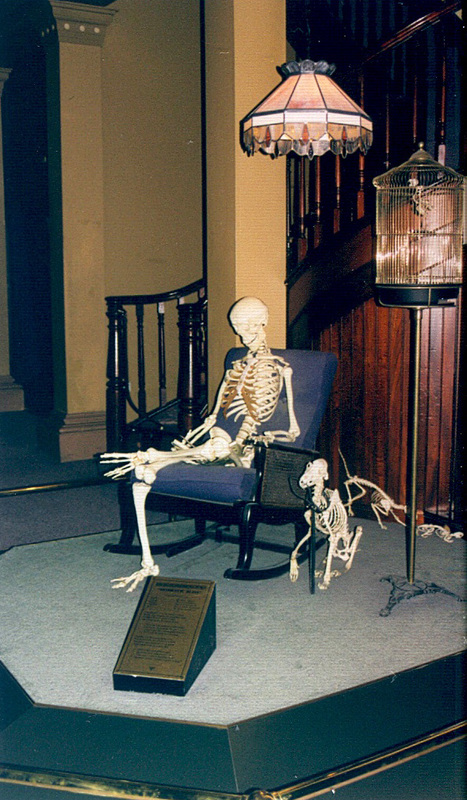
It was quiet, beautifully air-conditioned, and surprisingly funny. I wandered into the world-famous Skeleton Gallery, and there he was: my spirit animal. A human skeleton, casually chilling in a rocking chair, reading a book. Next to him? His loyal, equally skeletal dog, just hanging out. The display was called "Home Sweet Home". Looking at him, completely relaxed and not caring about the world, I thought: Yeah, mate. I know exactly how you feel. It was the most relatable thing I saw in all of Sydney. 
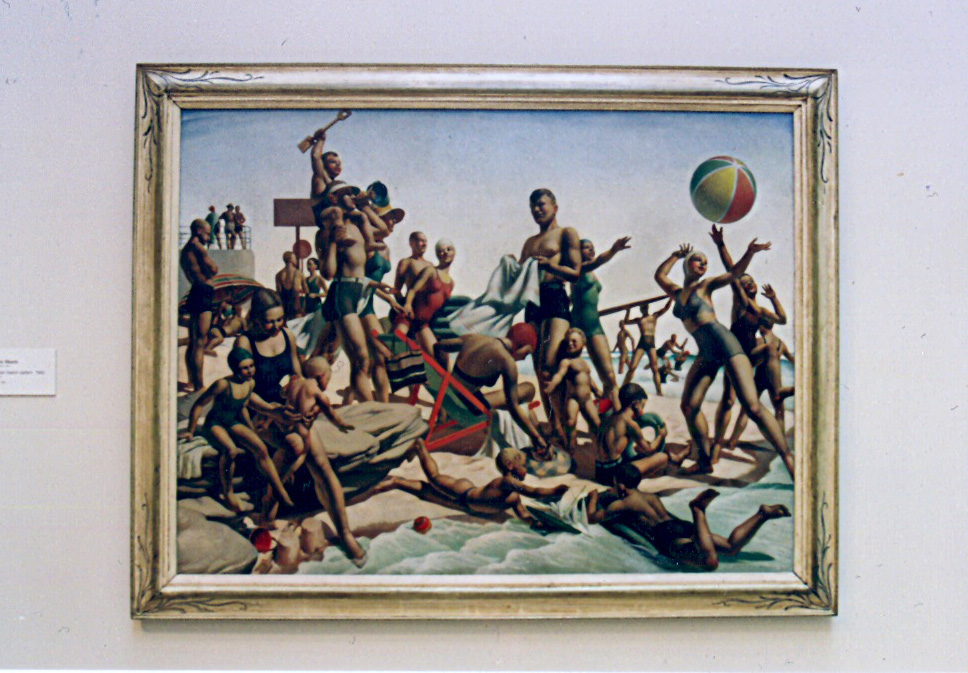
Then I pushed on to the nearby Art Gallery of New South Wales. Walking up those grand, classical steps felt like a proper cultural upgrade. Inside, it was a completely different vibe—peaceful halls filled with stunning Australian and international masterpieces. It was the ultimate mental reset. 
​

History Check: The Australian Museum is actually Australia's oldest public museum, founded way back in 1827. Its historic Skeleton Gallery has been fascinating (and amusing) backpackers and visitors with over 100 skeletons for generations.
History Check: Founded in 1871, the Art Gallery of NSW is one of Australia’s most vital cultural landmarks. Its iconic neoclassical facade in The Domain was built around 1900.


​Bondi Beach, Sydney
Picture
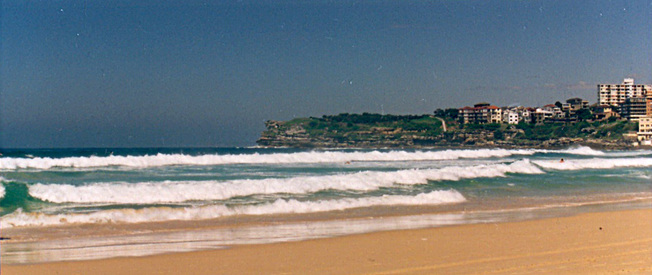
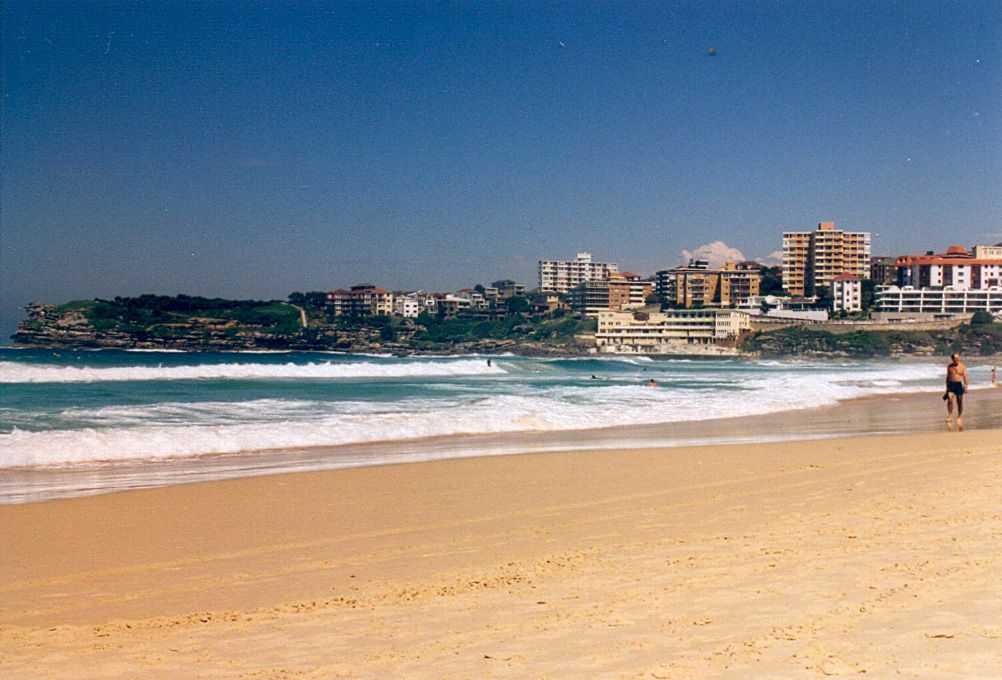
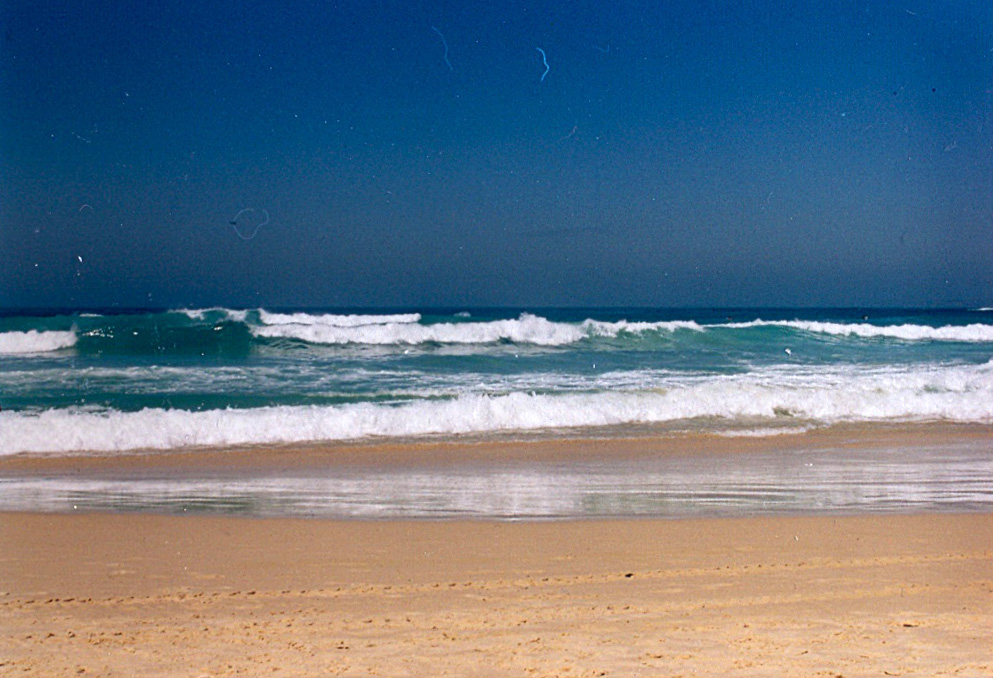
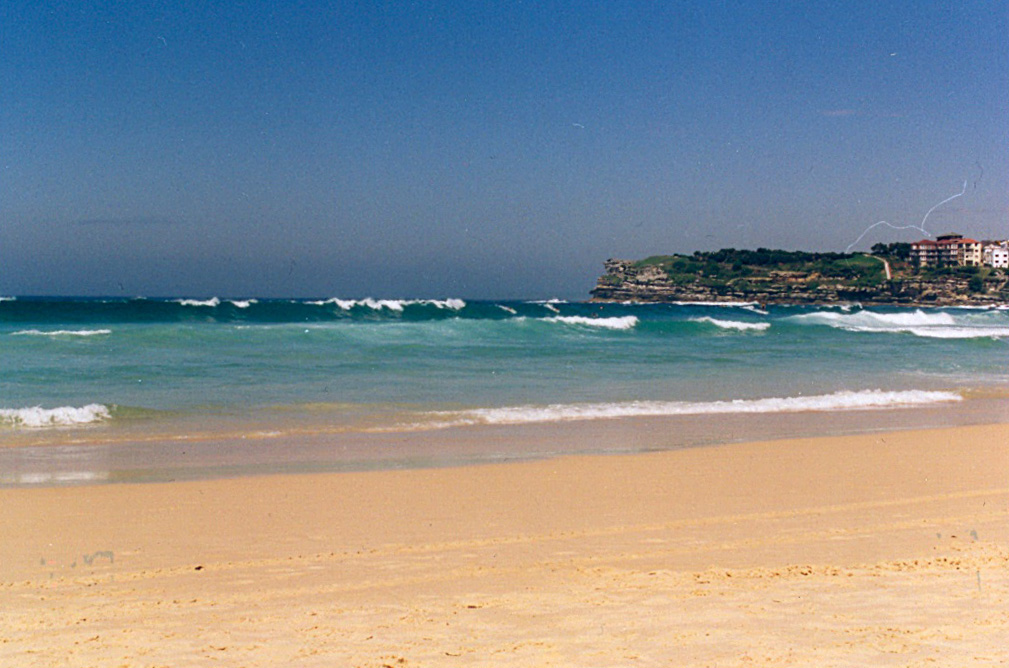
But you can’t leave Sydney without hitting the sand. Next stop: Bondi Beach. This place is pure gold. Waves crashing, surfers catching the perfect break, and an absolute overload of energy. In the year 2000, Bondi was buzzing even more than usual because they built a massive temporary stadium right on the sand for the Olympic beach volleyball games. Standing there, feeling the salty breeze, I finally understood the true Aussie lifestyle.
But Sydney has a dangerous trap: it sucks you in. The parties are too good, the beach vibes too easy. Countless backpackers never left the city. Luckily, I had a ticket out. A flight straight into the red heart of the outback: Ayers Rock. It was time to trade the neon lights for desert dust.


​Ayers Rock & Aborigines
The Red Heart: Small Planes, Ancient Caves, and the Python Woman
Leaving Sydney meant boarding a tiny propeller plane. With limited seats, the number of tourists heading into the desert was small. It felt exclusive. Remote. When you travel solo, booking a local tour is the smartest move here. The moment the endless red dirt appeared below, I knew I was in a different world.

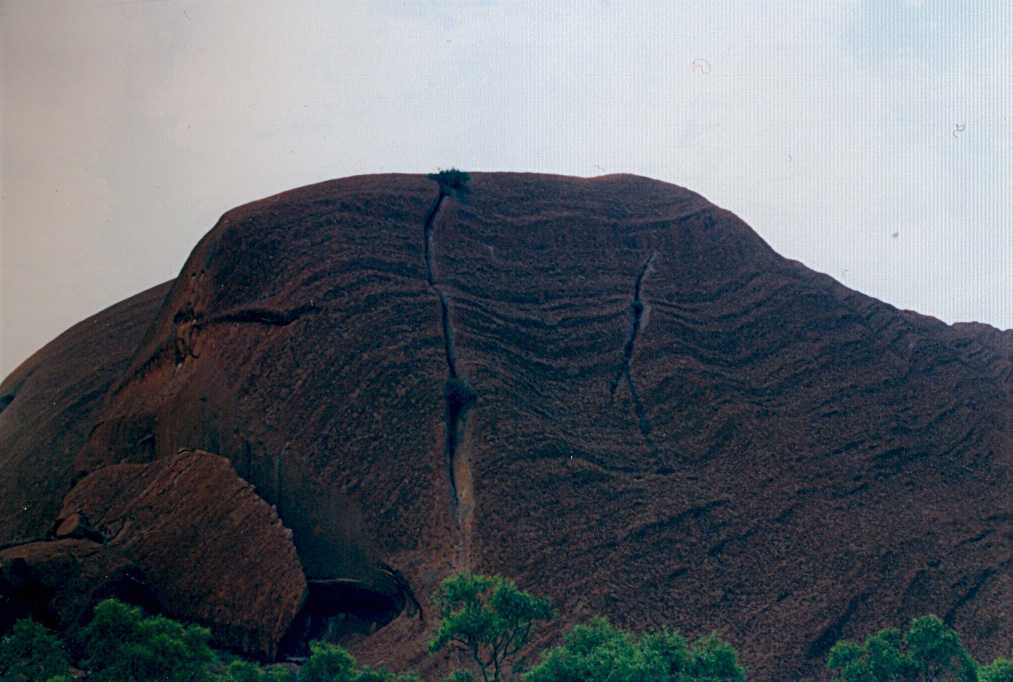
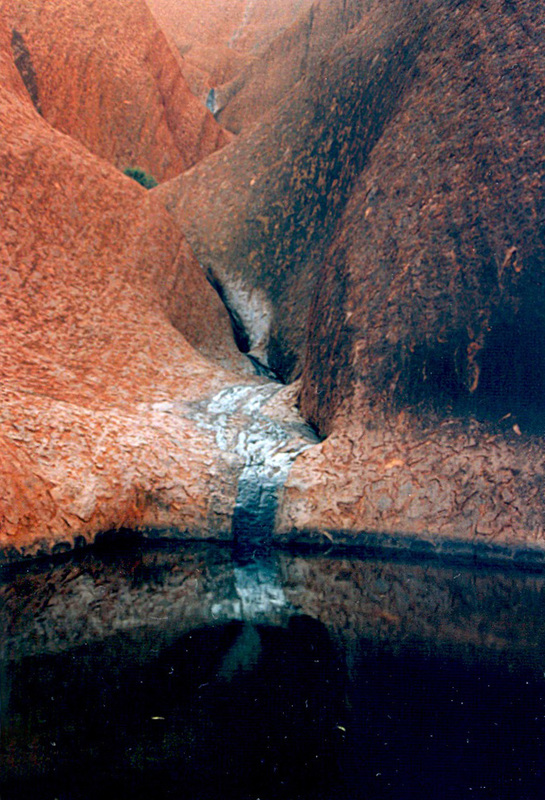
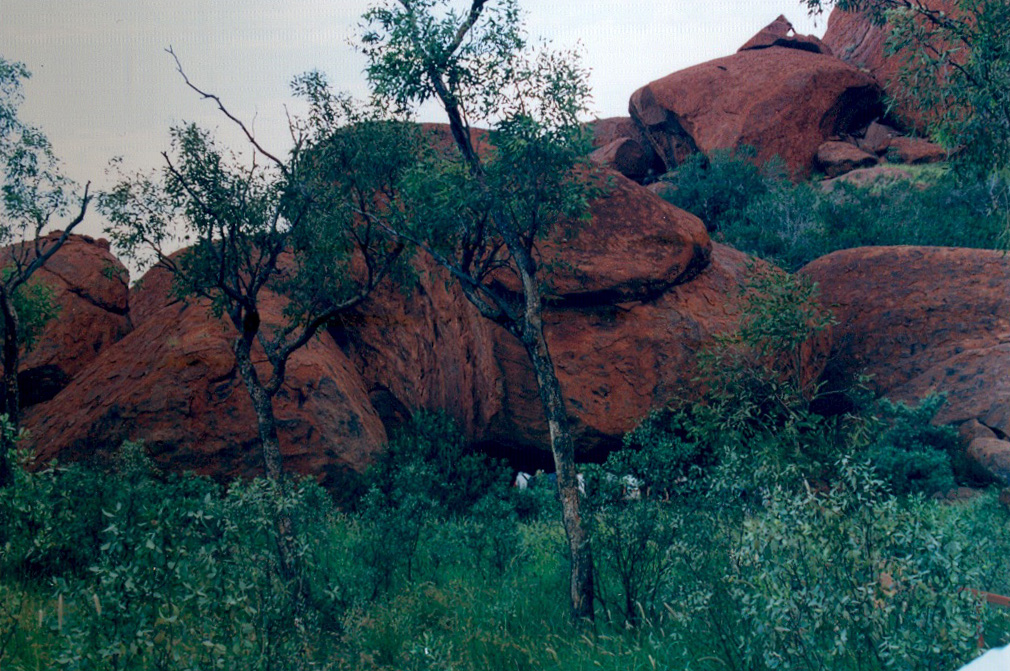
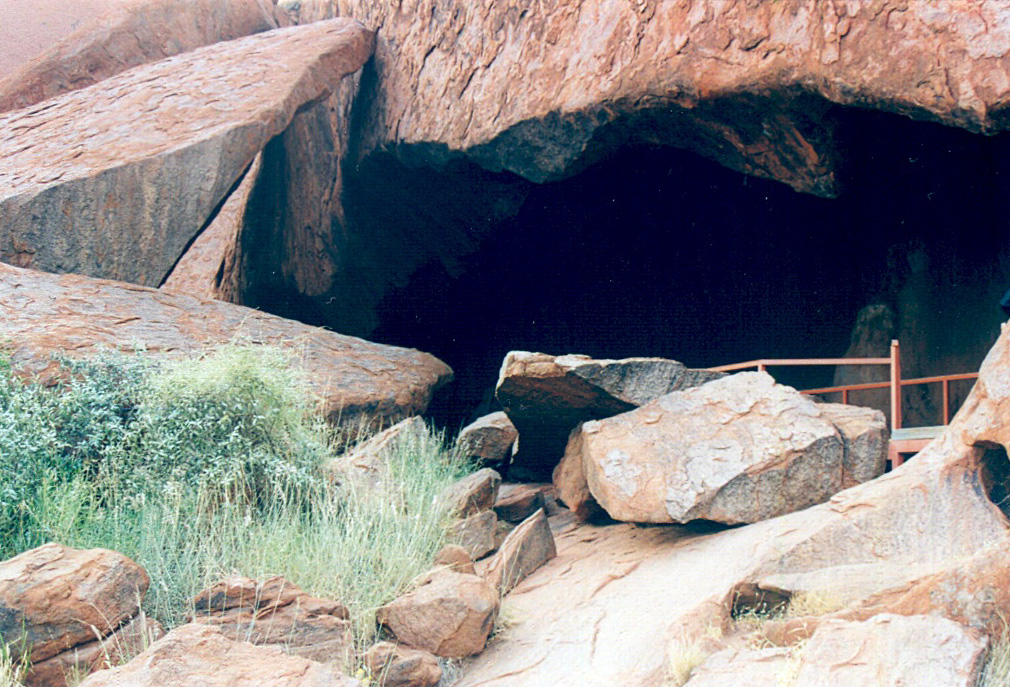
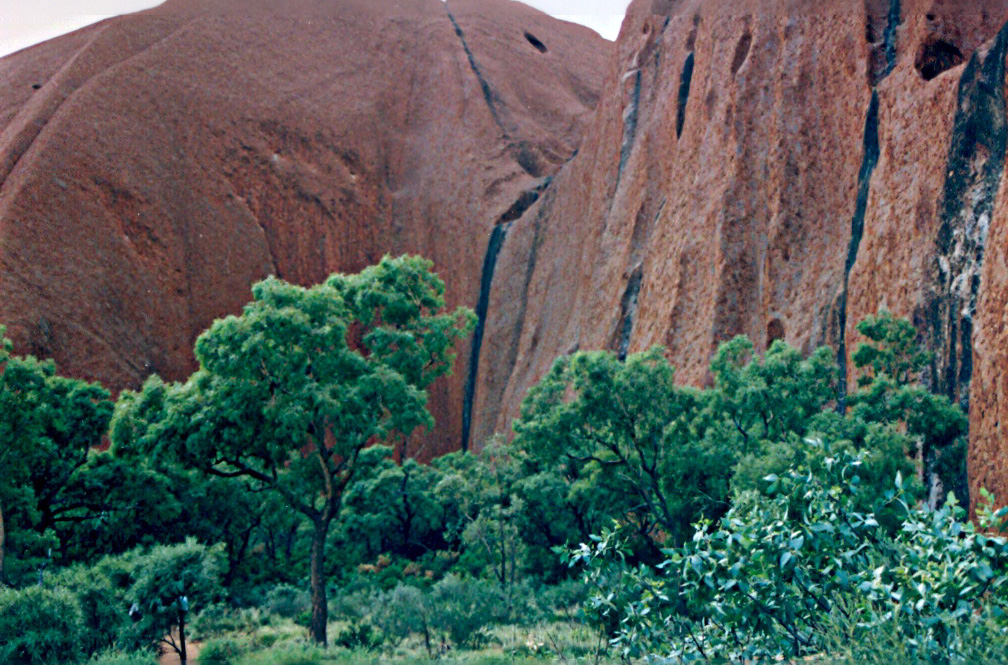
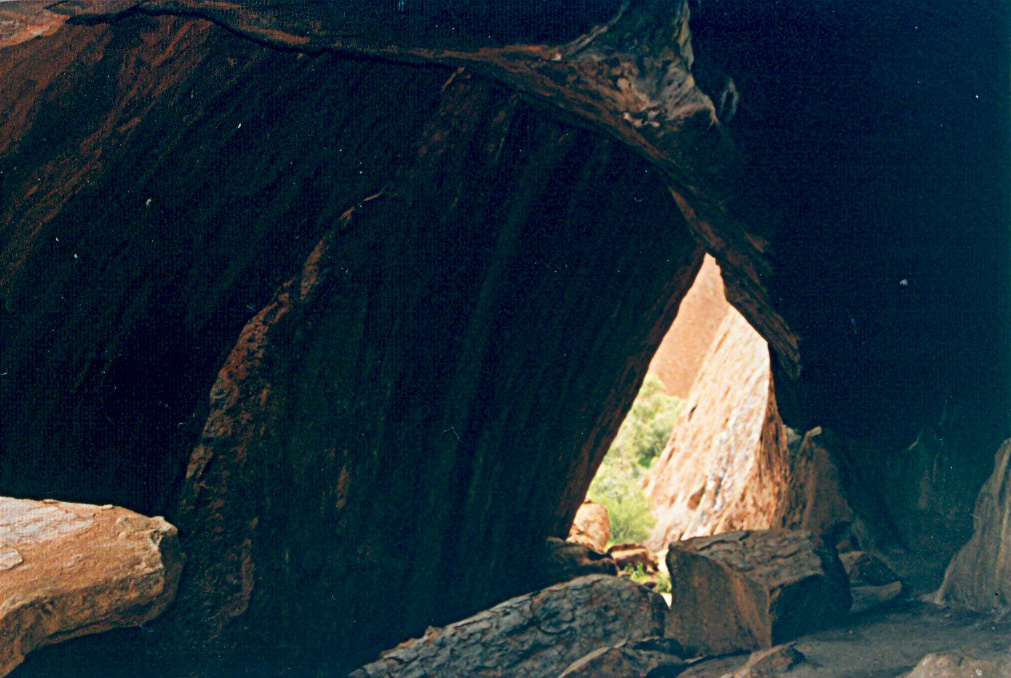
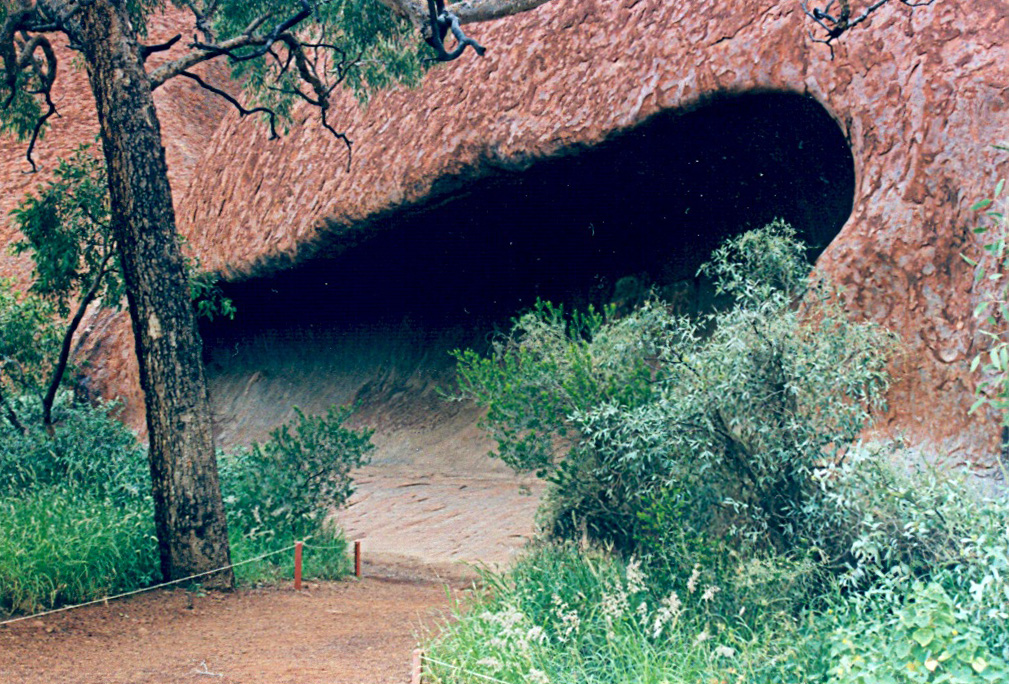
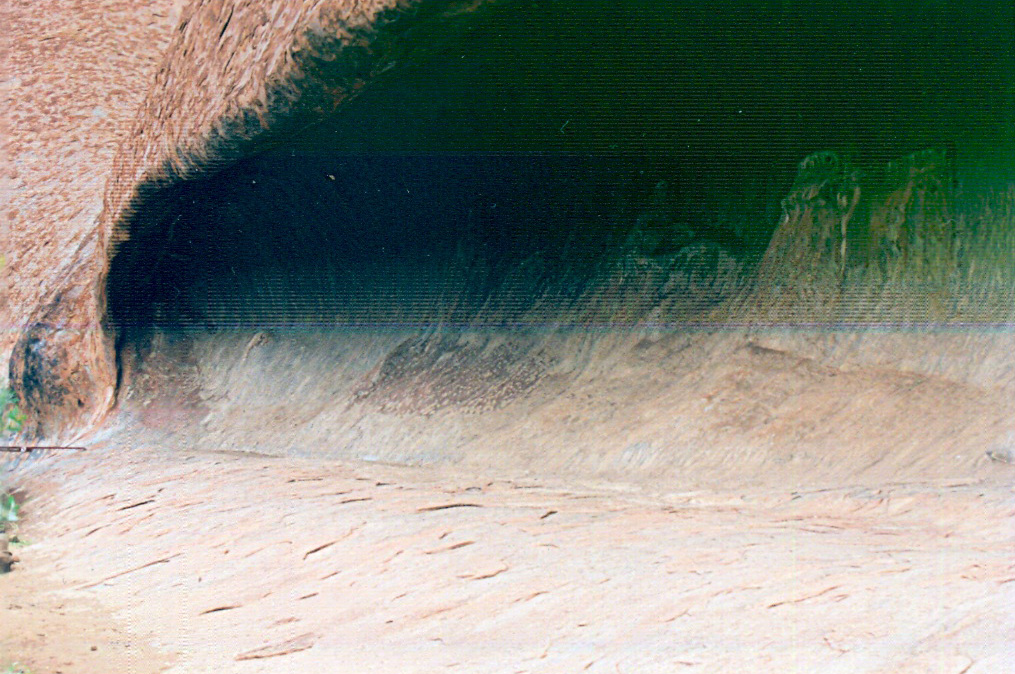
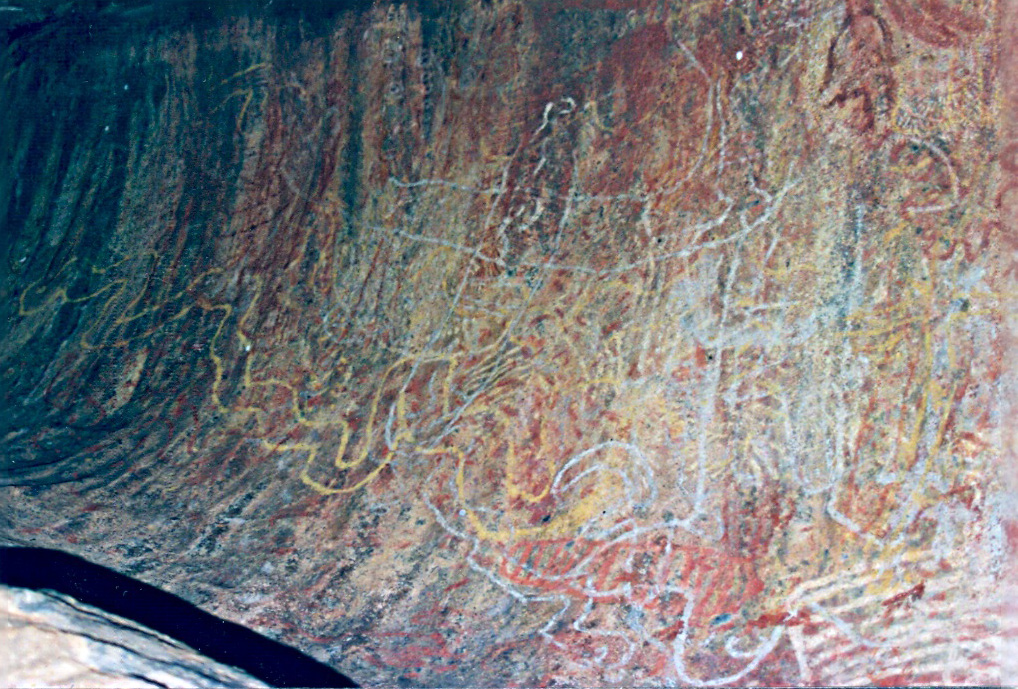
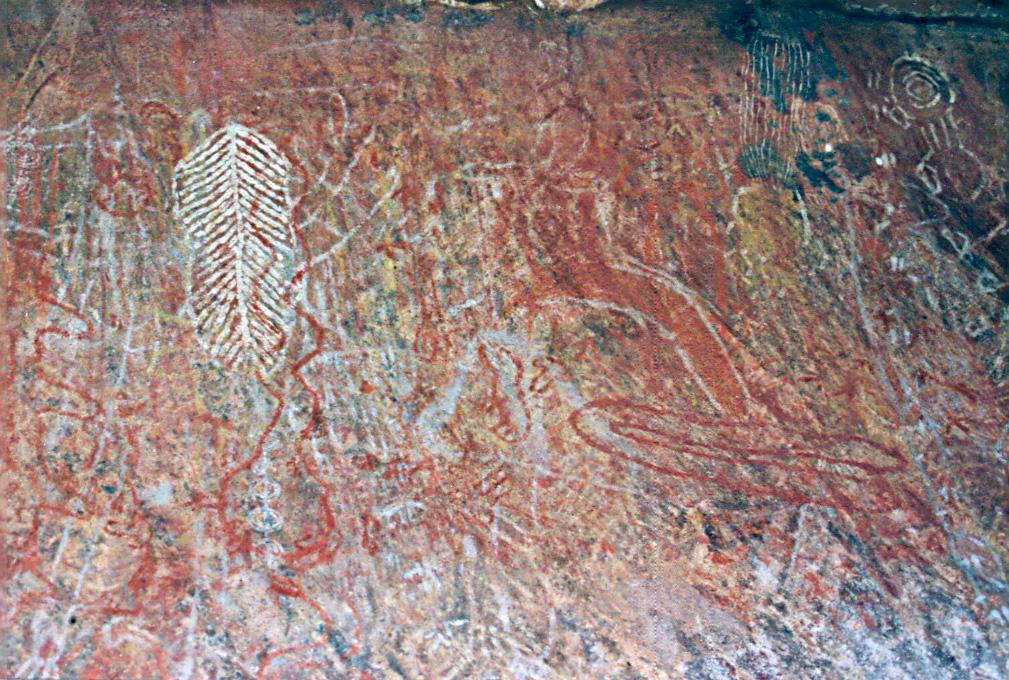
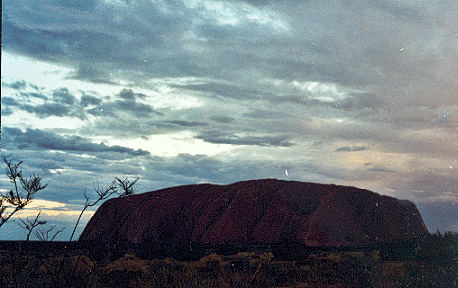
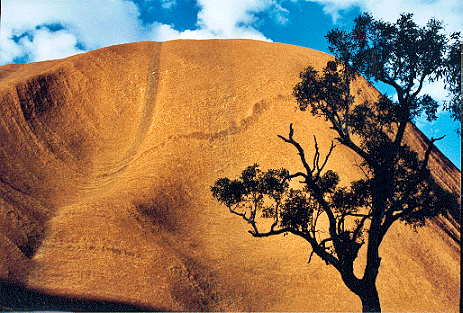
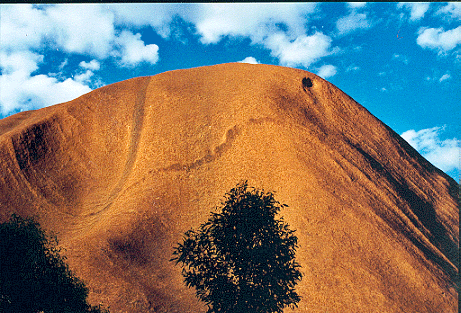
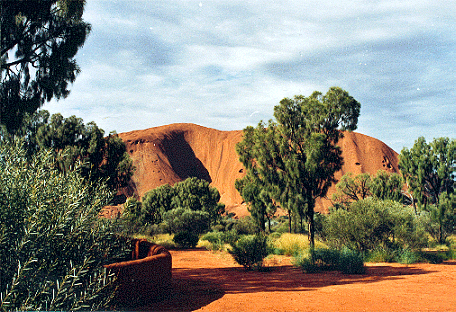
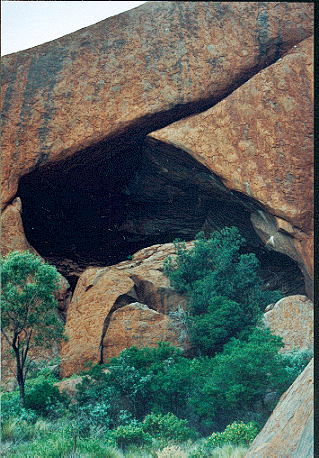
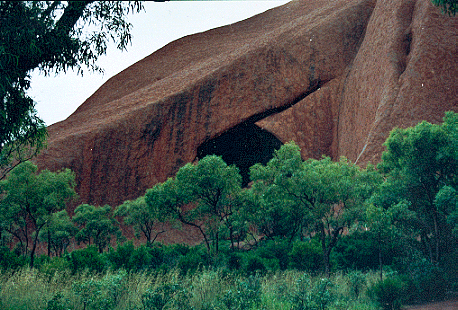
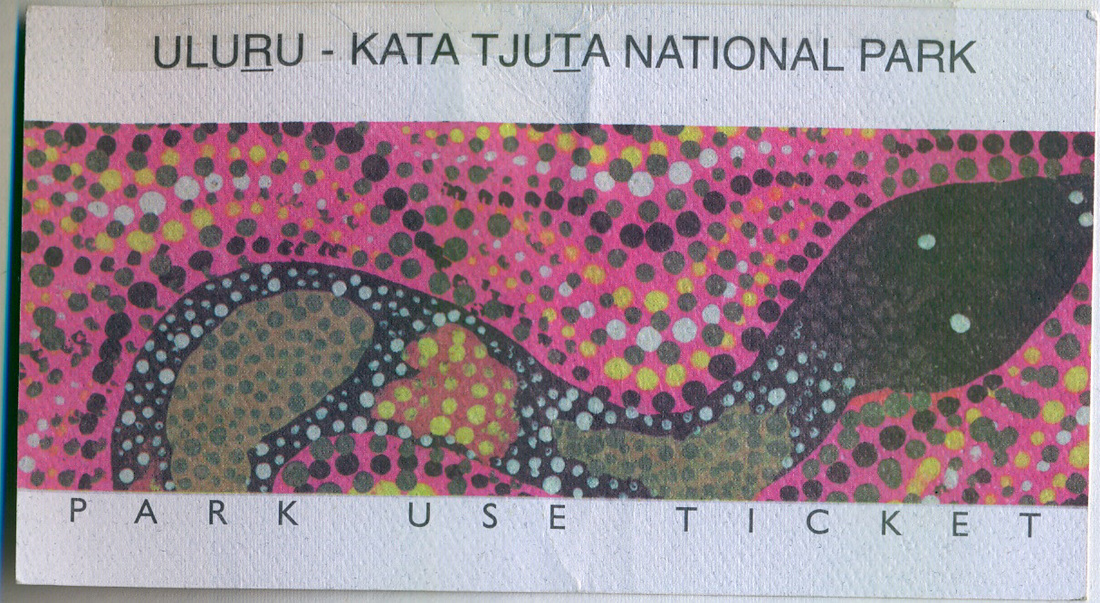
Uluru (Ayers Rock) is hypnotic. It doesn’t just sit in the desert; it dominates it. We jumped into a tour van and drove slowly around the base of the massive monolith. We stopped frequently, stepping into deep, cool caves carved into the sandstone over millennia. On the walls: ancient Aboriginal rock art. Red ochre and charcoal drawings thousands of years old.
Our guide pointed out strange scars and ridges in the stone. These weren't just geological features. To the local Anangu people, they are the literal tracks of the Kuniya (the Python Woman). According to Dreamtime legend, she fought a fierce battle right here against the poisonous Liru warriors to avenge her nephew. The ancient stories are physically etched into the mountain.
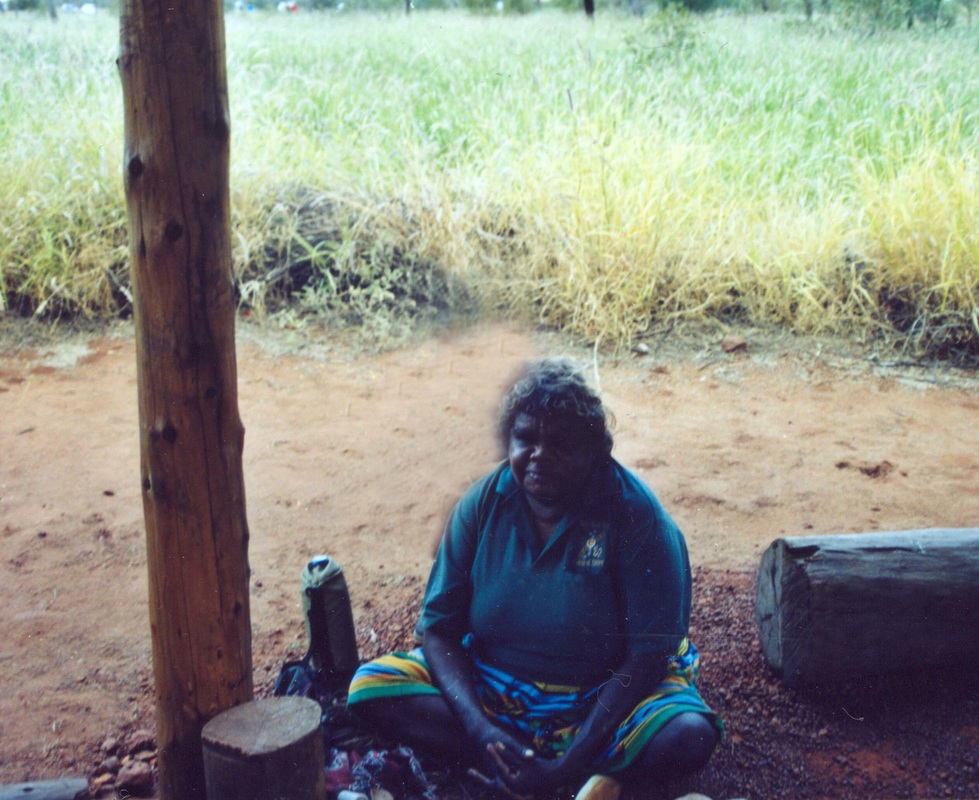
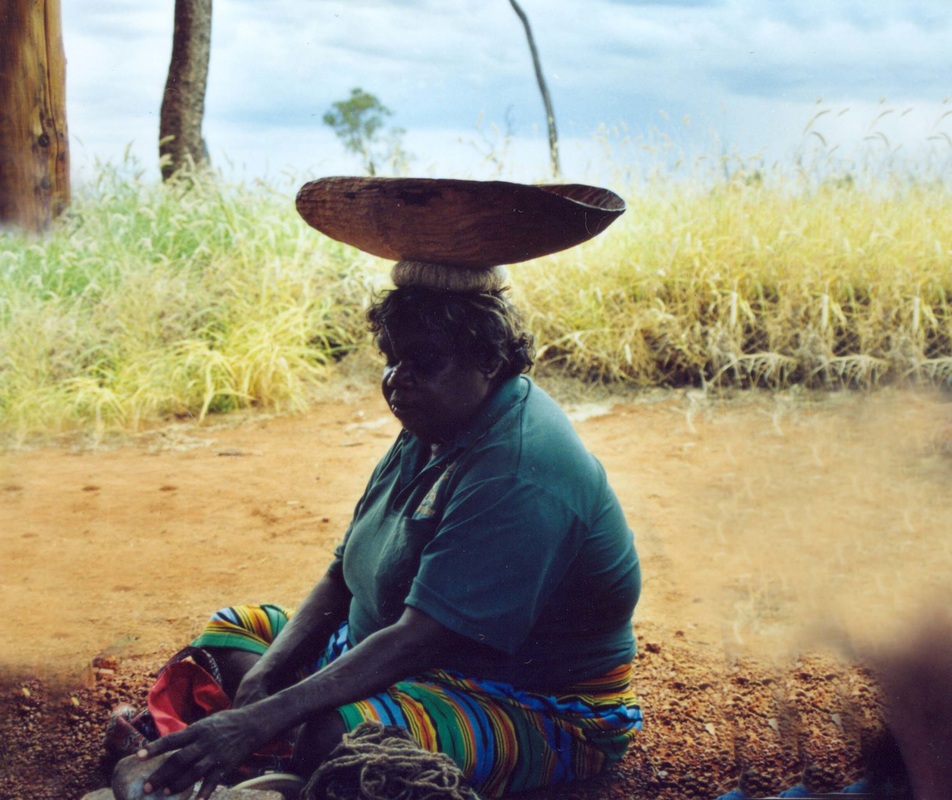
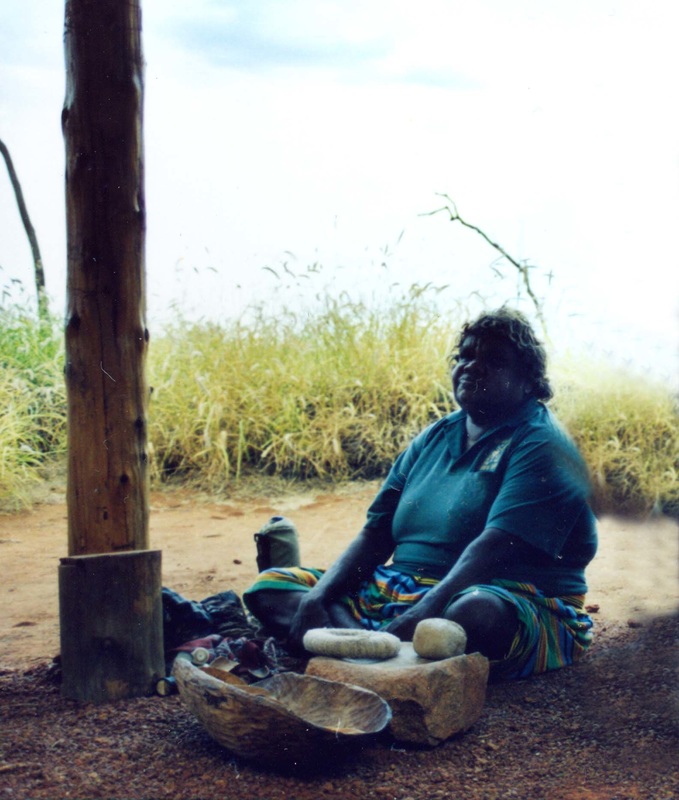
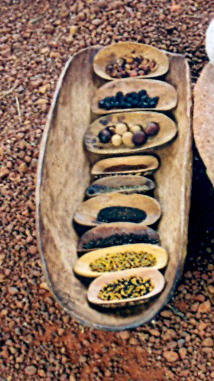
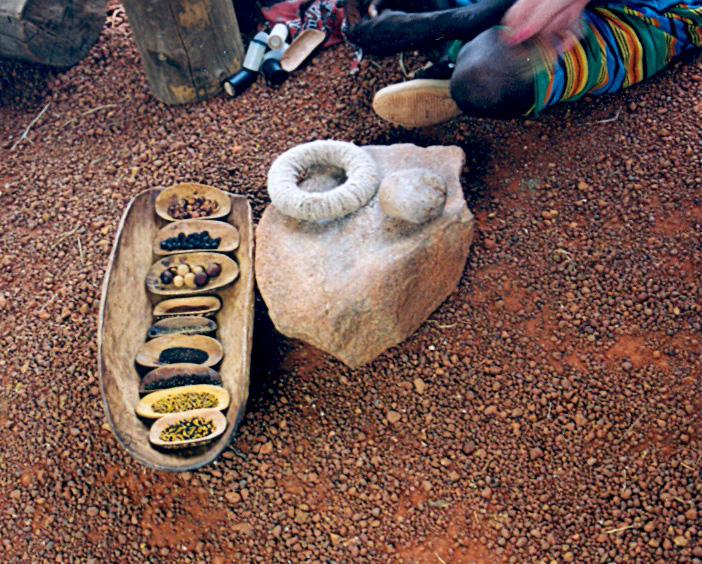
Afterward, we met a local Aboriginal woman. She sat with us and unlocked the secrets of the desert: Bush Tucker. She showed us native seeds, desert fruits, and plants that looked dead but were packed with nutrition and medicine. It was a masterclass in survival from the oldest continuous culture on Earth.
Desert Sunsets and the Next Frontier: Flying to Cairns
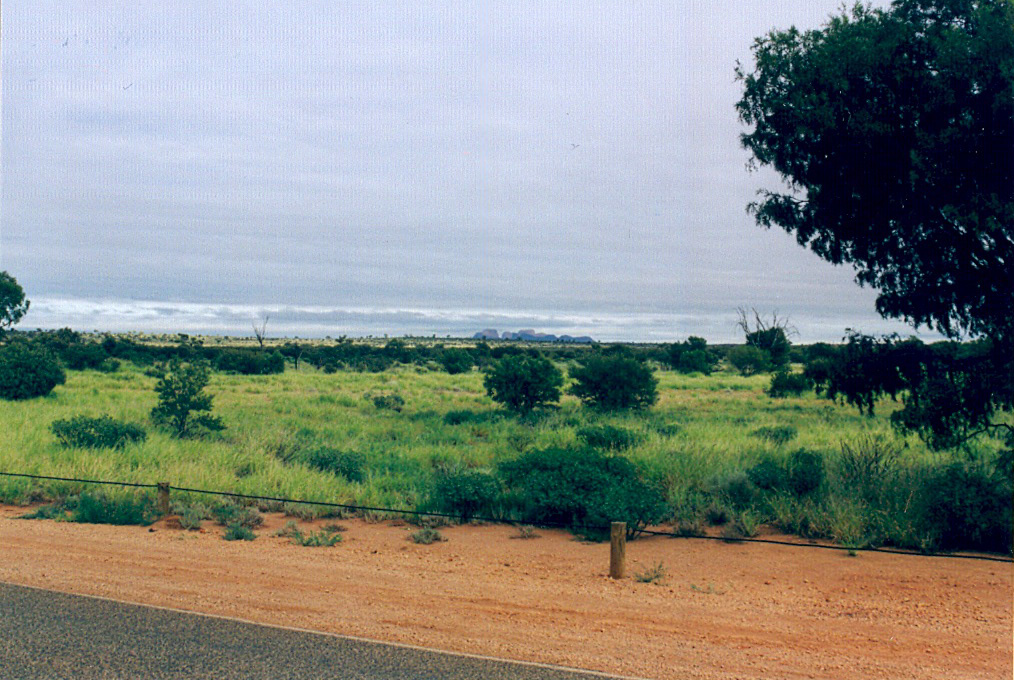
As the desert sun began to dip, casting long, dramatic shadows across the red earth, we started our journey back. In the distance, silhouettes rose against the burning sky: Kata Tjuta (The Olgas). These massive, rounded rock domes looked alien and majestic from afar. My time in the red heart of Australia was short, but it left a massive impression.


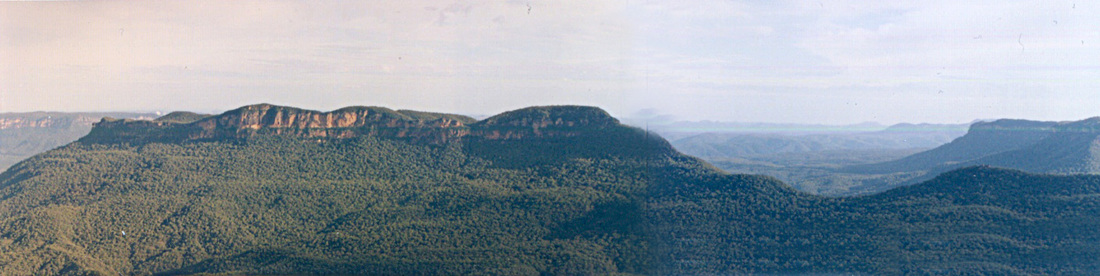
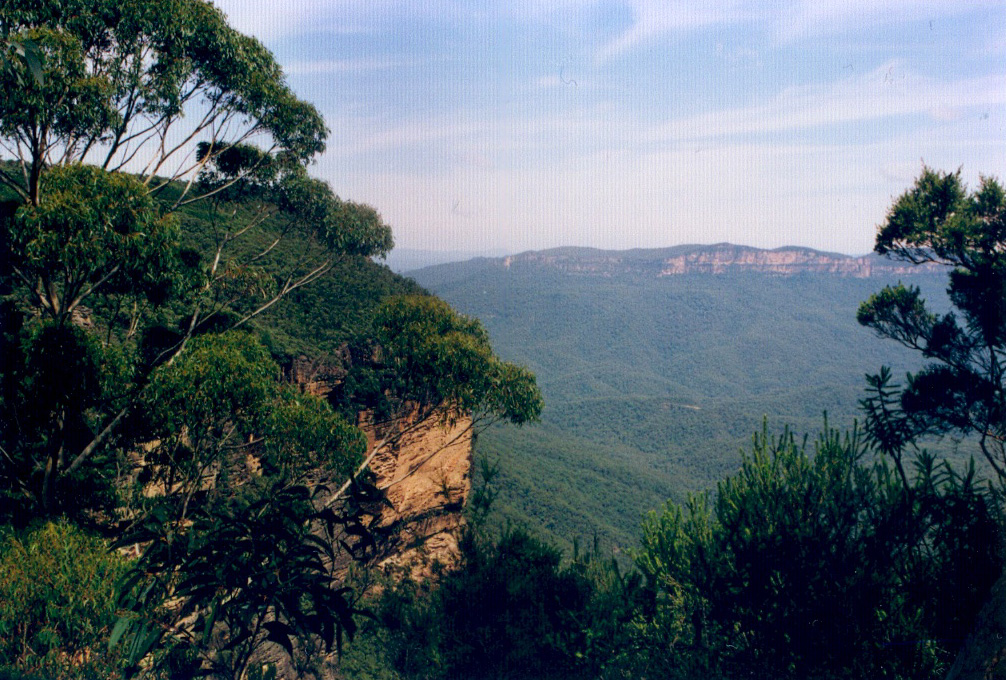
​Blue Mountains
Picture
Out of the Desert, Into the Chaos: A Terrifying Road Trip to the Blue Mountains
After the deep, spiritual silence of the Outback, it was time to head back. My flight dropped me straight into the buzzing energy of Sydney. I stayed a few more days, and that’s when I met Marcus—a British backpacker with a legendary asset: an old VW camper van. Our plan was simple: a classic road trip into the rugged Blue Mountains.
There was just one tiny, terrifying catch. Marcus was British, so driving on the left side of the road should have been second nature to him. However, he had spent the last few years living in France. Getting out of Sydney was an absolute heart-attack experience. Marcus would turn a corner, forget where he was, and casually drift into oncoming traffic. Turning onto the wrong side of the road in a massive metropolis? Spectacular. Horrifying. Hilarious.
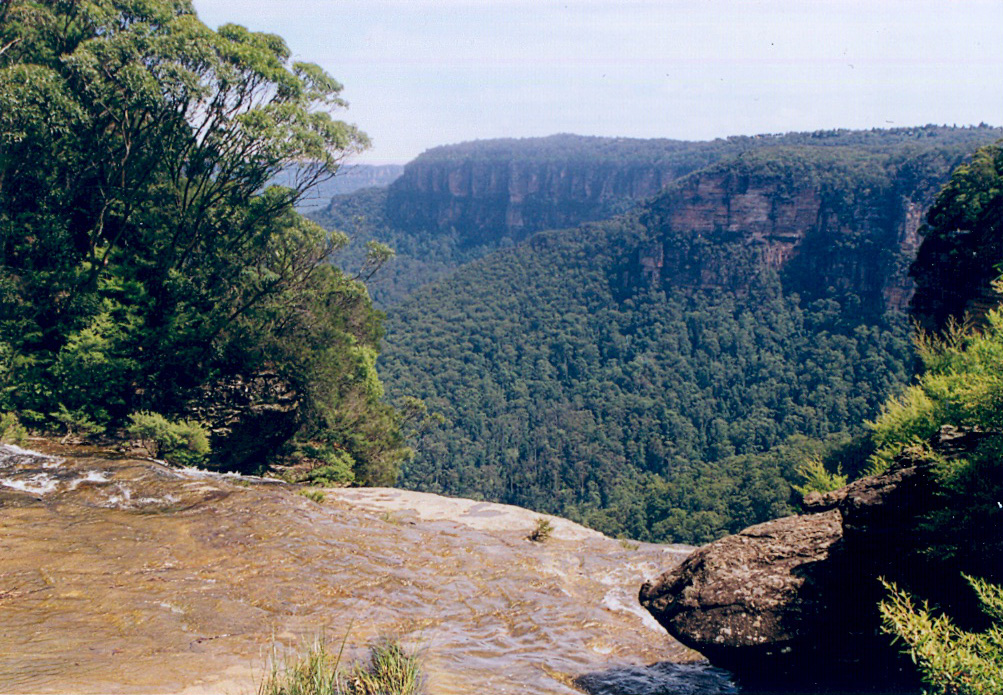
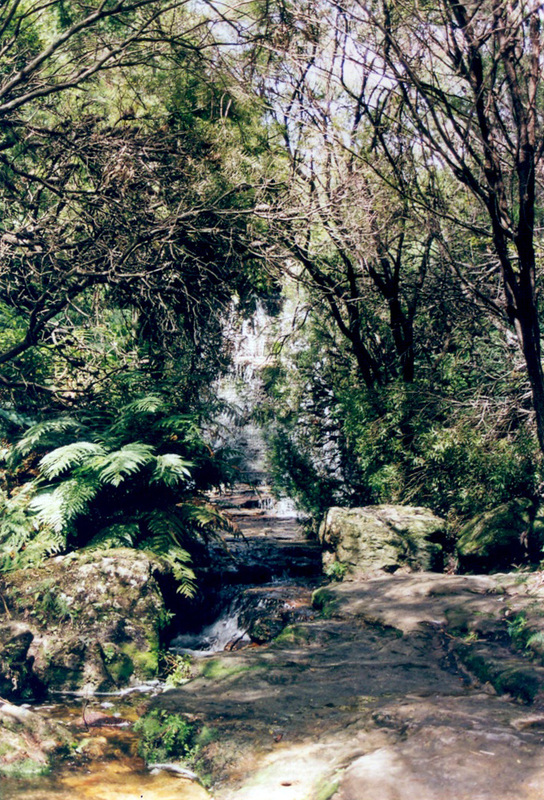
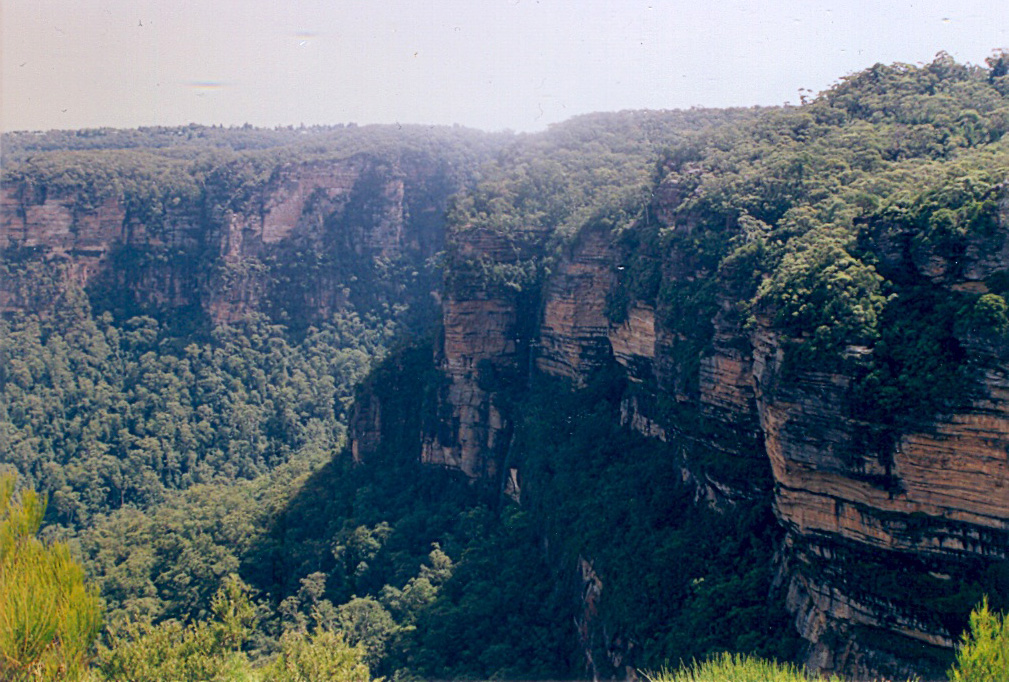
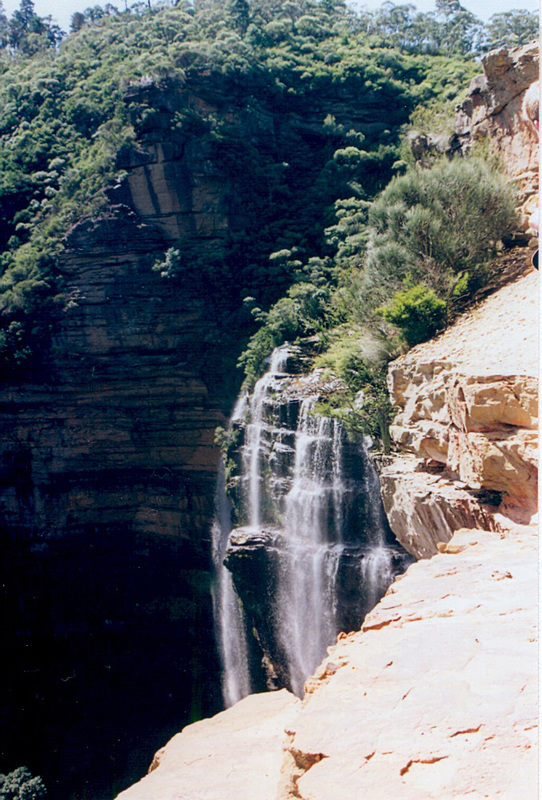
Wentworth Falls
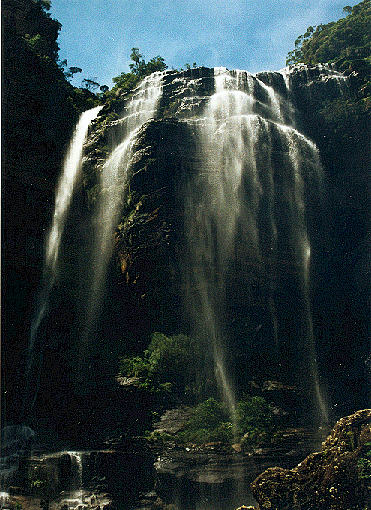
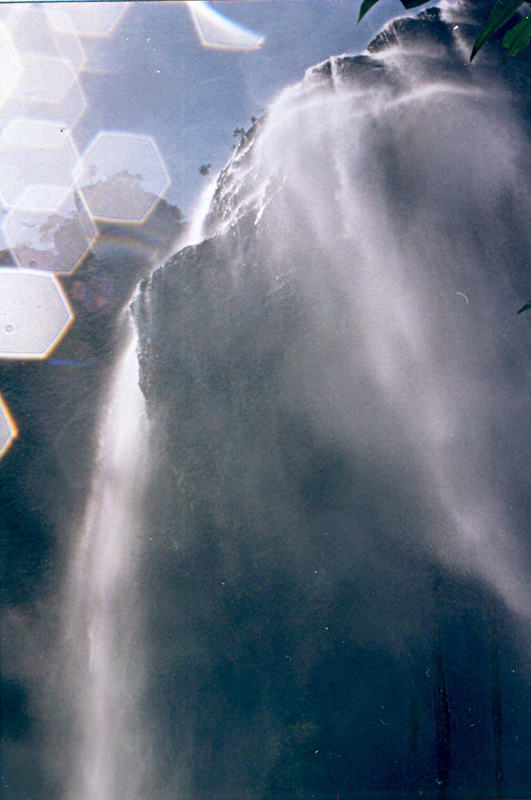
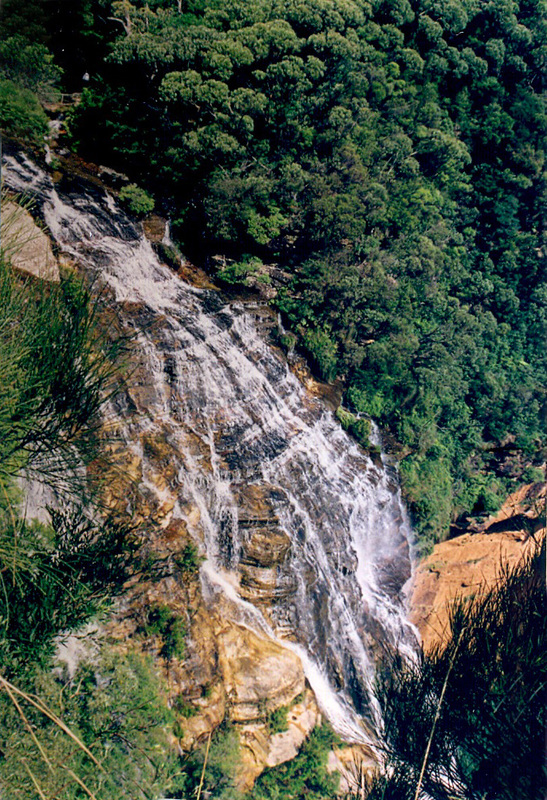
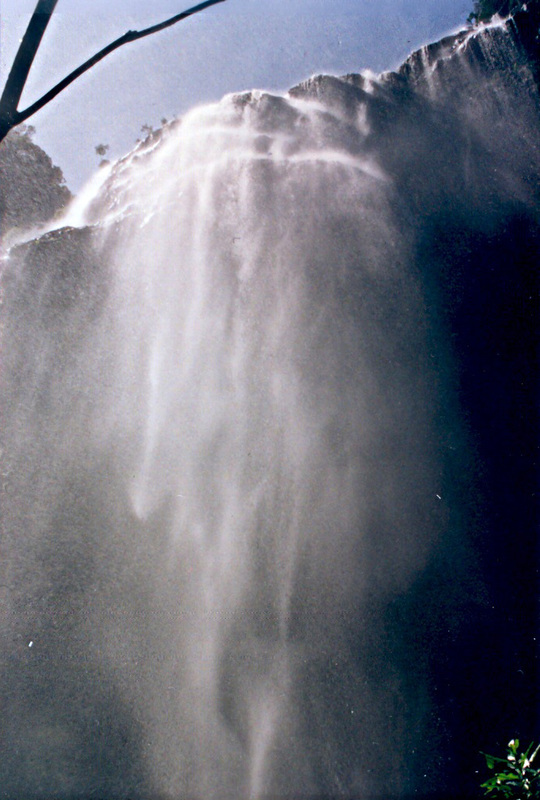
Against all odds, we survived the traffic and escaped into nature. Before hitting the famous viewpoints, we chased the thunderous sound of rushing water deep into the forest. We hiked down to the base of Wentworth Falls. Standing at the bottom, looking up at the massive walls of water cascading down the ancient sandstone cliffs, felt surreal. The heavy mist in the air was the ultimate refresher after that stressful drive.

History Check: Wentworth Falls drops a spectacular 187 meters into the Jamison Valley. For thousands of years, this area served as an essential camp and water source for the traditional landowners, the Gundungurra and Darug people. In 1836, even the famous naturalist Charles Darwin hiked down this exact track, amazed by the sheer scale of the gorge
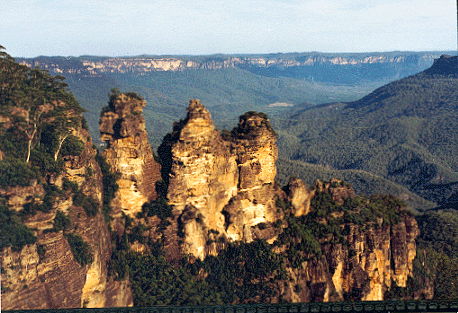
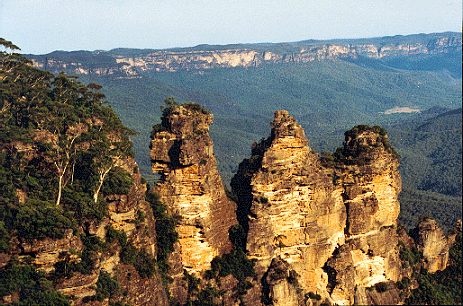
Three Sisters
After soaking in the waterfall views, we pushed higher into the mountain air to see the iconic Three Sisters rock formations. That night, we parked the VW van deep in the mountains, braved the freezing high-altitude temperatures, and slept right there in the bus. Pure backpacker freedom.
History Check: According to the local Aboriginal Dreamtime legend of the Gundungurra and Darug people, the Three Sisters were actually three beautiful sisters: Meehni, Wimlah, and Gunnedoo. They fell in love with three brothers from a rival tribe, sparking a brutal war. To protect them from the fighting, a tribal elder turned them into stone, intending to reverse the spell later. Sadly, the elder was killed in battle, leaving the sisters frozen in rock for eternity.
Picture

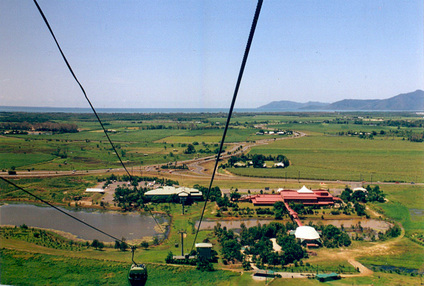
SkyRail, Cairns
Time to Head North: Skyrail and the World’s Oldest Rainforest
With only five weeks to conquer a massive continent, logistics are everything. My strategy? Hit the reset button, skip the endless coastal driving for a moment, and head straight to the tropical north: Cairns! From here, the plan was to slowly work my way down the East Coast to Byron Bay.
First order of business in the humid, tropical heat: the iconic Skyrail Rainforest Cableway.
Picture
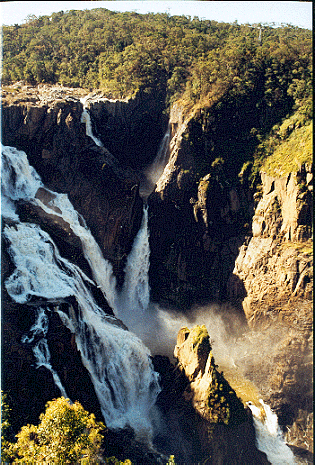
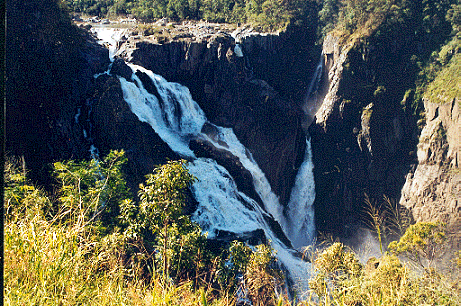
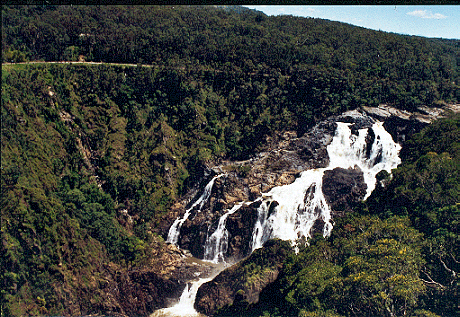
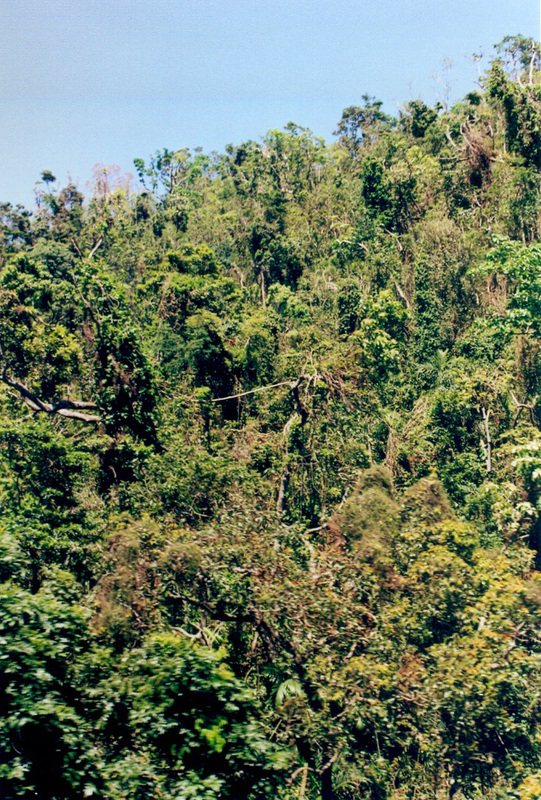
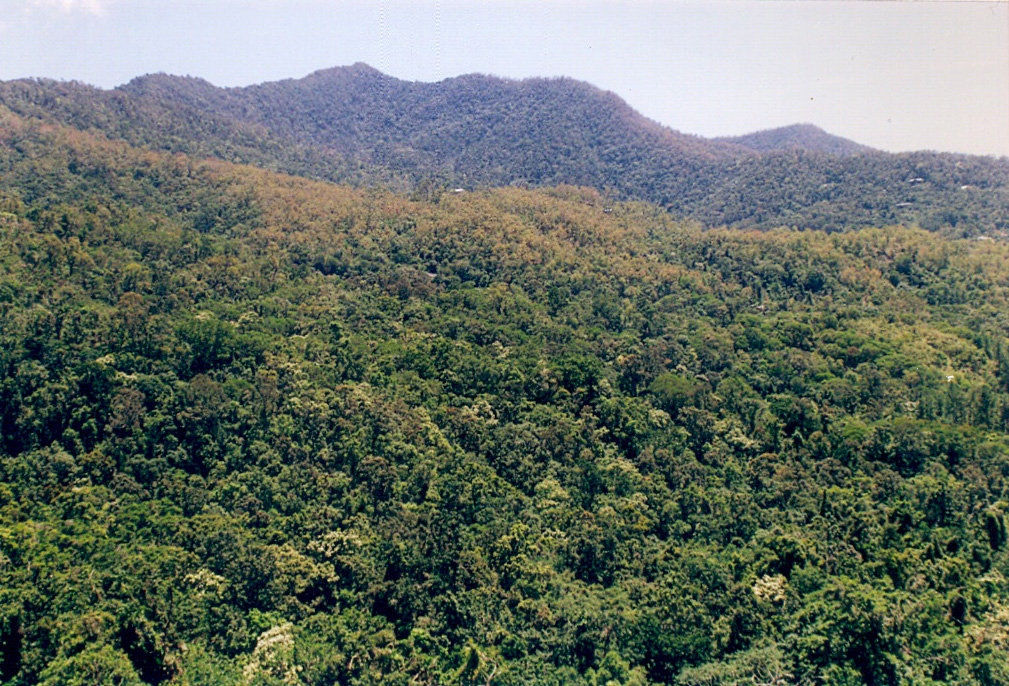
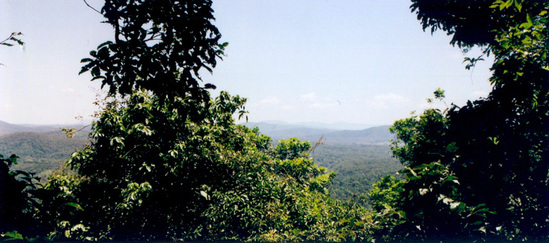
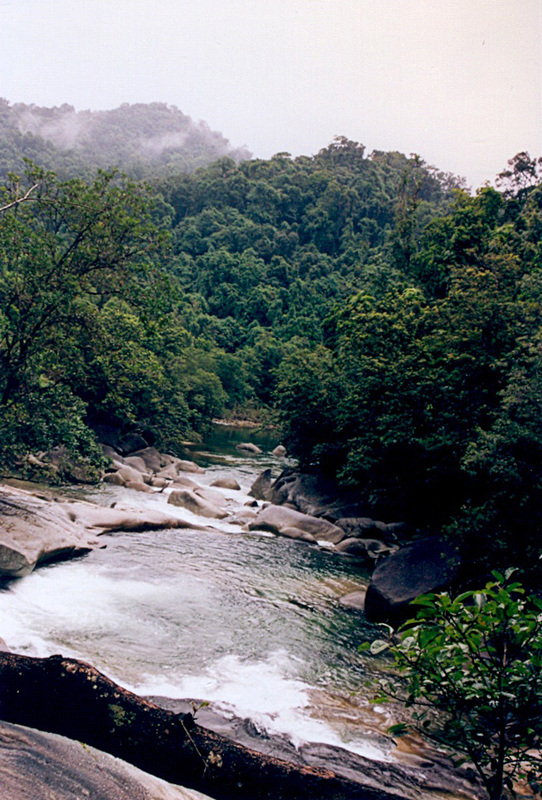
Stepping into the gondola, you leave reality behind. You glide just meters above the pristine canopy of the ancient Barron Gorge National Park. Suddenly, the jungle opens up, and you are staring at a monster: Barron Falls. The raw power of the water crashing down the jagged granite cliffs into the deep gorge is deafening.
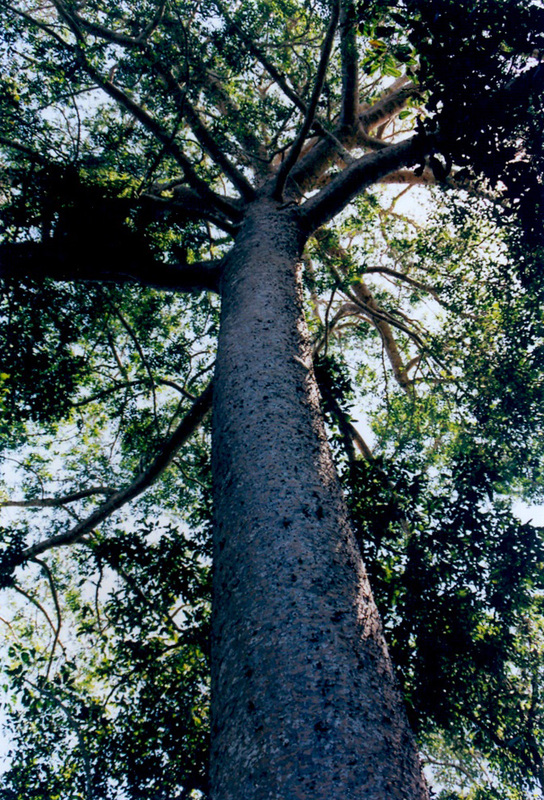
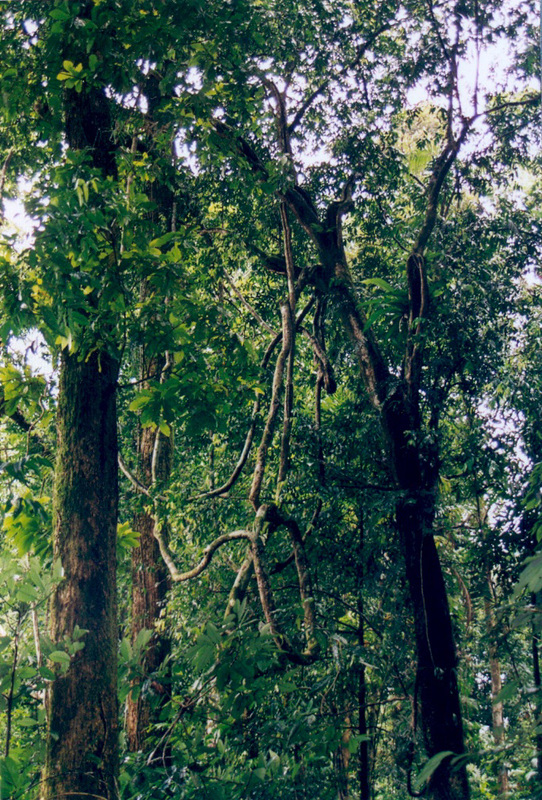
​We alighted at the rainforest stations to explore the damp forest floor. Looking up was dizzying. I stood before a monument of nature: a massive Bull Kauri Tree. These ancient giants feature perfectly straight, smooth trunks and can live for over a thousand years. It felt like walking through a living dinosaur park.

History Check: The local Djabugay Aboriginal people call these falls Din Din. To them, the roaring waters are sacred, deeply tied to the Dreamtime story of the giant carpet snake, Buda-dji, who carved out the entire Barron River landscape.

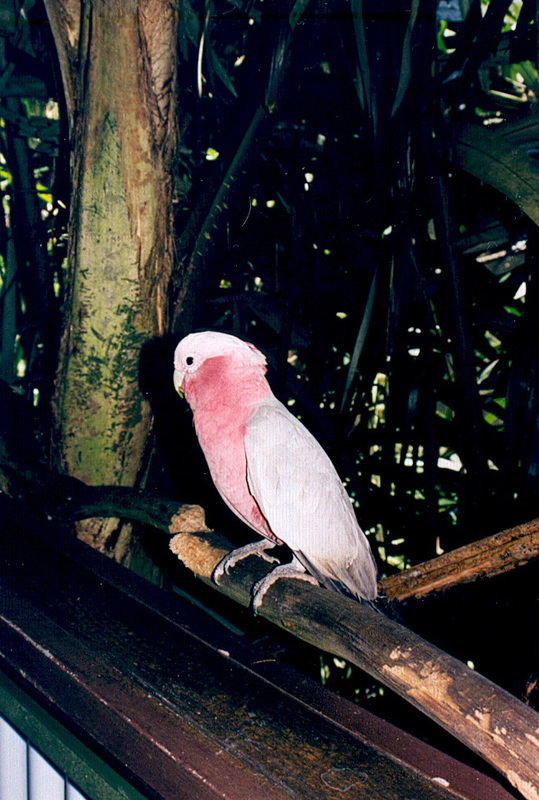
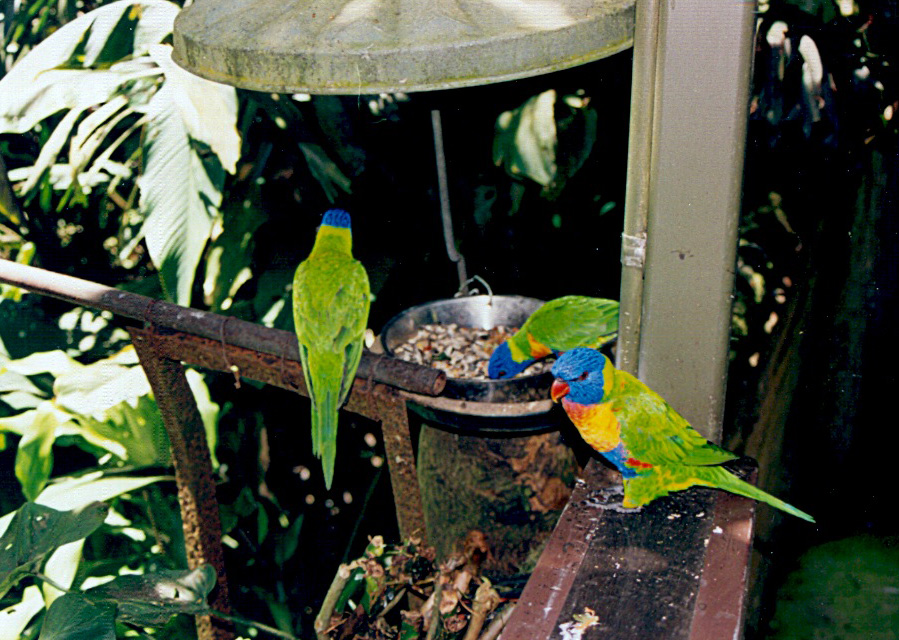
Next, it was time for some local wildlife encounters. The Australian bush is incredibly loud and colorful. First, I ran into a beautiful Galah (Rose-breasted Cockatoo), looking dapper with its bright pink chest and cool grey wings. Right next to it, a flock of Rainbow Lorikeets were causing chaos at the feeding stations. Their neon-blue heads and orange bellies are stunning, but their screeching is intense!
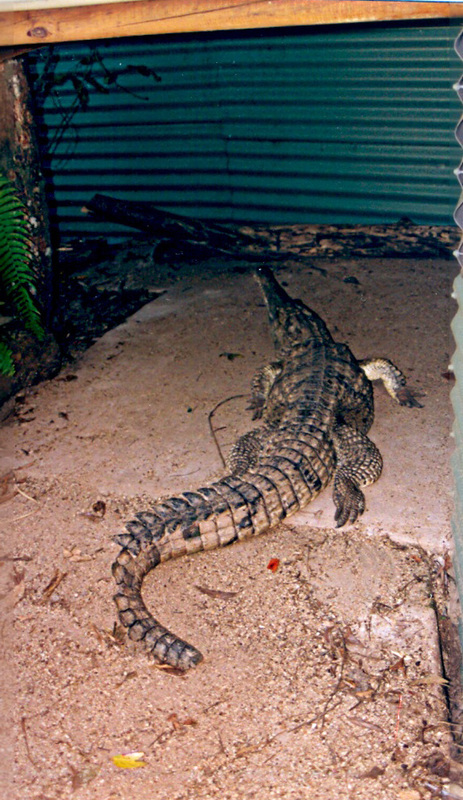
Then, things got serious. I spotted my very first prehistoric local: a young Freshie (Australian Freshwater Crocodile). It was chilling out on the sand near a corrugated iron wall. Compared to the massive saltwater crocodiles, these guys have narrow, pointy snouts and mostly eat fish. Still, looking at those scales and sharp teeth up close, you remember exactly who rules the Australian wilderness.
History Check: Opened in August 1995, the 7.5-kilometer Skyrail was the longest gondola cableway in the world at its completion. More importantly, it is considered a global masterpiece of ecotourism. To protect the ecosystem, no roads were built during construction. The 32 heavy towers were entirely lifted into place by helicopters to leave the fragile jungle floor completely untouched.
Picture

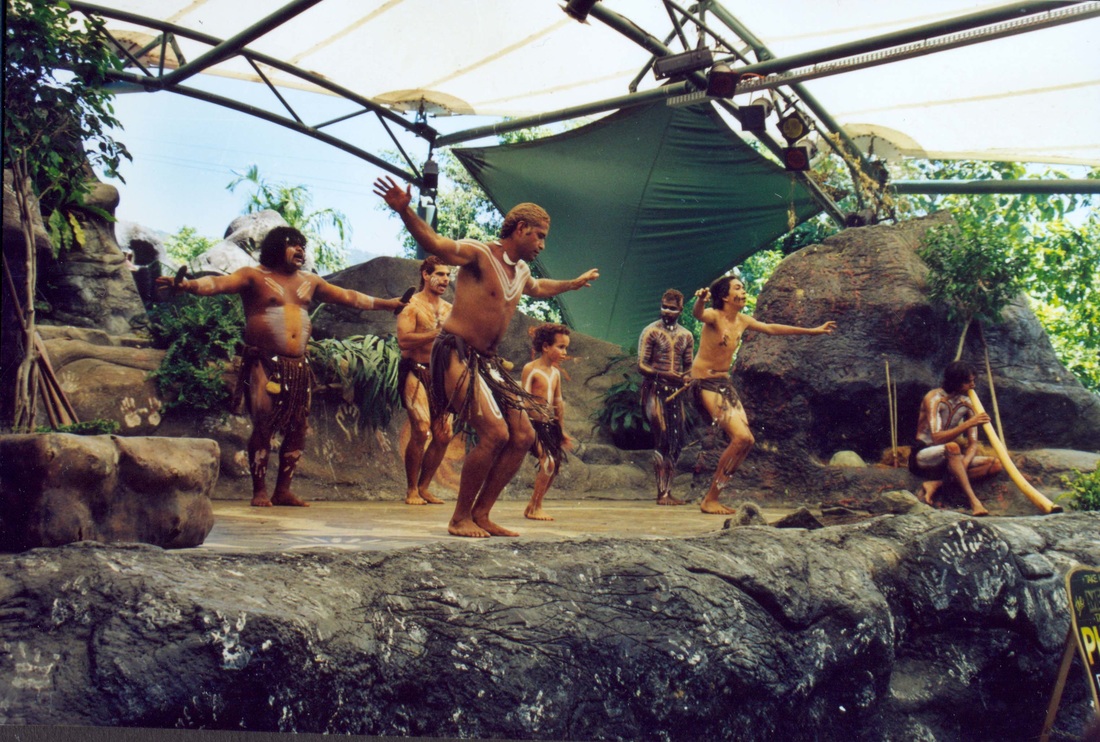
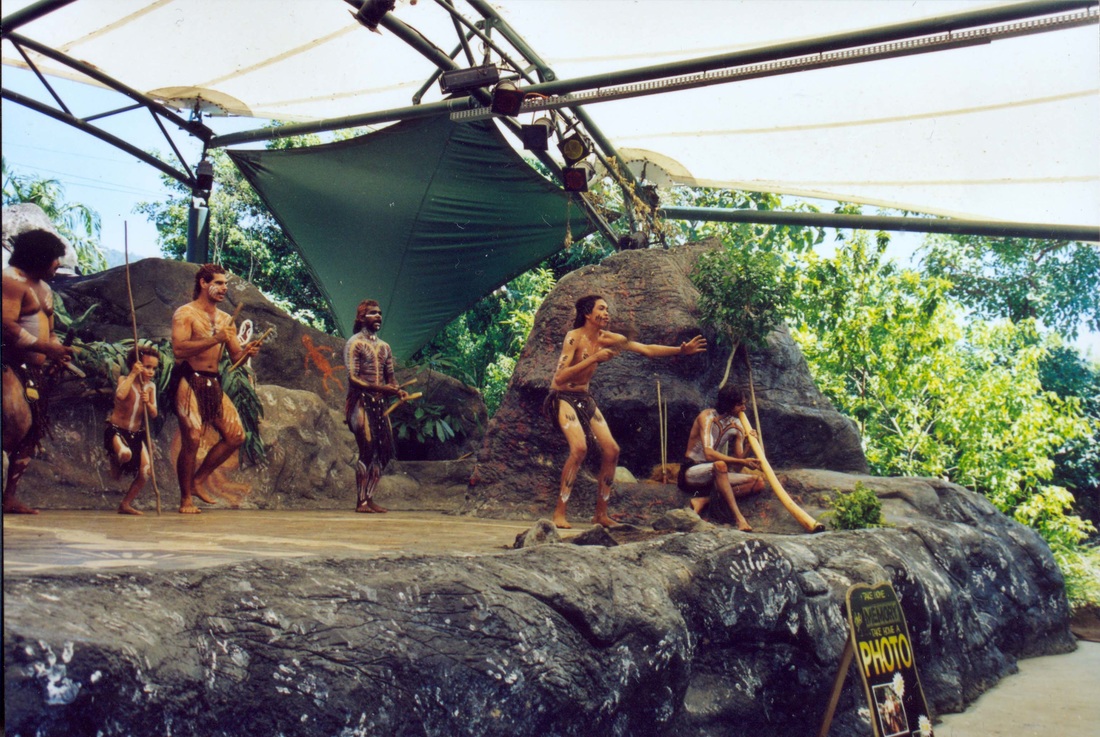
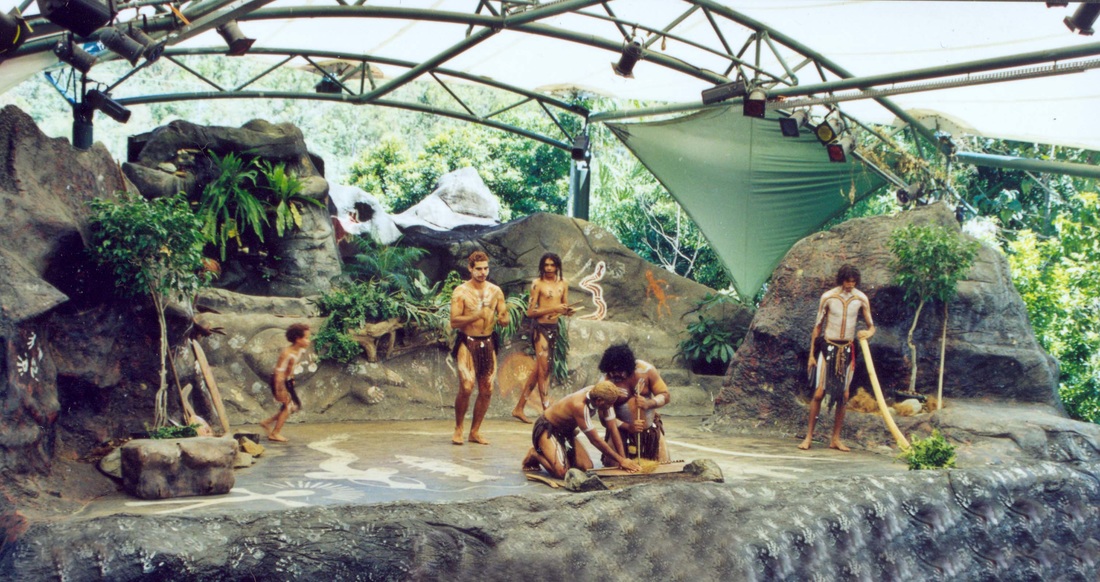
Aboriginal Dance im Tjapukai Center, Cairns
​
The rainforest adventure began right at the foot of the mountains. After the cableway, I visited the Tjapukai Aboriginal Cultural Park, located directly next to the lower Skyrail terminal. Witnessing the traditional Aboriginal dance performance was powerful. The heavy, rhythmic thumping of feet, the deep, vibrating drone of the didgeridoo, and the raw energy of the dancers storytelling through movement was unforgettable. It was a beautiful, deep connection to the land before exploring the jungle itself.
Cultural Insight: The Secret Language of Aboriginal Dance
The performance at the foot of the mountains was not just a show—it was a glimpse into the oldest continuous culture on Earth. For thousands of years, Australia's Indigenous peoples have used dance as an unwritten library.
  • The Corroboree: This is the traditional name for an Aboriginal ceremonial meeting where people interact with the Dreamtime (creation period) through dance, music, and song.
  • Living History Books: Because Aboriginal culture is entirely oral and has no written language, dances are used to pass down vital historical events, laws, and survival skills to the next generation.
  • Animal Mimicry: The dancers expertly imitate the movements of native wildlife. The most famous is the Kangaroo Dance, where performers mimic the hops, scratches, and territorial fights of kangaroos. Other dances copy the hunting style of the emu or the glide of the snake.
  • The Body Canvas: The white, yellow, and red paints on the dancers' skin are made from natural ochre and clay. Every line and pattern tells a specific story about the dancer's tribe, family connection, and spiritual role.


​​Cape Tribulation
​
Picture
Where the Rainforest Meets the Reef: The Wild Magic of Cape Tribulation
Into the Emerald Deep

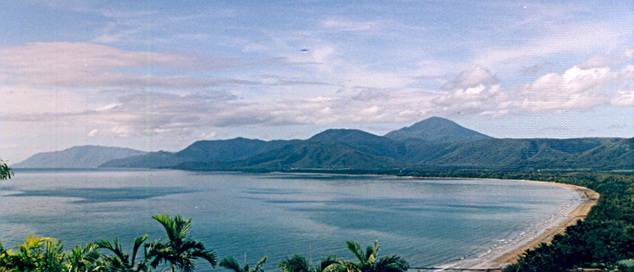
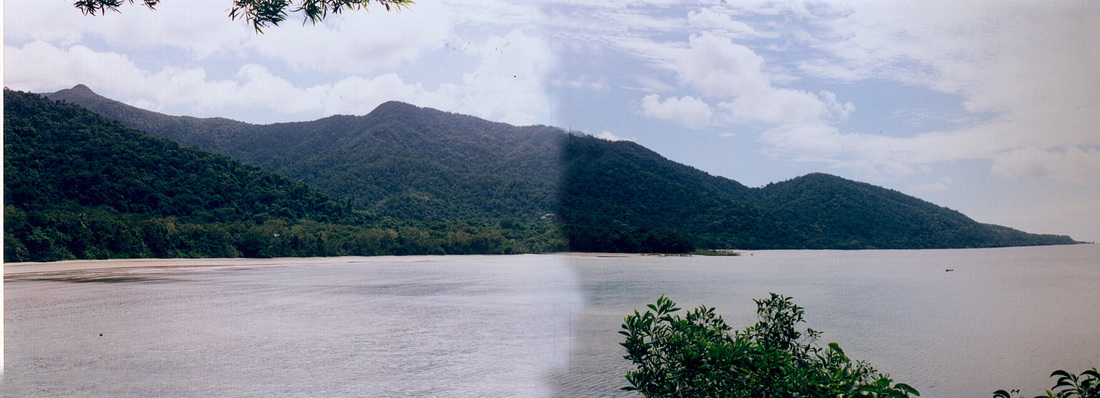
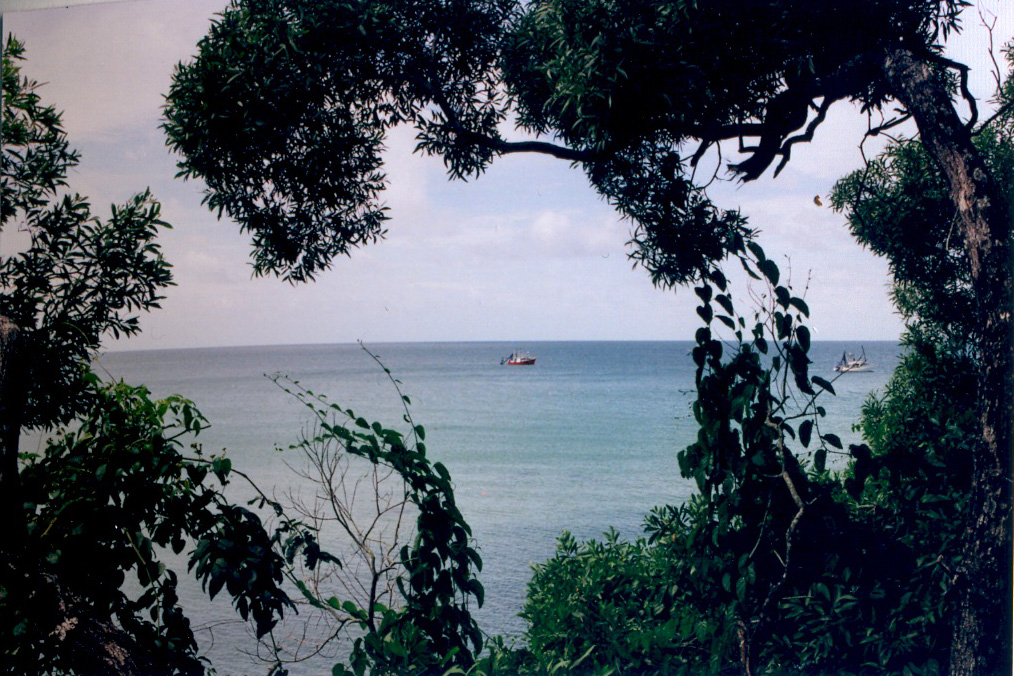
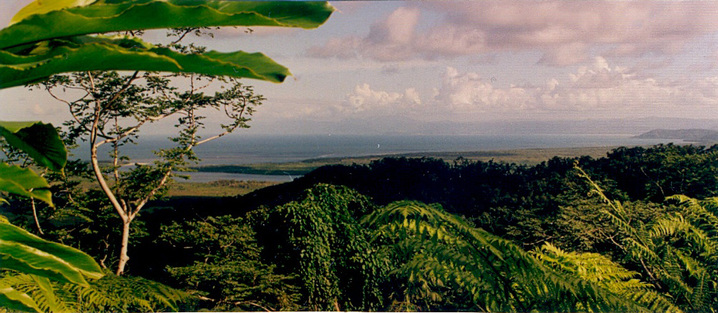
From Cairns, I pushed even further north into the wild. Destination: Cape Tribulation. This is one of the rarest places on earth where two UNESCO World Heritage sites collide—the ancient jungle literally grows right onto the coral coast.
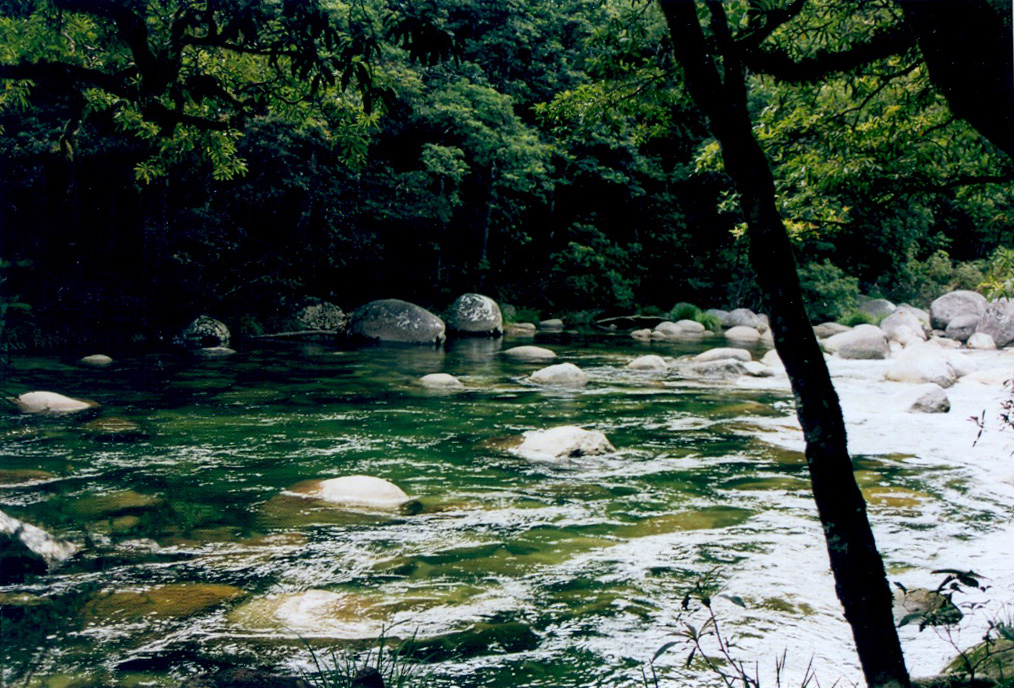
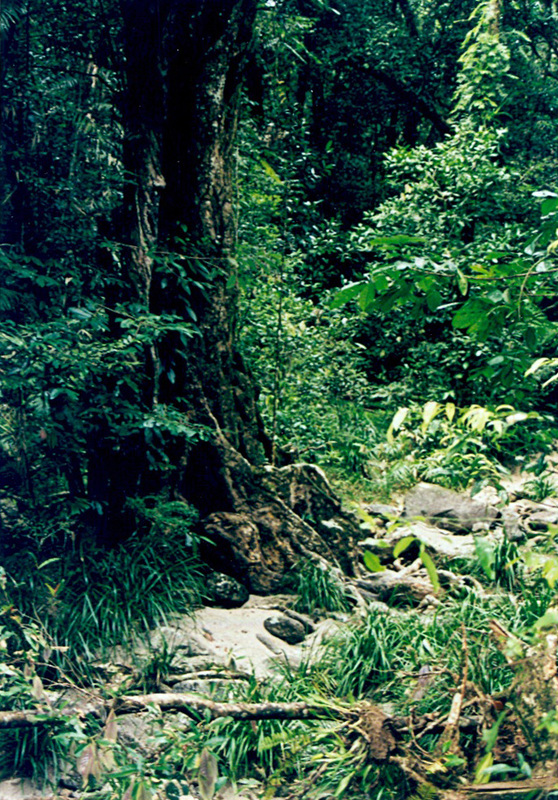
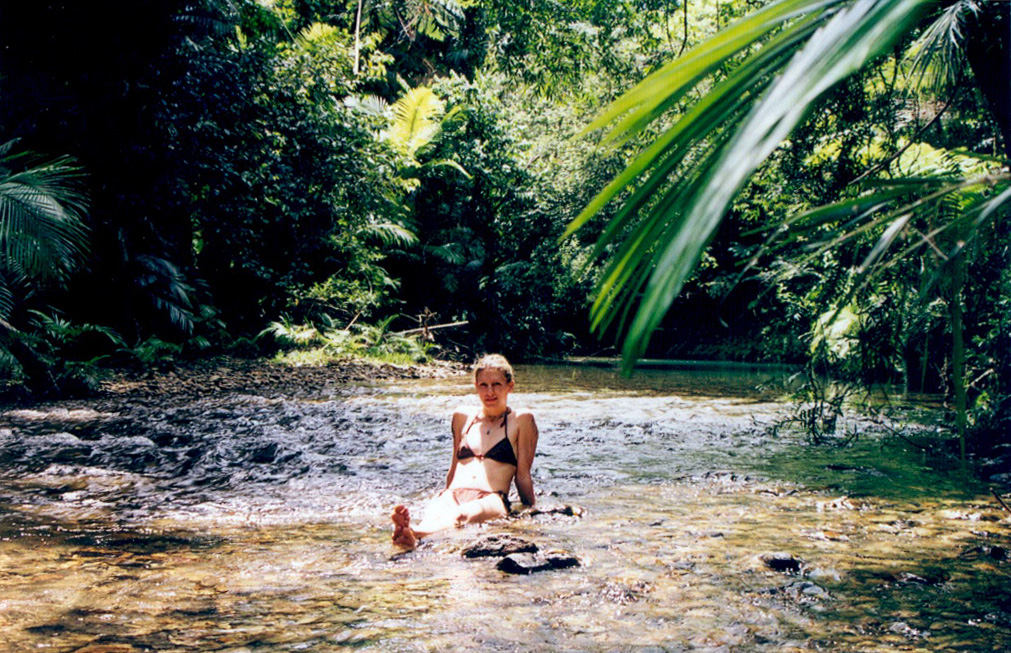
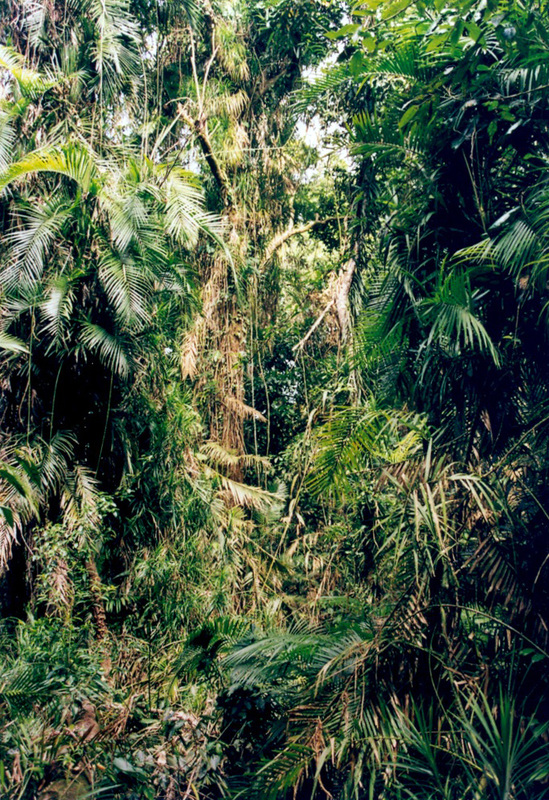
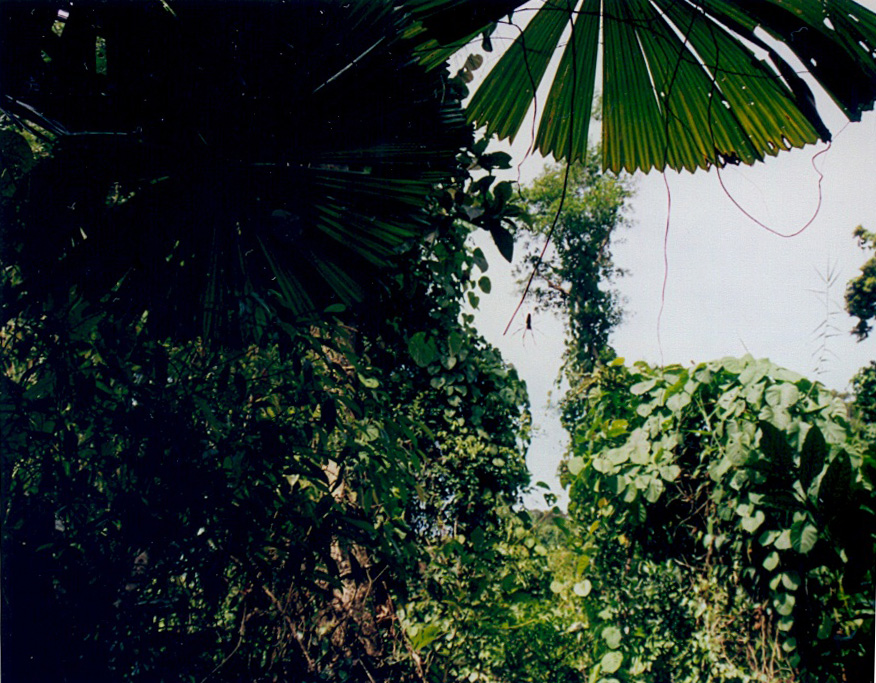
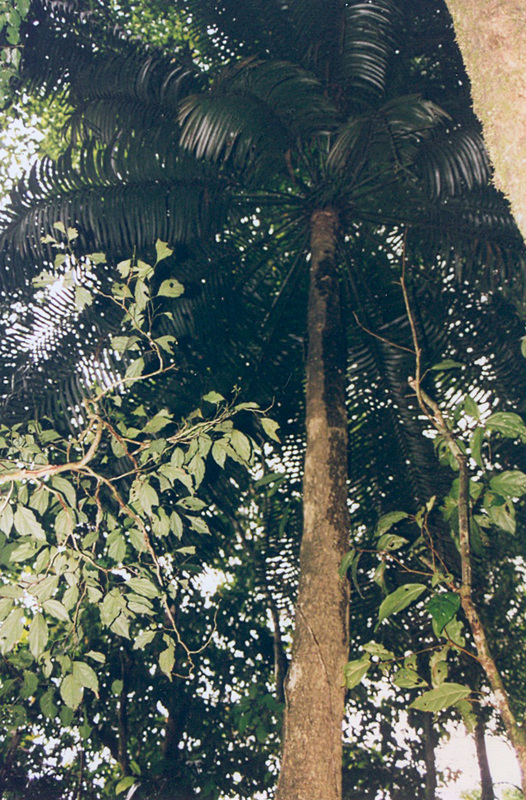
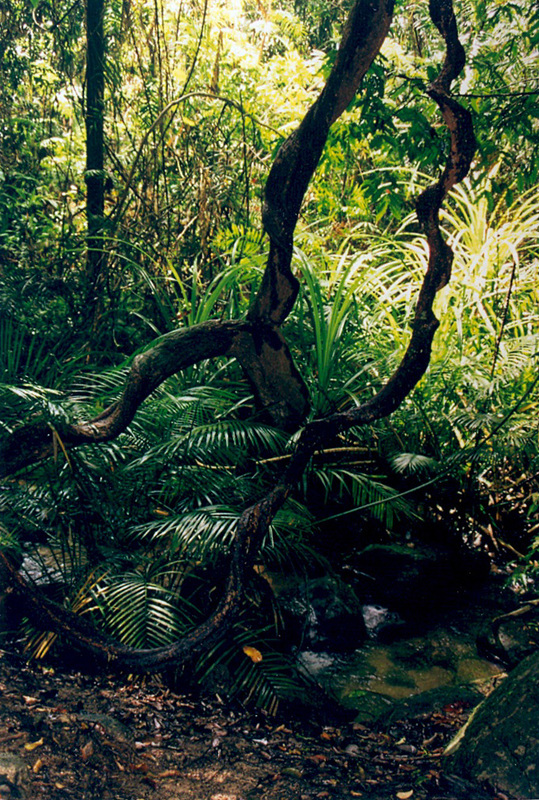
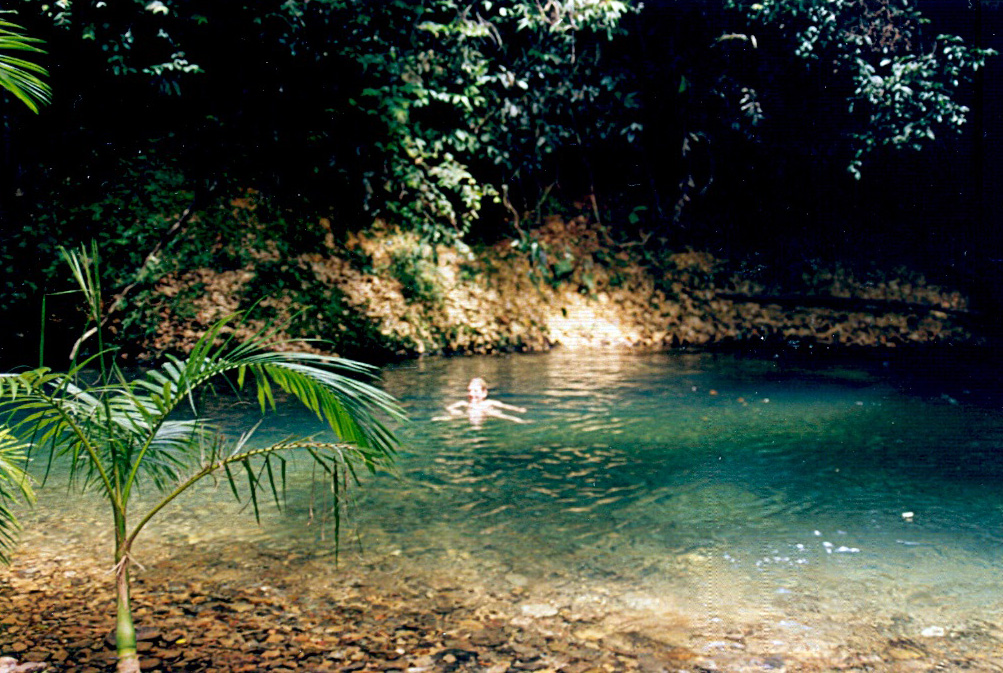
Our adventure started deep inside the Daintree Rainforest. The humid air was heavy, but the jungle provided the ultimate oasis: a pristine, freshwater swimming hole tucked away beneath the dense canopy. Diving into that cool, emerald-green water surrounded by giant palm trees and tropical ferns was pure bliss. No crocodiles here—just crystal-clear water and absolute silence.
​
​History Check: The Daintree Rainforest is estimated to be over 180 million years old, making it the oldest continuously surviving tropical rainforest in the world. Cape Tribulation itself was named by British navigator Captain James Cook in 1770, whose ship ran aground on a nearby reef, starting what he called his "tribulations" (troubles).
The Mirror of the Swamp
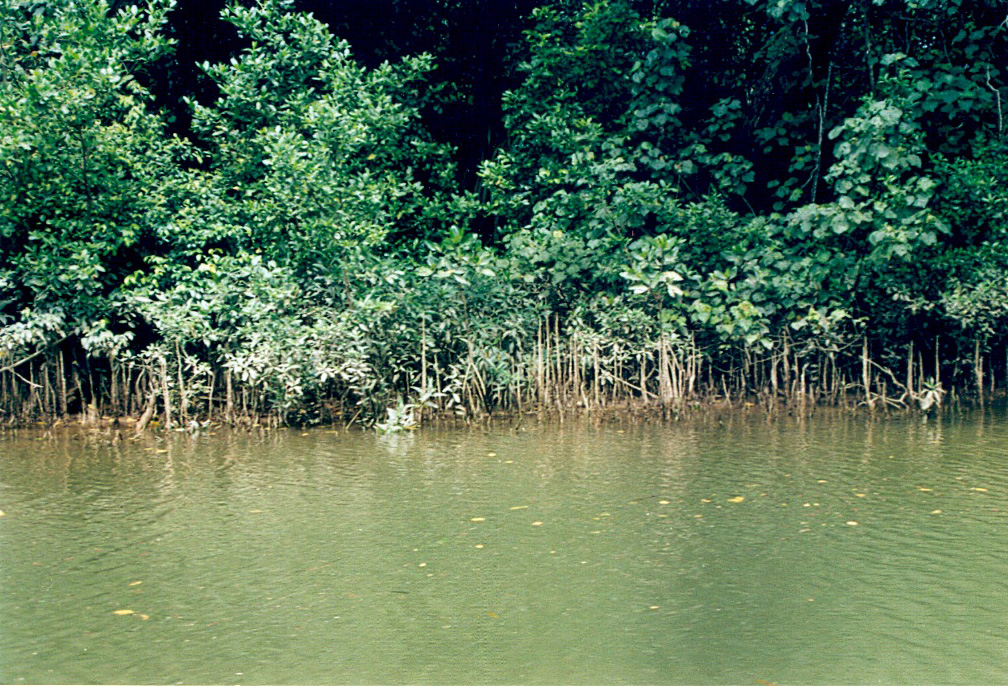
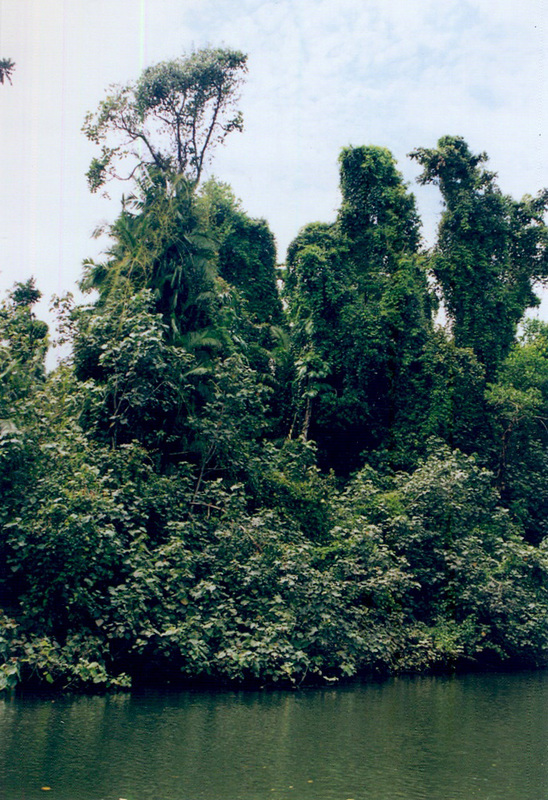
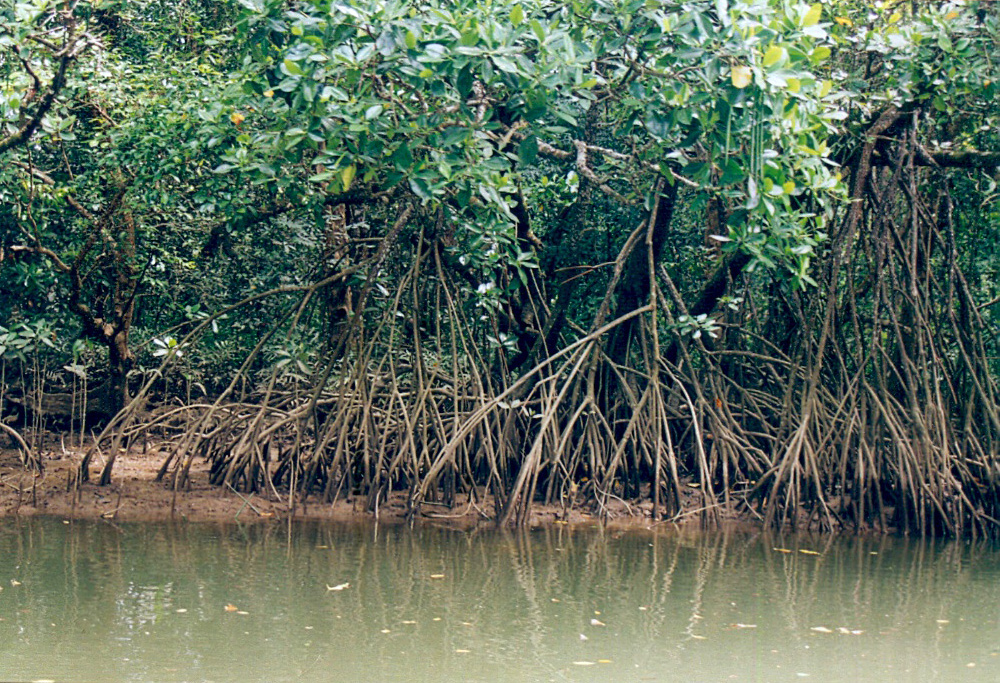
To explore this wild ecosystem, we hopped onto a small boat and drifted deep into the narrow tidal creeks. The water was smooth as glass, reflecting the thick wall of green above. Floating just inches away from the massive network of twisted, submerged roots was hypnotic. Every traveler on board was dead silent, scanning the dark water and muddy banks. This is prime hunting ground for massive saltwater crocodiles, and the raw, prehistoric energy in the air was palpable.
​

Beware of the Saltie: Earth's Ultimate Apex Predator
While drifting through the quiet creeks, one thought dominates your mind: the Saltie. The Saltwater Crocodile(Crocodylus porosus) is the largest living reptile on Earth. Males can grow up to six meters long and weigh over a ton. They are hyper-aggressive, lightning-fast, and master ambush hunters.

Walking on Roots
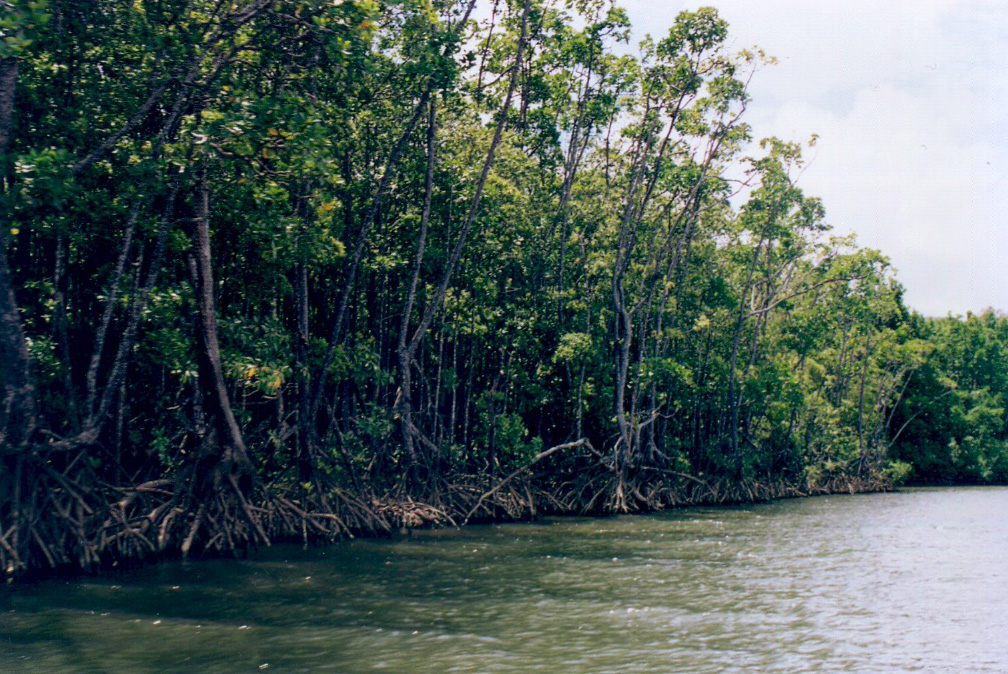
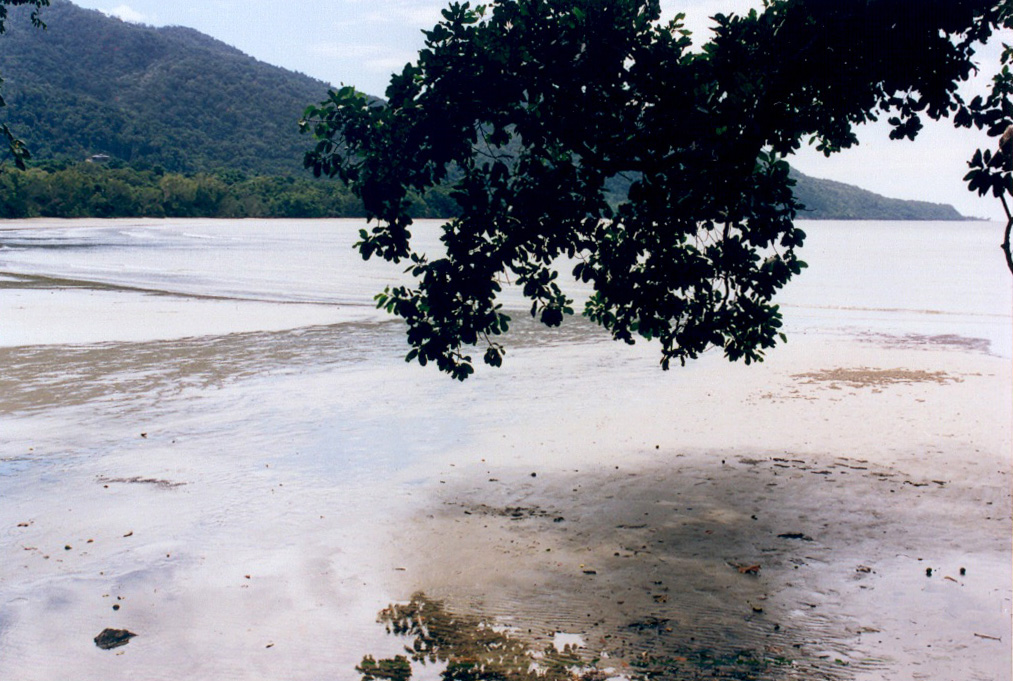
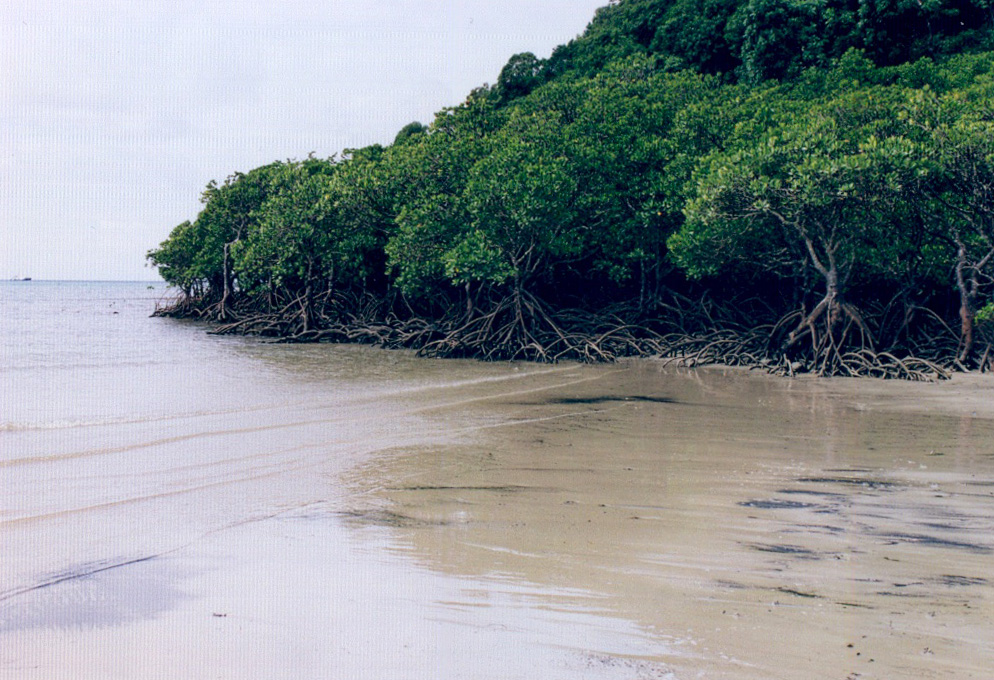
After the boat ride, we stepped onto the beach. The scenery here is a biological masterpiece. The dense canopy does not stop at the edge of the land; it marches straight onto the shore. Walking along the tidal flats, I confronted an incredible sight: an army of Mangrove Trees standing directly in the sand. Their iconic, tangled stilt roots arched out of the ground like giant, wooden spiders, holding the trees steady against the shifting tides. It felt like standing at the absolute edge of the world.
Biology Check: Mangroves are ultimate survivalists. They are among the very few trees on Earth that can thrive in salty ocean water. Their specialized stilt roots act as natural filters, blocking out the salt while allowing the tree to breathe. This dense underwater root maze also serves as a vital nursery, protecting small marine life from large predators.

Prehistoric Fact Check "Salties":
  • The Death Grip: Salties have the strongest bite force of any animal on the planet—exerting nearly four times the crushing power of a Great White Shark. Once they grab you, they perform the terrifying "death roll" to overpower their prey.
  • Saltwater Superpower: Thanks to specialized glands on their tongues, they can excrete excess salt. This allows them to travel thousands of kilometers across open ocean waters, though they prefer coastal rivers, swamps, and beaches.
  • Perfect Camouflage: They can stay submerged for hours by slowing down their heart rate. When they hunt, only their eyes and nostrils break the surface of the water, making them virtually invisible until it is too late.

Picture


​Uncle Brians Rainforest Tour, Cairns
Headline: Fun, Falls, and Fatal Legends: Uncle Brian’s Secret Rainforest Tour
Back in 2000, "Uncle Brian’s Tours" was not the massive commercial machine it is today. It was an alternative, low-budget secret weapon for broke backpackers. We hopped into a small, music-blasting bus and headed straight into the dense, misty rainforests of the Atherton Tablelands.
Welcome to Queensland: The Eight-Legged Welcome Committee
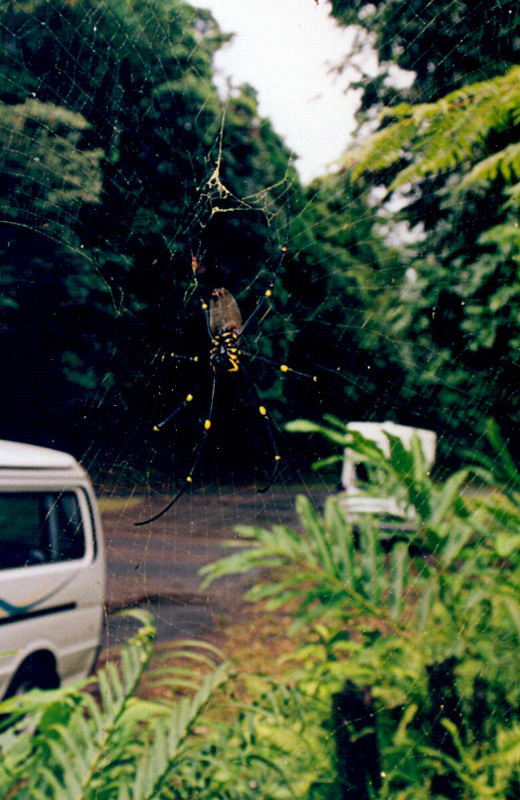
Before I could even marvel at the tropical trees, Australia gave me a classic check-in scare. Right at the start of the trip, I came face-to-face with my first giant Australian spider. It was just sitting there, massive and completely unbothered. Welcome to Queensland!
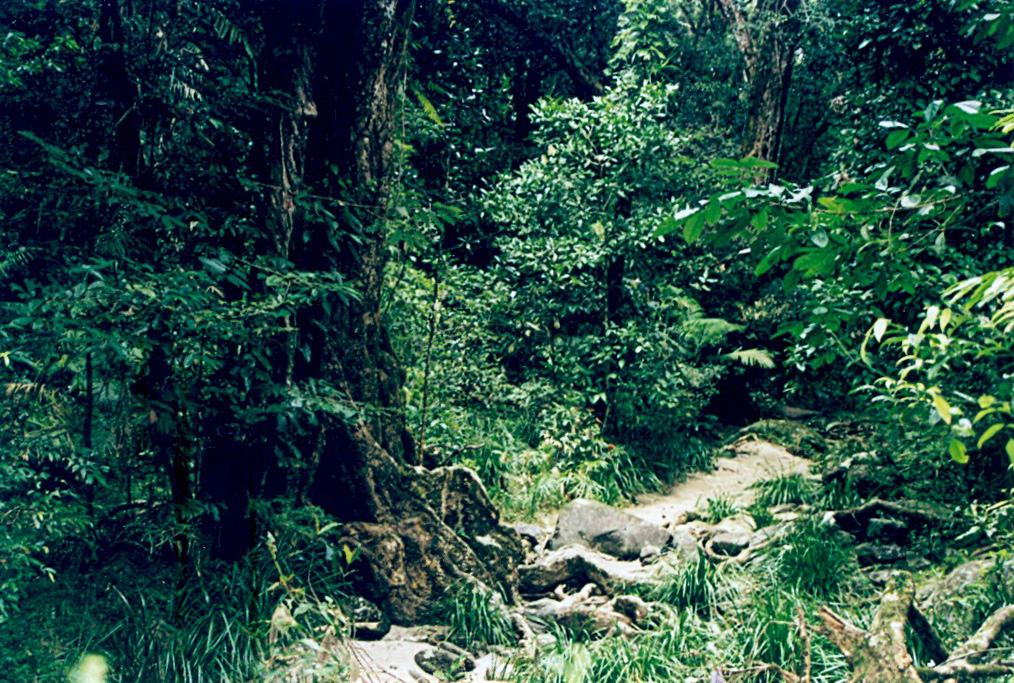
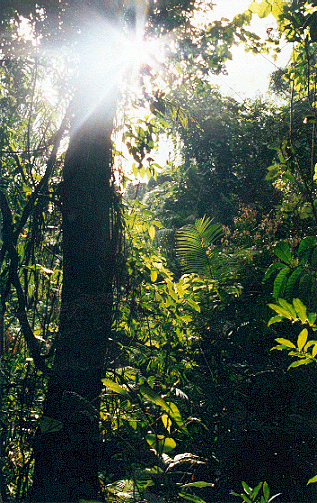
Our guide led us on foot through deep jungle tracks, chasing the sound of rushing water.  Hiking through this prehistoric green maze was a photographer's dream. Whenever the intense tropical sunlight pierces through the thick layers of ancient tree canopy, it creates breathtaking, glowing beams of light cutting through the humid air. If you catch the right angle between the giant ferns, you get the most spectacular, mystical shots.
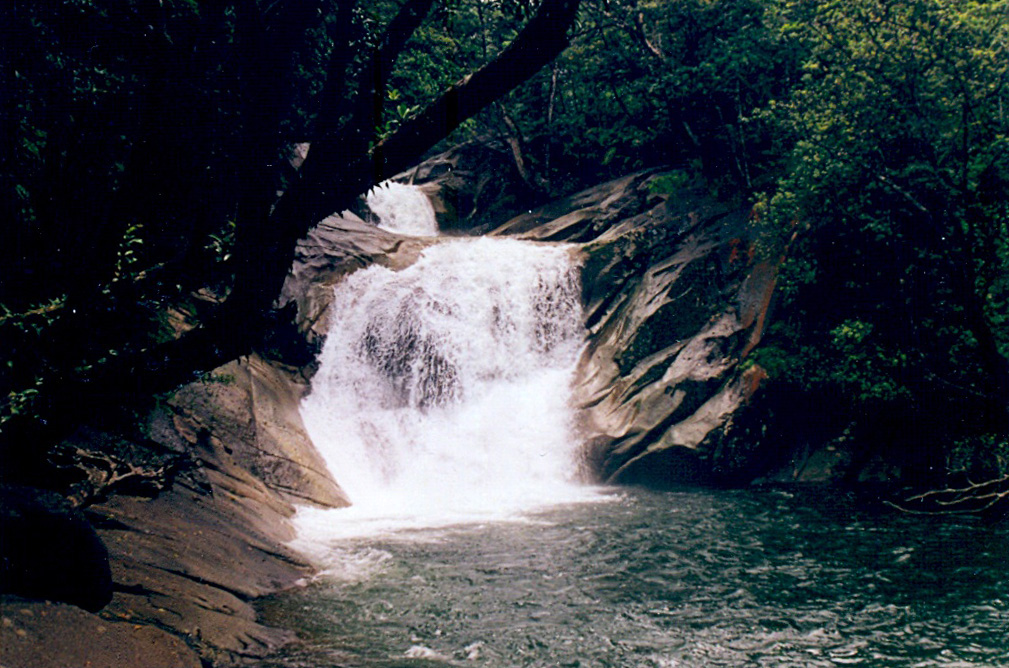
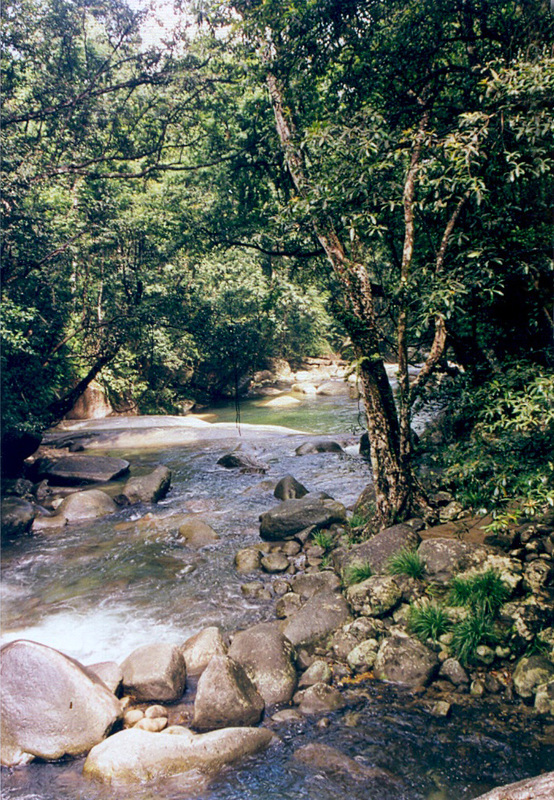
First stop: Josephine Falls. This place is a natural water park. The river cascades over giant, spiegelglatt granite rocks. We stripped down and slid right down the slippery stone slopes into the freezing, emerald-green jungle pool below. Pure adrenaline.​
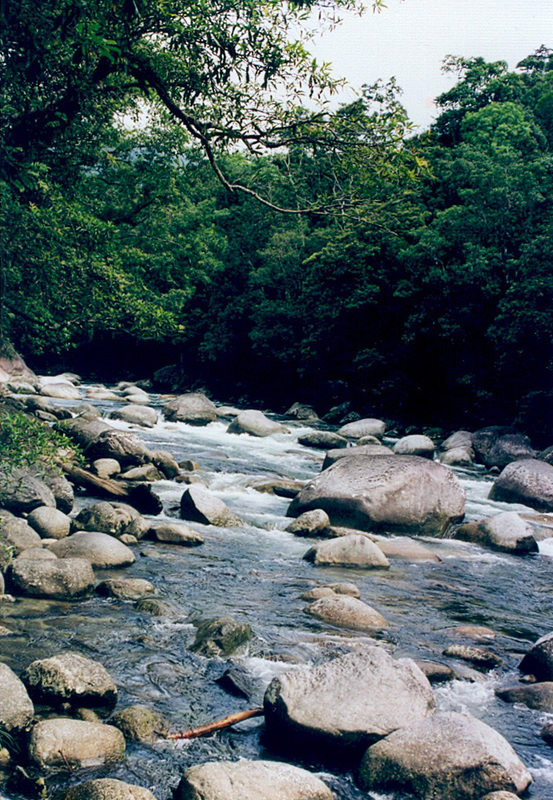
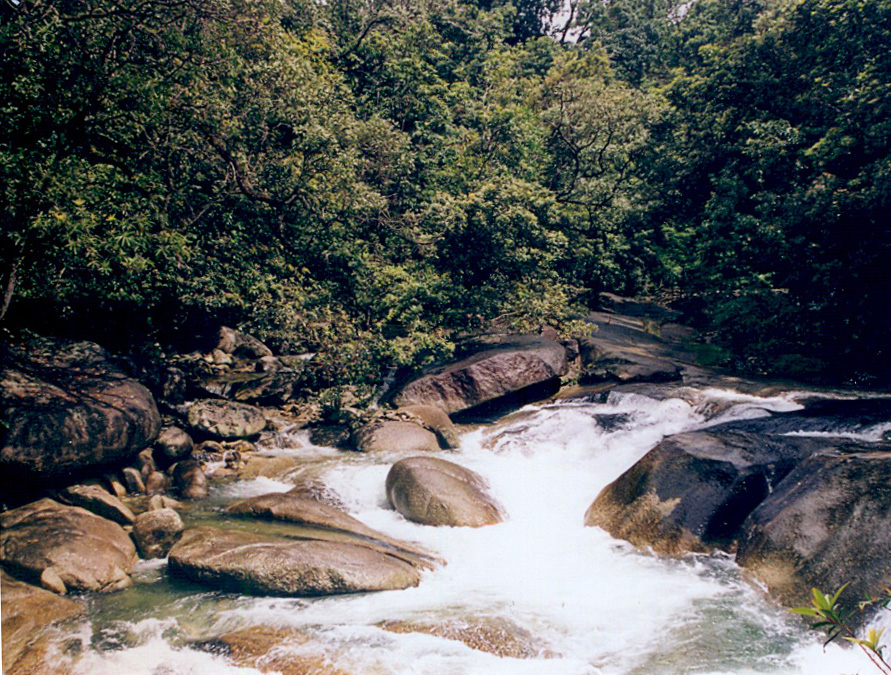
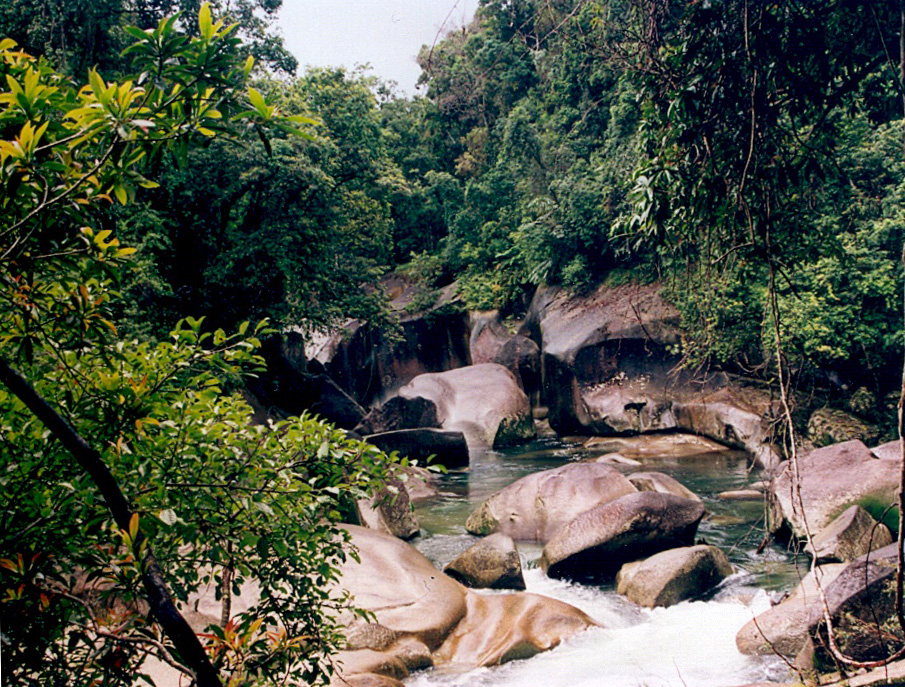
We pushed deeper along the river to the majestic Babinda Boulders. Here, the massive creek forces its way through a spectacular, chaotic maze of giant boulders. It looks peaceful, but the water holds a dark, heavy energy.
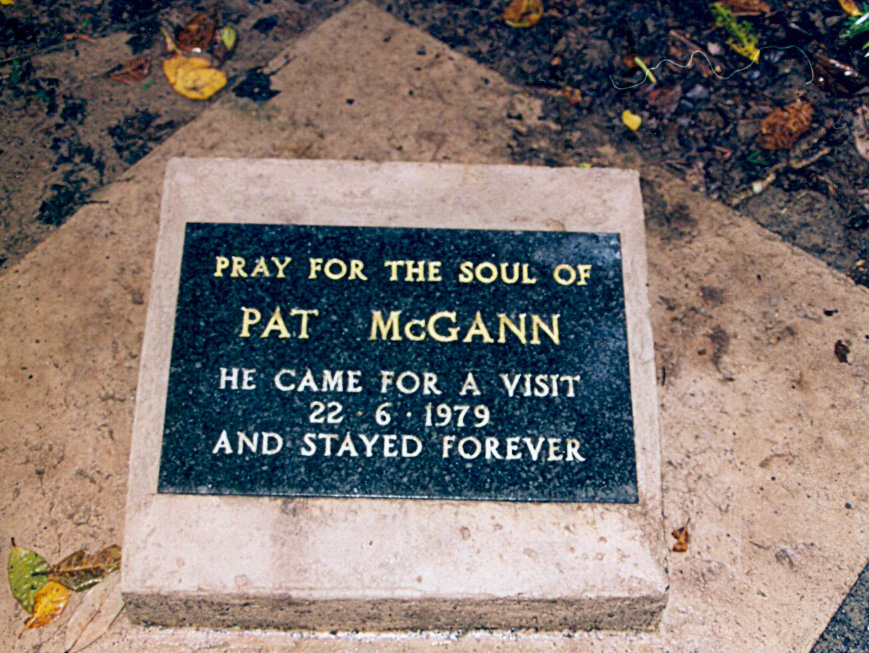
Right by the track, I stood before a chilling marble plaque for a 24-year-old traveler named Patrick McGann. The inscription reads: "He came for a visit and stayed forever." He drowned here in 1979. The local Indigenous Yidinji people have an ancient Dreamtime legend about this place, known as the Devil’s Pool. They say a heartbroken woman named Oolana drowned herself here after being separated from her lover. Her spirit still guards the pool, luring young men into the deadly, invisible underwater currents. It was a haunting reminder of the jungle’s raw power.
The Curse of Oolana: The Legend Behind Devil’s Pool
The haunting atmosphere at Babinda Boulders stems from a famous Dreamtime story of the local Yidinji people. It explains how the chaotic rock formations were born: 
  • The Forbidden Love: A beautiful young Yidinji woman named Oolana was married to a respected tribal elder. Shortly after, she fell deeply in love with Dyga, a handsome young warrior from a visiting tribe. 
  • The Flight & Capture: Knowing their love was forbidden, they fled into the wilderness. The tribal elders chased them down and captured them at the creek. As Dyga was dragged away, a heartbroken Oolana broke free. 
  • The Shaking Earth: In sheer despair, she flung herself into the calm waters. Her anguished cries for her lover caused the water to turn into a violent torrent and the earth to shake with sorrow. Huge boulders shattered across the landscape, swallowing her up. 
  • The Living Curse: The Yidinji believe Oolana’s spirit still haunts the pools. Her sorrowful voice can be heard calling out, luring young, traveling men into the treacherous, invisible currents to drown—searching for her lost love forever. 
Picture
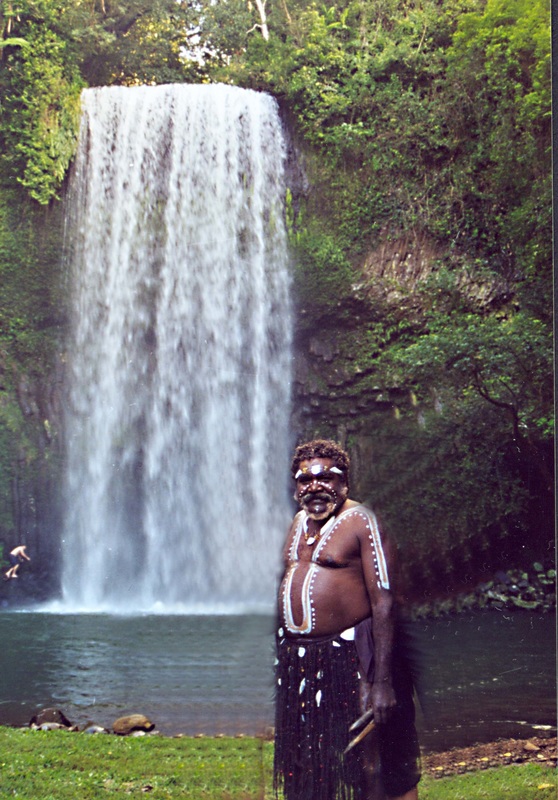
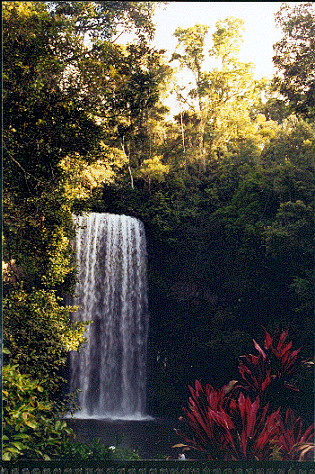
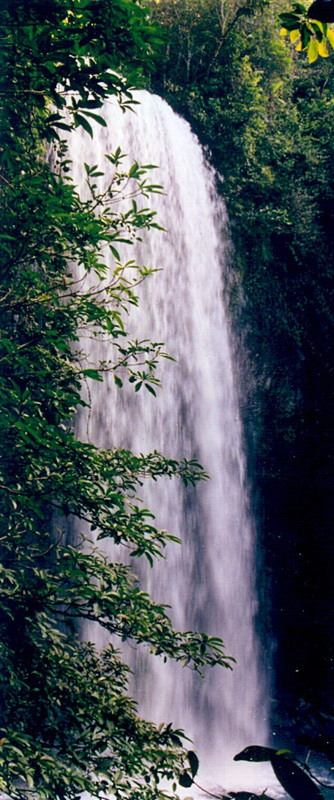
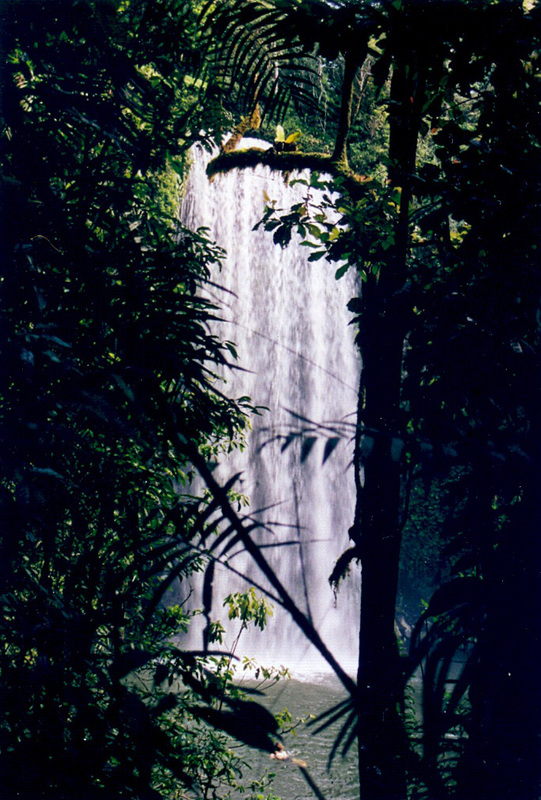
Our final destination was the crown jewel of the Tablelands: Millaa Millaa Falls. It is the archetype of a perfect waterfall. A flawless, 18-meter curtain of white water plunging into a pristine pool surrounded by giant tree ferns. Standing by the water, an Aboriginal man in full traditional body paint and attire welcomed us. The contrast of ancient culture and untamed tropical nature was mesmerizing. It was the ultimate, unforgettable finale to a wild day in the bush.

The Canvas of Ancestors: Decoding the Body Paint
The Aboriginal man standing at the waterfall wore a striking pattern of white lines and dots across his skin. In Indigenous culture, this is known as Body Art or Ochre Painting—and it is a deep, sacred language: 
  • The Sacred Paint: The white pigment is made from Kaolin (pure white clay sourced from the earth). White is deeply spiritual; it represents the spirit world, the clouds, and the bones of ancient ancestors.
  • Not a Costume, But a Map: The lines across his shoulders and chest are not random decorations. They represent Songlines (ancient tracks across the land) or connection to his specific tribal totem (like a certain animal or plant). 
  • A Cultural Right: Only initiated members are allowed to apply these specific patterns. The act of painting the body is a ritual itself, connecting the performer directly to the Dreamtime creators.


The Cairns Adrenaline Triple: White Water, Undersea Disposable Cameras, and a Forgotten VHS Tape
Cairns is not just the gateway to the jungle; it is the adventure capital of the southern hemisphere. In the year 2000, as a 22-year-old backpacker, fear simply did not exist. Looking back now in my late 40s, I ask myself: What on earth was I thinking? But back then? You just send it. I booked the ultimate adrenaline triple threat.

1. Crushing the Rapids: White Water Rafting
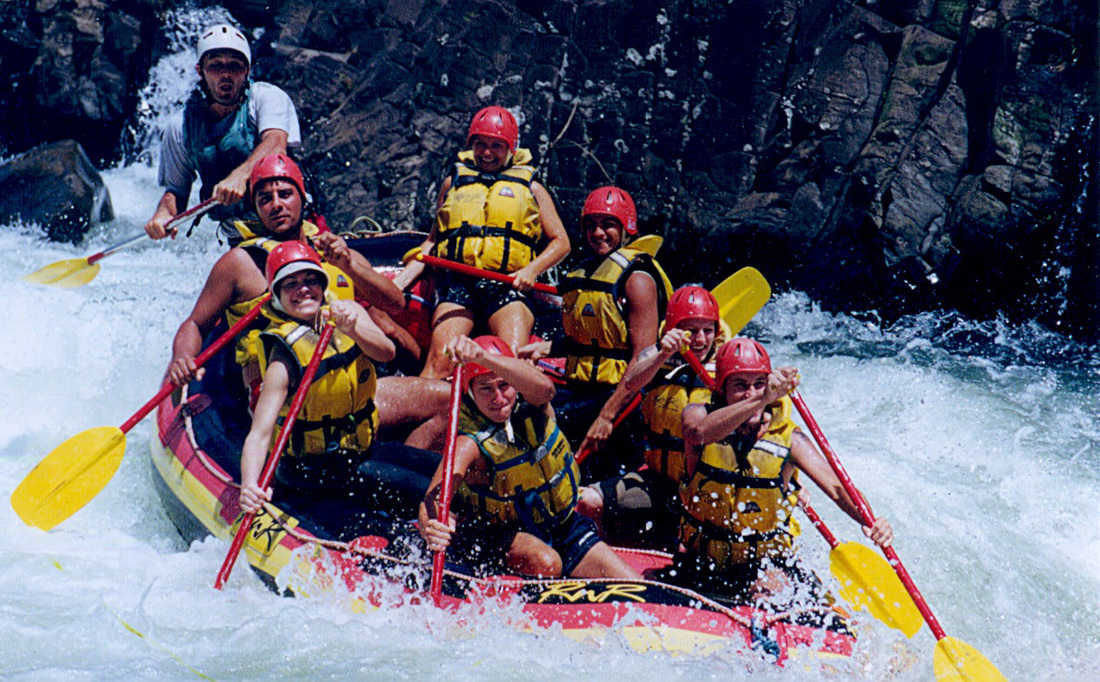
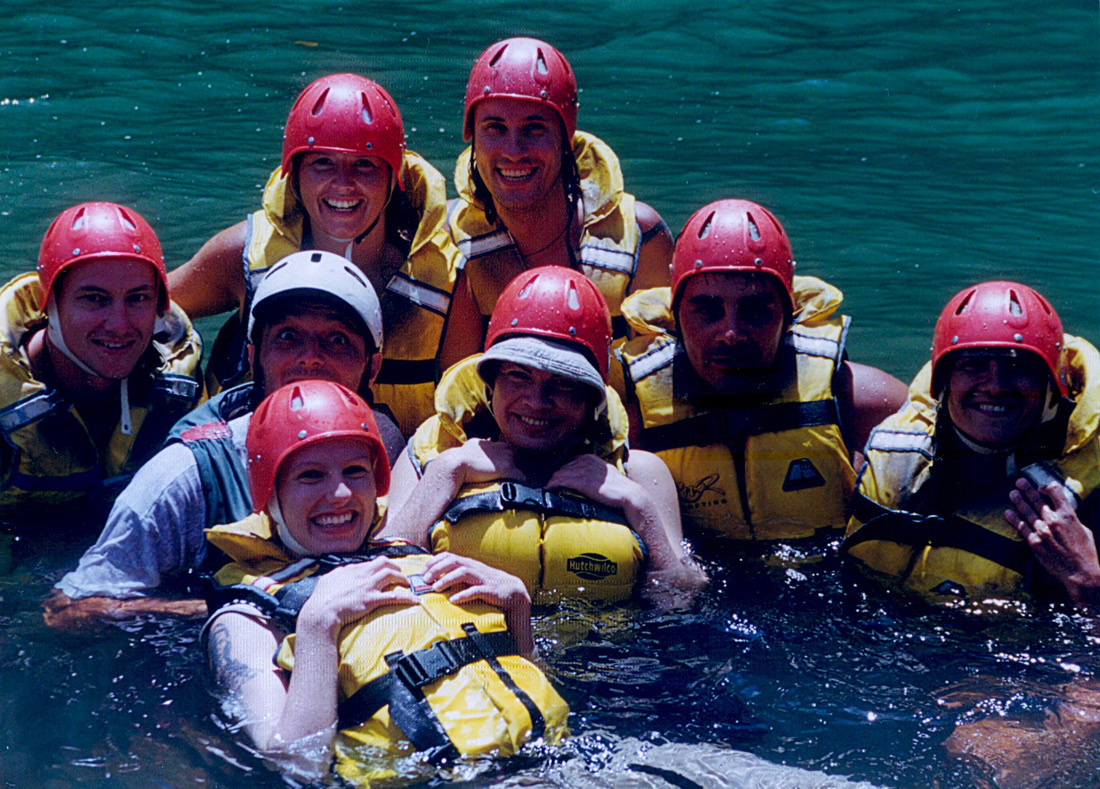
First up: testing the wild waters of northern Queensland. We geared up in helmets and heavy yellow life vests, grabbed our paddles, and piled into a big red inflatable raft operated by the legendary Raging Thunder Rafting crew. We tackled the thundering Grade 3 and 4 rapids. The power of the river was immense. Water was crashing over the bow, the raft was bucking like a wild horse, and everyone was screaming and paddling for dear life. It was a chaotic, brilliant rush of pure teamwork and survival.

2. Under the Surface: The Great Barrier Reef
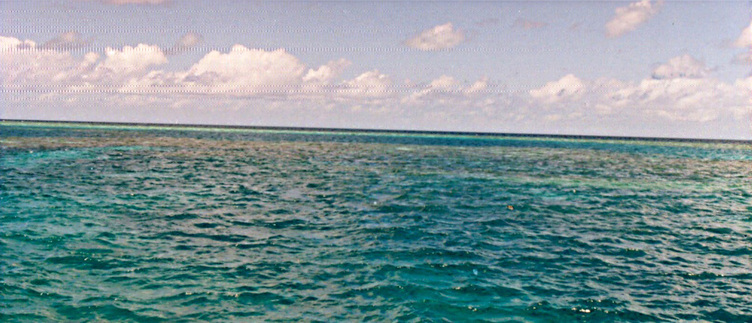
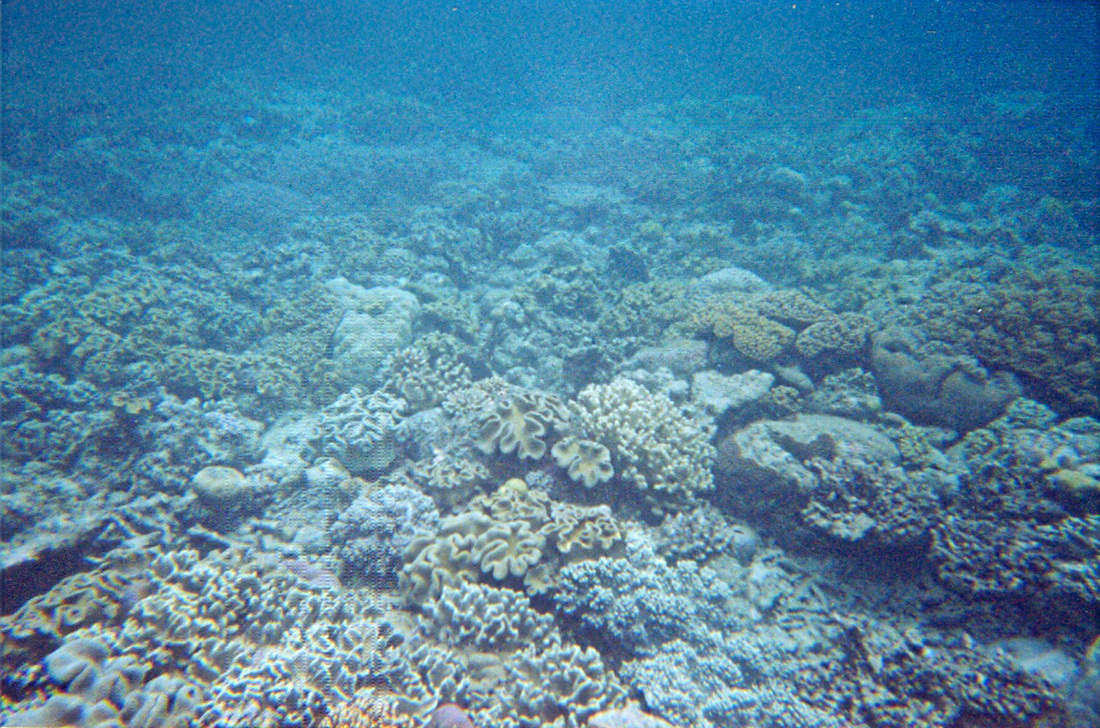
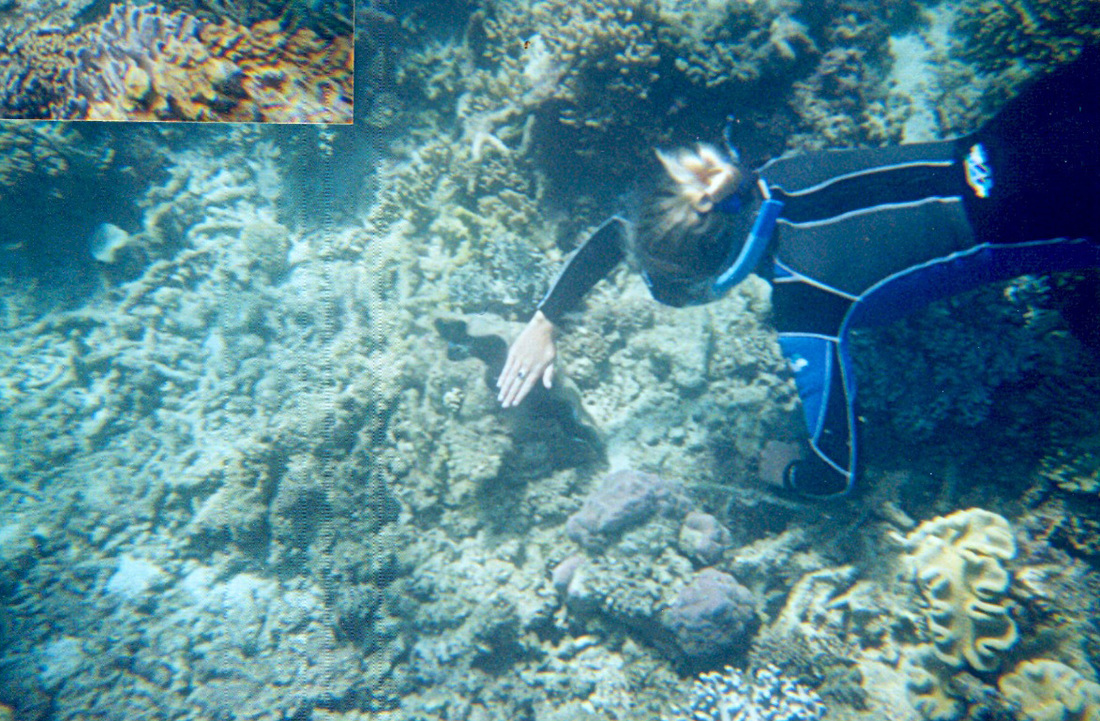
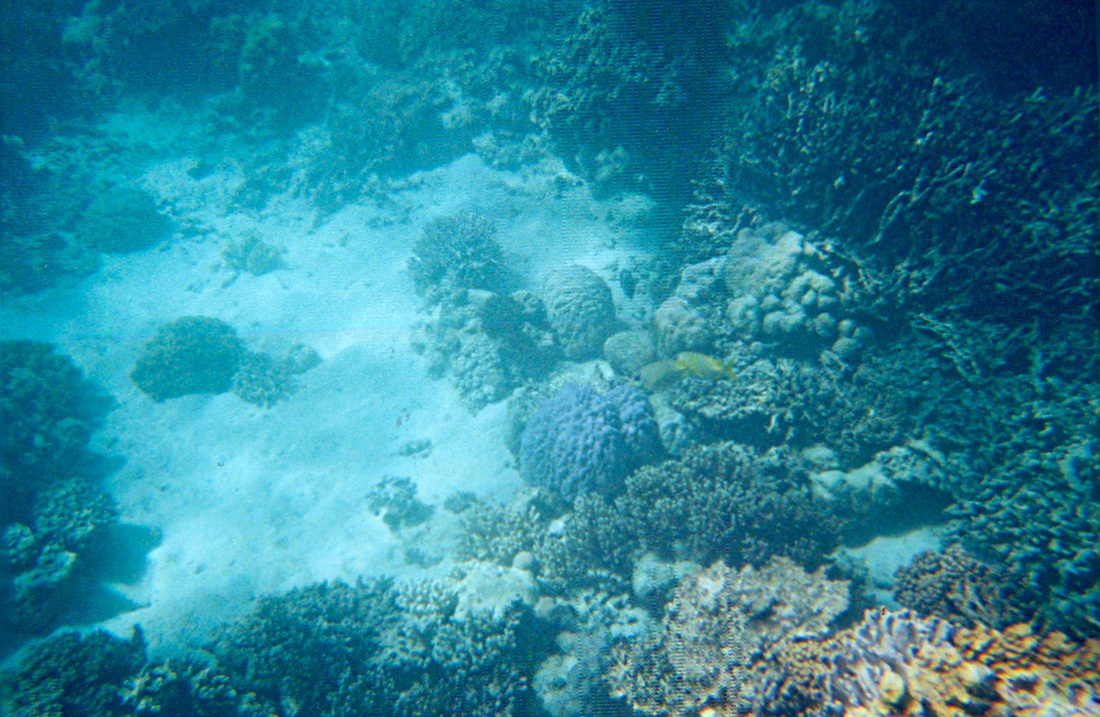
After conquering the rivers, it was time to dive into the big blue. You cannot visit Cairns without witnessing the world’s largest living structure: the Great Barrier Reef.
Remember, this was the year 2000. No smartphones, no GoPros. If you wanted underwater memories, you had to buy one of those chunky, bright-colored disposable underwater cameras wrapped in thick plastic. You had to wind the film manually after every shot and pray the seal wouldn't leak. Floating over the massive coral gardens, swimming alongside schools of neon fish, and snapping pictures completely blind was a trip in itself. Waiting days for the film to develop back at the shop was half the fun.

Picture
3. The Ultimate Leap: Skydiving from 14,000 Feet
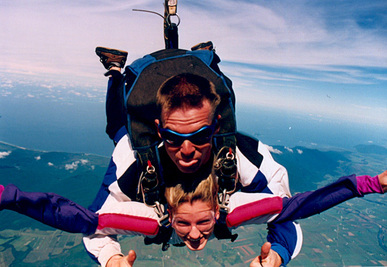
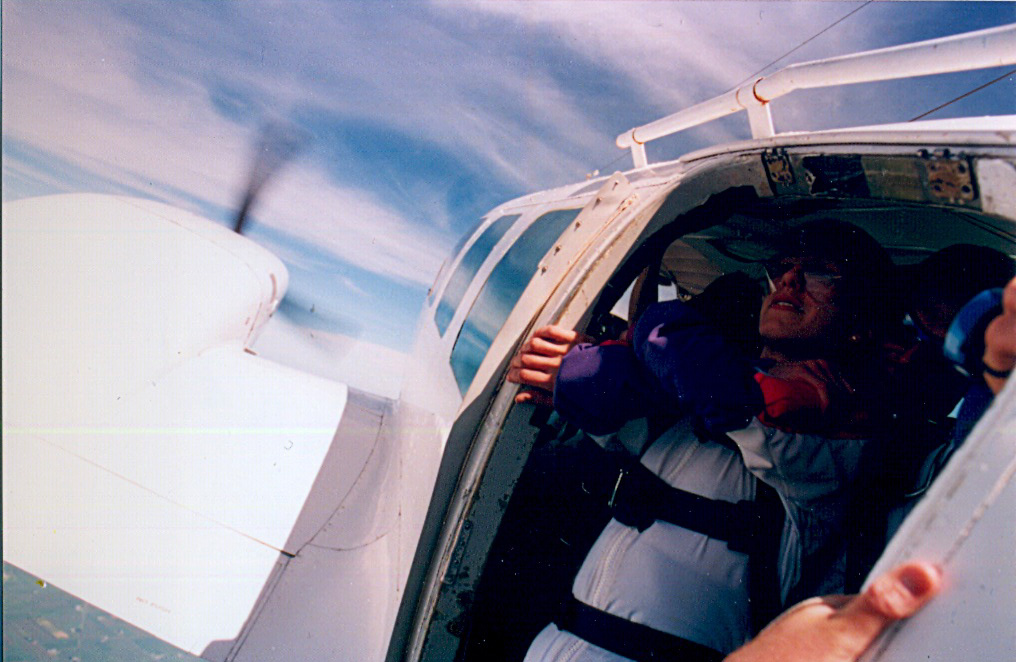
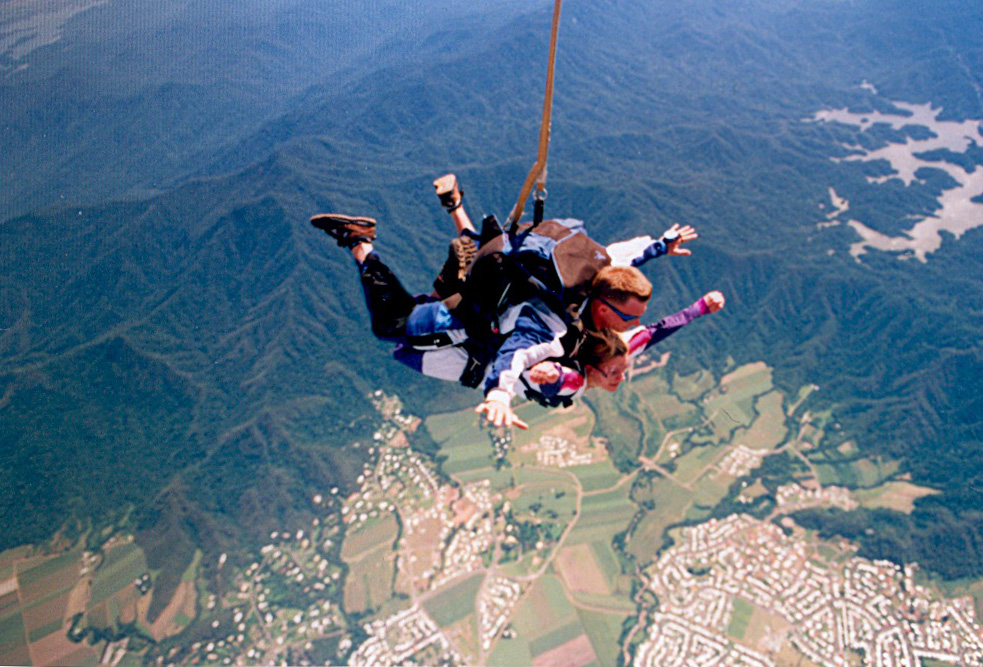
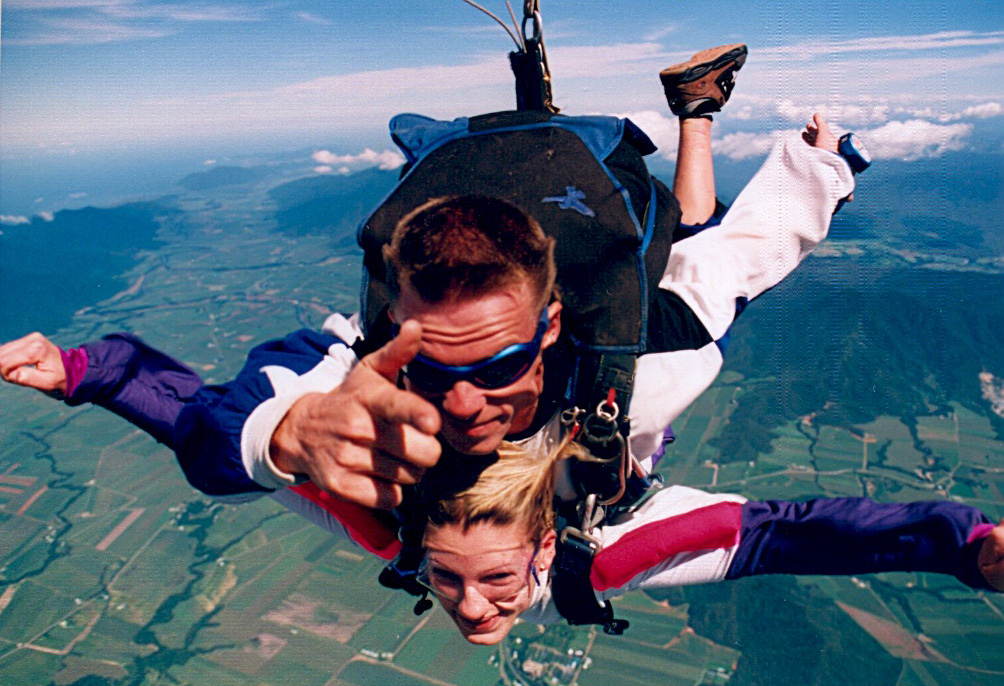
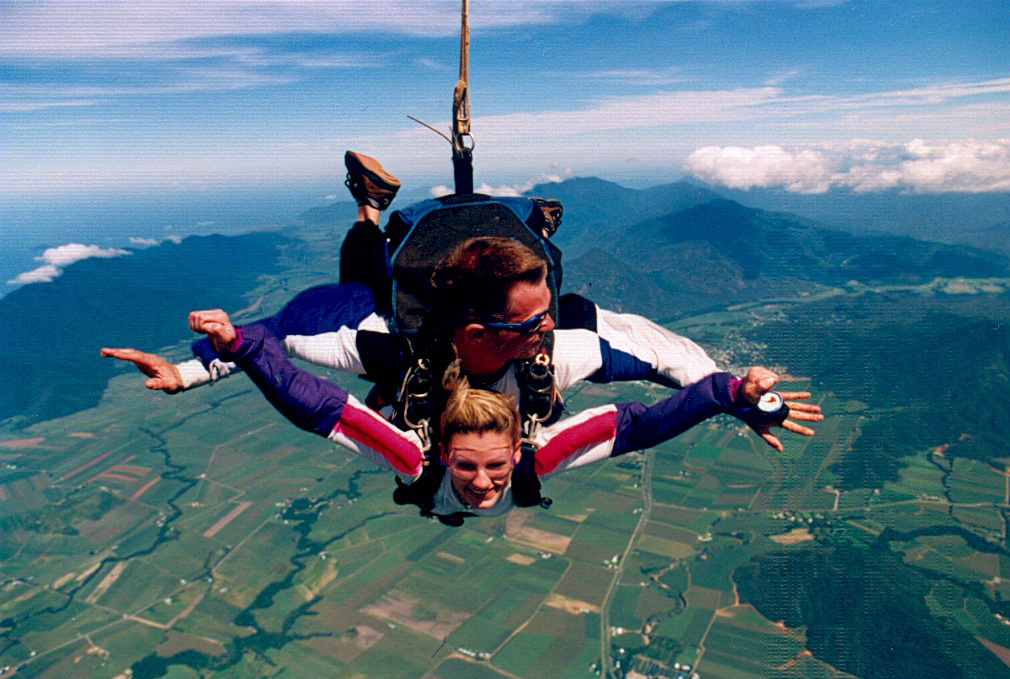
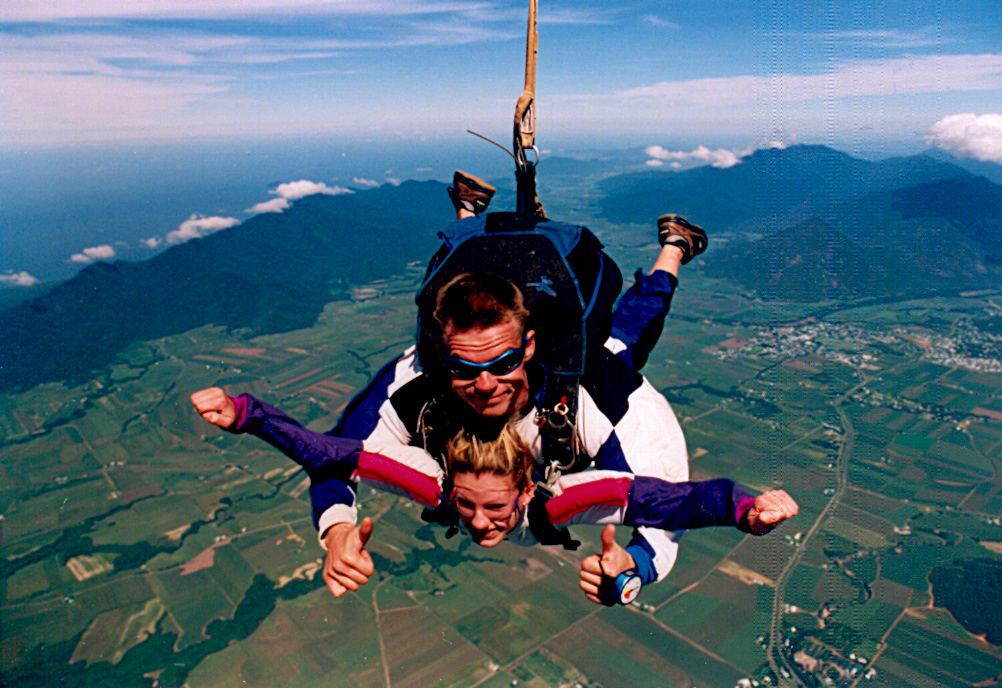
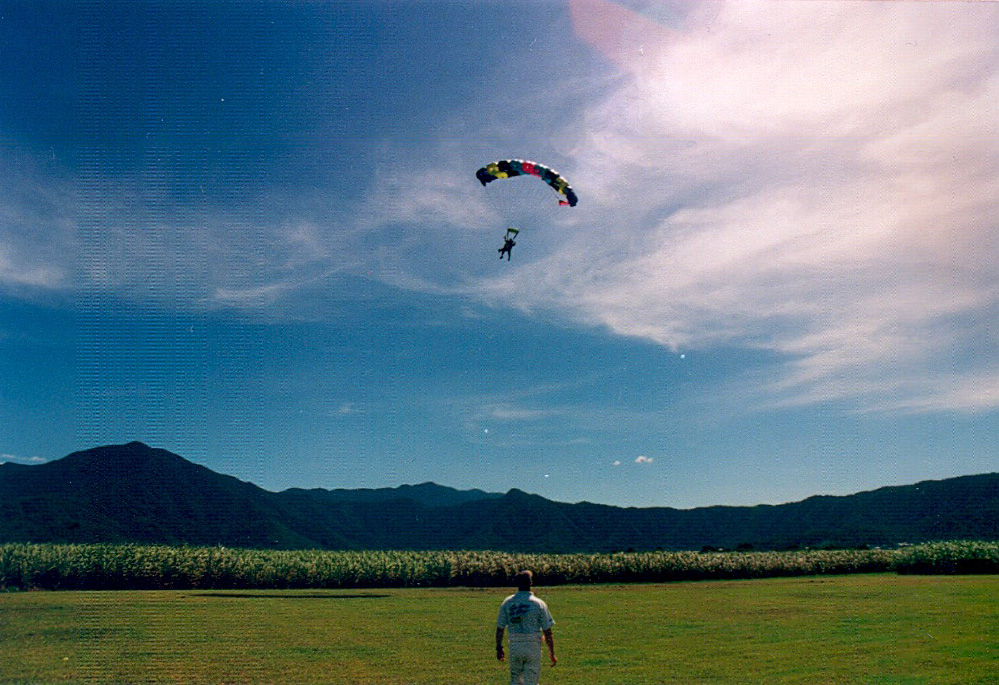
The grand finale was pure insanity: throwing myself out of a perfectly good airplane. At 22, you don’t think about the risks; you just want the rush. The plane climbs, the door slides open, the freezing wind hits your face, and suddenly—you are falling at 200 km/h over the breathtaking coastline of Queensland. The view of the coral reef meeting the green rainforest from above was unreal.
The coolest part? The package included a personal camera flyer who jumped out backwards just to film my face during freefall. At the end of the day, they proudly handed me a full photo set and a massive, heavy, original VHS video cassette of my jump. Today, that tape sits on my shelf as a legendary relic of the millenium era—because I don't even own a VCR anymore to play it!

Picture
The Perfect Touchdown
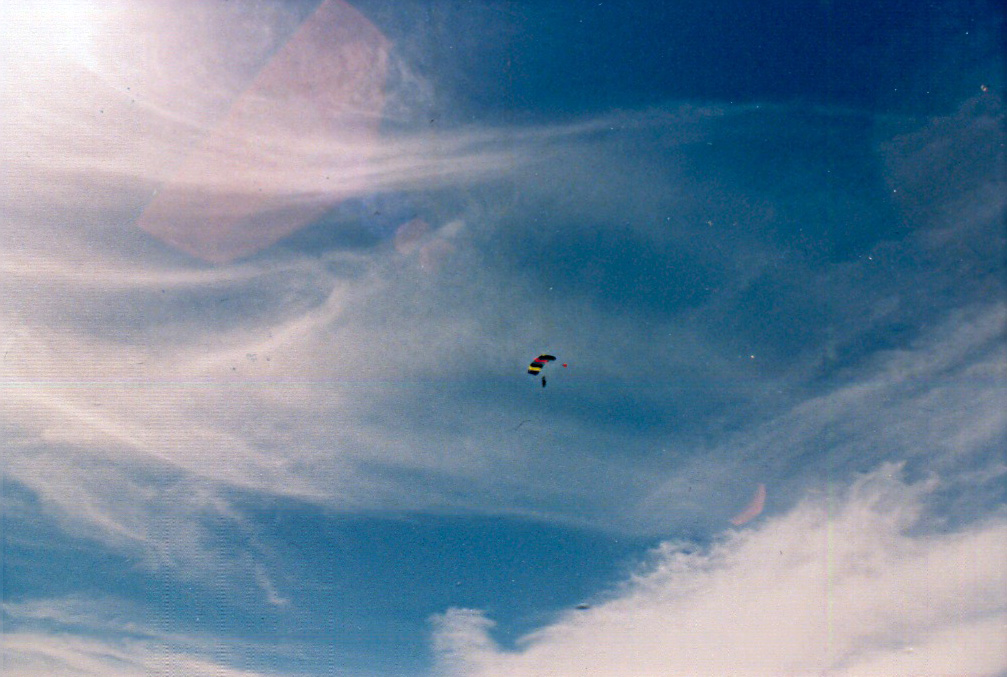
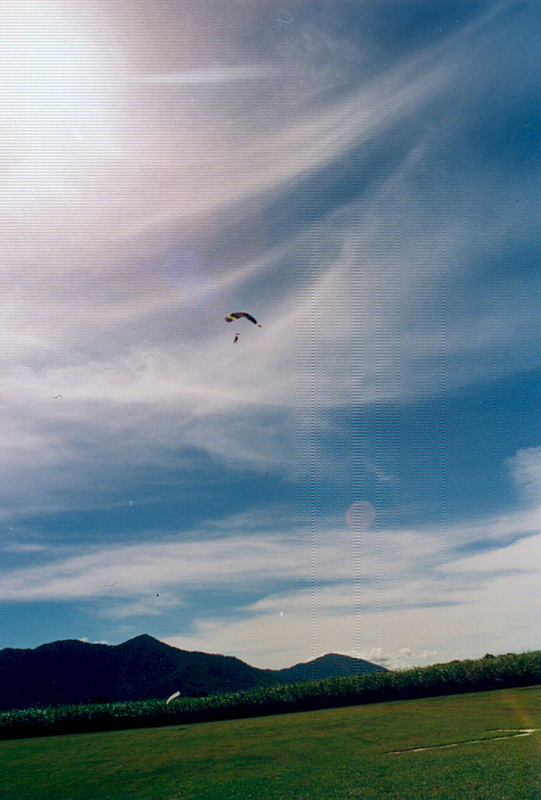
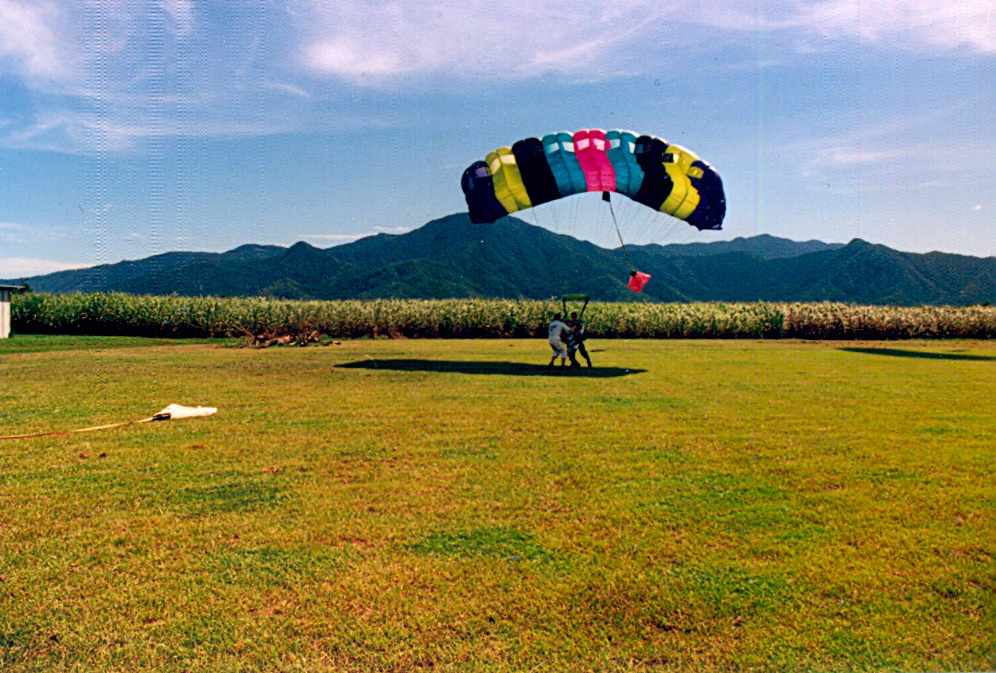
The ride under the canopy was pure silence after the roaring freefall. Gliding through the tropical air, the ground came rushing up fast. My landing spot was spectacular: a wide, vibrant green field surrounded by massive, towering walls of emerald-green sugarcane crops. In the background, the sharp blue ridges of the rainforest mountains framed the horizon.
As I coasted in for the touchdown, a crew member in white was already sprinting across the grass, ready to help me gather the parachute cords. My feet hit the ground, the adrenaline washed over me, and I couldn't stop laughing. I had just jumped out of a plane over the edge of the world, and I survived.


​Fraser Island / Hervey Bay
Paradise to Peril: The Ultimate K'gari Route and the Ghostly Dingo Pack
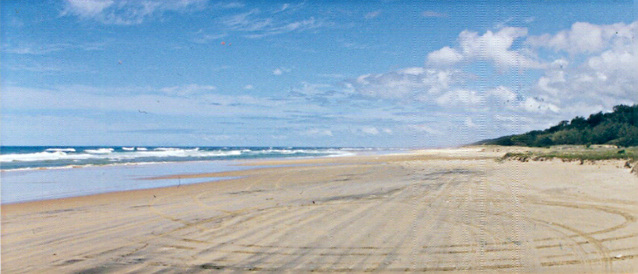
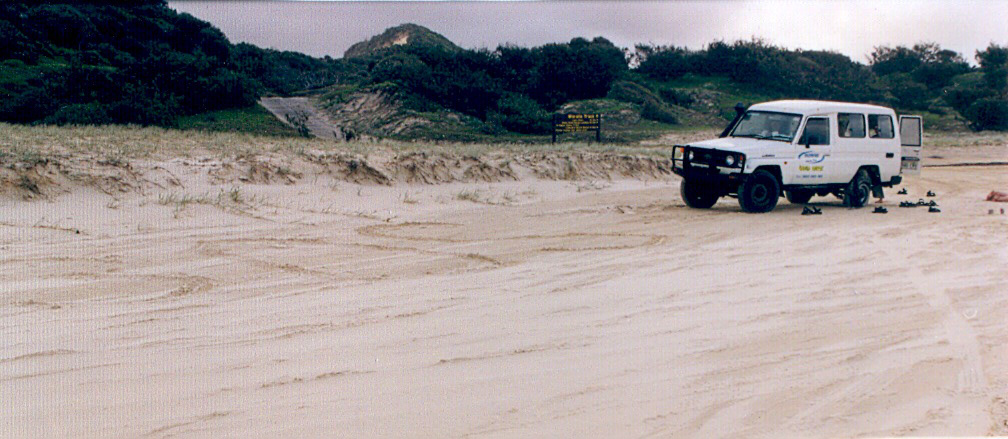
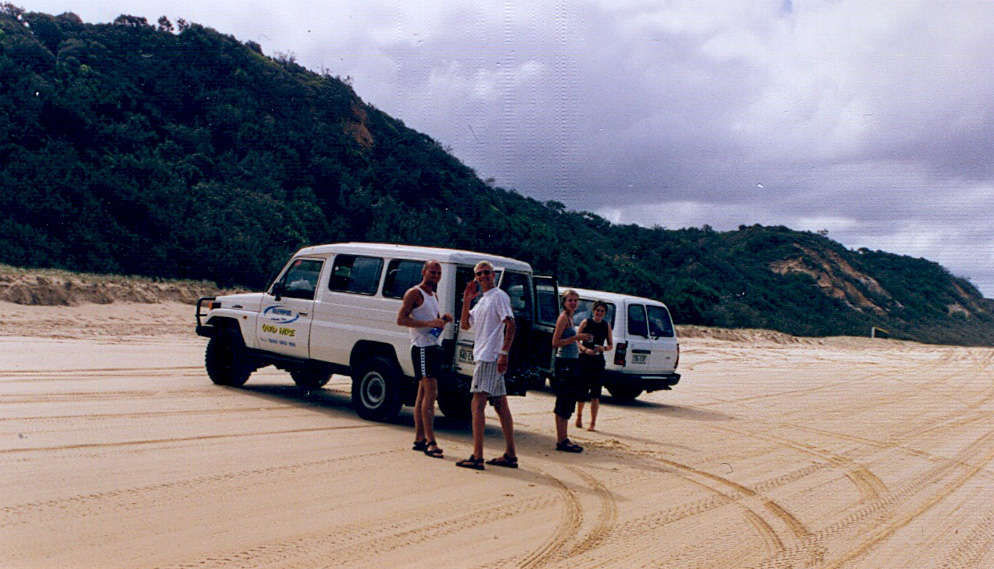
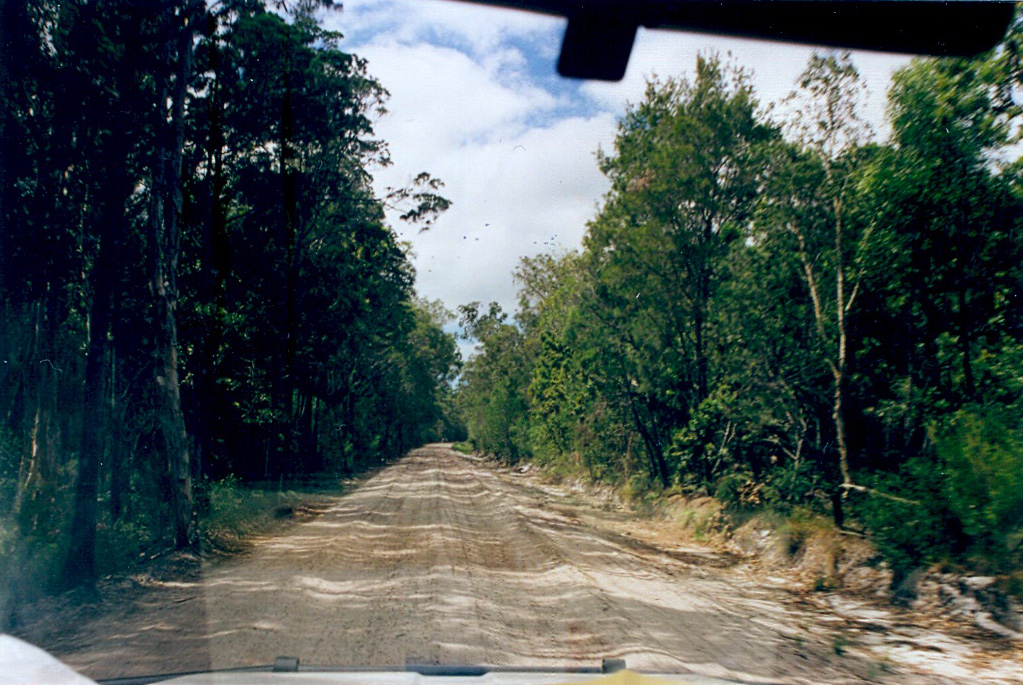
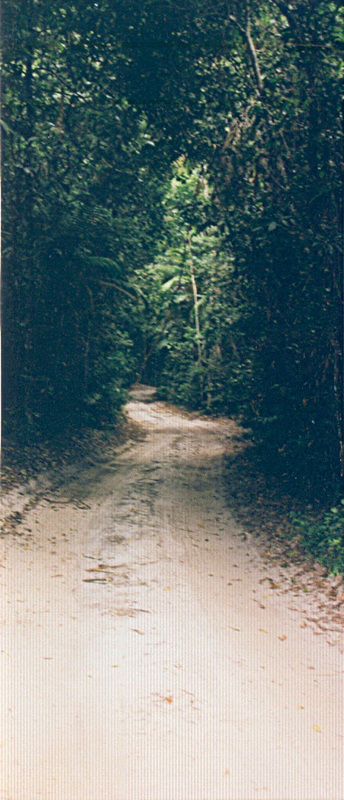
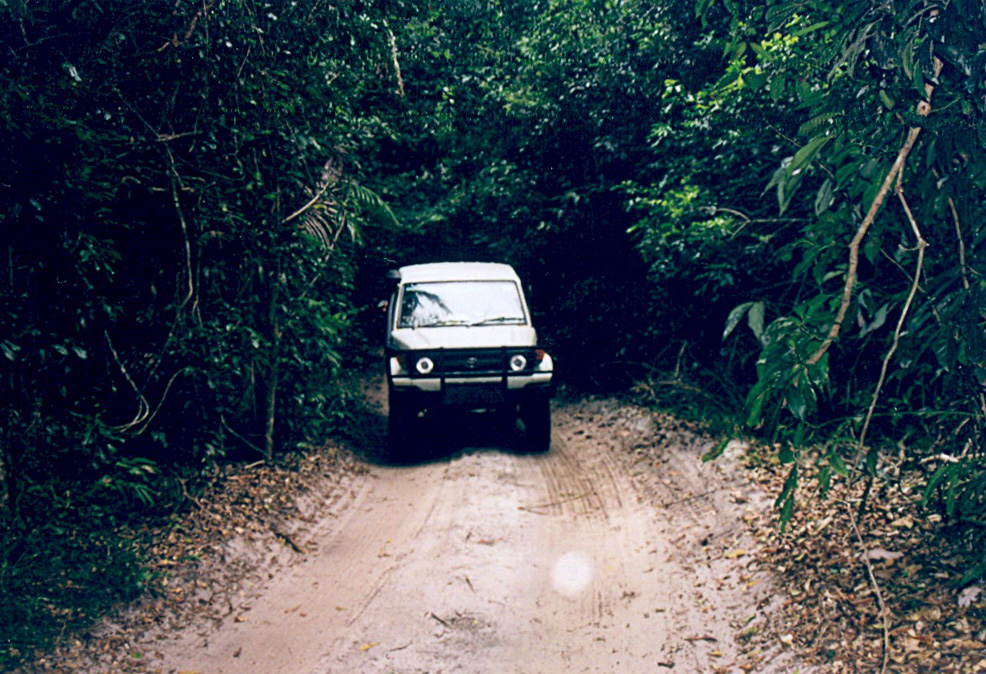
With eight backpackers packed into a prehistoric Jeep rented from a local Greek hotel owner, we set off to conquer the world's largest sand island: K'gari (Fraser Island). The first two days were pure, unadulterated island bliss​.
Picture
The Perfect Island Speed-Run
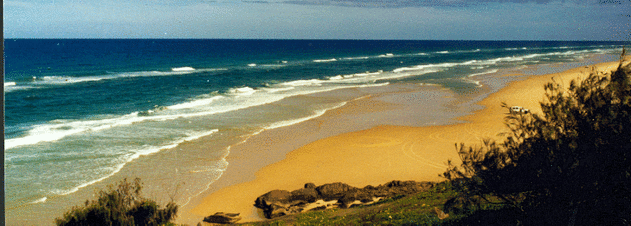
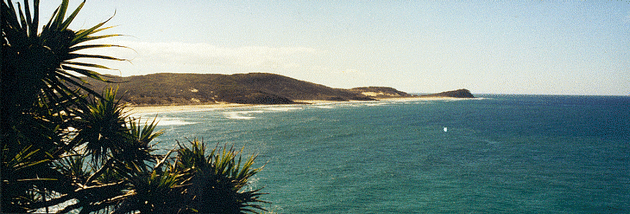
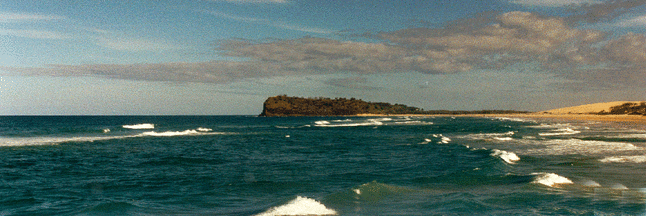
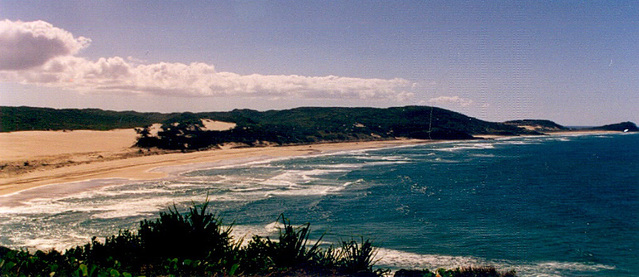
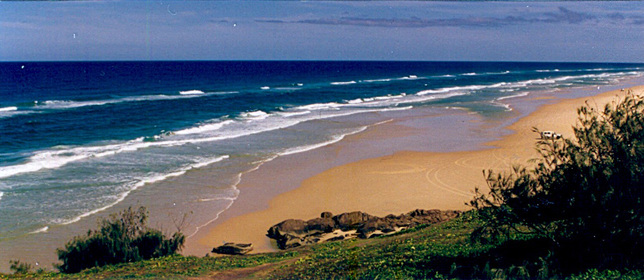
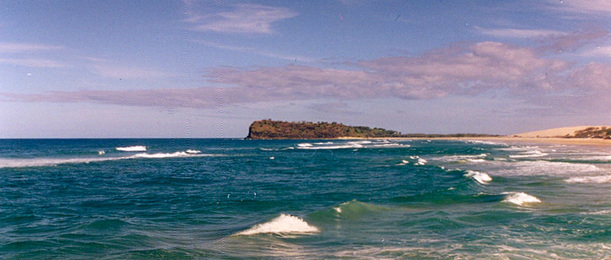
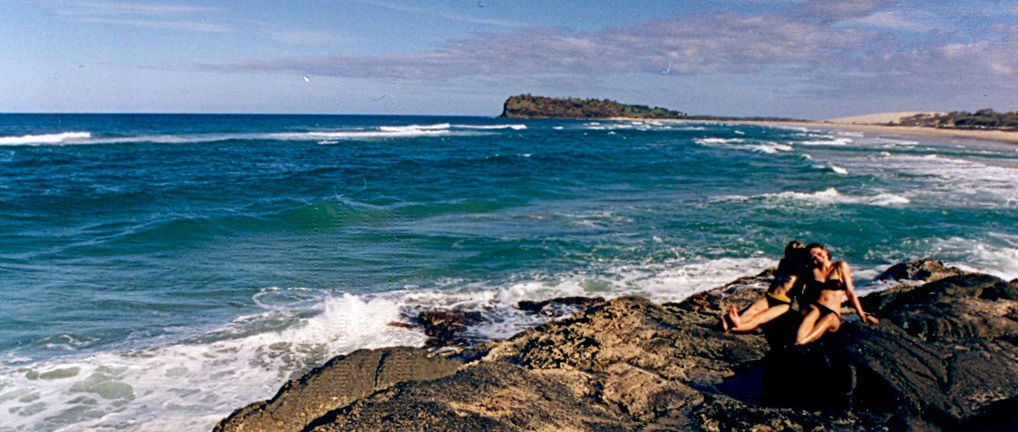
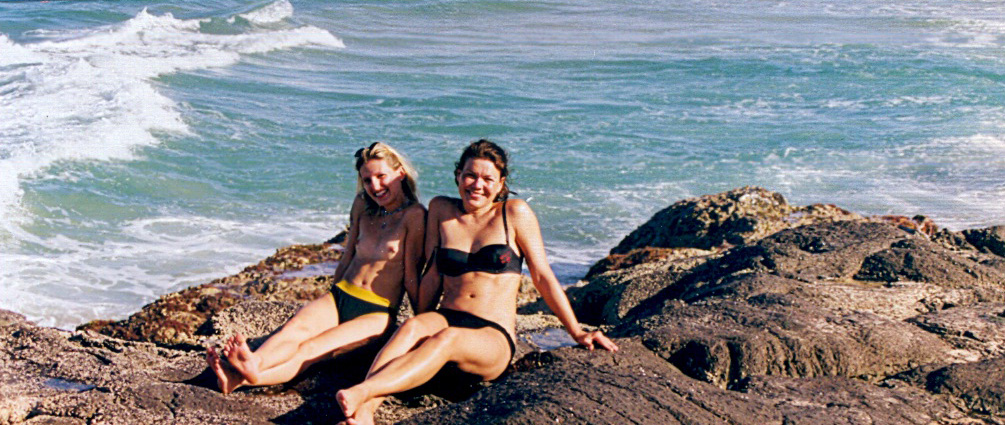
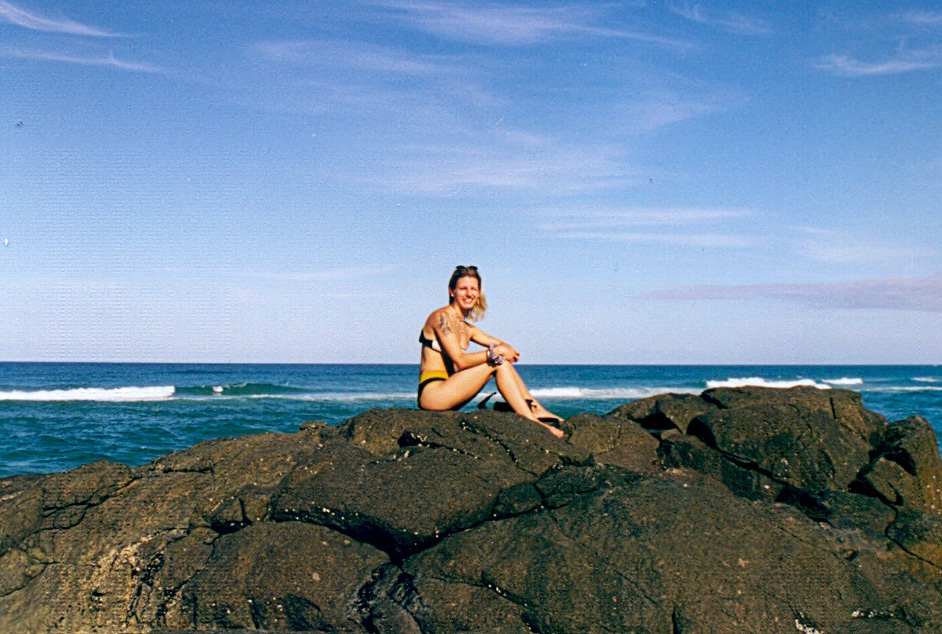
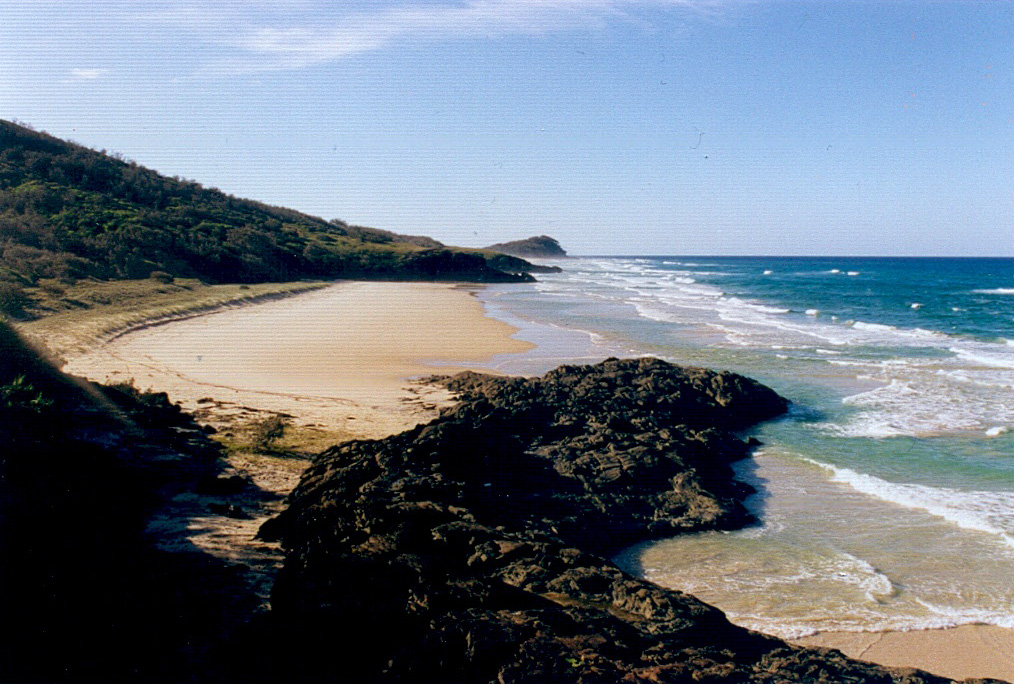
We drove along the coastal highway straight to Indian Head. Standing on the edge of the jagged cliffs, looking down at the massive turquoise waves crashing into the endless golden sand, was mesmerizing. Nearby, the wild Pandanus palms framed the horizon.
Picture
Picture
Picture
Indian Head
Indian Head
Tukkee: The Sighting of the Butchulla Warriors
The dramatic rocky headland that marks the easternmost point of the island is steeped in history.
  • Native American Significance? While the name might make you think of a Native American chief's headdress, the origin lies elsewhere.
  • The True Origin: The site was named by Captain James Cook on May 20, 1770. As his ship HM Bark Endeavour sailed past the massive volcanic basalt rock, he spotted a large group of the island's traditional owners gathered on the cliffs. In the vocabulary of British sailors at the time, all dark-skinned indigenous people were referred to as "Indians". Thus, he mapped it as "Indian Head".
  • The Sacred Sacred Site: To the local Butchulla people, the headland is called Tukkee, meaning stoneor short nose. It was an essential look-out point for marine life and a sacred ceremonial ground.
Picture
Maheno Shipwreck
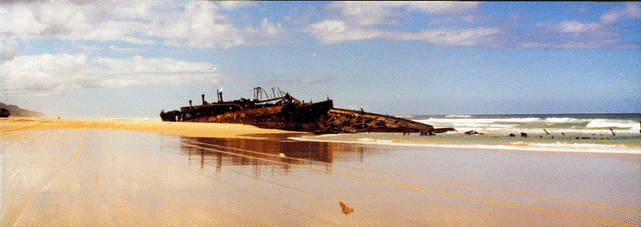
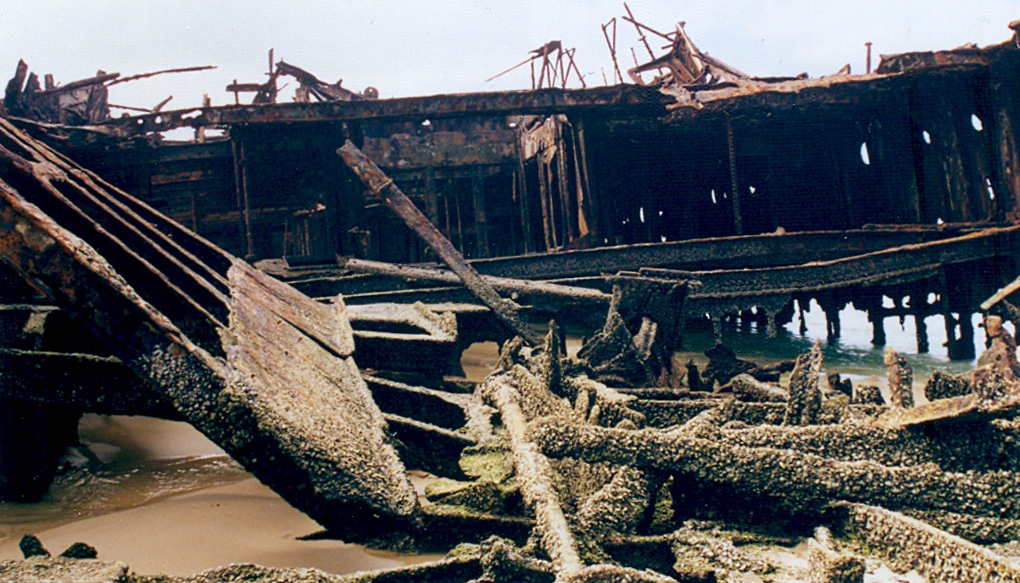
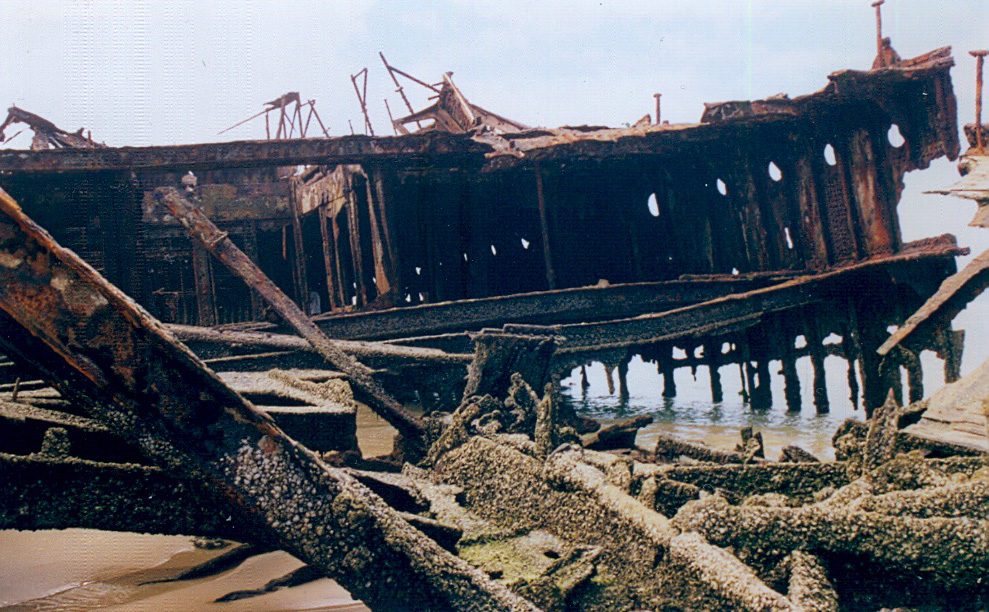
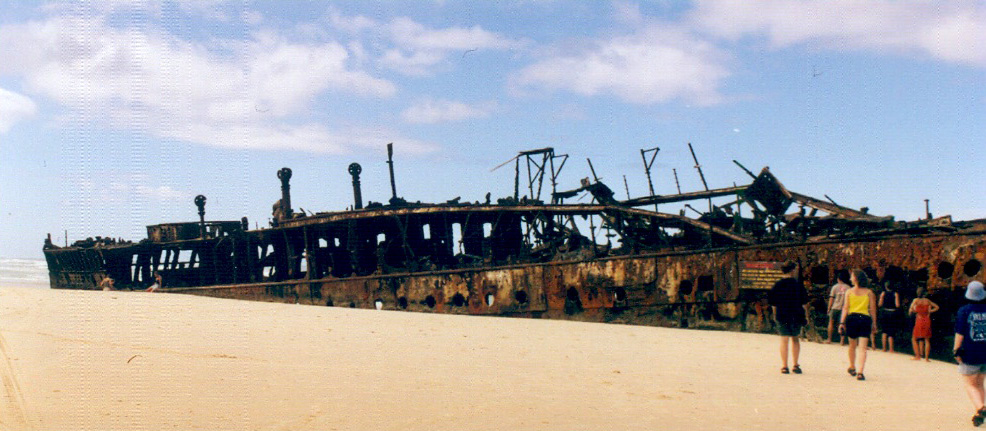
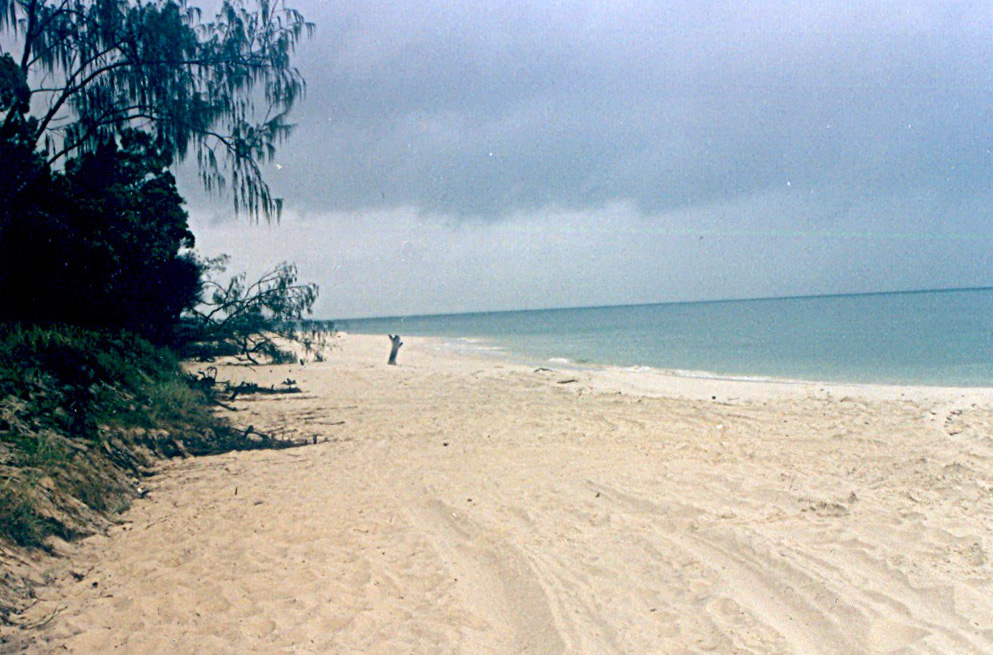
We cruised down the beach to the iconic Maheno Shipwreck. Back in 2000, the massive rusted hull of the 1935 luxury cruise liner stood proudly in the wet sand, reflecting the ocean like a ghost ship. 
The Maheno Shipwreck
Ghost of the Sand Highway: The SS Maheno
The towering rusted skeleton on 75 Mile Beach is K'gari's most famous artificial landmark. It has a legendary and diverse history:
  • The Five-Star Luxury Liner: Built in Scotland in 1905, the SS Maheno originally operated as a high-speed, world-class luxury passenger ship between New Zealand and Australia.
  • The Floating Hospital: During World War I, she was converted into a hospital ship, serving bravely in the Mediterranean and the Red Sea to rescue wounded soldiers from Gallipoli.​
  • The Final Storm: In 1935, while being towed to Japan for scrap metal, a ferocious cyclone snapped the towline. The ship drifted helplessly for days until she ran aground right here on the sand.
  • Target Practice: During World War II, the Australian Air Force even used the stranded wreck as a bombing target. Today, the ocean is slowly reclaiming her, sinking her deeper into the sand every year.
Picture
Picture
Picture
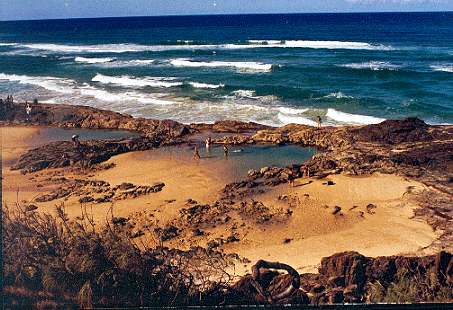
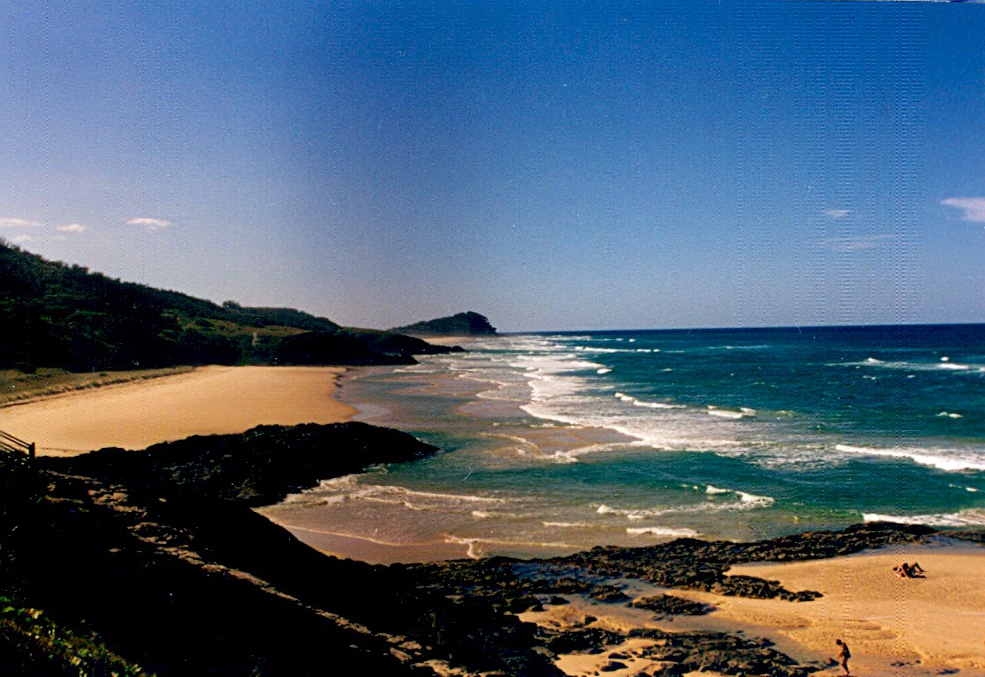
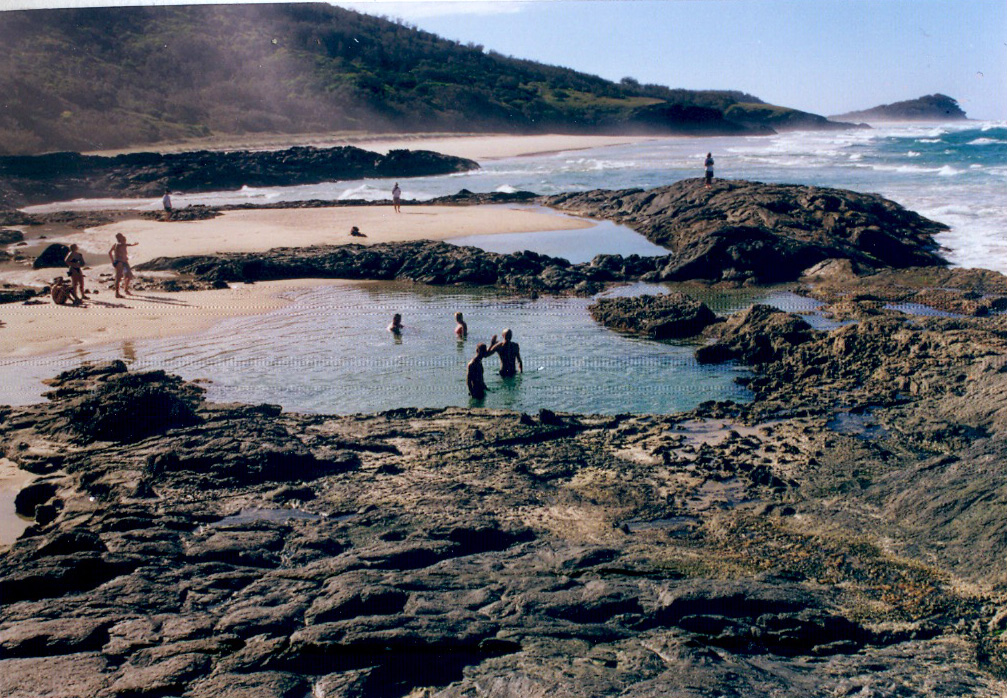
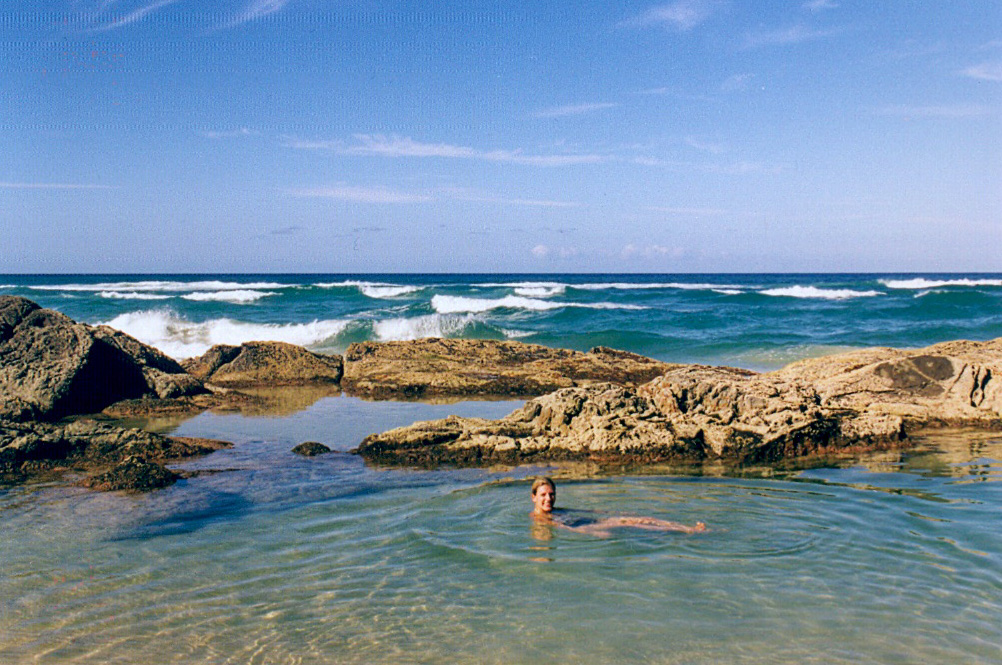
Next, a mandatory cool-down session at the Champagne Pools, swimming in natural volcanic rock basins as the crashing ocean waves turned the water into a bubbling jacuzzi.
Champagne Pools
Nature's Fizzy Jacuzzi: The Volcanic Pools
Swimming on the ocean side of K'gari is highly dangerous due to extreme undertows, rip currents, and massive tiger sharks. The Champagne Pools are the magnificent exception:
  • Volcanic Shields: Millions of years ago, rare volcanic activity created hard basalt rock formations along the coastline. These rocks act as a natural barrier against the open ocean.
  • The Crashing Surf: When the massive waves of the Pacific Ocean slam into the rock walls, the water cascades over the top, plunging into the shallow, sandy basins behind them.
  • The Bubble Effect: The raw impact forces millions of tiny air bubbles into the water, causing it to foam up violently, fizz, and swirl exactly like a freshly opened bottle of champagne—creating a safe, natural saltwater spa.
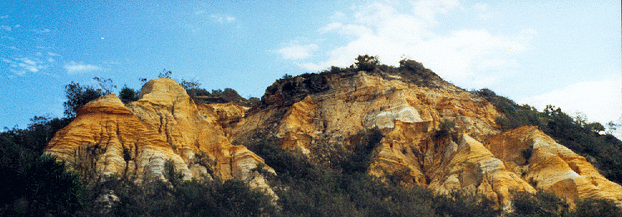
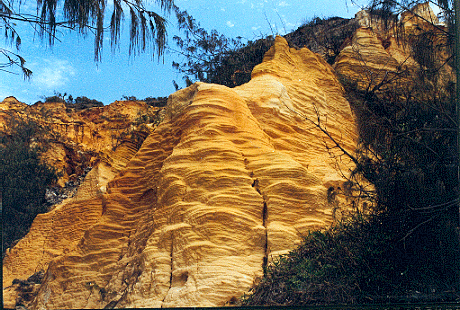
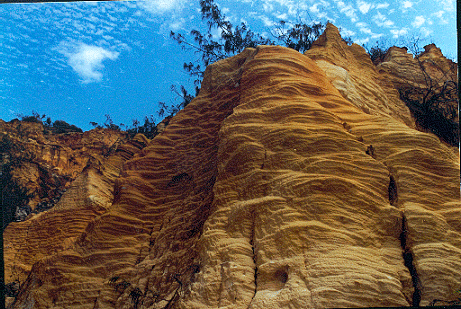
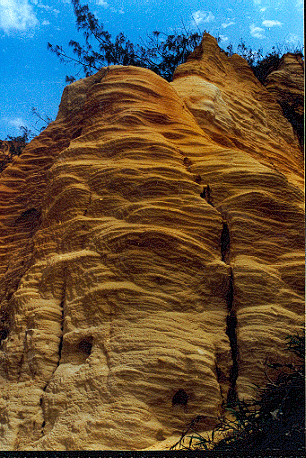
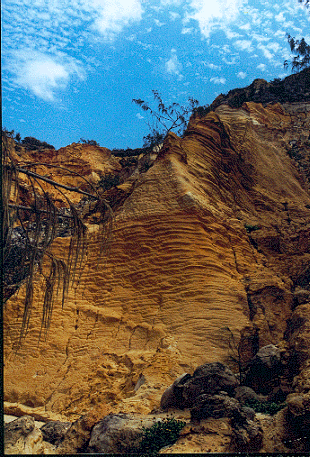
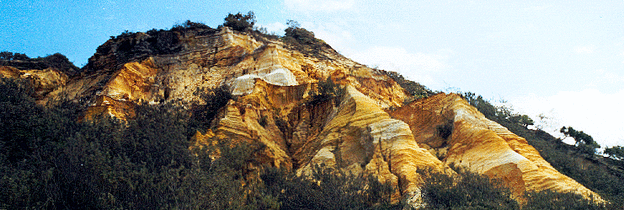
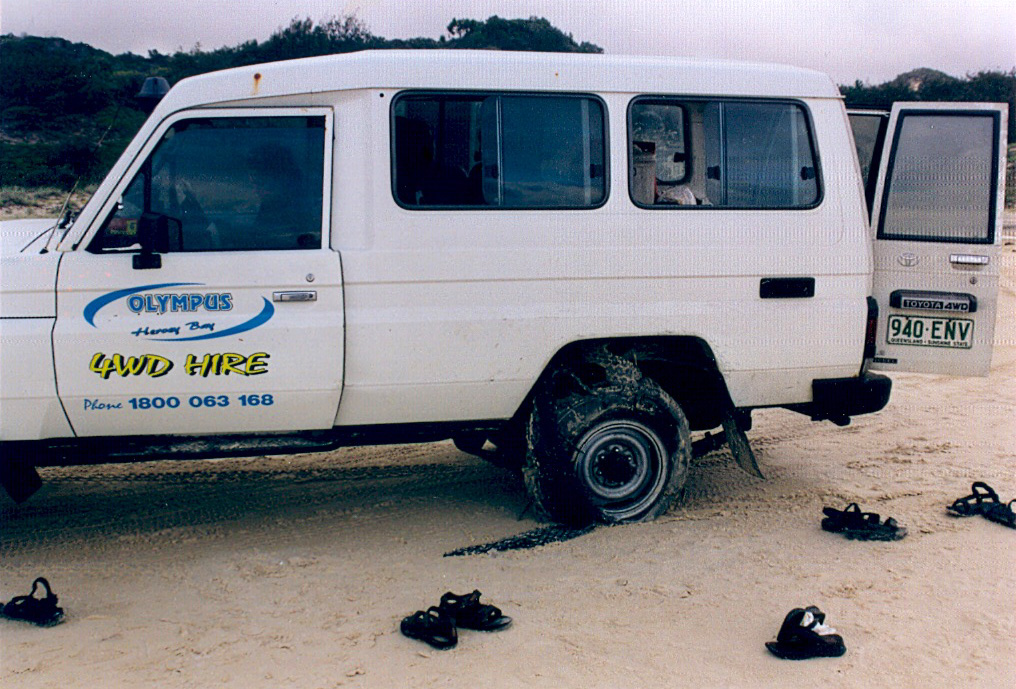
Then, we turned inland toward The Pinnacles (Colored Sands). The towering sand cliffs glowing in intense ochre, red, and orange tones were spectacular. But right here, the mechanical curse began: BAM. Our first flat tire. We cursed, swapped it for the only spare, and stubbornly pushed deeper into the dense, sandy rainforest tracks
Picture
Picture
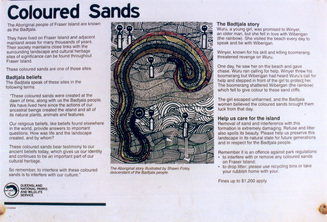
The Badtjala Dreamtime: The Sacrifice of the Rainbow
The striking, multi-colored cliffs of the Colored Sands are deeply sacred to the Badtjala (Butchulla) people, who believe these sands were created at the dawn of time alongside their ancestors. According to their oral history, the vibrant landscape is the result of a tragic love story:
  • The Forbidden Love: A young Badtjala girl named Wuru was promised to an older man, Winyer. However, she fell deeply in love with Wibergan—the Rainbow. Every day, she visited the beach just to speak and be with him.
  • The Chase: Winyer, known for his deadly skill with the boomerang, found out and threatened revenge. One day, he spotted Wuru on the beach and chased her down.
  • The Rainbow's Sacrifice: As Wuru ran for her life, calling for help, Wibergan the Rainbow heard her cries and stepped in front of the girl to protect her.
  • Shattered Colors: Winyer threw his lethal boomerang with full force. It struck Wibergan, shattering the Rainbow into a million pieces. The magical colors fell down the sand cliffs, staining them in deep red, orange, and yellow hues forever.
Wuru escaped unharmed, and to this day, Badtjala women believe these colored sands bring them luck. As the traditional owners remind all visitors: “To interfere with these coloured sands is to interfere with our culture.”

The Pinnacles (Colored Sands)
The Rainbow Cliffs: Thousands of Years of Earth Magic
The striking, multi-colored sand formations rising behind the beach are a spectacular window into the island’s ancient past:
  • The Mineral Palette: The glowing layers of red, yellow, orange, and brown sand are completely natural. Over hundreds of thousands of years, iron-rich minerals mixed with the sand grains, oxidizing (rusting) and creating a brilliant palette of up to 72 different hues.
  • The Clay Binder: Rich deposits of clay act like natural glue, binding the ancient sand dunes together into heavy, solid towers and pinnacles.
  • Weathered Sculptures: Wind and rain act as continuous artists, eroding the softer sand away and leaving behind these jagged, dramatic spires that constantly change shape over the decades.
  • Dreamtime Legend: For the Butchulla people, these sands are sacred. Legend says a beautiful woman named Purrene was protected from an aggressive warrior by the Rainbow Serpent, who shattered his body across the cliffs, staining them with his magical colors forever.
Picture
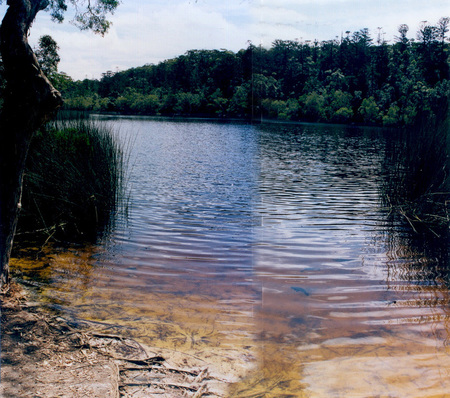
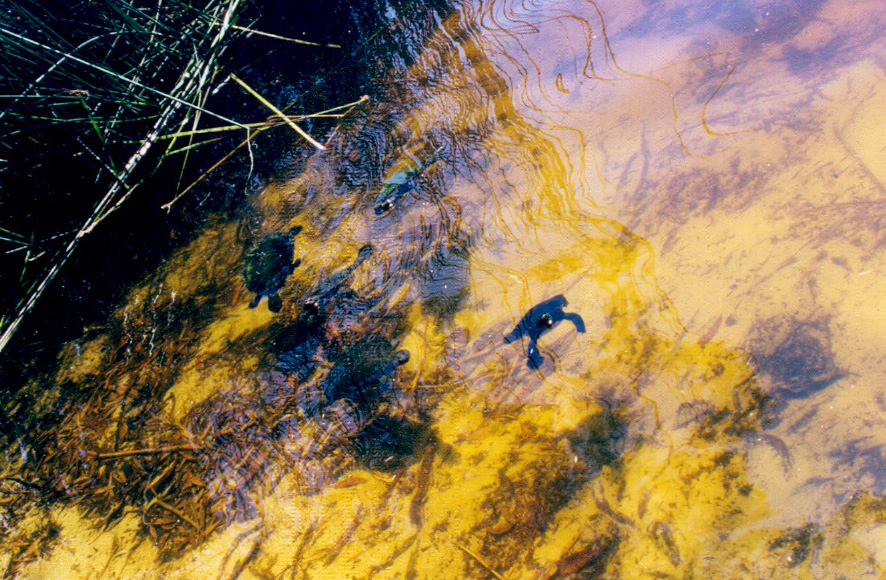
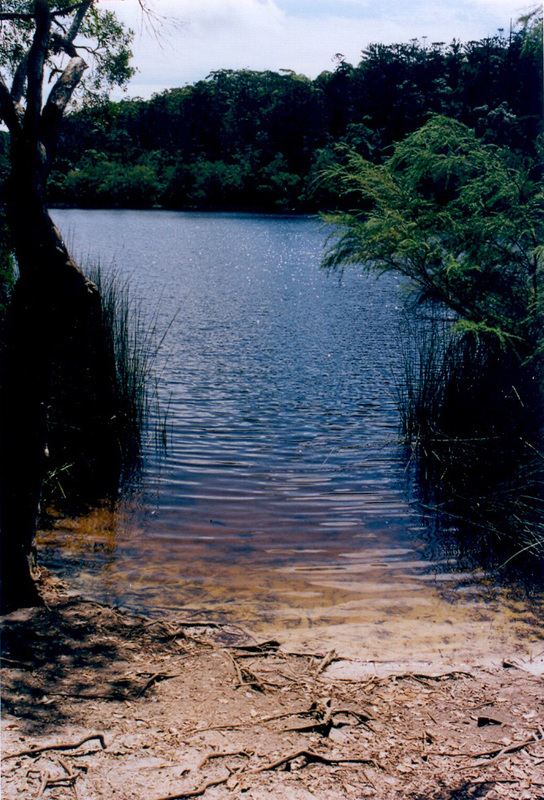
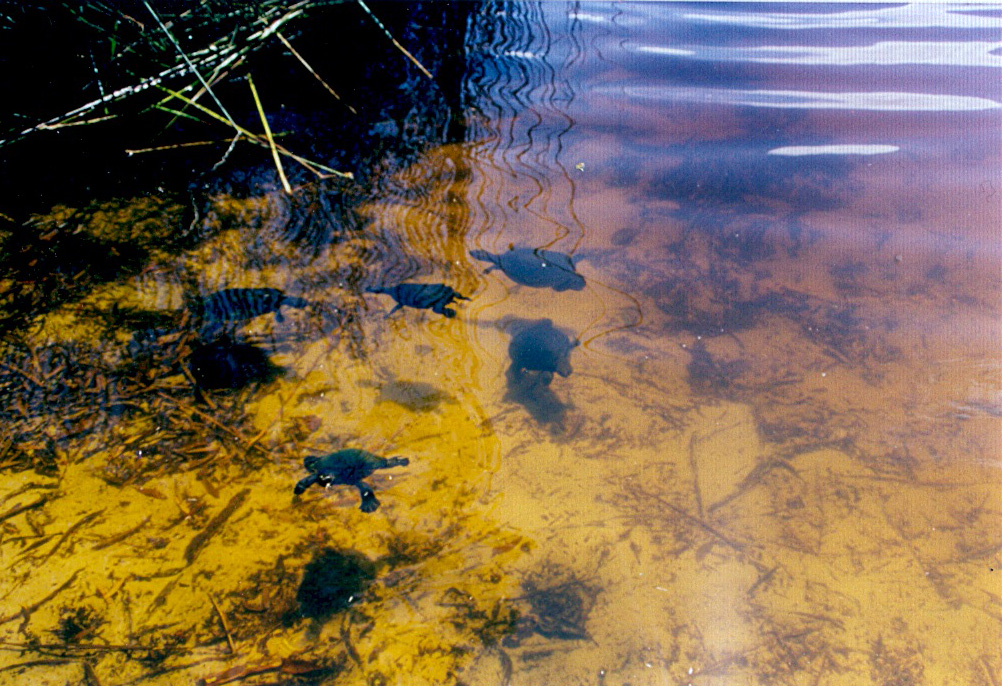
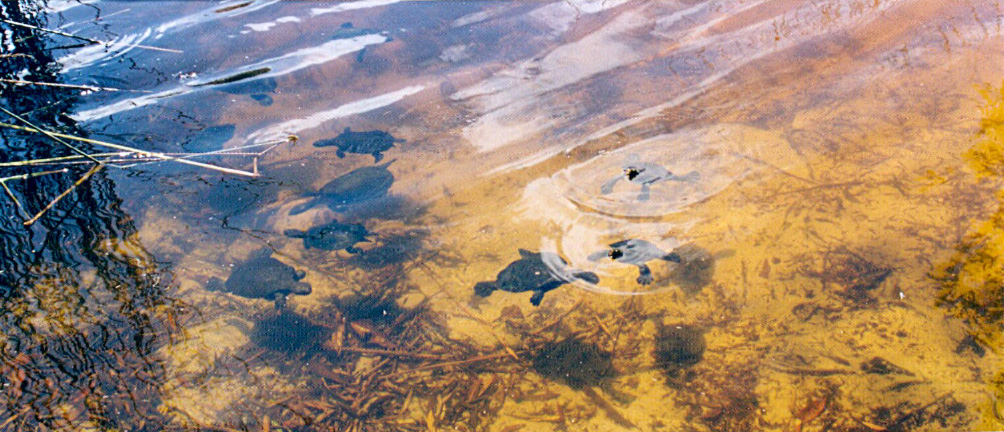
We reached Lake Allom, a hidden perched tea-tree lake. The calm, amber-colored water was magical, and as we stood by the edge, dozens of tiny, adorable freshwater turtles paddled right up to us. It felt like a peaceful sanctuary. But the peace was a trap.
Picture
Lake Allom
The Amber Oasis: Perched Water and Ancient Turtles
While K'gari has over 100 freshwater lakes, Lake Allom is unique in its design and wildlife:
  • The Perched Phenomenon: Lake Allom is a perched dune lake. It sits high above the actual ocean level. Organic matter, dead leaves, and sand compress over thousands of years to create an impermeable, concrete-like floor that catches pure rainwater like a giant bowl.
  • The Tea Tree Effect: The lake is densely fringed by a pristine, ancient rainforest. Leaves from surrounding Melaleuca (Tea Trees) fall into the water and slowly decay. This infuses the lake with natural oils and tannins, giving the crystal-clear water its signature deep-amber, tea-like color.
  • Turtle Sanctuary: The calm, rich environment is home to hundreds of Krefft’s River Turtles. These tiny freshwater creatures are incredibly curious and swim right up to visitors at the shoreline.
The Sunset Disaster
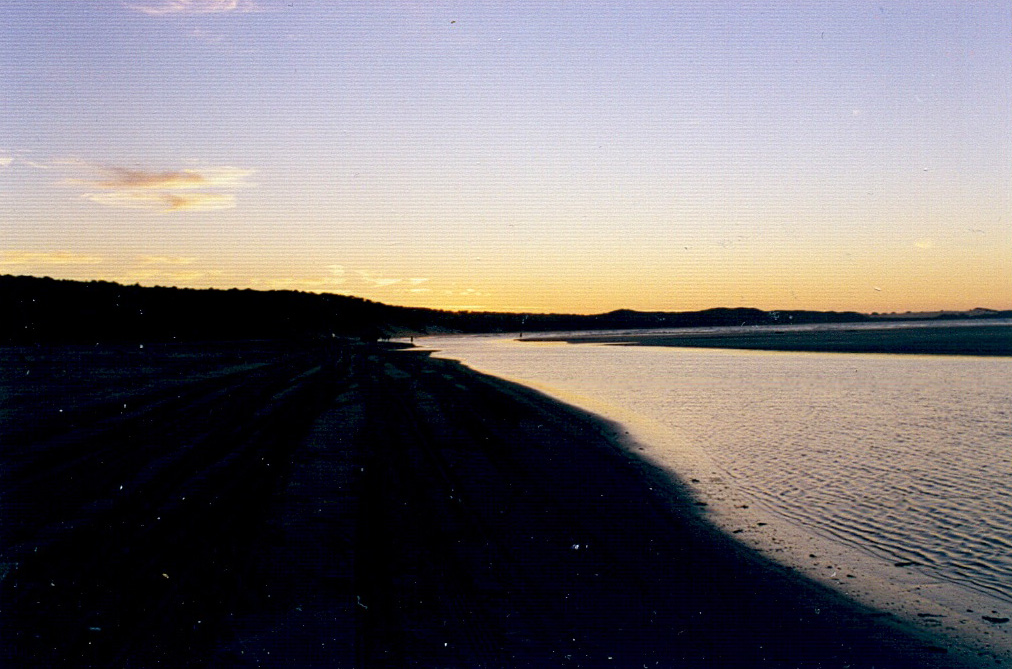
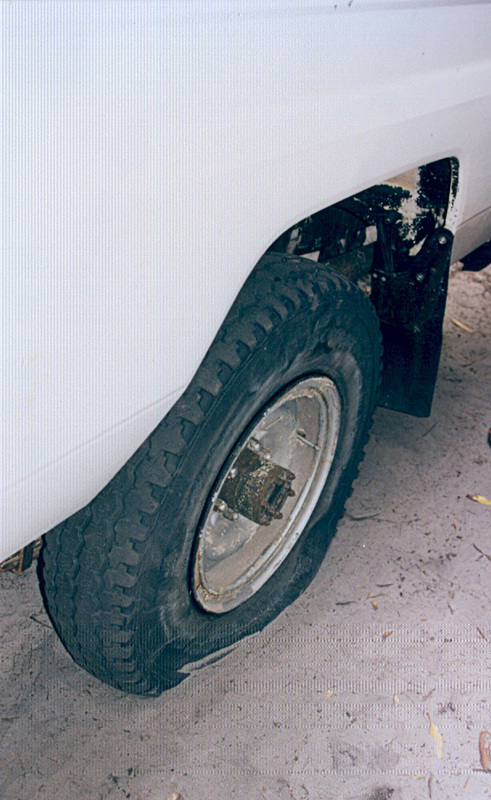
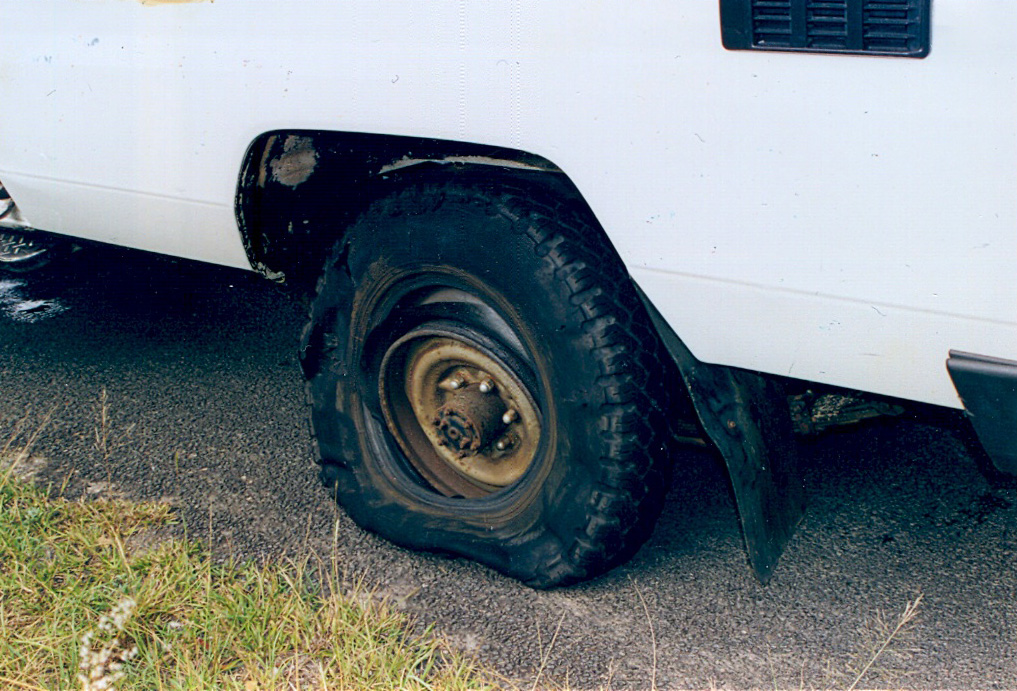
The third and final night was breaking. We headed back out onto the sand to catch the legendary sunset over the ocean. And that’s when disaster struck: BAM. A second flat tire. No spares left.
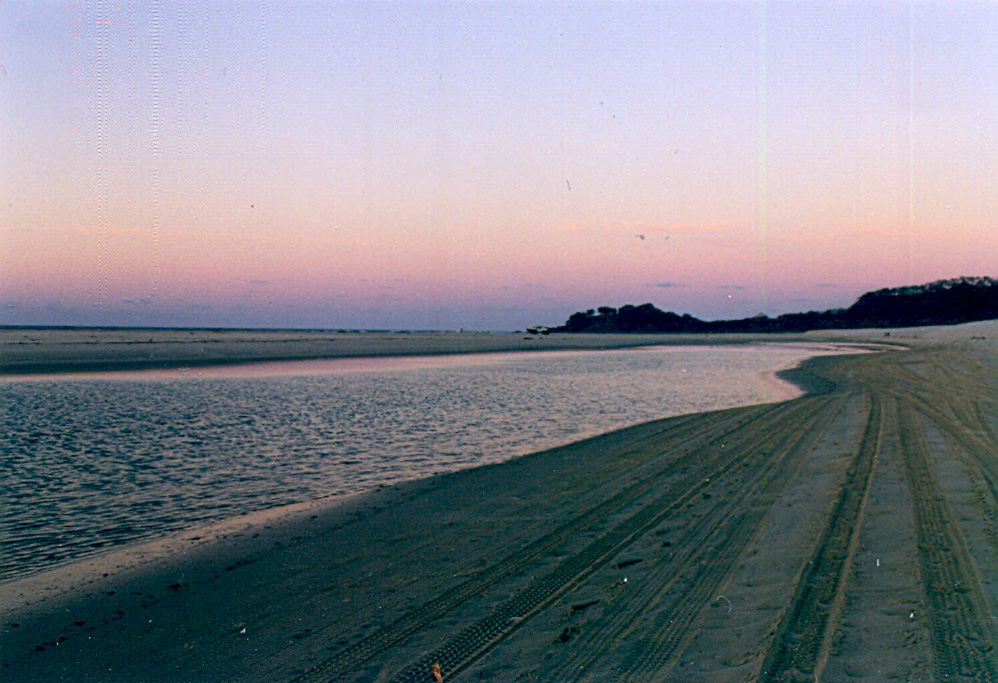
As the sky turned deep purple and the pitch-black tropical night rushed in, we were forced to bump the heavy Jeep along on the bare metal rim toward the open beach. I hiked for 1.5 grueling hours through the dark sand to locate a phone, but our landlord gave zero shits. When I rejoined the group, raw survival mode kicked in. The freezing tide was rising relentlessly, swallowing the sand. And then, they appeared.
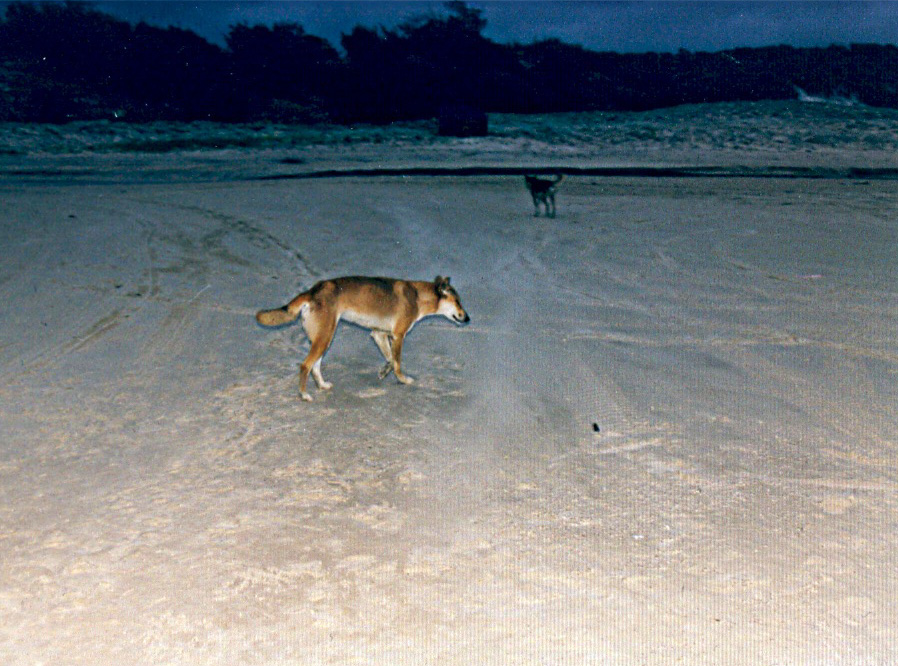
Out of the darkness, a pack of wild dingoes emerged. Their eyes glinted in the dim light, silently stalking our stranded vehicle, shifting closer and closer in the sand. Trapped inside the freezing, dead Jeep, we were shivering with fear, completely surrounded by apex predators.
The Last-Second Escape
Suddenly, bright headlights pierced the black. A local legend named Peter pulled up in his 4WD. "Move it! If you stay here, the ocean will wash this car away in minutes!" he shouted. He slapped his own spare tire onto our wreck, fed us a hot dinner, and let us five sleep into his tiny shack for the night. The boys on the tables and benches, we girls got a tiny mattress we shared.
The next morning, Peter solved the mystery: a sharp piece of metal frame was sticking out like a hidden knife inside the wheel arch, slicing our tires from the inside! The car was entirely ruined. We raced to the ferry terminal, the engine completely failing the moment we arrived.
The ferry crew yelled: "Get on now, or stay with the Jeep!" We grabbed our backpacks, left the key in the ignition, and leaped onto the boat in a single bound. We left the worthless piece of junk blocking the entire pier. We were broke, exhausted, but alive. No dingo dinner for us!
The two ferry departure points: Fraser Island on the left & Hervey Bay on the mainland on the right
Picture

​Whitsundays Islands

Picture
Headline: Sleeping on Water: Sailing the Whitsundays and the Ancient Ocean Tribe
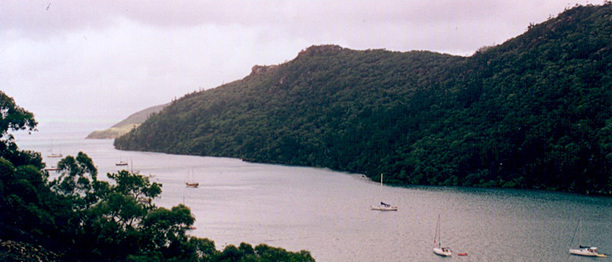
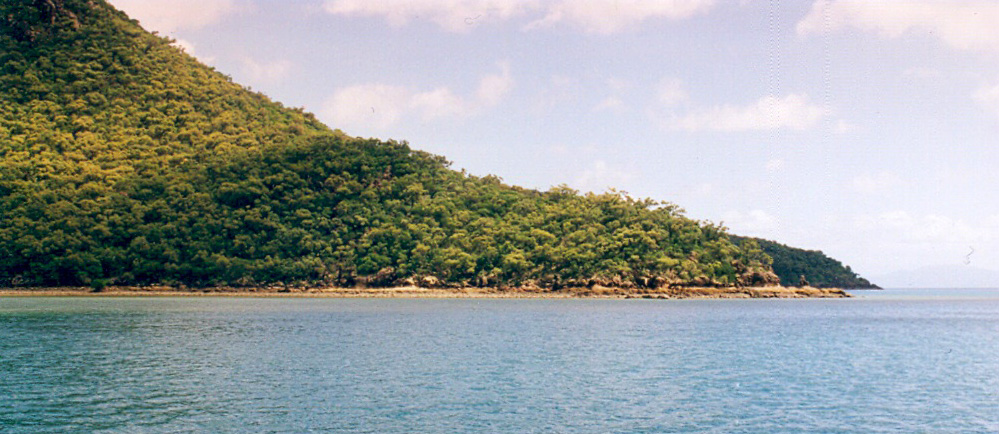
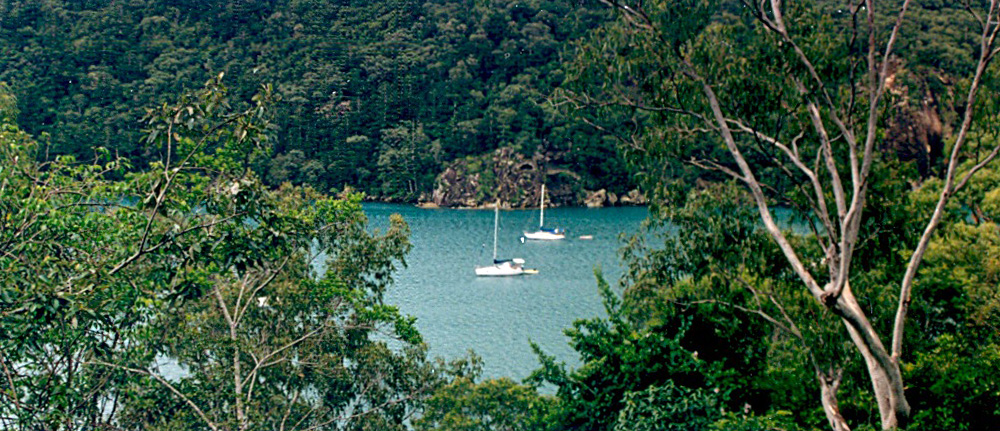
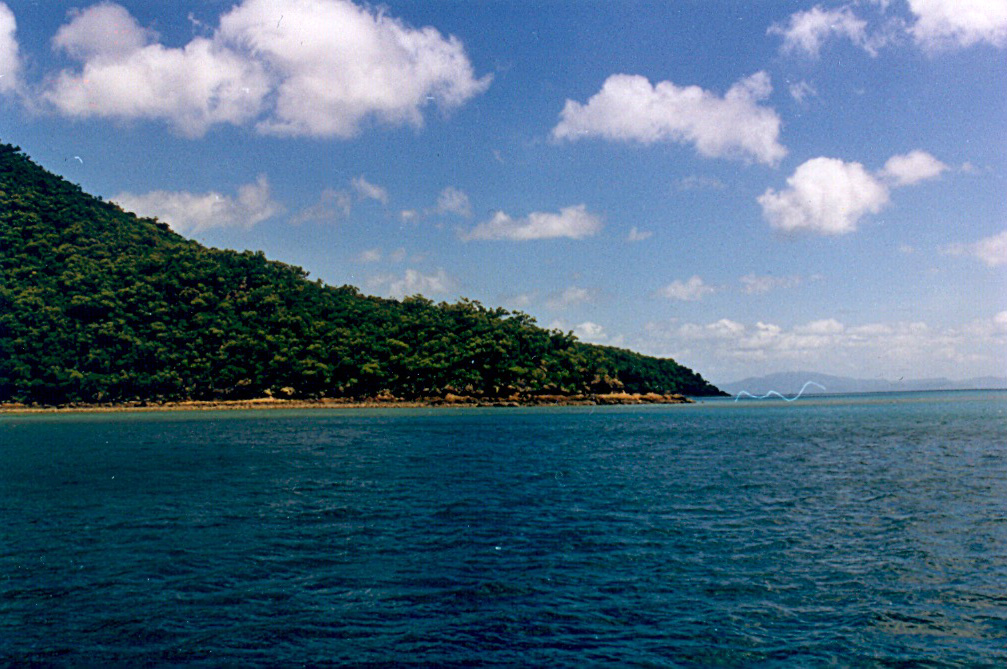
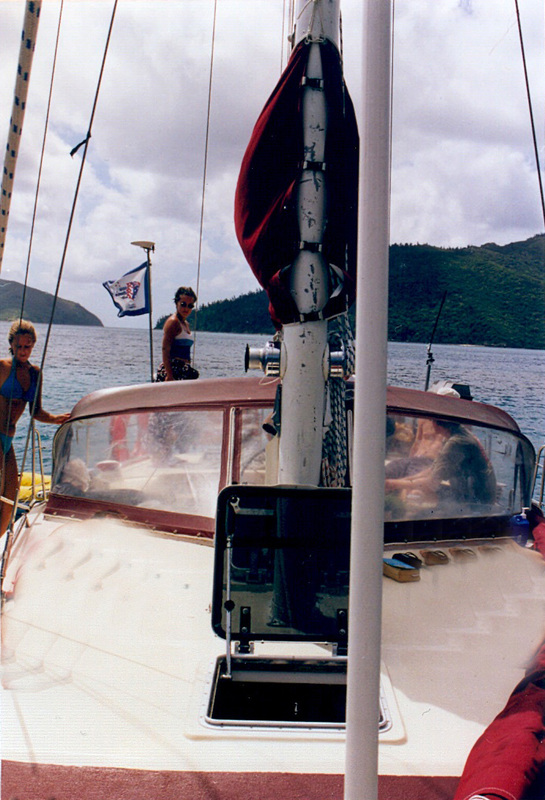
After the intense dust of Fraser Island, it was time to slow down. I headed to Airlie Beach, the ultimate launchpad for the tropical Whitsunday Islands. I booked a multi-day sailing trip, and it was pure bliss. The boat crew was hilarious, the music was flowing, and spending the nights rocking gently to sleep on the open deck under the stars was the ultimate relaxation.
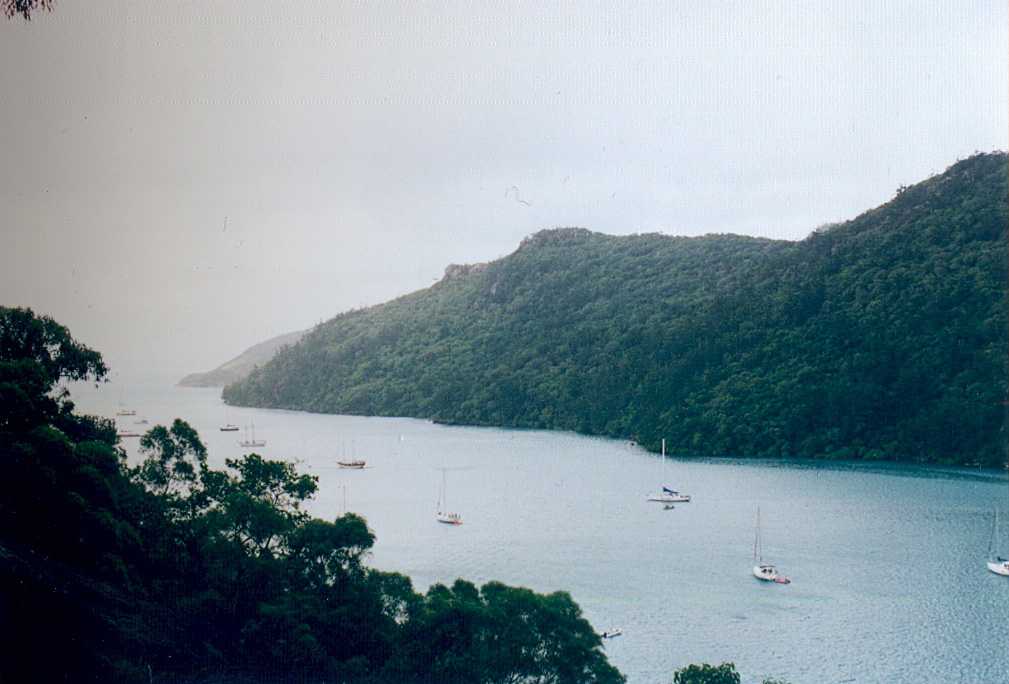
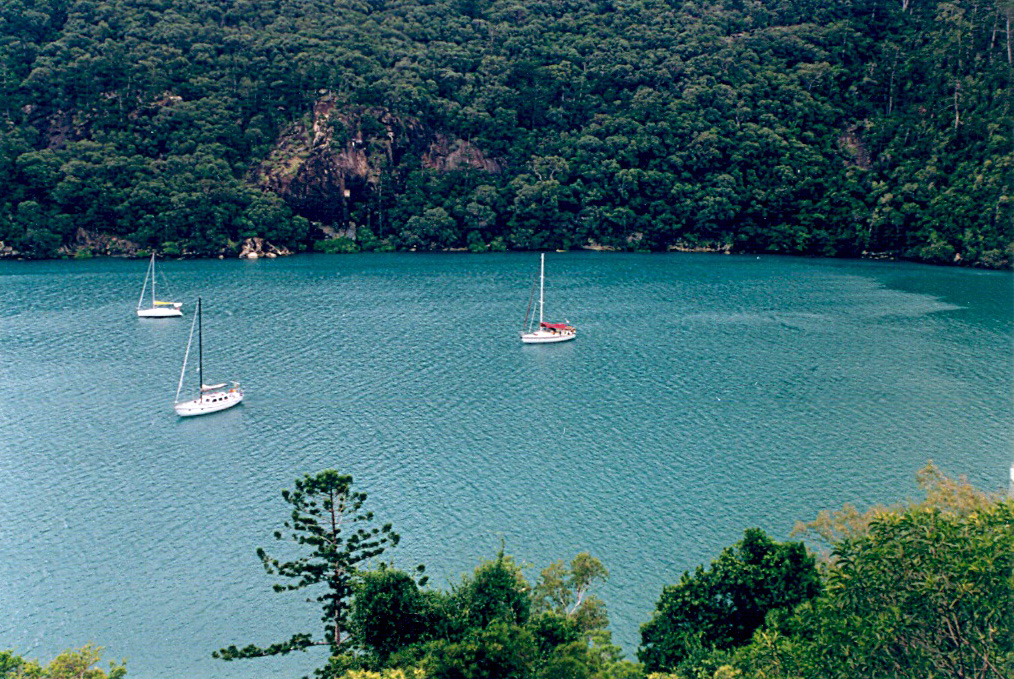
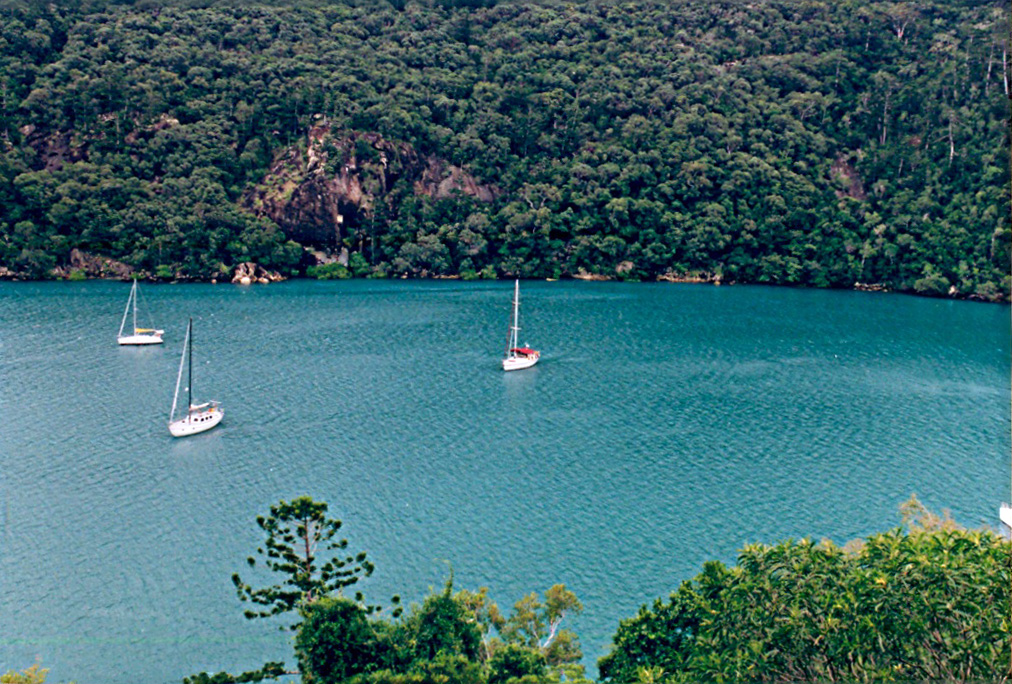
But we didn't just cruise. We dropped anchor deep inside Nara Inlet, a spectacular, fjord-like bay cutting into the rugged shores of Hook Island. We hopped into a dinghy, scrambled ashore, and hiked up a steep stone track into the dense canopy. Hidden in the cliffs lies a sacred sanctuary: the Ngaro Cultural Site.
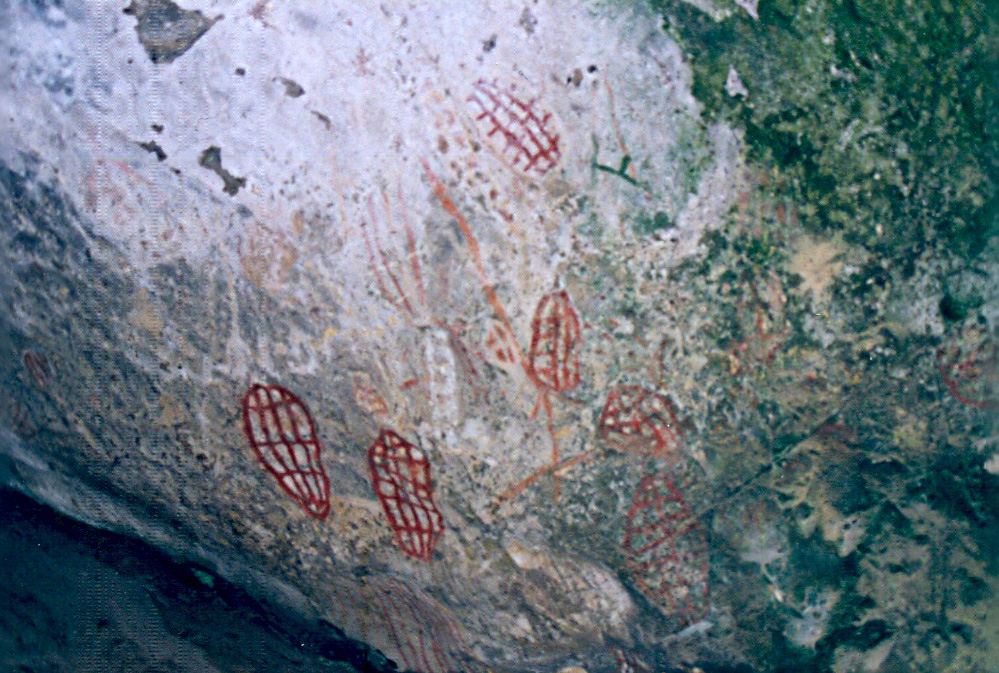
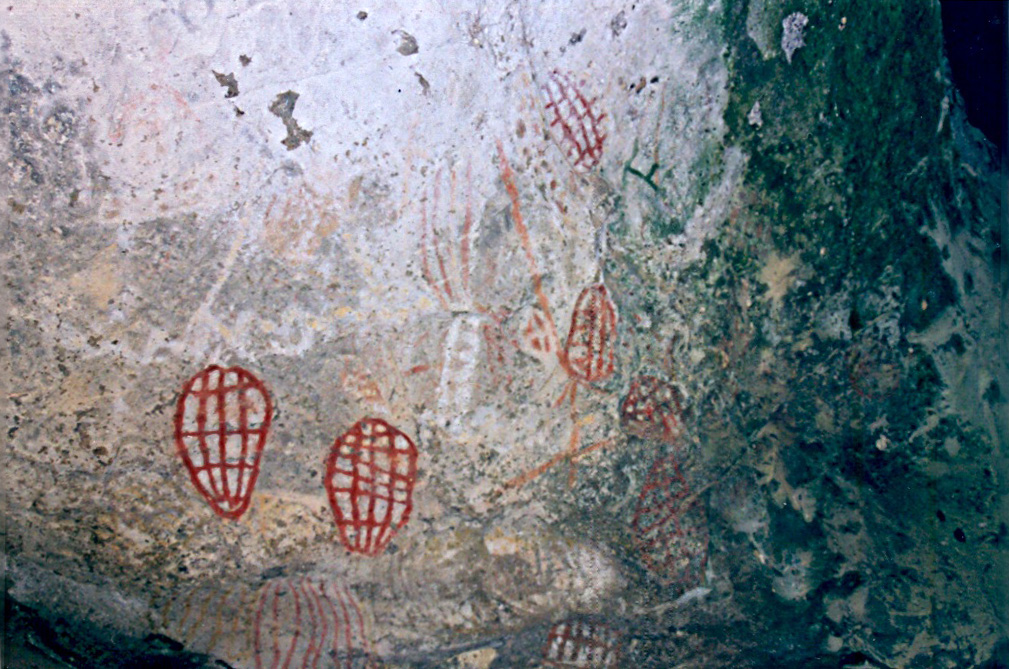
​Staring at the weather-worn stone walls, I confronted incredible crimson rock art. Painted in thick red ochre and charcoal, the non-figurative stencils, net-like grid patterns, and dynamic shapes look completely mesmerizing. Standing inside that quiet, cool cave, looking at drawings that survived for thousands of years, the deep connection to the ancient sea people was undeniable.
Picture
The Chemistry of Cave Art: How the Ngaro Painted History
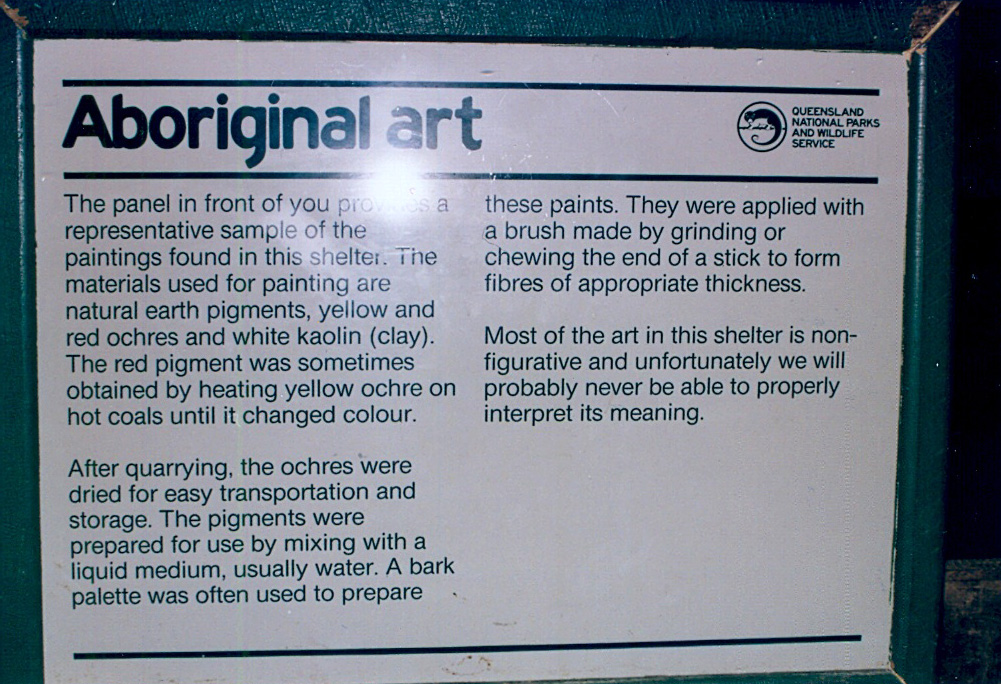
The informational sign inside the Hook Island shelter reveals the ancient, brilliant techniques behind the crimson artwork:
  • The Natural Palette: The artists used pure, raw earth pigments sourced directly from nature—yellow and red ochres, along with white kaolin (clay).
  • The Fire Trick: To get that specific, deep red hue seen in the cave, the Ngaro often gathered yellow ochre and heated it directly on hot coals until the extreme temperature chemically altered the minerals, turning it vibrant red.
  • Logistics & Preparation: After mining the ochres from the earth, they dried them completely so they were lightweight and easy to transport across the islands. To paint, they ground the dry rock into powder and mixed it with a liquid medium—usually water—using a piece of tree bark as their palette.
  • The Tooth-Brush: They didn't have modern tools. Instead, they took a small wooden stick and ground or chewed the end until the wood split into fine, flexible fibers, creating a perfect homemade paint brush.
The sign concludes with a poignant reminder: Most of the art here is non-figurative (abstract patterns), meaning that because the culture was disrupted, we will unfortunately never be able to properly interpret its true, deep meaning.

Picture
The Ngaro Seafarers: 9,000 Years of Maritime History
The cave paintings at Nara Inlet are not just ancient art—they are the oldest recorded Indigenous site on the entire East Coast of Australia. 
  • The Marine Masterminds: Unlike most Aboriginal tribes who lived deep in the desert interior, the Ngaro people were distinct coastal sea-faring people. They ruled the islands and waters of the Whitsundays for over 9,000 years.
  • The Bark Canoes: The Ngaro were legendary for constructing unique, three-piece bark canoes called naulo. These vessels were stitched together with vines and sealed with resin, allowing them to travel long distances across rough, open ocean waters to hunt for sea turtles, giant fish, and whales.
  • The Grid Mystery: The exact meaning of the distinctive grid patterns and net-like boxes seen in your photo remains a secret of the elders. However, anthropologists believe they represent traditional fishing nets, turtle traps, or complex navigational maps used to read the treacherous island tides.
  • Tragic Loss: Sadly, during the brutal British colonization in the 19th century, the Ngaro people were forcefully displaced from their marine homeland. Today, these red ochre paintings stand as a vital, protected monument to their incredible ocean spirit.
Picture
Headline: Birthday Twins and Bad Colds: The Grand Finale in Byron Bay
My epic five-week Australian odyssey was coming to an end. The final stop on the map: the legendary surf-and-hippie paradise of Byron Bay. But Australia decided to give me one last, uninvited parting gift. The moment I arrived, I was blessed with a cold. I was sniffing, and completely drained. But giving up wasn't an option—because it was my birthday, and you don’t skip a birthday in Byron Bay.
I dragged my sick body out into the vibrant nightlife, determined to celebrate. In the middle of the crowded, music-filled pub, I struck up a conversation with a local Aussie guy. He raised his beer, grinned, and shouted over the music: "Mate, let’s drink! It’s my birthday tonight!"
I laughed, totally skeptical, and shook my head. "Yeah, right! Safe bet, mate. Anyone can just claim it's their birthday to get a free drink!"
He laughed, pulled out his ID, and handed it to me. I stared at the plastic card, then pulled out my own passport. We stood there, jaws dropped, completely stunned. We checked the day. We checked the month. It wasn't just a pickup line. Against all mathematical odds, we were born on the exact same day.
Instantly, the cold was forgotten. The skepticism evaporated. We went from complete strangers to "Birthday Twins" in a split second. We celebrated until the early hours, a German backpacker and a local Aussie, united by a cosmic coincidence at the edge of the world. It was the ultimate, hilarious, and heartwarming farewell to a continent that had given me the wildest five weeks of my life.

Trip Gallery
Powered by Create your own unique website with customizable templates.